

REVIEW · FREEDOM TRAIL WALKING TOURS
Boston’s Freedom Trail: A Self-Guided Audio Tour
The Freedom Trail gets more fun when you can pause. This self-guided audio tour lets you walk Boston’s historic route at your pace, with stories delivered through the VoiceMap app and offline access built in. You start at the Massachusetts State House and end at the Paul Revere House, with themed narration that turns names on a map into people and plot twists.
I especially like the flexibility of a self-paced walk, so you can linger where you care most. I also like the practical design choice of offline audio and maps, which helps you keep moving even if your phone signal is spotty.
One thing to consider: this is a set route with turn-by-turn guidance, so if you wander far off the path or try to do it in reverse, the directions can get confusing.
Key highlights worth planning around

- Offline audio and maps let you keep the tour going without relying on cellular service
- Turn-by-turn route guidance helps you connect the dots between major Freedom Trail stops
- Comedy and character show up in the stories, especially around figures like Paul Revere, John Hancock, and Charles Dickens
- Granary Burial Ground gives you a focused, guided look at graves of early America
- Virtual tour option means you can review sites later from home
- Resume support makes it easier to jump back in if you take a break mid-walk
Other ways to walk the red brick, compared
Freedom Trail, but make it a choose-your-own-walk

Boston’s Freedom Trail is famous for a reason: it’s a walkable spine through a huge chunk of American origin stories. The difference here is delivery. Instead of reading plaques or rushing between stops, you’re following narration that points out what you’re looking at and why it matters, while still letting you decide how long to stop at each place.
The route is designed as a steady walking experience from the Massachusetts State House to the Paul Revere House. Along the way, you’ll hit major landmarks that most people associate with the Revolution, plus a few stops that feel more “Boston weird” in the best way, like the buildings tied to famous visitors and unexpected backstories.
How the VoiceMap app changes your walk
This tour runs through the VoiceMap app on Android and iOS. You get offline access to the audio, maps, and geodata, which is a big deal in a dense historic area where phone coverage can be unpredictable street to street.
Here’s the practical way to think about it:
- You press play when you’re ready, then follow the guided sequence.
- If you stop for a break or step away briefly, you can use the Resume button to pick up where you left off.
- The tour follows a set route with turn-by-turn directions. If you start from the far end and go backwards, turn instructions can flip (left becomes right, and your brain has to reverse too).
That last part matters. The app is doing navigation in a specific order. If you want to explore aggressively off route, treat the audio as something that can get temporarily out of sync. If you prefer to follow a line and get the story cleanly, this format is very friendly.
Route basics: start at the State House, end at Paul Revere House
You’ll start in front of the Massachusetts State House, 24 Beacon St, Boston, MA 02133. That location is the tour’s opening scene, and it’s also the highest point in Boston, which is a nice way to mentally “reset” before you move into the dense historic core.
Your walk ends in front of Boston’s oldest standing structure, the Paul Revere House, 19 N Square, Boston, MA 02113. Ending there gives you a strong, physical wrap-up. You can also keep going after the audio ends, but you’ll already have the main beats connected.
The tour is designed for an easy, walking pace. It’s about 1 hour 15 minutes to 1 hour 30 minutes, depending on how long you linger and how often you pause your phone.
Price and value: $11.99 for an audio-guided route you can repeat

At $11.99 per person, this tour sits in the “cheap enough to be a no-brainer” zone, especially if you like self-guided walking but hate missing context. What makes it feel like good value is that you get:
- Lifetime access to the tour in English
- Offline access so the tour is usable in the real world, not just on Wi-Fi
- A virtual tour option so you can revisit at home
If you’re planning one Freedom Trail outing and you want the story in an orderly sequence, this works well. If you’re the type who loves reading every plaque and soaking up the text, you might find audio redundant. But if you want the names and dates turned into something you can remember, the price looks fair fast.
More routes you can walk at your own pace



Stop-by-stop: what to expect from each Freedom Trail moment

1) Massachusetts State House, and the tour’s big themes
Your audio walk starts right outside the Massachusetts State House. You’re introduced to how the VoiceMap app works and you’ll get a roadmap of the major themes you’re about to hear.
Two things make this first stop useful:
- It helps you understand what kind of stories you’re about to get, so you don’t spend the rest of the walk trying to decode the narration.
- Standing at the State House gives you a clear mental anchor before the route drops you into the historic cluster.
Tip for your first minute: before you set off, make sure your audio is working and your screen brightness is easy to read. Nothing ruins a walk like discovering at the second stop that your phone is at 2 percent.
2) Granary Burial Ground: forefathers with real weight
Next up is the Granary Burial Ground. This is where the tone starts to shift from “tourist photo stops” into something more grounded. You’ll be guided through the graves of some of America’s forefathers.
This stop is powerful even if you’re not a big genealogy person. The audio format matters here because it can guide your eye and point out who you’re looking at. If you only glance at headstones, you miss the connections. With audio, you’re less likely to treat it like a random cemetery.
Practical note: cemeteries slow your pace naturally. Plan a little time here, even if you keep moving the rest of the trail at a brisk walk.
3) The Paul Revere Grave: 13 careers, not just one famous ride
The tour passes the Paul Revere Grave, and you’ll hear about his 13 successful careers. That detail is a good reminder to look beyond the single, iconic nighttime ride that gets all the fame.
This is also a nice example of how an audio guide can fill in gaps. If you only know one headline about a historical figure, the narration gives you extra angles. You’ll walk away with a more human sense of what his life looked like.
4) John Hancock’s Grave: Madeira wine trouble
You’ll then pass by John Hancock’s Grave. The story here includes trouble tied to his love of Madeira wine. It’s one of those details that makes a major name feel less like a monument and more like a person with habits and headaches.
If you like history with personality, you’ll probably enjoy this section. It also helps you remember the stop because the audio gives you a specific hook rather than a generic overview.
5) Omni Parker House: Charles Dickens and John Wilkes Booth
Next, the tour goes by the Omni Parker House. You’ll hear about famous former guests, including Charles Dickens and John Wilkes Booth.
This is where the Freedom Trail route stops being only about the Revolution and starts showing the longer arc of Boston history. The narration connects what’s happening in the building’s story across eras, not just during one year.
A quick practical thought: hotel areas can be busy with foot traffic. Keep your pace steady and keep your phone at a comfortable reading angle, especially at intersections nearby.
6) King’s Chapel: why it sits on top of a cemetery
At King’s Chapel, the audio explains why the chapel was built on top of a cemetery. This is a great stop for anyone who likes “wait, really?” moments in historic places.
The value of audio here is that it can guide you to notice how old sites evolved rather than treating each building as a sealed time capsule. You’ll probably find yourself looking at the surroundings a little more carefully after this.
7) Old City Hall: the statue moment
The route passes by Old City Hall, and you’ll hear the history of the building and the statue in front of it.
This is the kind of stop that can be easy to skim past without context. With narration, you’re not just passing a landmark, you’re understanding why the statue matters and what story it’s meant to tell.
8) Old South Meeting House: what the museum adds
Next is the Old South Meeting House. The audio points you toward the museum and you’ll get the idea of what it holds while you walk by.
Even if you don’t stop inside, this helps you orient yourself. When you later see the museum materials or photos, you’ll have a better sense of what you’re looking at.
This tour does not include museum tickets, so if you want to go inside, plan extra time and accept that it will extend your walk beyond the audio time estimate.
9) The Old State House: where the building story lands
The tour continues to The Old State House and explains the history of the building as you pass by.
This stop is useful because it anchors the route in the political and civic machinery of the era. A building like this looks “historic” in the simple way. The audio helps you connect it to events and systems, not just architecture.
10) Faneuil Hall: Puritans and civic talk
At Faneuil Hall, the audio shares how the Puritans are connected to the hall.
If you’ve ever wondered why certain civic spaces get repeated in American origin stories, this kind of explanation helps. It turns a famous name into a place with specific communities and motivations tied to it.
11) Old North Church: Paul Revere’s rides, not just one
Next you’ll pass by the Old North Church. The audio includes some of Paul Revere’s many rides, not only the one people memorize in school.
This is a smart way to avoid “history as a single scene.” It broadens the idea of what Revere was doing and how frequently he moved through the world of messages and warnings.
12) Paul Revere Statue: the horse details
You’ll then pass the Paul Revere Statue, and the audio teaches you about the horse Paul rode.
This might sound small, but it’s actually one of the best “photo payoff” moments. You get a detail to look for, so your picture becomes more than a generic statue shot. You’ll know what you’re seeing.
13) The Paul Revere House: ending at an anchor landmark
The tour finishes in front of the Paul Revere House, described as Boston’s oldest standing structure. Finishing here gives your walk a satisfying close, because the story is no longer only about events and figures. It becomes a physical place you can stand in front of and recognize.
If you’re planning a second stop after the audio ends, you’ll have the timeline clearer in your head. That makes whatever you do next feel more connected.
Timing and pacing that actually works

The tour is about 1 hour 15 minutes to 1 hour 30 minutes. That range is realistic because Freedom Trail stops come with two time costs:
- Natural pauses for photos and readings
- Forced slowing in crowded areas
If you’re trying to do this in one shot, I suggest planning a start time when you’re not rushed. If you need to catch another thing right after, you might feel pressure to skip the good stops, like Granary Burial Ground or King’s Chapel.
Setup checklist: avoid the common audio problems

The best version of this tour is when your phone is ready from the beginning. A few practical tips based on real-world issues that can happen with audio apps:
- Download and test before you leave. If the app won’t start or won’t download, the tour becomes “walk without audio,” which kind of defeats the point.
- Keep a little battery buffer. Offline still uses your phone screen and audio playback.
- Stay on the guided route. If you wander off too far, it can be hard to get the tour back on track.
- If you take a break, use Resume instead of trying to guess where you are in the route.
If something goes wrong during your booking, there’s support via VoiceMap. Some guest issues have been handled through direct troubleshooting and refund discussion, but the fastest path is always to reach support while you’re still troubleshooting in the moment.
Who this tour is best for

This is a strong fit if you:
- Want a Freedom Trail walk with stories that have names, humor, and context
- Like self-guided flexibility without having to read a thousand plaques
- Appreciate offline access while walking in a busy city center
- Want a repeatable experience with lifetime access and a home virtual option
It may be less ideal if:
- You hate using apps outdoors
- You plan to roam far away from the route and expect audio to follow your detours
- You want a strictly museum-and-interiors day, since tickets and entrances are not included
Should you book this Freedom Trail audio tour?
Yes, if your goal is to make the Freedom Trail feel alive without racing. The $11.99 price is reasonable because you’re buying guided narration plus lifetime access, and you get offline capability that keeps the tour moving.
Skip it or adjust expectations if you prefer zero tech on your trip, or if you like to wander freely off route. In those cases, you may end up fighting the app instead of enjoying Boston.
If you’re deciding between doing the Freedom Trail on your own or with audio, this is the better “you’ll remember it later” option, especially because it gives you story hooks at the exact places you’ll be standing.
FAQ
How much does Boston’s Freedom Trail: A Self-Guided Audio Tour cost?
It costs $11.99 per person.
How long does the tour take?
The duration is approximately 1 hour 15 minutes to 1 hour 30 minutes.
Is the tour available in English?
Yes, the tour is offered in English.
Can I use the tour without cellular service?
Yes. You get offline access to the audio, maps, and geodata.
What do I need to bring?
You need your own smartphone and headphones. The tour uses the VoiceMap app on Android or iOS.
Where do I start and end the tour?
You start in front of the Massachusetts State House at 24 Beacon St, Boston, MA 02133. You end in front of the Paul Revere House at 19 N Square, Boston, MA 02113.
Is it private?
Yes, it’s a private tour or activity, so only your group participates. Service animals are allowed.
Keep Going in Boston






More Routes at Your Own Pace




The Red Line, Three More Ways



More around Boston, freshly written up
- The Boston Bash Scavenger Hunt★ 4.5 · 3 reviews
- Self-Guided Audio Tour of Boston North End★ 4.5 · 3 reviews
- Self-Guided Boston Christmas Tour★ 5.0 · 3 reviews
- Self Guided “The North End Pizza, Cannoli and Picnic” Solo Walking Tour★ 5.0 · 3 reviews
- Cambridge: Haunted Charles River Cruise★ 4.3 · 3 reviews
- Boston: Official Freedom Trail® Lantern Tour★ 4.7 · 3 reviews
Freedom Trail Walking Tours, compared.
 ★ 5.0Freedom Trail History Small Group Walking TourFrom $356,450 reviews
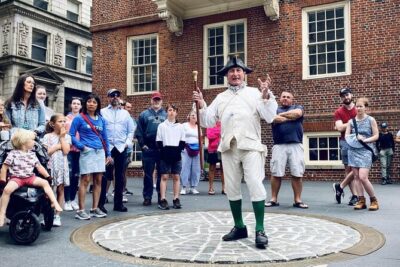 ★ 4.5Boston Freedom Trail Walking Tour with Costumed GuideFrom $262,531 reviews
 ★ 5.0Boston Food & History: Pizza, North End & Freedom TrailFrom $901,772 reviews
 ★ 4.9Boston’s Freedom Trail: A Revolutionary Walking TourFrom $311,748 reviews
★ 4.9Freedom Trail History Small Group Walking TourFrom $351,590 reviews
★ 5.0Boston’s Freedom Trail: A Revolutionary Walking TourFrom $311,343 reviews
★ 4.9Boston’s Freedom Trail: A Revolutionary Walking TourFrom $311,748 reviews
★ 4.9Freedom Trail History Small Group Walking TourFrom $351,590 reviews
★ 5.0Boston’s Freedom Trail: A Revolutionary Walking TourFrom $311,343 reviews
 ★ 4.5Freedom Trail Walking Tour 250From $261,118 reviews
 ★ 5.0Boston Freedom Trail History Pub Crawl Small-Group TourFrom $60996 reviews