

REVIEW · FREEDOM TRAIL WALKING TOURS
Boston’s Freedom Trail: A Revolutionary Walking Tour
History walks faster than you think. This 2.5-hour Boston Freedom Trail tour strings together all 16 official sites into one easy, guided story of revolution, from Redcoats and midnight riders to abolition and civil rights. I especially like the guide-led storytelling that makes big events feel human, and the way you hit major landmarks like the Paul Revere House and Bunker Hill area in a single stretch. The only drawback to plan for is that it can be a busy, fast walk, and if you end up off to the side, it may be harder to hear during stops.
The tour also shines because the guides are consistently described as fun, clear, and able to answer questions in real time. I saw guide names like Noah, Kenny, Sam, Alfred, Jim, Eliot, Julia, and Alissa come up again and again, and the pattern is the same: quick wit plus real follow-through on details. If you’re pairing this with other first-day sightseeing, you’ll come away with a mental map of downtown Boston that stays with you.
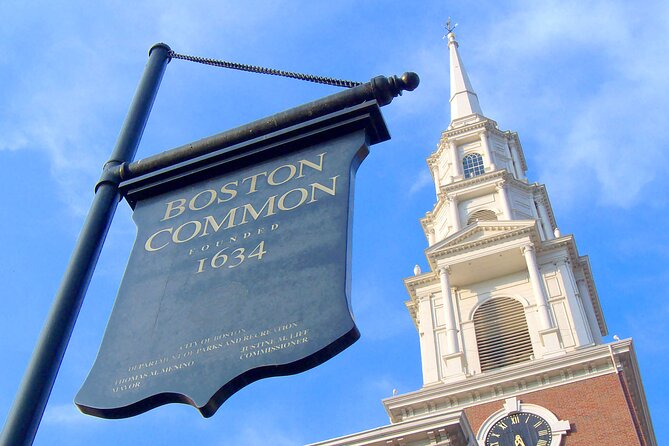
You start at The Embrace beside the Boston Common Visitor Information Center at 139 Tremont Street, then wind through historic streets and meeting halls, ending at Copp’s Hill Terrace with big views toward Bunker Hill Monument and the USS Constitution area. Bring comfortable walking shoes, because it’s a lot of ground in a half day feel, but it’s also the kind of route you can pace yourself on if you stay aware of your energy.
Key things to know before you go
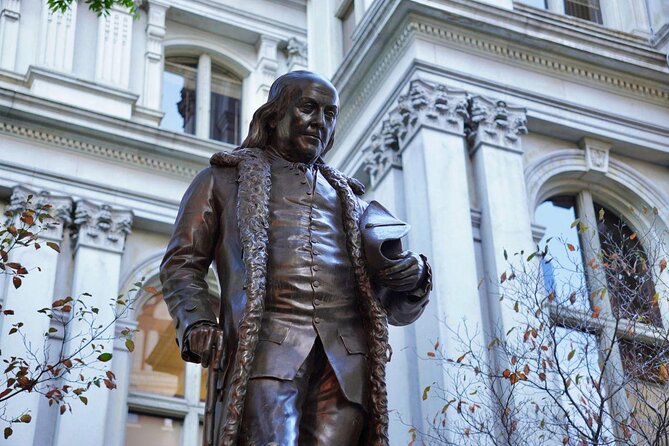
- All 16 Freedom Trail sites in one tour so you do not have to self-plan each stop
- Start at The Embrace by Boston Common, an easy landmark for getting oriented
- Major hits included, like the Paul Revere House, Faneuil Hall, and the lantern night signal
- Story-first guides who keep the group moving and answer questions as you go
- End at Copp’s Hill Terrace with views toward Bunker Hill Monument and USS Constitution
- Small group size (up to 25) helps the guide keep control and manage questions
Other ways to walk the red brick, compared
Why this Freedom Trail walk is the fastest history lesson in Boston
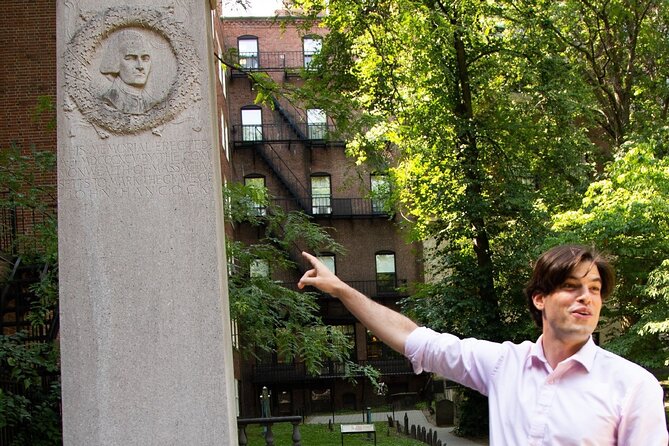
The Freedom Trail is famous, but doing it solo can feel like reading names off a map. This tour fixes that by giving you a guided line through the chaos: what happened, why it mattered, and how ordinary people got caught in the middle. You cover the Revolutionary era, then widen out into Boston’s long leadership on abolition, women’s rights, education, and immigration across about 400 years.
The payoff is momentum. In about 2 hours 30 minutes, you’re walking through the core of downtown Boston and checking the “I get it now” box for first-time visitors. If you already know a few American Revolution names, your guide should add the missing connections. If you know nothing, you should still feel like the story clicks into place.
One more reason I like this format: it keeps you moving between sites in short sections, so you spend less time wandering and more time learning. And since the company caps groups at 25 travelers, it usually feels more personal than a huge bus-tour stop-and-go day.
From The Embrace to Massachusetts State House: start with the right context
You begin at The Embrace, a statue commemorating Martin Luther King Jr. and Coretta Scott King. It sits right by the Boston Common Visitor Information Center at 139 Tremont Street, so meeting is straightforward and you’re already in the heart of the city.
From there, you head to the Massachusetts State House area. You’ll learn why this “new” Massachusetts State House matters, including the detail that Samuel Adams laid the cornerstone in 1795. This is a great early stop because it sets the tone: Boston is not just about dramatic battles. It’s also about how government, rules, and public pressure worked in the real world.
Next up is the red brick church built in 1809, where abolitionist congregations held space for fiery anti-slavery speeches. That matters even if you mostly came for the Revolution. The Freedom Trail does not just end at 1770 and 1775. It keeps running into Boston’s later fights for justice.
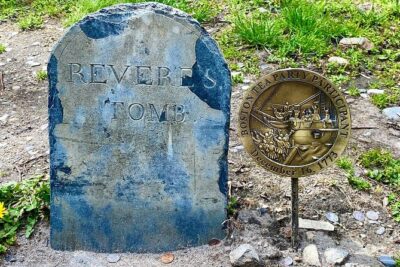
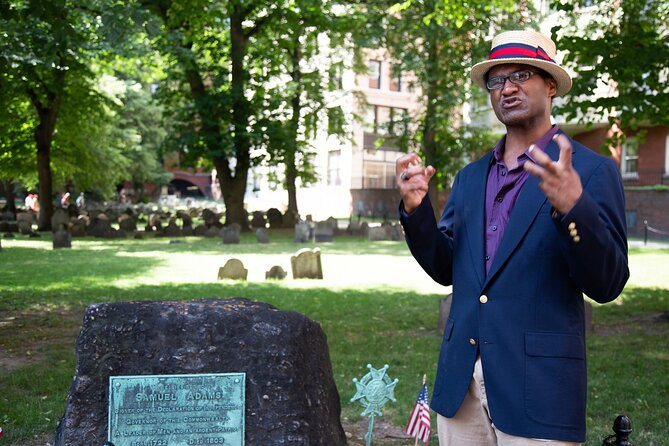
As you move along, you’ll also hit an important burying grounds stop dating to 1660, where the guide points you toward graves tied to Patriots like John Hancock, Paul Revere, and Samuel Adams. That turn toward “these were people” is one of the most emotional parts of the route, because names become neighbors.
Abolition-era voices, Puritan meeting house, and Patriots in the burying grounds
After the early government and abolition stops, the tour leans into religion and public life. You’ll see a stone church built in 1754, described as the first Anglican Church in Boston. You’ll hear about its construction, a nearby burying ground, and the crypts beneath. Even if you are not a “church person,” this is usually one of those stops where you start noticing how tightly community, ceremony, and politics were linked.
Then comes the Puritan meeting house built in 1729, the place where the Boston Tea Party began. This is where I’d advise you to pay attention to the cause-and-effect your guide explains. The Tea Party is not just a famous day, it’s a snapshot of how colonists used public disruption to argue they were owed rights.
Right after that, you’ll visit the historic building that started as a colonial apothecary (built 1718) and later became the publishing house Ticknor & Fields. This stop is a smart change of pace from courtroom rhetoric and revolutionary crowd energy. You’ll connect the Revolution to ideas spreading through print, because printed words helped shape public opinion.
In the burying ground portions, the guide usually brings the Patriots to life. The trail often gets treated like a timeline, but graves force the story to feel personal and final. If you tend to walk more slowly or need extra time in cemeteries, you should plan to pause, look around, and still follow the group when you can.
Tea Party origins, Old State House confrontations, and the Bloody Massacre stones
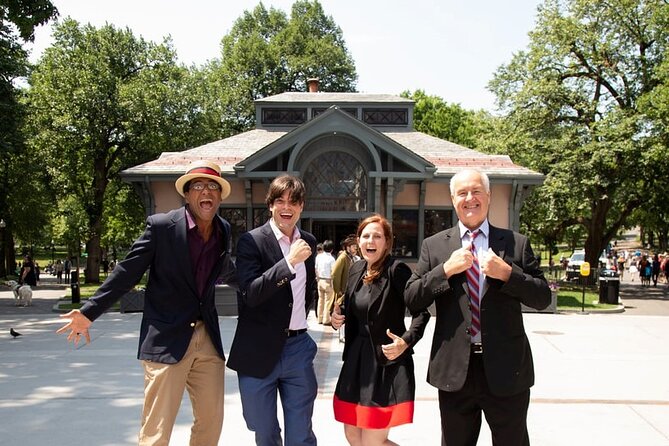
As you head deeper into the revolutionary core, you’ll reach the Old State House, built in 1713, with the lion and unicorn symbols tied to Great Britain. This stop is important because it turns the Revolution into something physical, not abstract. It is the kind of place where rules were enforced and confrontations happened.
Then you get the moment many people recognize from the books: the circle of stones marking the infamous Bloody Massacre of 1770. The guide gives a moment-by-moment account of the night when redcoat musket fire killed five colonists. This is where I recommend you stand where you can actually face the guide. One recurring tip from recent experiences is that hearing can vary if you’re not positioned toward the speaker.
From here, you’ll walk into Faneuil Hall, including what’s often called the Cradle of Liberty, tied to speeches from inside the hall. The second-floor meeting hall ends up feeling like a political stage, not a museum room. It’s a reminder that Revolution was fueled by persuasion, not only by weapons.
And because Boston is Boston, the route keeps mixing big events with local details. You’re learning how people gathered, argued, and acted out their beliefs in public spaces you can still stand in today.
More of the revolution, from the tea to the bridge

Faneuil Hall to Paul Revere House to the lantern signal
The Freedom Trail becomes more cinematic when you reach the Paul Revere story. The tour includes the wooden house dating to 1680, described as the oldest building in Boston and connected to the Revere family. You’ll hear how Paul Revere’s family life played out there, then how he stepped from those doors into pivotal events. That human context is what makes this stop click.
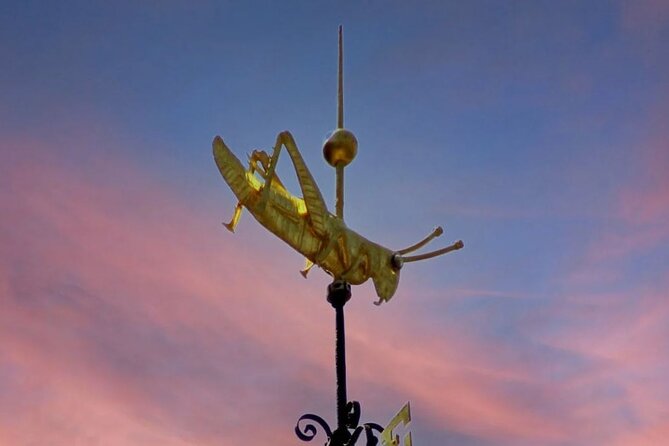
Right after, you’ll go to the 1723 church connected with the famous lantern signal, the one that uses the line one if by land, two if by sea. You’ll learn why that message mattered on the eve of Revolution, and how the signal was arranged by Paul Revere. Even if you know the slogan already, your guide’s explanation usually makes the timing and stakes feel sharper.
One practical thing to keep in mind: the lantern site can sometimes be affected by construction or crowds at specific times. When that happens, guides tend to manage the flow so you still get the story and the important sightlines.
Bunker Hill area payoff, Copp’s Hill obelisk, and USS Constitution views
Near the end, you’ll head into the Bunker Hill neighborhood. The route includes a burying ground dating to 1660, described as the site of British cannon emplacements during the Battle of Bunker Hill. This is another heavy stop, and it works well after you’ve built the narrative earlier. Now you understand why the fighting mattered and what the ground meant.
From there, you’ll view the 221-foot obelisk from the Copp’s Hill Terrace area. The monument marks the spot where colonial militia defended hastily made earthworks and repelled two redcoat charges before retreating. It’s a good reminder that not every moment of history is a clean victory. Sometimes it’s holding your ground long enough to keep the story from ending.
Finally, the tour wraps with a view that feels like a bonus field trip. From the Copp’s Hill Terrace ending area, you can see the masts and rigging of Old Ironsides, the USS Constitution, described as the oldest warship afloat anywhere in the world. You also get sightlines that connect to Bunker Hill Monument and Charlestown.
Pace, hearing your guide, and making the $31 value work for you
Let’s talk about the part that trips people up: pace. The tour runs about 2 hours 30 minutes and covers a lot of stops on foot. Some experiences note that the pacing can feel rapid, especially in cemetery sections where everyone wants to slow down to read and reflect. If you know you walk slowly or use a walking stick, plan to take your time where you can, then rejoin the group when you’re able.
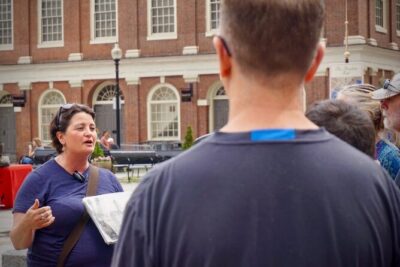
Hearing matters too. More than one recent experience mentioned that a louder speaker would help, and that being directly in front of the guide makes a big difference. My advice is simple: do not drift behind the group. Get close enough to see the guide’s face and posture, and you’ll likely catch more of the stories, jokes, and extra context.
On group dynamics, the maximum of 25 travelers helps. You should expect short walking stretches between stops, and then explanation at each site. Many guides are repeatedly praised for keeping teenagers, couples, and solo travelers engaged without turning the tour into a lecture.
Now the price. At $31 per person for a guided route that hits 16 official sites, it’s strong value compared with piecing together your own day with paid admissions and time lost to figuring out what each stop is really telling you. You’re paying for a human storyteller, plus a route that compresses Boston’s big themes into one practical walk. And because this tour is offered in English with a mobile ticket, it tends to fit easily into typical itineraries.
If you want your Boston visit to feel organized and meaningful, this is the kind of purchase that pays you back in confidence. You finish with a sense of place, not just a list of stops.
Should you book this Freedom Trail tour?
Yes, if you want the Revolutionary story with context, and you like learning while walking through real streets. This tour is especially worth it for first-timers who want all 16 Freedom Trail sites without doing homework, and for history fans who appreciate guides who can connect familiar names to lesser-known angles.
Book it with a bit of flexibility in mind. It helps to have moderate walking ability, and you will likely want to stay near the front to catch everything. If you’re someone who needs very slow pacing in cemeteries, you may want to set expectations that some stops move quickly.
FAQ
Where does the tour start and end?
The tour starts at The Embrace at 139 Tremont St, Boston. It ends at Copp’s Hill Terrace in Boston’s North End area.
How long is the Freedom Trail walking tour?
It runs about 2 hours 30 minutes.
Is it a long walk, and how fit do I need to be?
You should have a moderate physical fitness level. It covers a lot of ground on foot in a relatively short time.
Does the tour include all 16 official Freedom Trail sites?
Yes. The tour is designed to check off all 16 official sites of Boston’s Freedom Trail in one outing.
What language is the tour offered in?
The tour is offered in English.
What’s included with booking, like the ticket format?
You get a mobile ticket, and confirmation is received at the time of booking.
Is it suitable for families and mixed groups?
It is described as a good fit for history buffs and first-time visitors, and the group format can work well for mixed ages, since guides aim to keep attention during the walk.
What happens if weather is bad?
This experience requires good weather. If it’s canceled due to poor weather, you’ll be offered a different date or a full refund.
Is there a cancellation window for a full refund?
Free cancellation is available. You can cancel up to 24 hours in advance for a full refund, and cancellations made less than 24 hours before start time are not refunded.
Keep Going in Boston

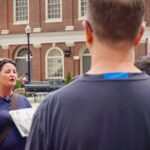




More Revolution in Boston

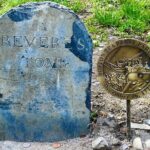




The Red Line, Three More Ways
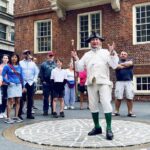


More around Boston, freshly written up
- The Boston Bash Scavenger Hunt★ 4.5 · 3 reviews
- Self-Guided Audio Tour of Boston North End★ 4.5 · 3 reviews
- Self-Guided Boston Christmas Tour★ 5.0 · 3 reviews
- Self Guided “The North End Pizza, Cannoli and Picnic” Solo Walking Tour★ 5.0 · 3 reviews
- Cambridge: Haunted Charles River Cruise★ 4.3 · 3 reviews
- Boston: Official Freedom Trail® Lantern Tour★ 4.7 · 3 reviews
Freedom Trail Walking Tours, compared.
 ★ 5.0Freedom Trail History Small Group Walking TourFrom $356,450 reviews
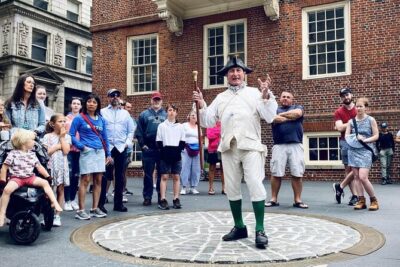 ★ 4.5Boston Freedom Trail Walking Tour with Costumed GuideFrom $262,531 reviews
 ★ 5.0Boston Food & History: Pizza, North End & Freedom TrailFrom $901,772 reviews
 ★ 4.9Boston’s Freedom Trail: A Revolutionary Walking TourFrom $311,748 reviews
★ 4.9Freedom Trail History Small Group Walking TourFrom $351,590 reviews
★ 4.9Boston’s Freedom Trail: A Revolutionary Walking TourFrom $311,748 reviews
★ 4.9Freedom Trail History Small Group Walking TourFrom $351,590 reviews
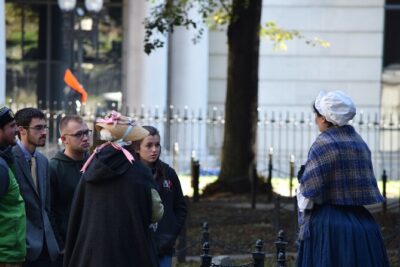 ★ 4.5Freedom Trail Walking Tour 250From $261,118 reviews
 ★ 5.0Boston Freedom Trail History Pub Crawl Small-Group TourFrom $60996 reviews
 ★ 4.6Official Freedom Trail® Walking TourFrom $18982 reviews