

REVIEW · BEACON HILL AND BACK BAY WALKING TOURS
Self-Guided Boston’s Beacon Hill Underground Railroad Audio Tour Walking Tour
Underground stories run under Beacon Hill.
This self-guided mobile audio tour uses narration to guide you through Beacon Hill landmarks tied to the Underground Railroad, from key homes and schools to churches tied to Boston’s fight for freedom. You can keep your own pace and start when you want, then finish at the African American Meeting House.
I especially love the independence. The route is built for self pacing, with clear on-screen directions, pictures, and tools to pause or go back when you want to hear a section again. I also like how the narration uses multiple voices, which keeps the stories from feeling flat or one-note.
One possible drawback: the directions and audio transitions can feel slightly jumbled at times, and if your phone app does not activate right away you will waste time on the sidewalk. Have your phone charged and be ready to troubleshoot if needed.
Key highlights before you go

- Mobile GPS narration with an on-screen arrow helps you stay on the next stop
- Named Beacon Hill figures like Lewis Hayden and Leonard Grime turn the story into real people
- Go deeper moments add extra context without forcing you to stay glued to the main line
- Pause and rewind options make it easy to control the pace
- A route that includes narrow alleys and passageways you might not see on the most common walking routes
- Low cost for a focused 45 to 55 minute walk at $9.75 per person
Still on the hill? More Beacon Hill and Back Bay walks
Price and time, and what that means for your schedule

At $9.75 per person for about 45 to 55 minutes, this is priced like an easy add-on, not a half-day commitment. For me, the value is that you get a structured route plus guided narration for the whole walk, which is what tends to cost more when you hire a person to lead you.
It also has enough time-breathing room to fit into a busy Boston day. If you are doing the usual sights nearby, this tour becomes a sharp contrast and gives you something more personal than a general overview.
Starting points in Beacon Hill: Charles Street Meeting House to Joy Street
The tour starts at Charles Street Meeting House, 70 Charles St, Boston, MA 02114. You end at 46 Joy St, at the African American Meeting House, one of the oldest extant black church buildings in America.
The big practical win is that you do not have to lock into a specific group meeting moment once you have your phone ready. You can begin and end whenever you want, so you can time it around weather, crowds, or your energy level. The endpoint shows hours of 12:00 AM to 11:30 PM, which makes it easier to plan an evening finish if you prefer quieter streets.
Using the WalknTours app: GPS arrows, pause, and the go deeper tool

This is a self-guided walking tour. Your phone becomes the guide, with narration in English, and you move from stop to stop as the app prompts you.
What makes it user-friendly is control. You can pause, go back, and replay sections, and there is a go deeper option when you want extra detail about a person or a concept. In plain terms, it is designed for people who learn by repetition, not just people who want to march through once and move on.
Here is how to avoid the most common frustration. When you feel unsure, check the on-screen route and follow the arrow that points to the next stop. If you get off track, the arrow is your fastest way back to the correct sequence.
If your code does not activate, do not panic. There is a button on your ticket page labeled View Ticket that provides the instructions to access the WalknTours app and use your code. If you still get stuck, you can contact support by email at [email protected] or text 617-991-3269.
Beacon Hill Underground Railroad stops, from John J. Smith House to the African American Meeting House

This route focuses on how Underground Railroad operations worked in Boston, using specific places tied to specific people. Expect the narration to connect what you see on the street with what was happening behind it, including the tension and secrecy that made escape attempts both dangerous and courageous.
A quick reality check before you walk: some stops are sites you view from the public sidewalk. You will not always see dramatic ruins or a big visitor center. The payoff is that the narration gives you a clear mental map, so you can stand in an ordinary street scene and understand why it mattered.
More routes you can walk at your own pace
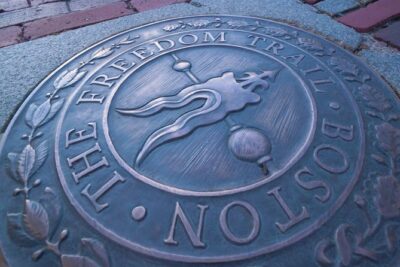


John J Smith House, and the operation behind the help
The first major stop is the John J Smith House. You learn how the Underground Railroad operated, then zoom in on his station and the people he helped.
What to watch for here is the narration’s focus on systems. It is not just hero storytelling. You get a sense of how a network could function day to day, using trust, timing, and quiet coordination.
83 Phillips Street: John Sweat Rock and his historical firsts
Next you head to 83 Phillips Street, the former home of John Sweat Rock. The narration ties in Harriet Tubman’s life, then connects it to John Sweat Rock and his many firsts in history.
This stop works well if you like when the tour connects famous names to local people. Instead of treating the story as distant or legend-like, it anchors it in Beacon Hill streets.
Practical note: Phillips Street is part of a neighborhood built for walking, not stopping for long photo breaks. Keep moving, and let the audio lead you.
Lewis Hayden’s home: saving runaways in Beacon Hill
Then you stop by the station master Lewis Hayden’s home. You hear stories about how he bravely saved countless runaways right here in Beacon Hill.
This segment tends to land emotionally because it puts agency back onto real people living real lives. It also helps explain why secrecy was not abstract. This was risk carried in someone’s everyday routine.
Leonard Grime: a conductor at the center of movement
You also pass the place once home to Leonard Grime, described as a conductor on the Underground Railroad. The narration frames his role as part of the practical work of moving people toward safety.
If you want to understand how the system functioned beyond the slogans, this is the kind of stop that does it. You are not just hearing what happened, you are hearing what a role looked like on the ground.
Old Temperance Boarding House: a stop you might not expect
The tour includes a stop at the Old Temperance Boarding House. You hear how it served as a stop on the Underground Railroad.
The boarding-house angle is a helpful reminder that hiding and housing were often tied together. The story reframes the ordinary idea of lodging into something that could be lifesaving.
Old Phillips School: first integrated school and first African American teacher
You stop by where the Old Phillips School once stood. It was the first integrated school in Boston, and it had the first African American teacher to teach at an integrated school.
This is a powerful pivot from Underground Railroad escape routes to education and civil rights. Even if you are only walking for an hour, this stop expands the scope beyond flight, toward long-term change.
Passing Vilna Shul: how the Jewish community helped
The route takes you past Vilna Shul, described as the oldest immigrant synagogue in Boston. The narration explains the Jewish community’s story and how that community helped on the Underground Railroad.
For me, this is one of the most interesting parts because it shows collaboration across communities. The Underground Railroad was not one single group operating in isolation.
John Coburn’s place and the gaming house station master
The next stop involves the house of John Coburn and his gaming house, with the note that John was a station master.
This is exactly the kind of detail that makes the story feel grounded in actual city life. The narration helps you see how everyday activity could hide the serious work of aiding escapes.
Charles Sumner’s Birthplace: abolitionism in the neighborhood
You also stop by Charles Sumner’s Birthplace, tied to the abolitionist movement. The narration connects him to the broader struggle against slavery and injustice.
This segment can be a nice breather, because it broadens from local helpers to national political energy.
Ending at the African American Meeting House on Joy Street
You end at the African American Meeting House, the oldest extant black church building in America. This is a fitting finish because it shifts the story from clandestine movement to community institutions that helped carry the aftermath.
If you have time and the streets feel calmer, this ending is a good place to pause. Let the narration fade out, then spend a minute just taking in what it means to reach an enduring place after a dangerous journey.
Nailing the route, avoiding phone trouble, and walking smart

This tour is short, but it is still walking. Beacon Hill has hills and uneven sidewalks, so wear comfortable shoes and bring water if it is warm.
Direction clarity is usually a strong point here, but you should still use the app as intended. Follow the arrow for the next stop. If you ever feel that you are wandering, stop walking for 10 seconds and re-check the route on your screen.
Also, plan for basic phone reality. You will be outside, moving between spots, and listening. A dead battery can ruin any audio tour, even a good one.
If you run into tech trouble, you have options based on real support behavior. Use View Ticket to find the WalknTours app instructions and your code, then reach out at [email protected] or text 617-991-3269 if it still will not activate.
Who should do this self-guided audio walk

This tour is a great match if you want history with built-in structure. I think it works especially well for people who like learning through place-based storytelling, and who appreciate being able to pause and replay.
It is also good for groups since it is private, so only your group participates. You can naturally spread out a bit or walk close together without feeling like you are tied to a strict group pace.
If you prefer someone to talk at you the whole time, you might miss a live guide. And if you hate phone-based navigation, be aware that this experience is dependent on your ability to follow on-screen prompts.
Should you book this Beacon Hill Underground Railroad audio tour?

With an average rating of 4.6 from 29 ratings and about 90% recommending it, the odds are good that you will find it worth your time and $9.75. The strongest reasons to book are the excellent information, the narration from multiple voices, the clear self-guided layout with directions and pictures, and the control features like pause, go back, and go deeper.
I would book it if you want a focused hour in Beacon Hill that connects named people and real locations, without waiting around for a meeting time.
I would hesitate only if you know your phone is unreliable, or if you are the type who gets stressed when a route does not feel immediately obvious. In that case, charge up, test your app before you leave, and treat the arrow on your screen as your best friend.
FAQ

How long is the Boston Beacon Hill Underground Railroad audio walking tour?
Plan for about 45 to 55 minutes.
How much does the tour cost?
It costs $9.75 per person.
Where does the tour start and where does it end?
It starts at Charles Street Meeting House, 70 Charles St, Boston, MA 02114, and ends at 46 Joy St, Boston, MA 02114 at the African American Meeting House.
What language is the narration available in?
The tour narration is offered in English.
Is this tour fully self-guided, or is there a live guide with you?
It is a self-guided walking tour, with narration delivered through your phone.
Can you pause, go back, or control the pace during the tour?
Yes. The tour includes options to pause and go back, and it also has a go deeper feature.
Is the experience private, and are service animals allowed?
It is private, so only your group participates. Service animals are allowed.
What if my tour code or app access does not work?
There is a View Ticket button that provides instructions to use the WalknTours app and your code. If you still cannot activate the tour, you can contact [email protected] or text 617-991-3269 for help.
What is the refund policy?
Free cancellation is available up to 24 hours in advance for a full refund. If you cancel less than 24 hours before the start time, the amount you paid will not be refunded.
Keep Going in Boston





More Routes at Your Own Pace




More of Beacon Hill






More around Boston, freshly written up
- The Boston Bash Scavenger Hunt★ 4.5 · 3 reviews
- Self-Guided Audio Tour of Boston North End★ 4.5 · 3 reviews
- Self-Guided Boston Christmas Tour★ 5.0 · 3 reviews
- Self Guided “The North End Pizza, Cannoli and Picnic” Solo Walking Tour★ 5.0 · 3 reviews
- Cambridge: Haunted Charles River Cruise★ 4.3 · 3 reviews
- Boston: Official Freedom Trail® Lantern Tour★ 4.7 · 3 reviews
Beacon Hill and Back Bay Walking Tours, compared.
 ★ 4.5Downtown Freedom Trail, Beacon Hill & Back Bay Walking TourFrom $65473 reviews
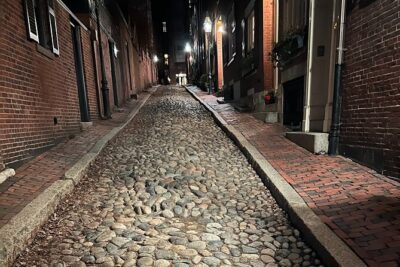 ★ 5.02-Hour Beacon Hill True Crime Expert Guided TourFrom $35182 reviews
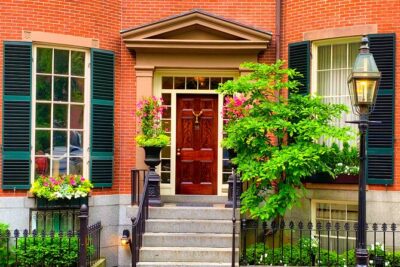 ★ 5.0Beacon Hill Boston History + Photo Walking Tour (SMALL Group)From $45163 reviews
 ★ 5.0Underground Railroad History Tour of Beacon HillFrom $35141 reviews
 ★ 4.3Downtown Boston Harbor Weekend Cruise with BrunchFrom $10669 reviews
 ★ 5.0Beacon Hill + Back Bay History + Photo Walking Tour(SMALL Group)From $5560 reviews
 ★ 5.0Votes for Women History Tour of Back BayFrom $3549 reviews
 ★ 4.5Guided Walking Tour of Copley Square to Downtown Boston Freedom TrailFrom $6546 reviews