
REVIEW · FREEDOM TRAIL WALKING TOURS
Freedom Trail Walking Tour 250
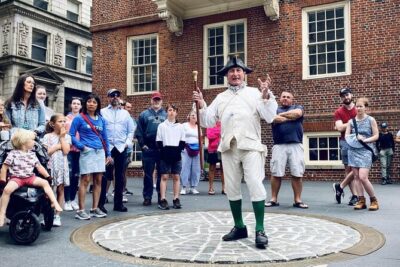
Boston history walks with you. This Freedom Trail tour stitches together colonial Boston landmarks with an in-character guide, so the streets feel like they still remember the Revolution, and the Founding Fathers get personal.
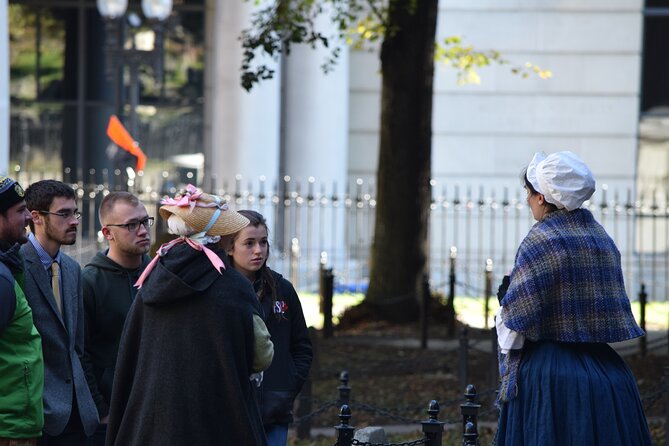
I particularly like two things. First, I love the costumed storytelling that keeps momentum between stops, with guides who can switch tone for kids and adults. Second, I love that most major sites on the route are free to enter once you arrive, so your $26 is mostly paying for the guide and context instead of gate fees.
One heads-up: the trail can feel crowded, and a few stops are in quiet, echo-y spots like burial grounds where it can get harder to hear if your group position is awkward. If you are sensitive to loud crowds or prefer a strict lecture, plan to manage expectations.
Key highlights worth knowing before you go
- Costumed, in-character guidance that turns famous names into people with motives and fears
- A tight route of about 1.2 miles (2 km) in roughly 1 hour 45 minutes, good for most legs
- Mostly free admissions at the stops, with only specific exceptions (like Old South Meeting House)
- Big-name Boston sites packed into one walk, from Granary Burying Ground to Faneuil Hall Marketplace
- Storytelling choices vary by guide, and the best experiences often come from guides who balance history and humor well
- Group size capped at 50, but you still share sidewalks with other tour groups
Other ways to walk the red brick, compared
Why this tour works: a “story walk” through colonial Boston
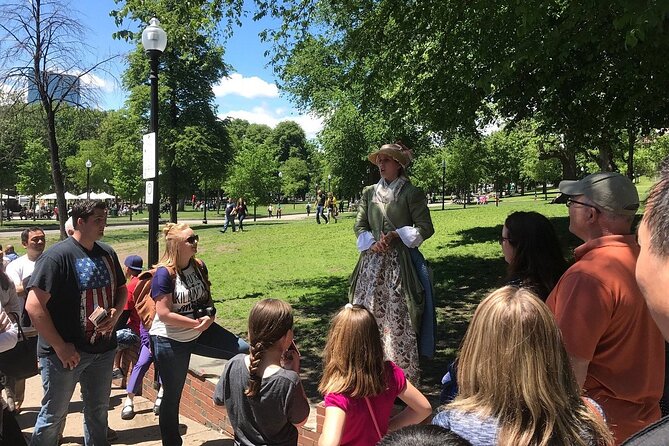
This tour is built around one simple idea: you see the Freedom Trail better when somebody narrates it like it’s happening in real time. That is what you’re paying for. The guide shows up costumed and talks from the perspective of the era, then links each stop to the next so you’re not left with a string of disconnected plaques.
I also like that the sites are the real anchors. You start at the Massachusetts State House area and work your way through churches, schools, meeting houses, and the market district, so the walk feels like a guided tour of the places that shaped early American politics. And since most stops have free entry, the experience stays focused on interpretation, not paperwork.
The best part is how the guide handles the Founding Fathers theme. You do not just get names and dates. You get why they mattered and what role ideas, religion, print, and public protest played in turning Boston into the match that lit the Revolution.
Price and value: $26 for 1 hour 45 minutes of guided context
At $26 per person for about 1 hour 45 minutes, this is one of those Boston deals that works especially well if you want a fast “what is what” introduction. You’re getting a professional guide, a structured route over roughly two kilometers, and stories centered on the Revolution and colonial life.
Where the value gets real is the mix of free stops and a guided flow. Many stops on the route are listed as free admission. That means you’re not double-paying for every location. The one notable exception is Old South Meeting House, where admission is not included. So if you want maximum value from the tour, be ready to decide on the spot whether you’ll add that ticket.
Also, the walk length is manageable. Reviews commonly describe it as an easy-to-moderate walking pace with decent time at each stop. If you’re visiting in a short window, or you’re trying to avoid “museum only” tourism, this is a smart way to cover a lot of iconic Boston without burning the day.
How long you walk and what the route feels like
The tour runs about 1 hour 45 minutes and covers around 1.2 miles (2 km). In practice, the pace should feel comfortable for most people, and the route is laid out in a way that doesn’t require major climbs or tricky navigation.
Still, plan for the real-world side of Boston walking. Sidewalks around the Freedom Trail are often shared with other groups, and some locations involve standing in lines or bunching together while you listen. If you end up farther from the guide at a busy stop, hearing can get harder, especially in burial-ground spaces where voices carry weirdly.
If you’re bringing kids, it helps that the tour is paced for attention, and several guides have a reputation for storytelling energy that holds younger ears. If you’re bringing grandparents, it helps that the walk is not long in distance terms. The biggest factor is not stamina, it’s positioning. Aim for a spot where you can see and hear without twisting.
Getting started at the Massachusetts State House area
You begin near the current Massachusetts State House. This is a strong opening because it sets the tone: Boston’s political story did not start in a vacuum. Even before you get to the churches and cemeteries, you’re oriented to the idea that government, public space, and civic identity were tightly linked.
This start also helps you understand what the tour will do next. You will move into religious institutions, then schools, then publishing and meeting houses, then back into protest and civic gathering. Starting at a government anchor makes the later stops feel more connected, instead of like random sightseeing.
More of Boston on foot
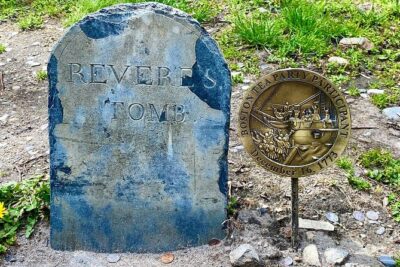
Park Street Church and the first performance of My Country, ‘Tis of Thee
Next up is Park Street Church. This stop is short, about five minutes, but it has a specific cultural hook: it’s where My Country, ‘Tis of Thee was first performed. It’s a reminder that Revolution-era change was not only about battles and meetings. It was also about songs, shared language, and the creation of common identity.
This is the kind of stop I enjoy because it adds texture. You’re not only hearing about political action; you’re also hearing about how Americans expressed themselves. Even in a brief visit, it can give you a lens for understanding why certain speeches and events landed as they did.
Granary Burying Ground: Founders up close, with real emotion
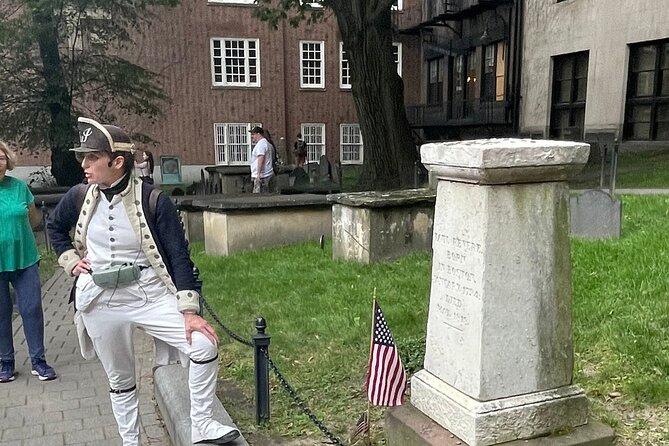
Granary Burying Ground is a centerpiece stop, about 20 minutes. It’s where you hear stories connected to the Founding Fathers at their final resting place. This is the emotional heart of the tour for many people because the setting forces you to slow down and think about what these figures left behind.
I love how this stop turns history into something physical. You’re not just imagining the past. You’re standing in a place that has kept memory in stone.
The tradeoff is time and sound. Some tour experiences spend more time here than you might expect, and because it’s a cemetery, it can feel like you’re listening in a more enclosed, echo-prone environment. If you’re the type who wants more action and less quiet, consider arriving with a good pair of hearing ears, and try to stand close enough to catch every sentence.
King’s Chapel and the early church story
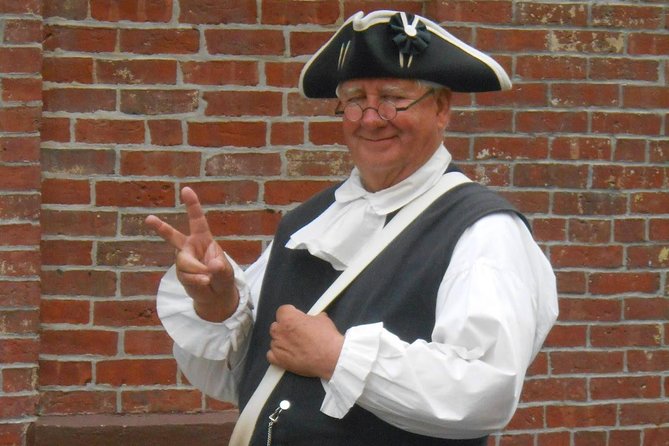
King’s Chapel is next, with a short stop around five minutes. This is described as America’s first Anglican Church, which makes it more than a pretty building. It’s a clue to how colonial Boston’s religious life was layered, and how that layering influenced politics and community.
What you’ll get here is contrast. The Freedom Trail is often told through protest and revolutionary politics, but religion and local power also shaped daily life. A brief church stop helps round out the picture so the tour doesn’t become only about one kind of story.
Boston Latin School, Franklin, and the power of education

Boston Latin School comes next, about five minutes, and it’s framed as America’s first public school. That is a big claim, and the tour uses it well. It gives you a sense that ideas were not only spread in taverns and print shops. They were also shaped through schooling and civic preparation.
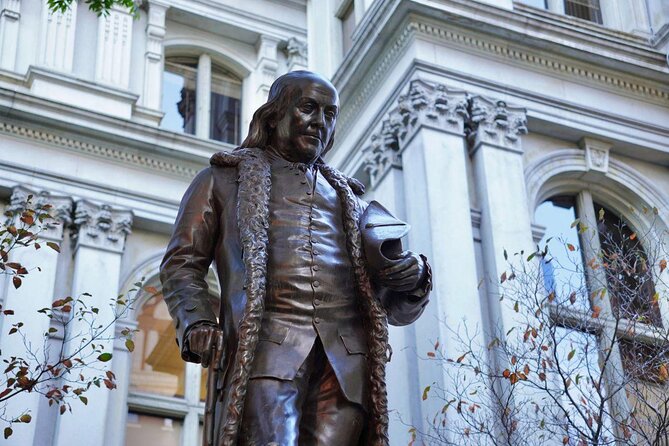
Then you add the Statue of Benjamin Franklin, about five minutes. This stop connects Franklin to Boston Latin School, which makes the education theme feel real. Franklin was not just a famous name. He represents a kind of practical thinking that influenced how people communicated, organized, and argued.
If you like when a tour makes connections across multiple stops, this is one of the strongest sequences. Education leads to notable alumni, notable alumni leads to civic influence, and the next stops bring you back to how information moved through Boston.
Old Corner Bookstore and the print-and-politics angle
Old Corner Bookstore is another short stop, roughly five minutes, and it’s described as America’s oldest commercial building. The key detail here is publishing: the Midnight Ride of Paul Revere was published there.
This is a smart inclusion because it shows how news and stories traveled. Revolutionary action did not survive on word of mouth alone. Print mattered. And once you see a physical place linked to publishing, it becomes easier to understand why pamphlets, newspapers, and broadsides could turn local events into national causes.
A small bonus: this stop often feels less solemn than the cemetery moments. It’s a change in mood that keeps the tour from becoming one long “listening marathon.”
Old South Meeting House and the Boston Tea Party moment
Old South Meeting House is about ten minutes. The big claim is that this is where the Boston Tea Party happened. Admission here is listed as not included, so if you want to go inside, budget time and be ready to pay separately.
Even if you just view the exterior, this stop carries weight. It’s where the Freedom Trail becomes less about biographies and more about public action. You’re looking at a location where community anger, political strategy, and bold theater came together.
Tip from experience with Boston crowds: at meeting-house style locations, people tend to cluster and ask questions. Stand where you can still move once the group needs to relocate.
The oldest standing government building and the pivot to protest
The route includes a stop described as the oldest standing government building in Boston. That matters because the Freedom Trail story is not only about rebellion. It’s about how government itself was contested, redefined, and reshaped.
This is also a bridge stop. You go from protest in the meeting-house story into the next sequence focused on colonial conflict, and you start feeling how the tour wants you to connect everything into one chain.
If your guide leans heavy on humor, you might want to tune your attention in this section so you don’t miss the political framing. This is where that framing can set up the next stop, which is all about the Boston Massacre and its aftermath.
Boston Massacre Site and the Sam Adams tale
The Boston Massacre Site stop is around ten minutes and is described as where a massacre and protest became a battle cry for the Revolutionary War. This is a powerful moment because the tour’s story shifts from isolated events into a pattern: protest escalates, symbols spread, and public outrage becomes fuel.
Right after, there’s also a stop where you hear the tale of Sam Adams. That pairing works well. The massacre provides the shock, and the story of Sam Adams shows the organizing side of how outrage got turned into strategy.
One balancing note: multiple guides in the mix are praised for storytelling, but a few experiences have complained about jokes that got too disrespectful or too light on history. If you are sensitive to comedic tone, look for a guide who consistently stays grounded in historical framing. If you can choose or request, some guests specifically recommended guides such as Elaina (noted as a standout), and others highlighted Elizabeth, Ben, Catherine, Mark, Jeremiah, and Mrs. Palmer as memorable performers. The lesson: the guide matters.
Faneuil Hall Marketplace and the big civic gathering energy
Faneuil Hall Marketplace is about five minutes and is described as the most iconic historical attraction in Boston. This is where the tour shifts toward public gathering and debate.
Even with a short stop, Faneuil Hall often feels energizing because it’s tied to the idea of the marketplace as a place to talk, organize, and share news. It also helps you wrap your mind around the Freedom Trail as a web of locations, not a straight museum line.
If you want a quick way to ground the tour in atmosphere, this is the place to do it. Look around, then listen to the guide’s framing, and you’ll get why public space mattered so much.
Finishing up with the Paul Revere House built in 1680
The tour also includes a stop featuring the Paul Revere House, described as built in 1680 and the oldest residential building in Boston. This is a great ending because it brings the story back to everyday life.
Revolutionary history can feel like only speeches and battles. A residential stop reminds you that these events grew out of neighborhoods, homes, and ordinary routines. It’s also a satisfying wrap because it gives you a final “physical takeaway” you can point to later when you tell friends what you saw.
What makes a great guide on this tour (and what to watch for)
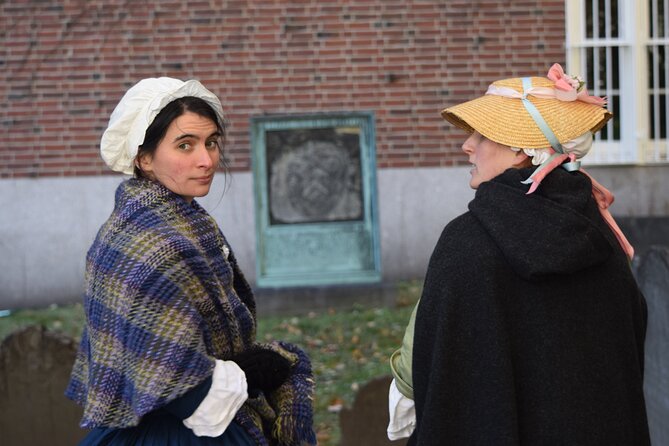
Most of the strong experiences revolve around one thing: the guide’s ability to connect the dots while keeping the group engaged. Names like Ben and Elizabeth show up repeatedly in positive notes for entertaining, informative narration and strong in-character presentation. Other standout mentions include Elaina (noted for fun and smart storytelling, especially with kids), Catherine (with humor and personalization), Mark and Jeremiah (with friendliness and pacing), and Mrs. Palmer (delightful and super knowledgeable in costume).
A downside theme also shows up in a few places: if the humor feels forced, or if the guide strays too far into jokes instead of history, the experience can feel shallow. One complaint even noted the guide did not mention the Freedom Trail by name during the walk, which is a red flag for anyone who wants a strict Freedom Trail focus.
Here’s the practical way to handle this before you spend the money. Go in expecting a story-led walk with humor, not a formal lecture. If you want serious, tightly factual commentary, you should still enjoy the guide, but be ready to ask questions at stops, and pay attention to whether the guide is consistently linking each location back to the broader Freedom Trail narrative.
Weather, comfort, and what to wear
The tour operates in all weather conditions, so you should dress for real Boston conditions, not perfect postcards. The route is outdoor, and you’ll spend time standing at multiple stops.
Bring comfortable walking shoes. If you get chilly easily, layer up. If it’s raining, have a rain shell or compact umbrella. A long walk on slick sidewalks can turn any sightseeing plan into stress fast.
Also, because the tour is roughly 1.2 miles but involves stopping and standing, plan for a stop-and-go rhythm. Even if you could walk the distance in 30 minutes on your own, you’ll feel it more here because it’s tied to listening and relocating.
Should you book Freedom Trail Walking Tour 250?
I’d book this if you want a guided, story-driven introduction to Boston’s colonial roots in under two hours. For $26, you get a costumed guide, a route packed with major stops, and plenty of free-entry locations that keep costs down. It’s especially good if you’re traveling with teens, grandparents, or mixed ages and you want a pace that works for different energy levels.
Skip it or choose carefully if you expect a straightforward academic lecture. Some guides lean more comedic than others, and a few experiences complain about jokes that crowded out history or about uneven pacing. If you can, aim for guides who consistently deliver both humor and substance, and don’t hesitate to stand closer at quieter stops like Granary Burying Ground so you can actually hear the key details.
If you want, tell me your travel dates and who’s coming with you (kids, seniors, history nerds, first-time Boston visitors), and I can help you decide what start time and day will fit best with the kind of pace you want.
FAQ
How long is the Freedom Trail Walking Tour 250?
It runs about 1 hour 45 minutes.
What does the tour cost?
The price is $26.00 per person.
Is the tour offered in English?
Yes, it is offered in English.
How far do you walk?
The tour covers about 1.2 miles (2 kilometers).
Are admissions included at all stops?
Many stops are free to enter, but Old South Meeting House is listed as ticket not included.
What happens if it rains or the weather is poor?
The tour operates in all weather conditions, so dress appropriately. If it is canceled due to poor weather, you will be offered a different date or a full refund.
Is the tour near public transportation, and are service animals allowed?
Yes, it is near public transportation, and service animals are allowed.
More Tours in Boston



More Tour Reviews in Boston
The Red Line, Three More Ways


More around Boston, freshly written up
- The Boston Bash Scavenger Hunt★ 4.5 · 3 reviews
- Self-Guided Audio Tour of Boston North End★ 4.5 · 3 reviews
- Self-Guided Boston Christmas Tour★ 5.0 · 3 reviews
- Self Guided “The North End Pizza, Cannoli and Picnic” Solo Walking Tour★ 5.0 · 3 reviews
- Cambridge: Haunted Charles River Cruise★ 4.3 · 3 reviews
- Boston: Official Freedom Trail® Lantern Tour★ 4.7 · 3 reviews
Freedom Trail Walking Tours, compared.
 ★ 5.0Freedom Trail History Small Group Walking TourFrom $356,450 reviews
 ★ 4.5Boston Freedom Trail Walking Tour with Costumed GuideFrom $262,531 reviews
 ★ 5.0Boston Food & History: Pizza, North End & Freedom TrailFrom $901,772 reviews
 ★ 4.9Boston’s Freedom Trail: A Revolutionary Walking TourFrom $311,748 reviews
★ 4.9Freedom Trail History Small Group Walking TourFrom $351,590 reviews
★ 5.0Boston’s Freedom Trail: A Revolutionary Walking TourFrom $311,343 reviews
★ 4.9Boston’s Freedom Trail: A Revolutionary Walking TourFrom $311,748 reviews
★ 4.9Freedom Trail History Small Group Walking TourFrom $351,590 reviews
★ 5.0Boston’s Freedom Trail: A Revolutionary Walking TourFrom $311,343 reviews
 ★ 5.0Boston Freedom Trail History Pub Crawl Small-Group TourFrom $60996 reviews
 ★ 4.6Official Freedom Trail® Walking TourFrom $18982 reviews
Also filed under