

REVIEW · FREEDOM TRAIL WALKING TOURS
Boston: Official Freedom Trail® Walking Tour
A red line through downtown Boston is an instant time machine. This tour strings together big moments of the American Revolution, using 18th-century costumed guides and real landmark stops.
What I love is the way it gives you an easy overview you can actually use on your next walk, plus the memorable set pieces like the Boston Massacre site and the Granary Burying Ground where Paul Revere rests. One heads-up: it covers 11 of the 16 official sites in about a mile, so you will not get the full Freedom Trail on this one outing.
Most guides seem to lean into storytelling with humor and character work. I especially noticed names like Jeremiah Poope, Danielle, and even Dr. Byles in the guide line-up, and that kind of energy helps you keep going when you are stopping often to listen and take photos.
Key takeaways before you step onto the red line
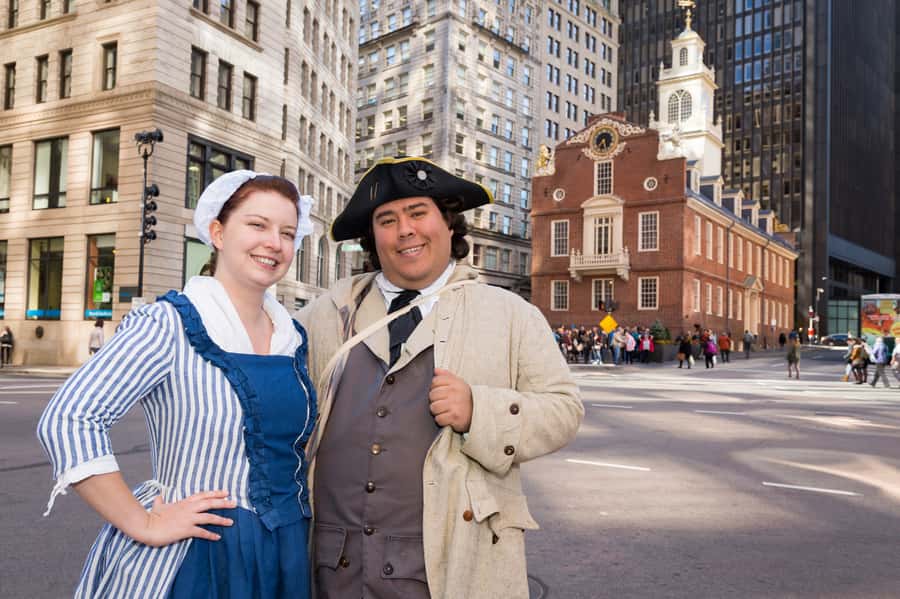
- Costumed guides and period-style storytelling turn street corners into scenes you can picture
- 11 official Freedom Trail stops in about 90 minutes gives a great “first taste” of the trail
- Boston Common at the start gives you a calm, historical anchor before the intensity ramps up
- Old State House area and the Boston Massacre help you understand why these moments still matter
- Granary Burying Ground and Paul Revere’s grave adds a human, grounded finish to the Revolution story
- Boston Latin School site surprises people who expect only forts and famous faces
The Freedom Trail red line: why it still beats guessing
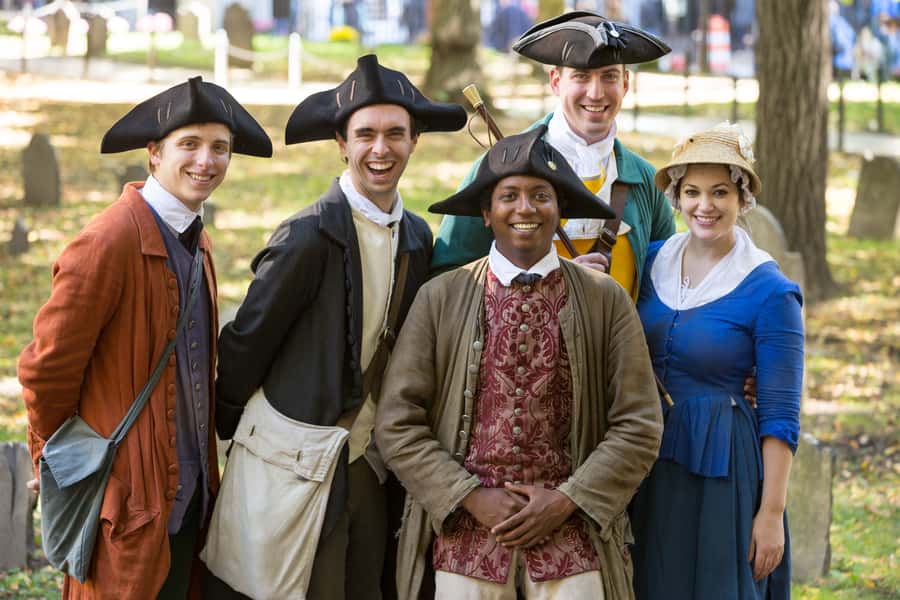
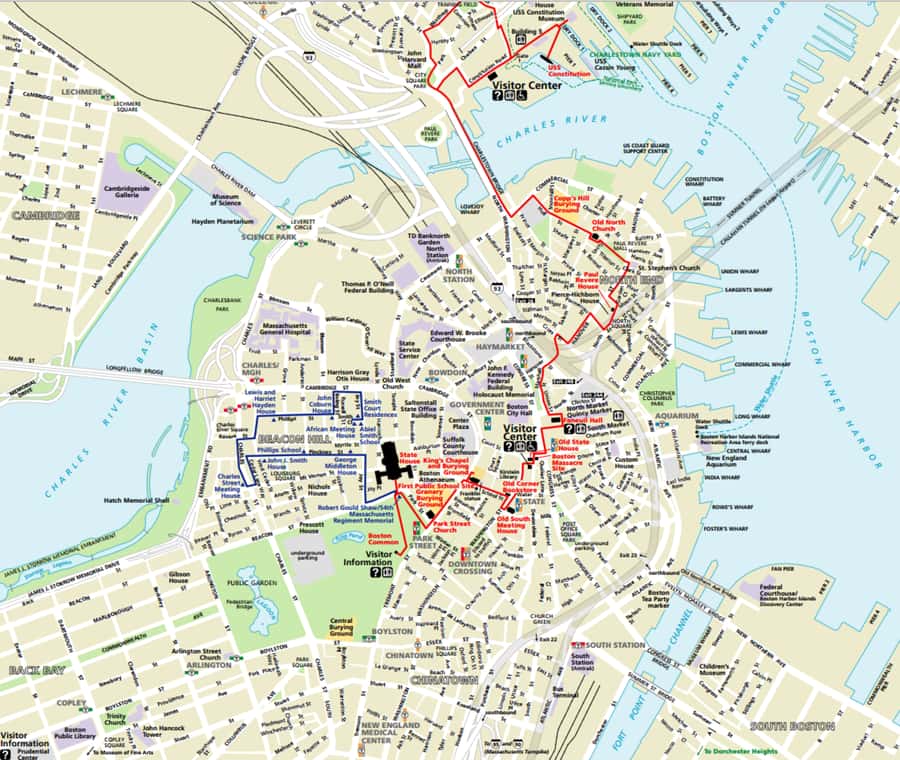
The Freedom Trail is one of the rare historic walks that is built for first-time visitors. The red markers do the heavy lifting. You do not have to “map” your way through downtown streets while you are trying to hear a lecture at the same time.
On this tour, you follow that red line through some of the best known Revolution landmarks. The value is not that you simply see plaques. It is that you get the chain of cause and effect. You go from everyday civic life to tense public events, and then to the personal stakes shown in places like graveyards.
And because the tour is only about 1.5 hours (roughly a mile), it works even if you are fitting Boston into a busy schedule. It is an efficient way to build context, so the rest of the Freedom Trail makes more sense later.
90 minutes and 11 sites: what you’ll actually cover
The tour runs about 1.5 hours and includes 11 of the 16 official Freedom Trail historic sites. That is a smart route for most people. You get a broad sweep without ending the day with sore feet and a history hangover.
You will also see the sites in the “real city” way. This is not a museum floor where everything is isolated. You are walking between streets, stepping into small precincts, and stopping where events unfolded. That matters because Boston in the Revolution era was a living city, not a model.
Here is the tradeoff: because you are only hitting 11 stops, some of the most famous places on the full trail are not part of this particular walk, or you may be outside-viewing areas instead of entering. The tour even flags that certain places on the Freedom Trail charge admission, and those entrances are not included.
So think of this as your guided “best-of” launchpad.
Boston Common to Faneuil Hall: where independence starts sounding real
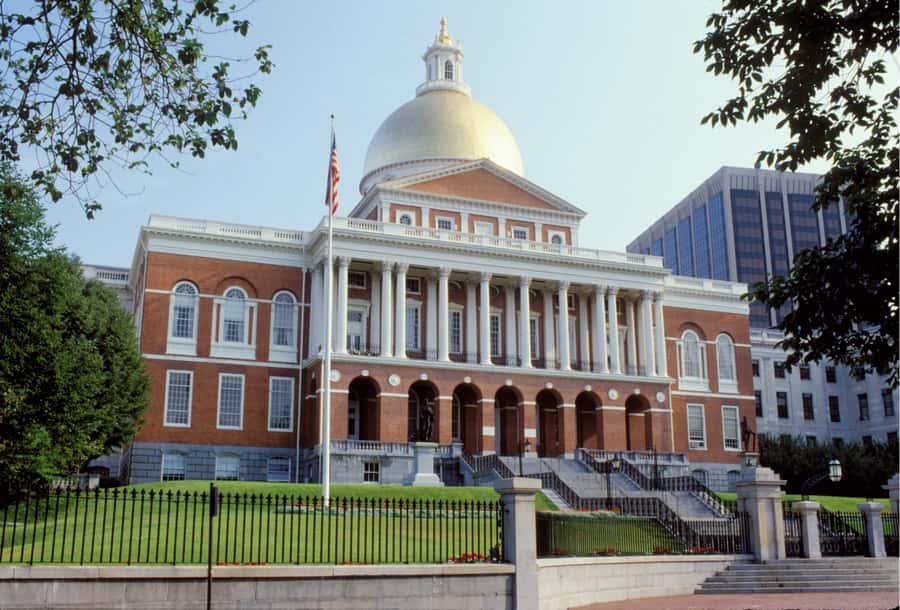
Boston Common is an excellent beginning. It is not just pretty. It gives you a sense of public space and civic life, which is exactly where Revolutionary ideas gained traction. From there, you shift toward the area around Faneuil Hall, where public speaking mattered.
In the Faneuil Hall precincts, you get the kind of context that makes the names on the walklist feel less like random trivia. Expect stories tied to the orators who argued for independence and liberty in the public square. The tour format is built for hearing these tales while you stand in the same general area they were delivered.
You will also hear the human side of the Revolution. The tour is framed around a small group of patriots challenging the strongest power of the 18th century. That is a powerful theme for visitors because it keeps the story anchored. You are not just hearing dates. You are hearing why ordinary people decided they could not accept the status quo.
A practical note: this section can be a lot of listening up close. If you are in a larger group, you may find it harder to see the guide without stepping forward. I suggest choosing a spot where you are not boxed in and you can easily turn your head toward the guide.
Old State House and the Boston Massacre: a moment that lands harder in person
The Boston Massacre site is one of the emotional stops on this walking tour. You will remember the tour’s dramatic framing: the idea of blood in the snow outside the Old State House on that night. It is not the kind of detail you forget, because it forces you to picture the chaos and fear, not just the outcome.
This is also where the costumed guide style can really work. When a guide is in character and describing what people believed and feared, the moment stops being a textbook paragraph. It becomes something like a street-level event.
What I like here is the balance between drama and clarity. The tour focuses on why that confrontation mattered. You do not just get the incident. You get the bigger point, why outrage helped push the political needle toward representative government.
Just be ready: this stop is heavier than, say, the “touristy” landmarks. If you are traveling with kids, you might want to keep expectations flexible and treat this as a serious history moment.
Granary Burying Ground and Paul Revere’s grave: the Revolution with a face
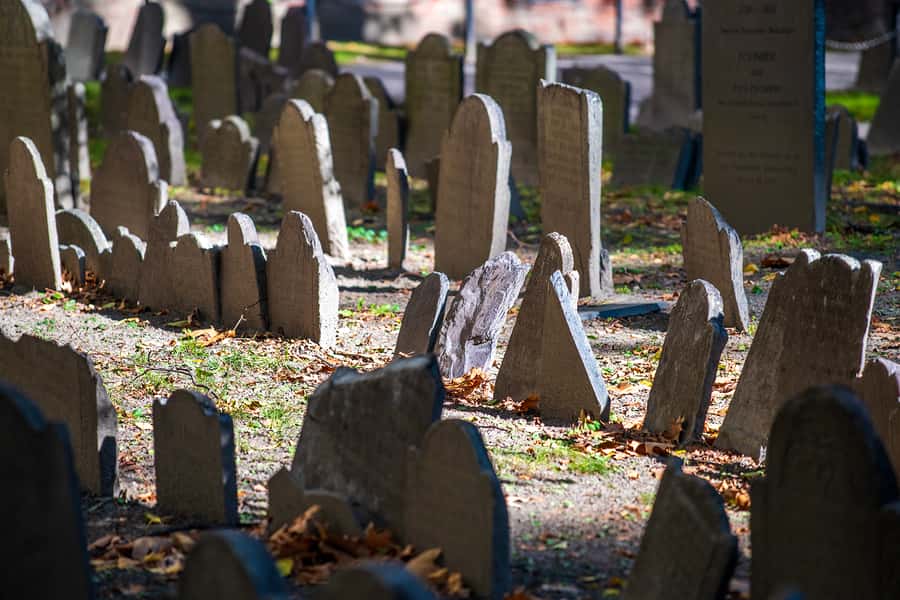
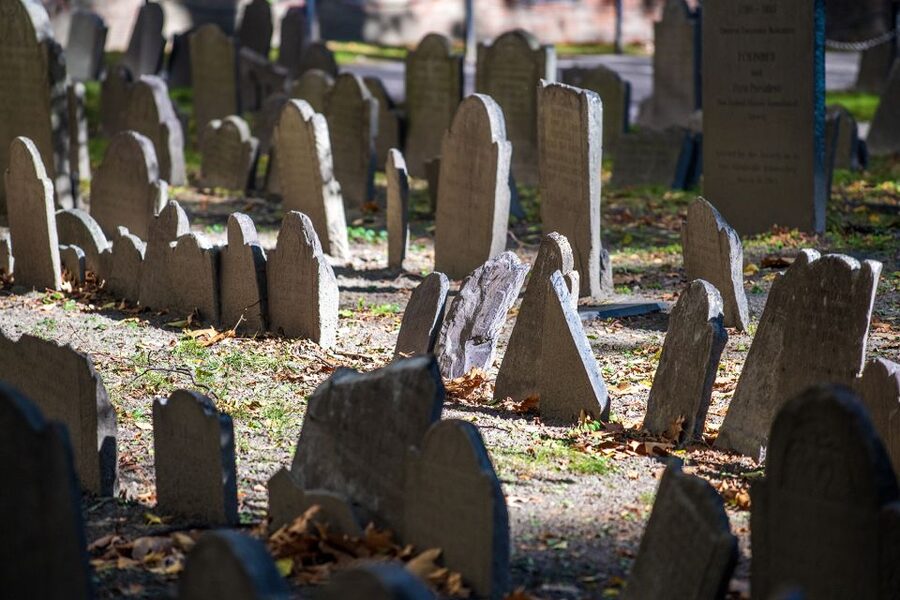
Granary Burying Ground is where the Freedom Trail story turns personal. Instead of focusing only on speeches and street events, you move into a place where the cost of history is visible in names on stone.
You will visit Granary Burying Ground and the final resting place of Paul Revere. For many people, that is the highlight because it is the moment when the Revolution feels less like a distant national founding and more like real people whose lives ran out.
One of the reasons this part works so well is how it reshapes what you heard earlier. The “why” behind revolutionary anger becomes “who” you are actually talking about. Paul Revere is a familiar name for lots of visitors. Standing at his final resting place makes the name more specific and more human.
Also, this stop is a good place to slow down. If you take photos, do it here. You are likely to get a clearer sense of composition and spacing than you will in tighter street corners.
The site of America’s oldest public school: the sneaky best stop
Not every Freedom Trail guide experience highlights education, but this one does. You will see the site of the oldest public school in the United States.
That matters because Revolution-era Boston was not just about battles. It was about forming citizens, not just armies. When you connect the idea of schooling to the push for representative government, the whole Freedom Trail starts to feel more coherent.
This stop also helps you with pacing. After emotionally intense moments, it offers a different kind of story hook. It gives you a breather while still staying on theme: liberty, civic responsibility, and how a community builds itself.
If you are traveling with students or history buffs, this is the part that often triggers the best questions. Expect to ask things like who had access to schooling and why a public school mattered when society was arguing about rights.
Guides in character: how to get more than facts while walking
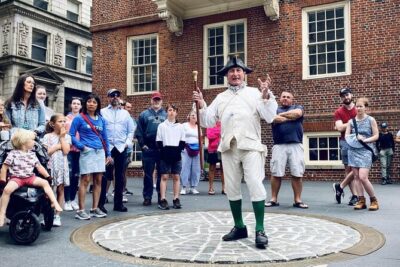
One of the biggest strengths of this tour format is the guide performance. In the guide line-up you may encounter people like Jeremiah Poope, Danielle, Nate, Hepzibah Swan, and James O’Sullivan. They are not just reciting dates. They shape the story with jokes, active Q and A time, and period-style delivery.
Here is how you can get the most out of it without making it feel like homework:
- Pay attention at the “precinct” moments, like around Faneuil Hall, because that is where the story is most contextual.
- Keep asking questions early if something is unclear. The tour is built with time for questions and photographs.
- When the guide is in character, use it as a memory tool. It is easier to remember an event when you heard it as a scene, not a list.
Voice projection can also matter a lot on busy sidewalks. Some guides are noted for making their voice carry even when the city gets noisy. Still, if you have hearing challenges, position yourself where you can face the guide.
Tickets, admission stops you skip, and why $18 can feel fair
At $18 per person for about 90 minutes, this is positioned as a high value orientation walk. The “included” portion is the guided tour of 11 sites with costumed guides.
The tour is also upfront about admissions. Entrance to certain sites that charge fees is not included, such as the Old South Meeting House, Old State House, Old North Church, and the Paul Revere House. You can buy those tickets at the door.
So what does that mean for you?
You still get what you came for: the guided experience through the major stops and the “story between the stones.” If you want interiors, you can add those separately.
Another plus: the tour notes skip the ticket line. Even if you are not entering the paid sites on this exact walk, a smoother flow at the stops helps the tour stay focused on walking and listening rather than queueing.
Weather, shoes, and why 1 mile can feel longer
This is a walking tour, roughly a mile for the full route, and it moves at a pace that still leaves room for photos and questions. Still, it can feel longer than a casual self-guided walk because you are stopping often.
Come prepared:
- Comfortable shoes matter. Stone sidewalks and uneven pavement add up.
- Bring water, especially in warm months.
- Video recording is not allowed, so plan on photos and looking up from your screen.
If it is cold or wet, dress for staying outside. Boston weather can shift fast, and your guide will keep moving as the tour carries on.
Reverse Walk Into History for a different arc
If you want a different feel, there is a Reverse Walk Into History option. That is useful when you already know some of the Freedom Trail basics or when you want to see the timeline from the other direction.
A reversal can also help you if you are pairing the tour with other plans later in the day. Sometimes starting with a later stop makes the rest of your Boston walking feel less frantic.
Should you book this Boston Freedom Trail walking tour?
Yes, I think you should book it if you want a guided introduction to Revolutionary Boston that is doable in a short time. The $18 price is easiest to justify when you treat it as orientation and story-building, not as a replacement for every single Freedom Trail interior visit.
Book it especially if:
- You want a guided way to connect key names like Paul Revere and Samuel Adams to specific places.
- You like humor and character in history storytelling, and you want a guide who keeps the group engaged.
- You are visiting for a first day in Boston and want the red line to make sense afterward.
Skip it or pair it if:
- You know you want every interior and every single stop on the full Freedom Trail. This one covers 11 of 16 sites, so you will still have work left for later.
- You prefer long, unbroken sightseeing. This tour is stop-and-listen by design.
If you are on your feet anyway, this tour is a smart way to turn “I walked the trail” into “I understood the trail.”
Freedom Trail Walking Tours, compared.
 ★ 5.0Freedom Trail History Small Group Walking TourFrom $356,450 reviews
 ★ 4.5Boston Freedom Trail Walking Tour with Costumed GuideFrom $262,531 reviews
 ★ 5.0Boston Food & History: Pizza, North End & Freedom TrailFrom $901,772 reviews
 ★ 4.9Boston’s Freedom Trail: A Revolutionary Walking TourFrom $311,748 reviews
★ 4.9Freedom Trail History Small Group Walking TourFrom $351,590 reviews
★ 5.0Boston’s Freedom Trail: A Revolutionary Walking TourFrom $311,343 reviews
★ 4.9Boston’s Freedom Trail: A Revolutionary Walking TourFrom $311,748 reviews
★ 4.9Freedom Trail History Small Group Walking TourFrom $351,590 reviews
★ 5.0Boston’s Freedom Trail: A Revolutionary Walking TourFrom $311,343 reviews
 ★ 4.5Freedom Trail Walking Tour 250From $261,118 reviews
 ★ 5.0Boston Freedom Trail History Pub Crawl Small-Group TourFrom $60996 reviews
Also filed under