
REVIEW · NEW ENGLAND SELF-GUIDED AUDIO TOURS
Boston Record Breakers: Self-Guided Scavenger Hunt
Boston can feel big and busy. This hunt turns it into a solvable route, with offline play and a set-your-own-pace format. You follow clue prompts between major sights, then get nudged to look closely at what is right in front of you.
You start at Boston Public Library and end at the Union Oyster House, a practical finish you can actually use for a snack or meal.
The main consideration is clue difficulty. The cost is low, but a few spots may require careful looking, especially around Park Street and the Union Oyster House.
Key points to know before you start

- Offline-friendly gameplay, so you can wander without relying on cell service
- Private, no human contact, which is great if crowds and group tours get on your nerves
- Flexible timing, start any hour and pause when you want
- A landmark route you can walk in one sitting, roughly 1 hour 20 minutes
- Ends at a real destination (Union Oyster House), making the finale feel useful, not just ceremonial
More routes you can walk at your own pace
Price and time: is $5.99 actually good value?
At $5.99 per person for about 1 hour 20 minutes, this is priced for people who want structure without paying for a full guided tour. You are not buying a bus, a scripted storyteller, or reserved entry. You are buying a self-guided route plus prompts delivered through the Questo mobile app.
That matters. In Boston, a lot of paid experiences cost a lot just to get you to the right neighborhoods. Here, your money mostly goes to convenience: the game format, the clue flow, and the fact that it is designed to keep you moving between specific landmarks. When you finish, you are dropped near a historic restaurant that is open most of the day.
If you like walking at your own speed, this price feels fair. If you need polished riddle craftsmanship every step of the way, you might find one or two prompts to be less clever than you hoped. Still, the low entry cost makes it easier to forgive a stumble.
How it works: an offline Boston hunt with a mobile ticket
This is a self-guided scavenger hunt delivered via a mobile app (Questo). The big practical win is that you do not need an internet connection to play. That single point changes the whole experience in Boston, where you can move between busy streets, plazas, and parks that are not always friendly to spotty service.
You also get full flexibility. You can start at any hour, take a break, and resume later. That is ideal if you are traveling with anyone who needs bathroom breaks, coffee stops, or a slower pace.
It is also set up as a private activity for your group, with no human guide involved. The experience provider frames it as one of the safer ways to book since you avoid a typical human-led group format and its crowds.
One more practical note: your start and end points are fixed. You begin at the Boston Public Library, then you follow the in-app instructions to reach the Union Oyster House.
Start point: Boston Public Library, Central Library (700 Boylston St)
Most scavenger hunts start in a place that feels random. This one starts in a place that feels important on day one: Boston Public Library’s Central Library at 700 Boylston St.
The game’s first stop is built around the library’s claim to early American library leadership. You are prompted to look around and find the answer that helps you move to the next location. The goal is not just to read facts, it to practice “slow looking” in a building many people pass without taking time inside or around.
What I like about this kind of opening: it gives you an immediate Boston “anchor.” You are stepping into an institution that still draws huge crowds in real life, so it sets the tone that this route is about more than sightseeing. It’s about understanding how Boston organized public access to knowledge long before many cities caught up.
Practical tip: plan a few extra minutes for this start. If you get your bearings early, the rest of the hunt feels easier.
Copley Square: from Art Square past to the present
Next up is Copley Square, in Boston’s Back Bay neighborhood. The game highlights how the square was once known as Art Square because of the cultural institutions that clustered here, with some of those ties still visible today.
In-game, you’ll be asked to look around for a specific answer to advance. This is a good spot for people who enjoy noticing architectural and public-space details. If you are the type who likes to identify landmarks by shape and position, Copley Square is a strong mid-route test of your powers.
What to watch for: don’t rush. The square is open, busy, and visually loud. The clue works better if you pause and scan the way a local would, rather than taking quick snapshots and hoping the answer jumps out.
More of the Gilded Age, down the coast



Arlington Street Church: historic American Unitarianism in plain sight
From Copley Square, you move to the Arlington Street Church, across from the Public Garden. The game frames the church as a historically important institution in American Unitarianism and Unitarian Universalism.
This stop also pays off for people who like architecture. You learn it was completed in 1861 and designed by Arthur Gilman and Gridley James Fox Bryant, and it was intended to resemble St. Martin-in-the-Fields in London.
For the hunt itself, the prompt is again about looking. You search your surroundings to find what you need to progress. That repeated structure may sound repetitive on paper, but in the streets of Boston it becomes a steady rhythm: scan, read, solve, move.
Potential drawback: if you dislike churches or prefer purely outdoor sightseeing, you might feel like this stop slows the “fun factor.” But if you care about how Boston’s civic and cultural life formed, it is a solid pivot point.
The Ether Monument: The Good Samaritan near the Public Garden
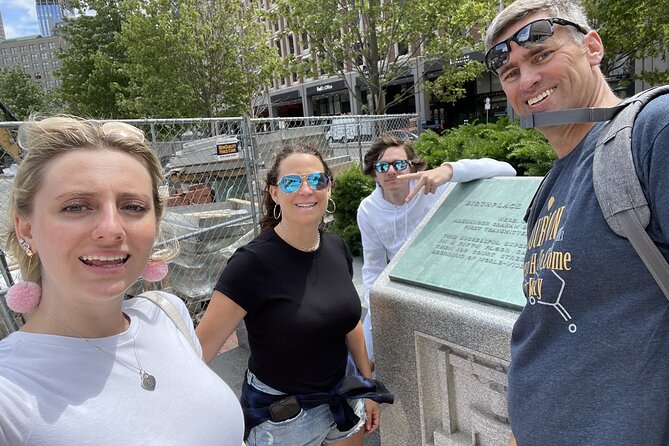
You then head to the Ether Monument, also called The Good Samaritan. It is a statue and fountain near the northwest corner of the Boston Public Garden, by the intersection of Arlington Street and Marlborough Street.
The game spotlights the story behind it: ether’s role in anesthesia. The monument is also credited to Boston architect William Robert Ware and sculptor John Quincy Adams Ward, and it is described as the oldest monument in the public garden.
This is one of those stops where the hunt format works especially well. You do not just “see a thing.” You stop, read the clue context, and then look for the physical details that confirm what the monument represents.
Practical tip: if it is a warm day, the garden area is a good place to take a quick breather. Even though it is a game, your body is doing the real work here, and the pace is up to you.
Massachusetts State House: Beacon Hill’s seat of government
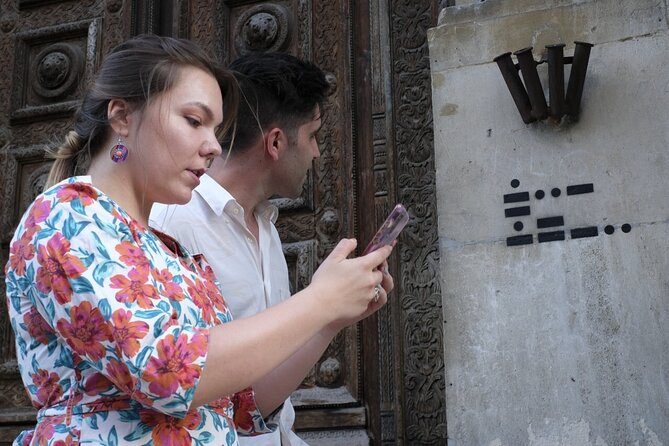
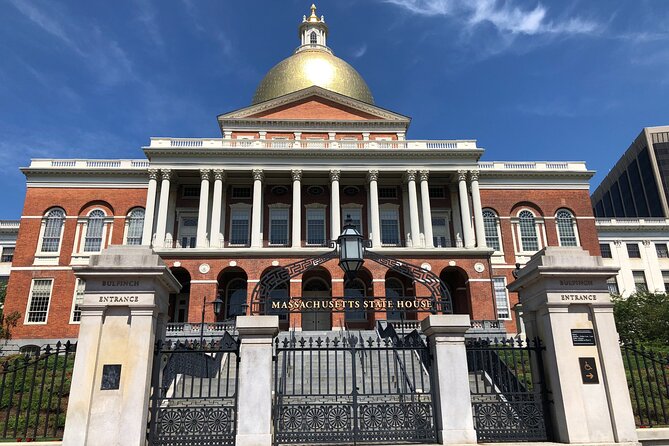
Now you move into Beacon Hill territory, with the Massachusetts State House as the next major target. The building is the seat of government for the Commonwealth of Massachusetts and houses the Massachusetts General Court and governor’s offices.
The hunt includes specific context: it was designed by Charles Bulfinch, completed in January 1798, and the provided figures note the cost ballooned to $133,333, much more than the original budget. The game also points out that it has been enlarged repeatedly since.
What I like here is the contrast. In earlier stops you are learning about public culture and civic life. At the State House, you get civic power. The prompt is, again, to look around and find what the challenge asks for so you can advance.
Practical tip: keep your eyes up as well as forward. Government buildings often reward the slow scanner, especially near entrances, carvings, and notable surfaces.
Robert Gould Shaw Memorial: courage carved opposite the Common
Next is the Memorial to Robert Gould Shaw and the Massachusetts Fifty-Fourth Regiment. This bronze relief sculpture by Augustus Saint-Gaudens sits opposite 24 Beacon Street at the edge of Boston Common.
The game focuses on what the relief depicts: Colonel Robert Gould Shaw leading members of the 54th Regiment Massachusetts Volunteer Infantry as they marched down Beacon Street on May 28, 1863 to depart the city. The description also notes the sculpture was unveiled May 31, 1897, and that it is described as the first civic monument to pay homage to the heroism of African American soldiers.
This stop is emotionally weighty, and that is exactly why it works inside a scavenger hunt. You are forced to stop long enough to read what the memorial communicates, not just pass it with a cursory glance.
One more practical note: expect foot traffic near the Common. If you want a quieter moment, you may need to time it or accept that you are solving in a public, active zone.
Park Street: the small street that ties culture to transit
After Beacon Hill comes Park Street. The game notes Park Street was laid out in 1804, initially as Park Place, replacing the previous Sentry Street. It also mentions that in the 1880s the feminist Woman’s Journal was published on Park Street, and that Houghton Mifflin was headquartered here in the late 19th century.
Then there’s the transit angle, since Park Street is a known stop on Boston’s subway network. The in-game challenge asks you to look around and find an answer to advance.
This is one of the areas where some people may hit a wall. The hunt format relies on visual searching, and transit-adjacent clues can feel tricky if signage is hard to read or you happen to be looking from the wrong angle.
My advice: when you get stuck, don’t guess wildly. Step back, re-read the prompt, and look for the specific feature the clue likely refers to. Even a ten-minute slowdown keeps the whole game from getting frustrating.
Tremont Temple: a church that rebuilt after fire
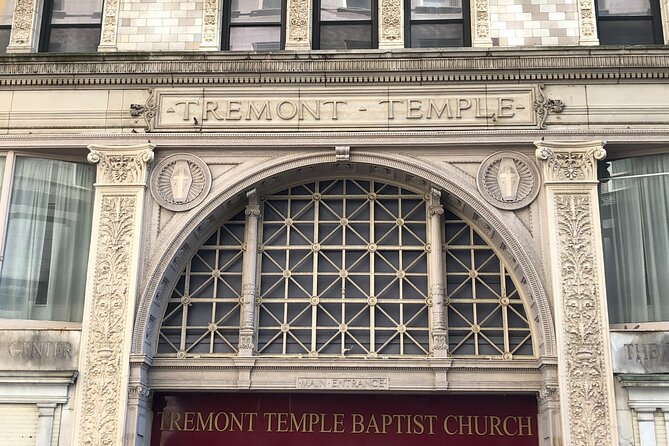
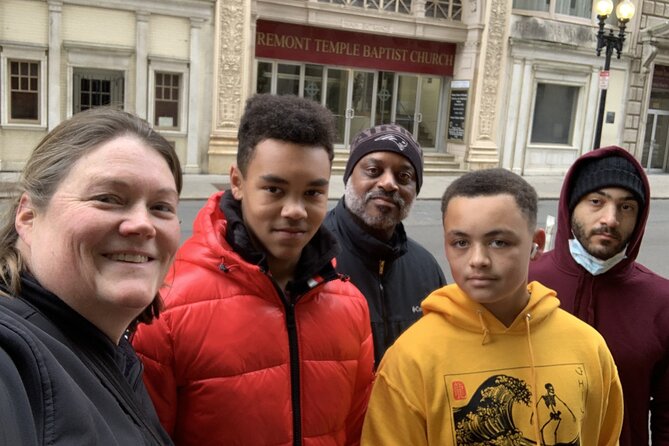
The route continues to the Tremont Temple at 88 Tremont Street. The provided details frame it as a Baptist church, with architecture credited to Clarence Blackall of Boston. The existing structure opened in May 1896 and replaced an earlier 1827 structure that had repeatedly suffered damage by fires.
This is a more “institutional” kind of story than some of the other stops. The game uses it as another anchor point, with another look-around challenge that helps you progress.
What makes this stop valuable for your walk: it shows how Boston reinvested and rebuilt. Streets and neighborhoods often feel static, but buildings change, and the reasons matter.
Alexander Graham Bell connection: inventions meet a Boston landmark moment
The hunt includes Alexander Graham Bell, described here as a BU professor from 1874 to 1879. The game context says Bell invented the telephone in 1876 after research funded by BU.
It also notes Bell appears here at a 1916 BU reception marking the 40th anniversary of his invention. That suggests your challenge is tied to a real-life representation or marker associated with this moment.
The key is to pay attention to the in-game prompt. Since the details given focus on Bell’s timeline and the 1916 reception, you might find the correct answer by looking closely for the relevant inscription, depiction, or referenced element.
Practical tip: if you are traveling with kids or tech-minded friends, this is a fun stop. It links everyday modern tech to a specific Boston moment rather than treating the invention like an abstract timeline.
The Tavern: the old alehouse vibe that still feels Boston
Next comes the Tavern, described as being around since 1795. It is called a gathering place for printers and politicians, sailors and students, and it became the city’s most famous alehouse.
This is one of the few stops that feels like it could become a real moment even after the hunt ends. You can use the surrounding energy and atmosphere to slow down, reset, and decide if you want to linger.
For the in-game task, you still do the same essential thing: look around and find what the prompt asks for. But because this stop is tied to a long-lived social setting, it can feel less like searching and more like stepping into the city’s living memory.
Union Oyster House: finish at America’s oldest restaurant
The final stop is the Union Oyster House, located near Faneuil Hall on the Freedom Trail. It is described as America’s oldest restaurant, housed in a building dating back to pre-Revolutionary days and serving food starting in 1826.
The information also highlights the oyster bar and stalls, where Daniel Webster is described as being a constant customer, and that the stalls and oyster bar are in their original positions.
This is where the hunt becomes practical. Even if you are not an oyster person, it is still a great place to reward yourself for finishing. The route ends here by following the instructions in the app, and it gives you a natural stopping point where food and rest are right there.
Timing note: the Union Oyster House has opening hours listed from 5:00 AM to 9:00 PM, seven days a week. Even if you finish later, you are likely to find it open.
One more reality check: since this is a famous restaurant area, it can be busy. The game ends there, but you can plan to arrive with the idea that you might need a few minutes to settle and find your preferred spot.
Who this hunt is for (and who may prefer a guide)
This is a great match if you want:
- A self-guided way to connect Boston’s major sights without paying for a human-led walking tour
- Offline freedom, so you can move without stressing about data or roaming
- A route you can pause and restart, so you are not locked into one strict schedule
- A private format that avoids the energy drain that comes with large groups
It may not be ideal if:
- You want everything to feel perfectly clever as a puzzle, every single step
- You get frustrated by visual searching and prefer a more guided approach when a clue is ambiguous
- You need clear, spoken explanations rather than reading prompts and figuring it out on-site
Still, with the low price, the hunt works as a low-risk way to test your walking style in Boston.
Should you book Boston Record Breakers in Boston?
If you like walking, reading clues, and turning landmarks into mini missions, I think this is worth booking. The biggest advantages are the offline setup, the private no-human-contact format, and the fact that the ending point is a real historic meal destination at the end of the Freedom Trail area.
If you strongly prefer guided clarity, or you hate anything that feels like searching for answers, you might be disappointed by the difficulty level of a couple clues. But even then, the short duration makes it easier to salvage the experience with extra sightseeing around the same neighborhoods.
FAQ
Do I need an internet connection to play?
No. This scavenger hunt can be played offline, so you can complete the game without an internet connection.
How long does the Boston Record Breakers scavenger hunt take?
It’s approximately 1 hour 20 minutes, though you can take breaks and resume later.
Where do I start and end the game?
You start at Boston Public Library – Central Library, 700 Boylston St, Boston, MA 02116. You end at Union Oyster House, 41 Union St, Boston, MA 02108.
Is there a physical guide with this activity?
No. This is a self-guided city game. It does not include a physical tour guide.
Can I start at any time, or do I need a fixed schedule?
You have full flexibility to start at any hour, take a break at any time, and resume later.
What is the cancellation policy?
You can cancel for a full refund if you cancel at least 24 hours in advance. If you cancel less than 24 hours before the experience starts, the amount paid will not be refunded.
Keep Going in Boston






More Gilded Age Houses




More Routes at Your Own Pace




More around Boston, freshly written up
- The Boston Bash Scavenger Hunt★ 4.5 · 3 reviews
- Self-Guided Audio Tour of Boston North End★ 4.5 · 3 reviews
- Self-Guided Boston Christmas Tour★ 5.0 · 3 reviews
- Self Guided “The North End Pizza, Cannoli and Picnic” Solo Walking Tour★ 5.0 · 3 reviews
- Cambridge: Haunted Charles River Cruise★ 4.3 · 3 reviews
- Boston: Official Freedom Trail® Lantern Tour★ 4.7 · 3 reviews
New England Self-Guided Audio Tours, compared.
 ★ 4.5Scenic Newport, RI Self-Guided Driving Audio TourFrom $16325 reviews
 ★ 4.5Self Guided Classic Freedom Trail Location Aware (GPS) Walking Audio TourFrom $7258 reviews
 ★ 4.5Self-Guided Smartphone Ghost Walking Tour in SalemFrom $7225 reviews
 ★ 4.0Cape Cod & Provincetown Self-Guided Driving & Walking Audio TourFrom $24207 reviews
 ★ 4.5Boston Freedom Trail Self-Guided Tour with Audio Narration & MapFrom $998 reviews
 ★ 4.0Newport Cliff Walk Self-Guided Walking TourFrom $1479 reviews
 ★ 4.5Ultimate Historic Salem and Witch Trials Self-Guided Walking TourFrom $1667 reviews
 ★ 4.0Lexington & Concord Self-Guided Driving & Walking Audio TourFrom $1462 reviews