
REVIEW · FREEDOM TRAIL WALKING TOURS
Private Walking tour of Boston’s Freedom Trail and more!
Boston’s Revolution starts on a sidewalk. This private Freedom Trail walking tour is built for crowd-free walking with a guide who can shape the morning around your group, starting from a convenient central meeting point.
I really like that you move block by block, not bus stop by bus stop. You also get a true private guide experience, so you can slow down, ask questions, and adjust as you go instead of rushing with a large group.
One thing to consider is that it’s still a focused walking tour. If you have kids who need extra energy, or if you prefer loud, theatrical guiding, ask your guide to match your group’s style, because guide delivery can vary.
Key reasons this Freedom Trail private walk works
- Private pacing: you set the speed and can pause without feeling rushed
- Fewer crowd headaches: no tourist-bus chaos, just steady sightseeing on foot
- Flexible itinerary: your guide can tailor stops to what matters most to your group
- Iconic stops in 3 hours: Boston Common, Faneuil Hall, Paul Revere, Old North are all covered
- Most entrances are free: many stops are outside or free to visit, with optional tickets for the big two
Other ways to walk the red brick, compared
A Freedom Trail start that saves you time and stress
You meet at 139 Tremont St, Boston, with the tour beginning at 10:00 am. The location is easy to find and puts you right near the downtown core, so you spend less time figuring out where to go and more time looking at Boston.
You’ll end in the North End Italian District area near 282 Hanover St, which is a smart way to finish. After the last historic landmark stops, you’re already in the part of town where lunch and snacks are everywhere.
This tour runs about 3 hours, and it’s offered in English with a mobile ticket. Your group stays private the whole time, so it feels like a focused walk with one guide rather than a shared schedule with strangers.
Boston Common, the oldest park, and why it sets the tone
The first major stop is Boston Common, established in 1634. You’ll learn that colonists purchased the land rights for the 44 acres from the area’s first European settler, Anglican minister William Blackstone. It’s a big claim for such a simple-looking green space, and your guide helps you picture why it mattered.
Boston Common is also a practical start. It’s open, it’s central, and it works as a “warm-up” area for the history to come. Admission is free, so you can linger without turning this into a paid museum marathon.
After Boston Common, you’re headed toward the old government and civic center where the Revolution didn’t feel like a distant legend. It felt like neighborhood politics, sermons, town meetings, and arguments over taxes.
Massachusetts State House and the civic buildings that frame the story
Next is the Massachusetts State House. The current building was designed by Charles Bulfinch and has served as the seat of Massachusetts government since it opened in 1798. It holds the legislative and executive branches.
Important for planning: admission is not included here. Even so, getting this stop in early is useful because it anchors your understanding of how power worked long before any of the famous speeches.
The value of seeing it during your walk is that your guide can connect it to what comes next at Faneuil Hall and the market area. You’re not just spotting buildings, you’re building a map in your head of how decisions got made.
Park Street Church and the Granary site beneath the steeple
One of the more interesting stops is Park Street Church, founded in 1809 at the corner of Park and Tremont Streets, on top of the site of Boston’s town grain storage building, called the granary. The church’s steeple is 217 ft, designed by Peter Banner, and your guide shares how it once served as a key landmark for travelers approaching Boston.
You’ll also notice how the tour mixes “big national events” with everyday infrastructure. A grain storage site sounds dull until you realize that food supply equals survival, and survival equals political power. This is the kind of detail that makes the Freedom Trail feel real instead of postcard-ish.
Time wise, expect short pauses here as you keep moving toward the burial grounds and learning sites.
More of Boston from the top of the list
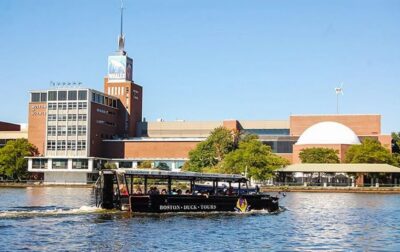
Granary Burying Ground: where the founders are close enough to feel human
Then you arrive at Granary Burying Ground, established in 1660. This is one of those stops where the numbers and names sink in fast: it has roughly 2,300 markers and includes many notable citizens and founding fathers.
The “why” matters: this isn’t just a lineup of famous people. It’s a window into how communities remembered leaders, structured memory, and stayed connected through generations. Even if you’re not a cemetery person, this place tends to grab you because the stones and spacing create a quiet rhythm.
Admission is free, so you can take your time. Just remember this is still a walking tour, so keep an eye on your pace and let your guide know if you want extra minutes here.
Quick hits for learning: Boston Latin School site and Franklin’s marker
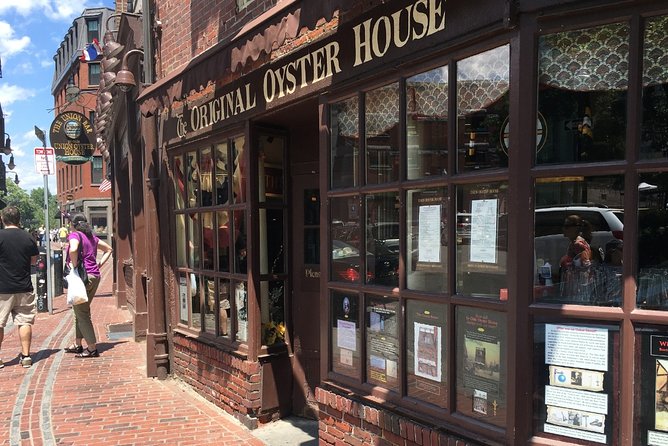
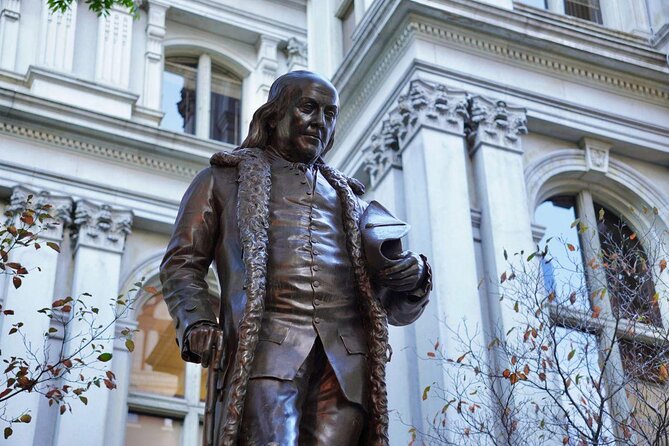
A short stop highlights a surprising educational detail. Near the Boston Latin School site, you’ll see a mosaic and a statue of Benjamin Franklin marking where the original schoolhouse stood.
Boston Latin School is described as the oldest public school in America, founded on April 23, 1635. The school offered free education to boys regardless of wealth, while girls typically attended private schools at home. That contrast gives you a sharper view of who had access to learning, and who didn’t.
This is a brief stop, but it’s a good example of what makes this tour feel personal. You don’t just hear about battles. You see the systems that produced writers, thinkers, and leaders.
Old Corner Bookstore: a preserved storefront tied to American publishing
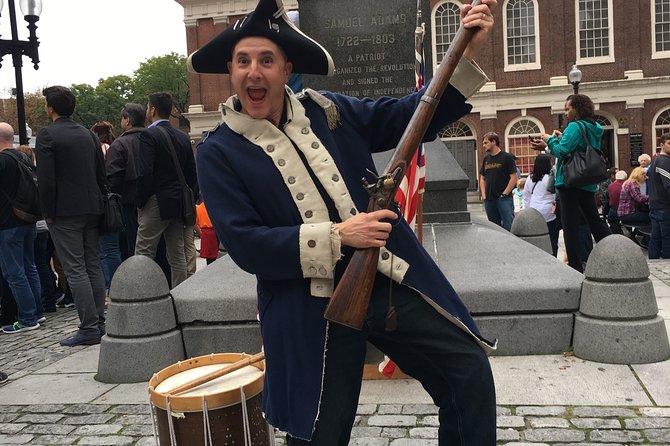
Downtown Boston history sometimes hides in plain sight, like at the Old Corner Bookstore. Built in 1718, it’s downtown Boston’s oldest commercial building. Your guide connects it to Ticknor and Fields, the publishing giant that helped produce major American titles, including works by Thoreau, Hawthorne, Longfellow, and the Atlantic Monthly.
One practical detail I like: the building was saved from demolition in 1960, and its leases help subsidize historic preservation in Boston’s neighborhoods. So the story isn’t only about what happened in the past. It’s about how Boston chose to protect the evidence.
Admission is free, and the stop is short. That said, it’s one of those “wait, really?” moments that helps you understand why Boston still feels like an ideas city.
Faneuil Hall Marketplace: the Revolution’s town meeting energy
Next up, you reach Faneuil Hall Marketplace. Faneuil Hall is often called the home of free speech and the Cradle of Liberty, and your guide brings you back to the moment when it hosted America’s first Town Meeting.
The hall’s revolutionary role wasn’t part of its original plan, and that detail matters. History isn’t always predictable. It grows when people keep showing up to argue, vote, and persuade.
You’ll also get time at the marketplace nearby, where you can grab something to eat or simply watch daily life around historic walls. Admission is free, and this is one of the easiest spots to take a breather without losing the thread of the story.
Boston Stone, Union Oyster House area, and small landmarks that reward attention
A quick but memorable stop is the Boston Stone, an 18th century round rock embedded in a wall. It’s famous for a reason that your guide explains, and it works well as a reset between heavier stops.
You also pass through the area around Union Oyster House and along the route toward Paul Revere’s world. Some of the best walking tours in Boston include these micro landmarks, because they connect famous events to ordinary streets.
If you like details, you’ll probably enjoy this part most. Your guide can point out what to notice so you don’t just see more buildings, you start seeing layers.
Paul Revere House and Old North Church, optional but worth weighing
The tour then reaches the North End’s famous Revolutionary sites.
Paul Revere House
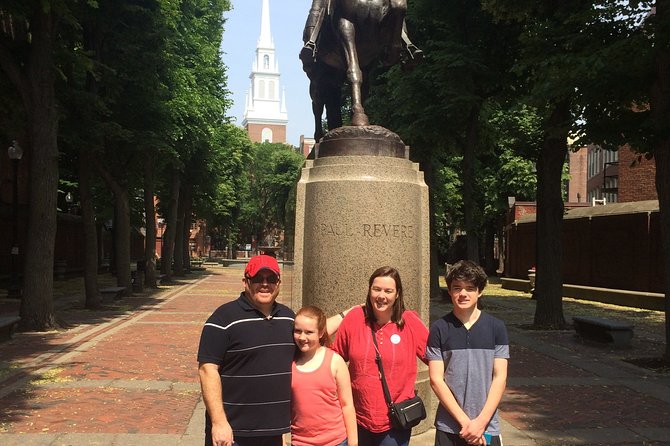
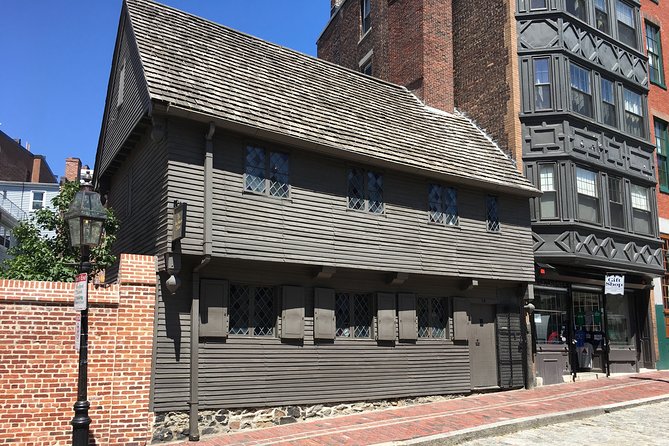
At the Paul Revere House (today at 19 North Square), you’ll hear how on April 18, 1775, Paul Revere left his home as a silversmith and rode out on the journey that made him a legend. The home is downtown Boston’s oldest building and one of the few remaining 17th-century dwellings in a large urban area in the United States.
This stop comes with optional admission, and admission is not included. The tour notes that you get a special low rate for these add-ons, which is a nice perk if you want the inside access.
Old North Church
Then comes Old North Church and its historic site. This is where the lantern signals happened on April 18, 1775. Church sexton Robert Newman climbed the steeple and held two lanterns as the signal that the British were marching by sea across the Charles River, not over land.
The church was built in 1723, it is Boston’s oldest surviving church building, and it’s described as the most visited historical site. Again, optional admission applies, so you can choose based on time, interest, and how much indoor viewing your group likes.
Here’s how I’d decide: if your group loves “how it looked inside,” add both. If you’re more about outdoor views and moving steadily, you can still learn a lot at the exterior stops and focus your energy on the walking story rather than extra ticket lines.
Copp’s Hill Burying Ground: a calmer ending near the North End
To wrap up, you reach Copp’s Hill Burying Ground. It’s named after shoemaker William Copp, and it’s the final resting place for merchants, artisans, and craftspeople who lived in the North End.
This is a good ending because it shifts the tone. You’ve been inside Revolutionary headlines. Now you see the people who built the city day to day, and the cemetery gives that perspective in a quieter way. Admission is free.
You’ll finish near the North End, where you can keep the vibe going with pastries, coffee, and casual bites. That location also makes it easy to connect to the rest of your day in Boston.
How the private guide makes a real difference
The biggest reason people love this tour is simple: a private guide changes the whole feel.
Many praised guides by name, including Tracy, Manny, Ernie, Cindy, Ellen, and Neil. And the common thread is not just facts. It’s how the guide paces and explains. One guide was highlighted for being especially accommodating to the group’s pace, and another for keeping kids engaged without leaning on costumes.
That matters because the Freedom Trail can be demanding. It’s a lot of names and dates, packed into a short time window. A good guide turns it into story flow and real understanding.
I also appreciate the flexibility. The tour is described as customizable to your group’s interests. Some guides add quick detours off the main line, with examples like Pi Alley, the Spite House, and the Holocaust Memorial. You might find these kinds of extras if your guide thinks they fit your group and schedule.
Timing and walking reality, so you can plan confidently
This is an approximately 3-hour walking tour with a moderate physical fitness level. That means you should plan for steady walking between stops, short pauses at each site, and the occasional longer moment if you ask.
Tips that make it easier:
- Wear comfortable shoes with grip, since Boston sidewalks can be uneven in spots.
- Bring water, especially if you’re touring in warmer months.
- If you want indoor time at Paul Revere House and Old North Church, decide early so your guide can manage the flow.
Also, remember that some major attractions have optional admissions or are not included. Massachusetts State House has admission not included, and the two North End sites are optional. That’s normal, but it helps to go in with a plan.
Value for money: private guide time beats squeeze-your-way tourism
You’re paying for a private guide, and that can feel like a splurge compared to group tours. The tradeoff is time and control.
In practical terms, private usually means:
- You spend less time dealing with crowds and more time getting clear explanations.
- You can pause for questions without feeling like you’re holding everyone back.
- Your guide can tailor the emphasis toward what your group cares about, not what the bus schedule forces.
The tour’s review snapshot also backs up the idea that people feel the extra money pays off. It’s rated 4.8 with 29 reviews, and it’s recommended by 93%. The standout praise focuses on engaging storytelling, accommodating pacing, and the fact that it feels like an overview without the mass-crowd energy.
The only real caution is delivery. One review noted a guide who did not talk loudly enough and lacked enthusiasm, especially with kids. That doesn’t mean every guide is like that, but it does mean you should communicate your group’s needs.
Should you book this private Freedom Trail walk?
I think you should book it if you want the Freedom Trail landmarks with breathing room and a guide who can adapt to your group. It’s especially strong for families and mixed-age groups, because the stops are iconic and the guide can keep things engaging.
Book it if you like walking and you want a smart overview in about three hours, ending in the North End with an easy place to eat. Skip it only if you know you need zero walking time or you prefer a fully self-guided museum-heavy day, since this is built around moving from site to site.
FAQ
How long is the Boston Freedom Trail private walking tour?
It runs for about 3 hours.
What’s included in the tour?
The tour includes a private tour guide. You also receive a mobile ticket.
What is not included, and where are the optional admissions?
Admission is not included for the Massachusetts State House. Optional admission is also available for the Old North Church and Paul Revere House (offered at a special low rate).
Where do we meet, and where does the tour end?
You start at 139 Tremont St, Boston, MA 02111. The tour ends near the North End Italian District restaurant area at 282 Hanover St, Boston, MA 02113.
What language is the tour offered in?
The tour is offered in English.
Is the tour suitable for people with moderate physical fitness?
It’s recommended for travelers with a moderate physical fitness level, since it’s a walking tour.
When will I get confirmation, and what if weather is poor?
You should receive confirmation within 48 hours of booking, subject to availability. The tour requires good weather, and if it’s canceled due to poor weather you’ll be offered a different date or a full refund.
More Tour Reviews in Boston




Keep Going in Boston
The Red Line, Three More Ways


More around Boston, freshly written up
- The Boston Bash Scavenger Hunt★ 4.5 · 3 reviews
- Self-Guided Audio Tour of Boston North End★ 4.5 · 3 reviews
- Self-Guided Boston Christmas Tour★ 5.0 · 3 reviews
- Self Guided “The North End Pizza, Cannoli and Picnic” Solo Walking Tour★ 5.0 · 3 reviews
- Cambridge: Haunted Charles River Cruise★ 4.3 · 3 reviews
- Boston: Official Freedom Trail® Lantern Tour★ 4.7 · 3 reviews
Freedom Trail Walking Tours, compared.
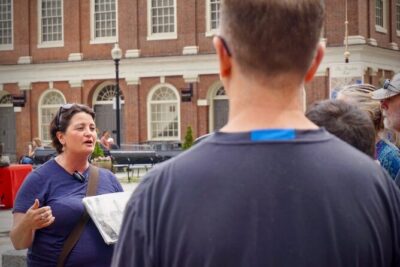 ★ 5.0Freedom Trail History Small Group Walking TourFrom $356,450 reviews
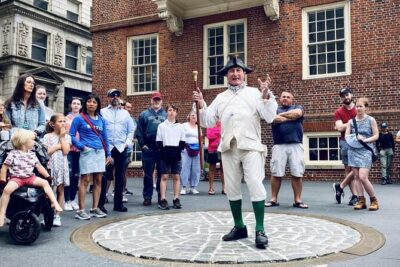 ★ 4.5Boston Freedom Trail Walking Tour with Costumed GuideFrom $262,531 reviews
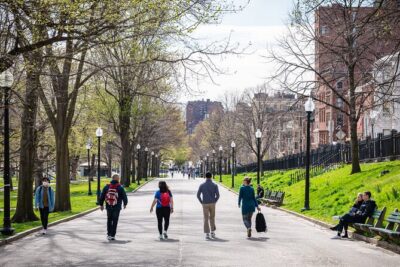 ★ 5.0Boston Food & History: Pizza, North End & Freedom TrailFrom $901,772 reviews
 ★ 4.9Boston’s Freedom Trail: A Revolutionary Walking TourFrom $311,748 reviews
★ 4.9Freedom Trail History Small Group Walking TourFrom $351,590 reviews
★ 5.0Boston’s Freedom Trail: A Revolutionary Walking TourFrom $311,343 reviews
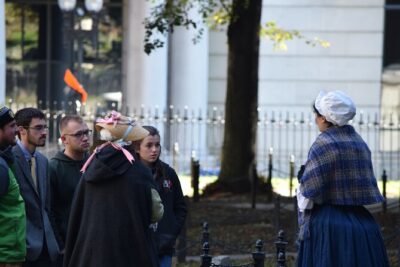 ★ 4.5Freedom Trail Walking Tour 250From $261,118 reviews
 ★ 5.0Boston Freedom Trail History Pub Crawl Small-Group TourFrom $60996 reviews
Also filed under