
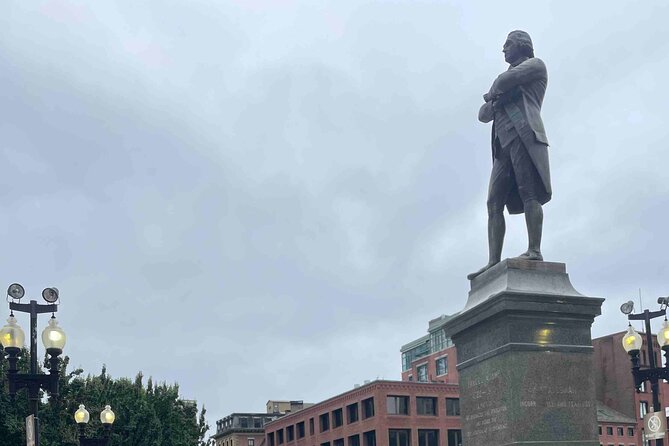
REVIEW · FREEDOM TRAIL WALKING TOURS
Heart of the Freedom Trail – 60 Minute Private Walking Tour
Boston feels different when you walk it.
This one-hour private Freedom Trail tour is an easy way to connect the dots between the buildings that shaped Boston’s Revolution. I like that it’s private (your group only), and you get a focused route with mobile tickets so you are not scrambling. One thing to plan for, though: with four major stops in about an hour, you will mostly be viewing key spots from outside, then getting smart, story-driven context fast.
The guide does the heavy lifting, which makes a big difference on a short walk. In particular, I love how guides like Kate and Marcie (both named in firsthand trip reports) kept the tone engaging and clear, even with kids in the group. The result is that you leave with names, dates, and cause-and-effect, not just a checklist of landmarks.
Key highlights in 60 minutes
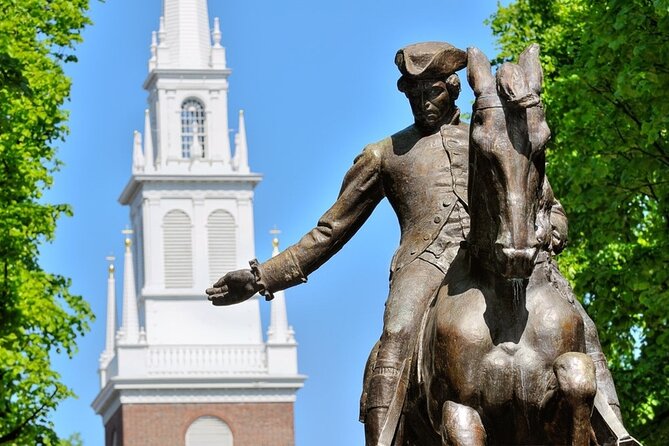
- Four Freedom Trail anchor stops handled in a tight, one-hour format
- Old State House balcony connected to July 18, 1776 and the Declaration reading
- Faneuil Hall marketplace backstory that includes Peter Faneuil’s transatlantic slave trade ties
- King’s Chapel and Dr. Joseph Warren through a patriot eulogy lens
- Old South Meeting House and the Tea Act story tied to Dec 16, 1773
Other ways to walk the red brick, compared
A one-hour Freedom Trail plan that actually works
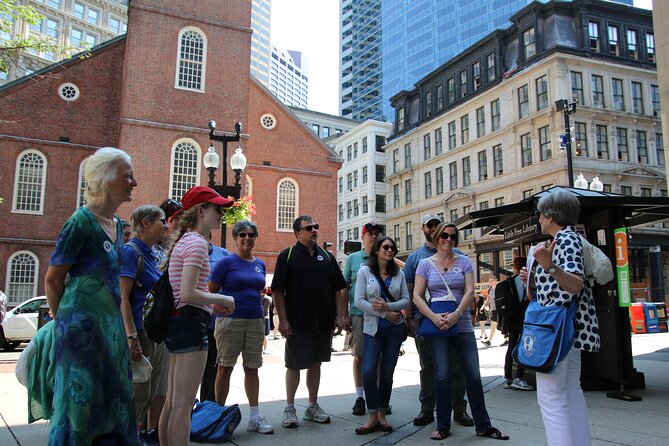
Boston can be overwhelming if you try to do everything in one day. This tour is built for the moment you want the Revolution explained without spending half a day walking and guessing. You get a guided line through the major public spaces, then you walk out with a clearer sense of why people acted the way they did.
You also get a useful reality check. Liberty was argued for in dramatic public settings, but it did not mean the same thing to everyone. The tour includes that tension, like the note that African Americans and women remained without a voice even as independence was being claimed.
If you have only a small window of time, this format is a smart way to start. It sets up your next stop on your own, whether you return to the Freedom Trail later or keep exploring other parts of Boston with better context.
Price and group size: what $175 per group really buys you
The price is $175 per group, up to 12 people, for about one hour. That matters, because you are not paying per person. For families, friend groups, or small parties who want a guided route instead of a self-guided shuffle, the value can be strong.
Think of it like this: you are buying someone to translate the streets, buildings, and public spaces into a story you can follow in real time. And since it is private, you can ask questions that would be awkward or too slow in a larger group.
Is it the cheapest option in Boston? No. But it is often the most time-efficient option when you factor in guidance plus a set route that hits major Revolutionary sites in a single hour.
Where you start and where you finish near the action
Your tour starts at 1 Faneuil Hall Market Pl, Boston, MA 02109. That is a great launch point because it is already tied to the city’s public life and marketplace energy.
You end in the general area of One Beacon Street, 1 Beacon St, Boston, MA 02108. That ending spot helps if you want to keep walking in the downtown core afterward, or connect to public transportation without backtracking.
One more practical point: the tour uses a mobile ticket, which usually makes check-in smoother than printing or hunting for paper passes. You will still want to have your phone charged.
Stop 1: Old State House, the balcony of power and July 18, 1776
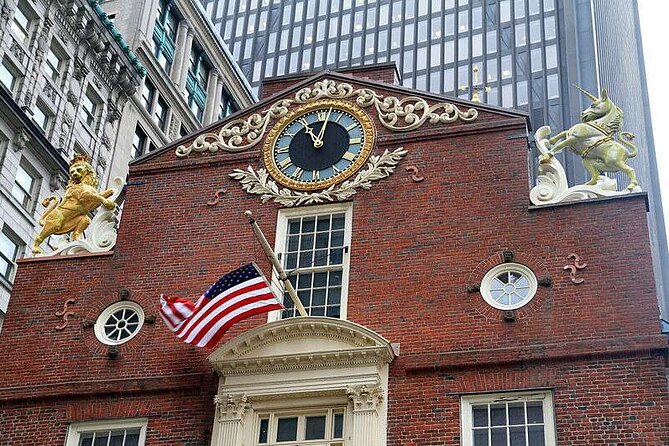
The Old State House is the kind of building that quietly dominates a neighborhood. Constructed in 1713, it is the oldest public building in Boston, and it was designed to impress. Starting in 1658, it handled government business, so you are not just looking at a landmark, you are looking at a place built for decisions.
The tour focuses on one specific idea that really sticks: the same balcony where Royal Governors proclaimed the king’s decrees later became the place where the Declaration of Independence was read on July 18, 1776. That contrast is the point. You go from authority imposed from above to independence declared in public, but the building itself stays in the frame.
The tour also makes sure you do not miss the cost of that shift. Liberty in practice was selective, and African Americans and women did not gain a voice during that time. That gives the moment weight, not just drama.
What to watch for: When your guide brings up the balcony and public proclamation, slow down for a moment. Even if you are outside, it helps to picture what it meant for crowds to gather there.
More of Boston on foot
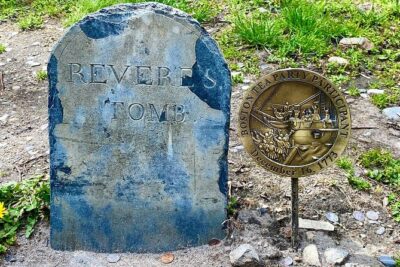
Stop 2: Faneuil Hall Marketplace, Peter Faneuil and a complicated gift
Faneuil Hall Marketplace is more than a pretty historic corner. In 1742, Boston was a working port city with a safe harbor, active docks, and trade exporting goods to Europe and the West Indies. Wealth was concentrating among merchants, and that economic backdrop sets the scene.
Then comes the part that makes this stop more honest. Peter Faneuil, the man whose gift helped create the marketplace, was a wealthy merchant whose wealth came from the transatlantic slave trade. The town initially refused his offer at first, suspicious that a central marketplace might hurt existing businesses. It eventually accepted by a slim margin, and Faneuil added a second floor.
This is where the tour earns its keep for me. It does not treat Revolutionary history as a clean morality play. It shows how money, trade, and public institutions were tied together, even when the Revolution later pushed for freedom.
A practical takeaway: After you hear this, revisit Faneuil Hall on your own with different eyes. You will spot how public spaces are shaped by the economies that created them.
Stop 3: King’s Chapel, Dr. Joseph Warren, and why colonists hated symbols
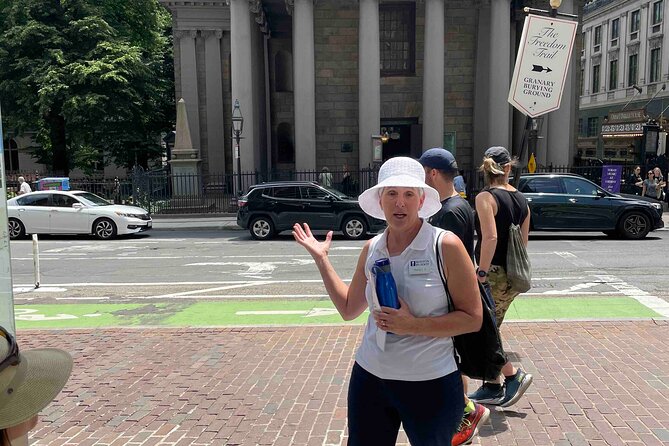
King’s Chapel is a key Freedom Trail site because it represents power in religious clothing. Established in 1686 as the first Church of England congregation in Boston, it was created to serve the newly appointed royal governor’s worship needs.
And its location mattered. Being next to the town’s oldest burying ground made it more than a church. By the time revolution sentiment grew, it became a visible symbol of what colonists hated about England.
The tour then links the space to Dr. Joseph Warren, one of Boston’s charismatic patriot leaders. By the beginning of the Revolution, King’s Chapel was where Warren was eulogized. The guide also highlights his practical side: by age 34, he was an accomplished physician who cared for both Patriots and Loyalists. That matters because it complicates the usual hero story and shows Warren as a connector, not just a fighter. The tour also describes him as an influential organizer who worked with militia efforts.
What to expect in this stop: A story-focused explanation that connects worship, politics, and community. You are not just hearing where Warren is connected. You are seeing how public symbols helped fuel conflict.
Stop 4: Old South Meeting House, the Tea Act, and the anger that surfaced
Old South Meeting House was built in 1729 and was the largest meeting space in Boston. That scale matters because it tells you how protests could move from whispers to public action.
The tour frames it around how Puritan worship and daily life shaped meeting spaces, making this building ideal for public gatherings and protest meetings. One of the most famous meetings tied to the site happened on December 16, 1773.
Here’s the chain of events the tour makes clear. The East India Company, one of the largest companies in the world, was supplying tea to the colonies. The company was failing, partly because of poor conditions in Europe. Parliament stepped in with the Tea Act of 1773, bailing out the company. The act also gave the East India Company exclusive access, which increased resentment because it felt like Parliament was steering commerce in Britain’s favor, not treating the colonies as equals.
Why this stop is worth your time: It explains how economic policy became political anger, and then became direct public action. You come away understanding the trigger, not only the headline.
How the pacing feels on the ground
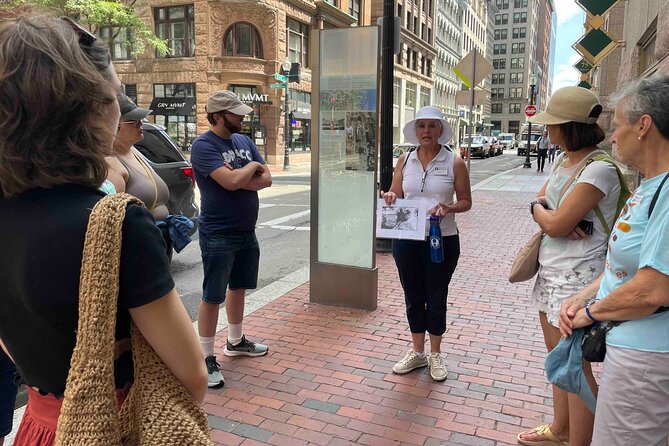
Each of the four stops is allotted about 15 minutes, which keeps the tour tightly focused and prevents you from getting stuck in long explanations. For me, that is a big part of the value in a one-hour format. You get a clean sequence: place, story, and a couple of key takeaways.
Because the tour is private, the guide can usually adjust pacing to your group. If you have kids, you might appreciate that the tour can work at a family pace. One trip report specifically notes patience with young children, which tells me the guides know how to keep the information moving without steamrolling smaller attention spans.
One consideration: If you are the type who wants to linger, take photos for a long time, or read every plaque, you might feel time pressure. This is designed to inform quickly, then leave you room to continue exploring on your own.
Who should book this Freedom Trail private walk
This tour fits best when you want a smart introduction and you care about context. I especially recommend it if:
- You are visiting Boston for the first time and want the Revolution story in a straight line.
- You are traveling with a group of up to 12 and want everyone to stay together with one guide.
- You prefer listening to stories while walking, rather than trying to piece the sites together from signs.
- You want a guide who can explain the uncomfortable parts of history too, including who was left out of the promise of liberty.
If you already know the basics and you want a very detailed, slow museum-style experience, you might want a longer tour. But for many people, a one-hour private route is exactly the right starting point.
Practical tips for your one-hour walk
Bring comfortable walking shoes. You will be on your feet between four major downtown sites, and short tours add up in a hurry.
Plan for quick stops, then treat the rest of the day as optional follow-up. The tour is like a guided opening chapter. After that, you can pick which buildings you want to revisit more carefully.
Also, have your mobile ticket ready on your phone. The tour includes mobile ticketing, which usually means the best move is to keep your device accessible rather than packing it away for the whole walk.
Should you book this Heart of the Freedom Trail private tour?
If you want a fast, guided way to understand Boston’s Revolution, I think this is a strong choice. The structure is efficient, the stops are real Freedom Trail anchors, and the guide storytelling is clearly a highlight, with named guides like Kate and Marcie leaving visitors feeling like they learned new details even after long familiarity with the city.
The tradeoff is simple: you only get one hour. You will leave knowing the key threads, but you will not have time for deep interior exploration. If that sounds like your style, book it. If you want slow, in-depth time inside buildings, plan for a longer tour or pair this with self-guided time later.
FAQ
How long is the Heart of the Freedom Trail private walking tour?
The tour is approximately 1 hour.
What does it cost, and how big is the group?
It costs $175.00 per group, for up to 12 people.
Is this a private tour?
Yes. It is a private tour, so only your group will participate.
Where does the tour start and end?
The tour starts at 1 Faneuil Hall Market Pl, Boston, MA 02109. It ends in the general area of 1 Beacon St, Boston, MA 02108.
Which stops are included during the tour?
The tour includes the Old State House, Faneuil Hall Marketplace, King’s Chapel, and the Old South Meeting House.
Are admission tickets included?
The stops listed for this tour note Admission Ticket Free.
Is there a mobile ticket?
Yes, the tour includes a mobile ticket, and you should receive confirmation at booking.
What is the cancellation policy?
You can cancel for a full refund up to 24 hours in advance. If you cancel less than 24 hours before the start time, the amount you paid is not refunded.
More Tours in Boston





More Tour Reviews in Boston
The Red Line, Three More Ways


More around Boston, freshly written up
- The Boston Bash Scavenger Hunt★ 4.5 · 3 reviews
- Self-Guided Audio Tour of Boston North End★ 4.5 · 3 reviews
- Self-Guided Boston Christmas Tour★ 5.0 · 3 reviews
- Self Guided “The North End Pizza, Cannoli and Picnic” Solo Walking Tour★ 5.0 · 3 reviews
- Cambridge: Haunted Charles River Cruise★ 4.3 · 3 reviews
- Boston: Official Freedom Trail® Lantern Tour★ 4.7 · 3 reviews
Freedom Trail Walking Tours, compared.
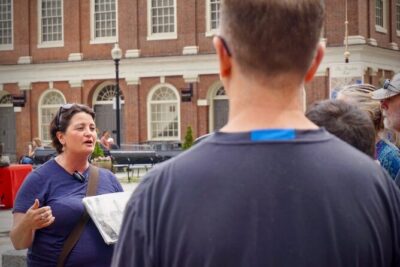 ★ 5.0Freedom Trail History Small Group Walking TourFrom $356,450 reviews
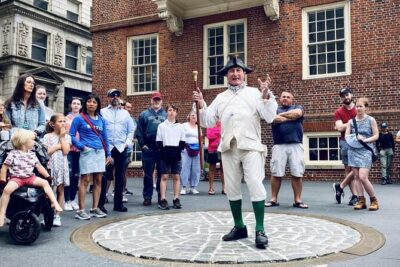 ★ 4.5Boston Freedom Trail Walking Tour with Costumed GuideFrom $262,531 reviews
 ★ 5.0Boston Food & History: Pizza, North End & Freedom TrailFrom $901,772 reviews
 ★ 4.9Boston’s Freedom Trail: A Revolutionary Walking TourFrom $311,748 reviews
★ 4.9Freedom Trail History Small Group Walking TourFrom $351,590 reviews
★ 5.0Boston’s Freedom Trail: A Revolutionary Walking TourFrom $311,343 reviews
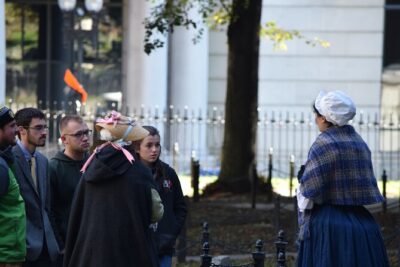 ★ 4.5Freedom Trail Walking Tour 250From $261,118 reviews
 ★ 5.0Boston Freedom Trail History Pub Crawl Small-Group TourFrom $60996 reviews
Also filed under