
REVIEW · FREEDOM TRAIL WALKING TOURS
Freedom Trail Walking Tour in Boston in French
Boston turns into a story in 2.5 hours. This Freedom Trail walking tour in French strings together the essentials of downtown Boston, from Boston Common to Copp’s Hill, plus modern public art like The Embrace and the Holocaust Memorial.
I love that you get the big headline moments without feeling rushed, and you cover 16 iconic sites on foot. I also like the small group size (maximum 12) and the guide’s ability to adjust to your pace, which matters a lot when you’re weaving through neighborhoods and monuments.
One consideration: this is a walking tour focused on outdoor stops, so no museum visits are built into the schedule. If you want indoor exhibits, you’ll need a separate plan.
Key things I’d bookmark before you go
- A French guide with original anecdotes: you get history explained in plain spoken French, with engaging stories along the way
- 16 Freedom Trail and North End stops: you see the essentials in about 2.5 hours
- Plenty of famous architecture in the open: state buildings, meeting houses, and historic streets you can actually stand in front of
- Revolution markers you can picture: from the Declaration reading site to the Boston Massacre location
- End in the North End with views: Copp’s Hill Terrace finishes your walk with a strong photo moment
- Mobile ticket, short admissions, and no museums: easy logistics for a half day slot
Other ways to walk the red brick, compared
Why this Freedom Trail walk works so well for first time Boston
If Boston is new to you, this kind of tour is a shortcut to understanding the city. In about 2.5 hours, you’ll connect people, places, and events that usually feel like names on a worksheet.
What makes it practical is the mix of iconic Revolutionary War stops and “real city” details. You’ll move from Boston Common into Beacon Hill landmarks, then down through the waterfront area and into the North End, where the colonial thread becomes part of daily street life.
And because the tour is led in French, you get more than translation. A good guide can slow the story down, explain why a building matters, and add local texture so you walk away with mental maps, not just dates.
Boston Common to Telegraph Hill: where the trail starts at 1634
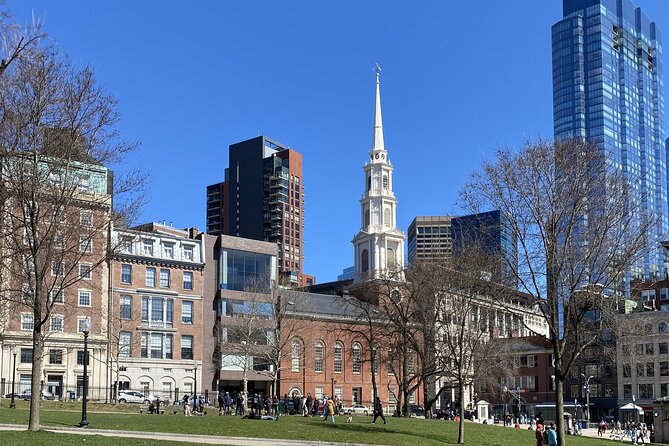
The tour kicks off at the Boston Common Visitors Center at 139 Tremont St, then begins at Boston Common itself. This is the oldest public park in the United States, dating to 1634, and it’s part of the Emerald Necklace, a green ribbon made up of 6 parks.
From there, you’ll hear about Telegraph Hill, tied to the city’s early founding. The park area also puts famous memorials and landmarks on your radar, including the Boston Massacre Memorial, the Great Elm Tree, and the Soldiers and Sailors Monument.
Practical note: Boston Common is a big place. The value here is that you’re not wandering, you’re getting an orientation to key points so you understand what you’re looking at once you step outside the tour.
Robert Gould Shaw Memorial to Massachusetts State House: architecture that tells you who had power
The walk continues with the Robert Gould Shaw and the 54th Regiment Memorial. You’ll pause for a bronze bas relief by sculptor Augustus Saint-Gaudens, which is a strong reminder that Boston’s Revolutionary story also includes later struggles and recognition of sacrifice.
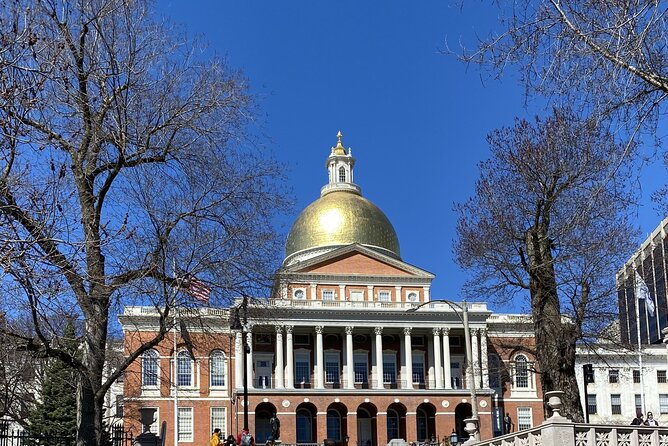
Next up is the Massachusetts State House, a true architectural focal point in Beacon Hill. Built at the end of the 18th century by architect Charles Bullfinch, it’s Federal style and capped by a golden dome that dominates Beacon Hill.
This is one of those stops where I like the “why this matters” angle. You’re not just seeing a landmark, you’re learning how power and civic identity were displayed in stone, dome shapes, and official spaces.
Old City Hall and the French Second Empire style you can spot instantly
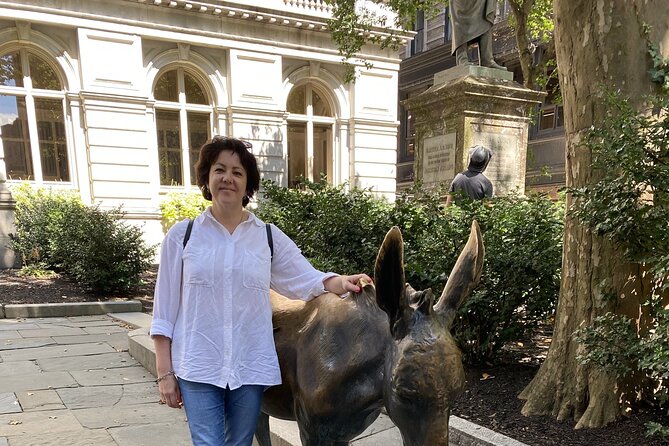
A quick jump brings you to Old City Hall, built in 1865 in French Second Empire style. The reference point here is the Napoleon III design language, similar in spirit to major Parisian buildings like the Garnier Opera.
It’s not only pretty, it’s historically useful. Old City Hall hosted Boston’s city council from 1865 to 1969, so you get a sense of how long these civic institutions were physically anchored in the same general downtown footprint.
If you’re the type who likes to connect art styles to time periods, this stop gives you a visual shorthand. You’ll start noticing these design cues as you walk the rest of downtown.
More of Boston from the top of the list
Old Corner Bookstore: a bookstore stop that adds context to American culture
Between major civic sites, you’ll also get a pause near the Old Corner Bookstore. Built in 1718, it’s located in what’s described as the oldest commercial building in downtown Boston.
What I like about including this kind of stop is the broader view of “what made a revolution.” It’s not only battles and speeches. This publishing location, active as a 19th century publishing house, is described as having published multiple famous American classics.
Even if you don’t go inside, the stop helps you connect ideas, publishing, and public life to the same streets you’re learning about for independence.
Revolutionary pressure points: Old South Meeting House, Old State House, and Boston Massacre
Now you hit the heart of Revolutionary geography. At Old South Meeting House, built in 1729, you’re looking at a former Puritan church that served as a gathering place for nearly three centuries.
Then you move to Old State House from 1713. This area is almost frozen in time compared to the modern surroundings around it. On July 18, 1776, the text of the United States Declaration of Independence was read from the balcony.
That’s a key moment for first time visitors: you’re not learning the Declaration as an abstract document. You’re learning where people would have stood in the street when the words were made public.
Right after that, the Boston Massacre site connects the story to the escalating violence of 1770. In front of a public building in this area, a squadron of British army troops opened fire and killed five Bostonians, and the incident became known as the Boston Massacre.
What makes these stops effective together is cause and effect. You see how gatherings, official announcements, and conflict happened in close proximity, not in separate chapters.
Faneuil Hall to Quincy Market: from Liberty to where you actually eat
The tour reaches Faneuil Hall Marketplace, built in 1741 and described as the Cradle of Liberty. A distinctive golden weathervane shaped like a huge grasshopper sits on the building, and the grasshopper became Boston’s first and most famous symbol.
This is one of the best “photo plus meaning” stops on the route. You get the symbol, the setting, and the role of public debate and organizing, all without needing a museum ticket.
From there, you move to Quincy Market from 1824. It used to be a market, and today it functions as a food court with an alley of stalls and shops. It’s described as an architectural highlight, so even your snack stop has a story.
Then you’ll pause at Union Oyster House, described as the oldest restaurant in the United States (1826), housed in a historic building from 1704. There’s also an interesting link to Louis-Philippe, the future king of France, who lived in the house in a modest apartment on the second floor.
I like that the tour doesn’t treat food as an afterthought. The Revolution happened in the same city where people later formed institutions like restaurants and public markets, and you can feel that continuity in these stops.
Old pedestrian lanes and the entrance into the North End
As you move through downtown, there’s a chance to look at old pedestrian streets behind the Bostonian hotel, including Blackstone Block, which is on the National List of Historic Places.
Then you transition into the North End, literally the northern district and one of Boston’s oldest neighborhoods. This is where the tour starts to feel less like a checklist and more like walking through a living historic quarter.
You’ll spend about 30 minutes in the North End area, which is valuable. It gives you time to breathe, absorb the feel of the streets, and reorient from civic landmarks into neighborhood character.
If you care about photography, this stretch is often where you’ll start getting better shots, because the streets and blocks look more intimate than the larger set piece areas.
Paul Revere House and Old North Church: colonial landmarks tied to real legends
The North End sequence is where the tour becomes very easy to picture. You’ll stop at the Paul Revere House, built in 1676, described as one of the last vestiges of the colonial era. Revere lived there from the 1780s to 1800.
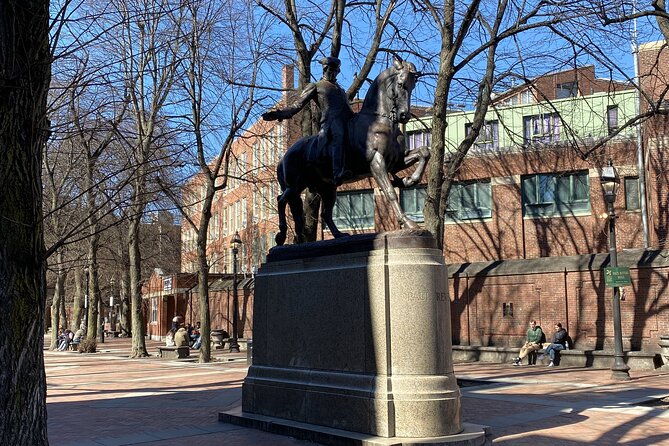
Then it continues to a Paul Revere statue in a historic pedestrian space that honors the Midnight Ride of 1775. That gives you a specific place to attach the famous name, rather than keeping it locked in textbooks.
Next is Old North Church and Historic Site. The first church in the North End was built on this site in 1650, and over the colonial period it’s described as the most influential church in the Northeast and a Puritan faith stronghold.
Even if your focus is mainly on the Revolutionary War, I think this stop matters because it shows how religion and community structure helped shape public life. And because it’s an outdoor pause, you can take your time looking at details like the placement and surrounding streets.
Copp’s Hill Burying Ground and the Charles River panorama finish
The tour ends at Copp’s Hill Terrace, just steps from Old North Church, in Boston’s Italian Quarter area. You’ll also get Copp’s Hill Burying Ground as the capstone stop.
Copp’s Hill was erected in 1632 and is the highest point in Boston’s North End. At the top is an old cemetery dating back to 1659, and from Copp’s Hill Terrace you can admire a panorama of the Charles River, plus the Bunker Hill Obelisk and the USS Constitution on the opposite bank.
This ending is smart. You walk through the narrative, then you finish with a wide view. It helps you file everything you learned into a mental map of the city.
What the French guide adds, beyond dates and plaques
A big part of the value here is that the guide is French-speaking and uses story style anecdotes. The tour description emphasizes that you’ll hear facts about Boston’s construction, architecture, notable figures, abolition, American education, immigration, and contemporary daily life.
That variety is not random. It helps you see Boston as a city that kept changing, not just a stage for one famous decade. You’ll also have moments where modern sculptures appear along the route, including The Embrace, so the city you’re walking through is connected to the city that exists now.
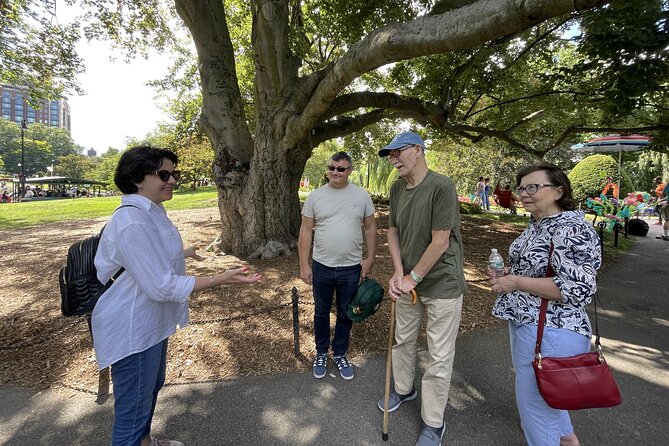
Also, the tour is described as adapted to your wishes and your pace. That matters if you’re the kind of traveler who likes to ask small questions or slow down for photos.
Price and timing: is 45 dollars worth it for a 2.5 hour walk
At $45.00 per person for about 2 hours 30 minutes, the value comes from what you’re getting that you would struggle to replicate on your own. You’re paying for guided pacing across multiple neighborhoods, plus a specialist who can explain why each site matters.
You’re also not paying for museum admissions, because museum visits are not part of the plan. In practice, that means your money goes toward interpretation, not ticket lines. Many stops are free to view, and the tour includes the guide services plus fees and taxes.
One more practical plus is that it’s a walking tour with no transportation provided, so you avoid the cost and time drag of moving between attractions by car or subway during the tour window. And with a maximum of 12 travelers, you’re less likely to feel lost in a crowd.
The likely downside is that you cannot use this as your only Boston activity. It’s designed to give you the Freedom Trail essentials and North End orientation, not to replace museum time or deep dives in specific buildings.
Who should book this Freedom Trail tour in French
This tour is a strong match if:
- You want Boston essentials quickly and prefer a guided route to solo planning
- You’re comfortable walking and want a structured way to understand downtown Boston and the North End
- You want history explained in French with anecdotes and discussion moments
- You like photography, because the route includes memorial stops and a strong final viewpoint at Copp’s Hill Terrace
It’s less ideal if:
- You expect indoor museum visits during the tour
- You want to spend long periods inside specific buildings rather than stopping outside and moving on
Should you book this French Freedom Trail walking tour?
Yes, if you want a guided, French-language way to get your bearings fast and still feel connected to the places that shaped the Revolution. I’d book it when you have only a half day and you want a route that covers the Freedom Trail essentials plus the North End finish.
I’d think twice if you already plan to spend heavy time in museums, because this schedule is built around outdoor stops, monuments, meeting houses, and streets. In that case, you might still enjoy it for orientation, but you’ll want other plans ready for indoor deepening.
FAQ
FAQ
How long is the tour?
The duration is about 2 hours 30 minutes.
How much does it cost?
The price is $45.00 per person.
Where does the tour start and end?
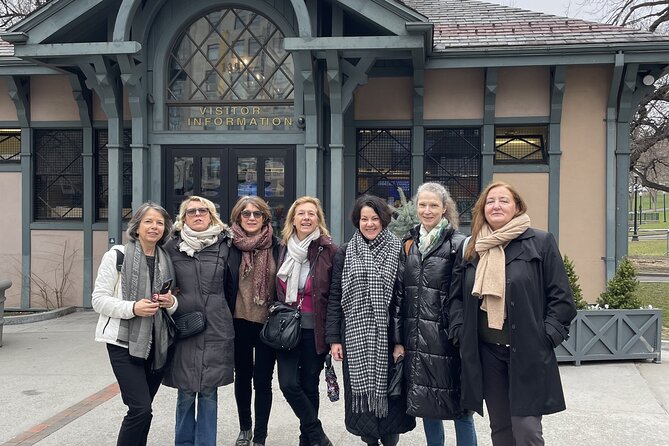
It starts at Boston Common Visitors Center, 139 Tremont St, Boston, MA 02111, and ends at Copp’s Hill Terrace, Boston, MA 02113.
Is this a museum tour?
No. Museum visits are not planned.
Is transportation included?
No. It is a walking tour, so transportation is not included.
What kind of ticket do I get?
You receive a mobile ticket.
How big is the group?
The tour has a maximum of 12 travelers.
Can I get a full refund if I cancel?
Yes. You can cancel up to 24 hours before the experience for a full refund. If you cancel less than 24 hours before, you will not be refunded.
More Tour Reviews in Boston




Keep Going in Boston
The Red Line, Three More Ways


More around Boston, freshly written up
- The Boston Bash Scavenger Hunt★ 4.5 · 3 reviews
- Self-Guided Audio Tour of Boston North End★ 4.5 · 3 reviews
- Self-Guided Boston Christmas Tour★ 5.0 · 3 reviews
- Self Guided “The North End Pizza, Cannoli and Picnic” Solo Walking Tour★ 5.0 · 3 reviews
- Cambridge: Haunted Charles River Cruise★ 4.3 · 3 reviews
- Boston: Official Freedom Trail® Lantern Tour★ 4.7 · 3 reviews
Freedom Trail Walking Tours, compared.
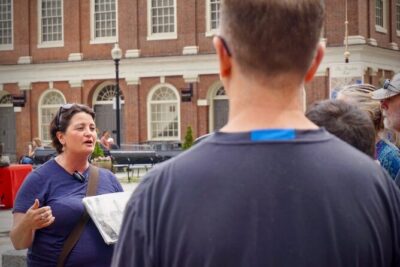 ★ 5.0Freedom Trail History Small Group Walking TourFrom $356,450 reviews
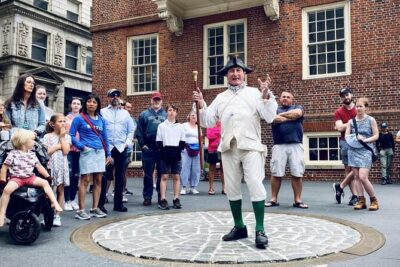 ★ 4.5Boston Freedom Trail Walking Tour with Costumed GuideFrom $262,531 reviews
 ★ 5.0Boston Food & History: Pizza, North End & Freedom TrailFrom $901,772 reviews
 ★ 4.9Boston’s Freedom Trail: A Revolutionary Walking TourFrom $311,748 reviews
★ 4.9Freedom Trail History Small Group Walking TourFrom $351,590 reviews
★ 5.0Boston’s Freedom Trail: A Revolutionary Walking TourFrom $311,343 reviews
 ★ 4.5Freedom Trail Walking Tour 250From $261,118 reviews
 ★ 5.0Boston Freedom Trail History Pub Crawl Small-Group TourFrom $60996 reviews
Also filed under