
REVIEW · FREEDOM TRAIL WALKING TOURS
Freedom Trail: Small Group or Private 2 Hour Walking Tour
Follow the footsteps of a revolution. This 2-hour private walk through Boston’s historic downtown and North End is built to make the American Revolution feel personal and local, not like a textbook.
I like that your guide keeps it small-group and story-driven, pointing out the buildings and sites tied to the years right before the Revolution. You also get the kind of context that helps you understand how Boston became a trigger point for change, including economic, environmental, and social shifts.
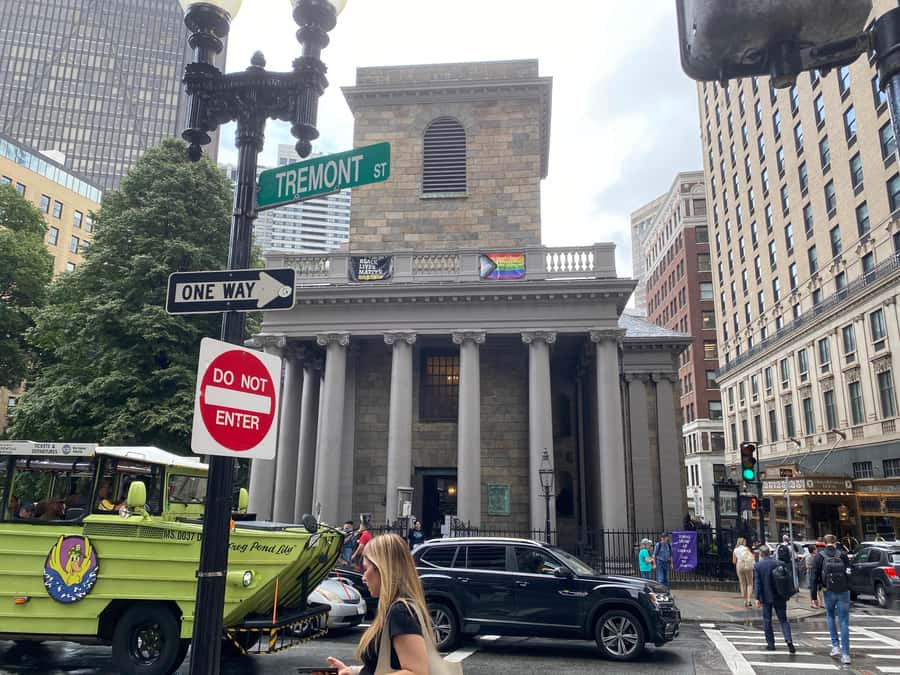
One thing to keep in mind is the meeting logistics. It starts near King’s Chapel at the corner of Tremont and Beacon, so arrive a few minutes early so you do not get stuck waiting with nobody to match your group.
Key Things That Make This Tour Worth Your Time
- Up to 2 people in your private group for more Q and a more conversational pace
- Revolution-era details that connect everyday tension to big events
- Tea Party focus including the March 5, 1770 question of Massacre vs something else
- Boston’s presses and Paul Revere explained as tools for persuasion and emotion
- A guided path from downtown to the North End with an ending at Copps Hill Terrace
Other ways to walk the red brick, compared
A Two-Hour Freedom Trail Experience That Ends at Copps Hill Terrace
Boston’s Revolution story does not only live in museums. It lives in street corners, doorways, and the way people talked, printed, and organized in the 1760s and 1770s. This tour is designed to fit into a tight schedule, but still give you real narrative momentum.
You get a full 2-hour guided walk with a clear “from tension to ignition” storyline. It is long enough to hear multiple threads, like how propaganda traveled and how local conditions pushed people into action.
Best of all, the ending point at Copps Hill Terrace helps you land the story with a sense of place. You leave with a mental map of what happened and where it happened, instead of just a list of dates.
Meeting Near King’s Chapel: Where You Start Matters
The tour meets at the corner of Tremont and Beacon streets, across from King’s Chapel. The starting location is listed as One Beacon Street, so expect the meetup area to feel like a short walk around that central point in downtown.
This matters more than people think. A Revolution-themed walk is not meant to start late, and with a private group setup, there is less flexibility if your guide has to wait. Arrive about 10 minutes early so you can settle in, check the route, and start on time.
Also, because this is a walking tour through historic streets, you will feel the difference between rushing in and starting calmly. You will hear more when you are not scanning for your guide.
Historic Downtown to the North End: What Your Guide Shows You
This is a guided walk through Boston’s historic downtown and the North End, with the focus on sites that mattered in the period leading up to the American Revolution. Instead of treating the Freedom Trail like a checklist, the guide ties places to cause and effect.
That approach is great for both history buffs and first-timers. If you already know the big headlines, you will still get the “why did this matter” layer. If you are new to the Revolution, you will get names and events framed in plain language that connects to what you see around you.
The downtown portion helps set the stage. You are seeing the environment where political pressure and public emotion could build. Then the walk into the North End keeps that story moving, since it is the kind of neighborhood where daily life and civic conflict could feel close together.
You should expect the guide to point out buildings and explain why they connect to the lead-up years. The goal is to help you look at Boston and recognize the Revolution as something that grew from local life.
The Tea Party Story, Including March 5, 1770
One of the strongest promises of this experience is a focus on the Tea Party era, including the event on 5 March 1770. The tour does not push one fixed label on you. You are encouraged to decide for yourself whether that episode was truly a Massacre.
That “make up your own mind” format is a smart choice for a walking tour. Labels and summaries can blur details when you only hear the loudest version. With a guide walking you through the context, you can weigh what people were reacting to and how that shifted public opinion.
This part of the walk is also useful if you care about how history gets told. You learn how the same event can be remembered differently depending on political goals and public messaging.
If you like stories where you have to think, not just listen, this stop is one of the reasons the tour earns strong feedback. It keeps the Revolution human and arguable, which is how it likely felt at the time.
More of Boston on foot
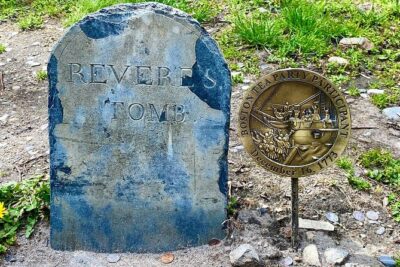
Paul Revere and Boston’s Printing Presses: How Emotion Spread
Boston in the 1760s was not only a place of protests. It was a place of writing, images, and persuasive messaging. A key promise here is learning why Paul Revere was such an effective messenger.
That does not mean the guide only covers famous moments. The emphasis is on how communication worked in a time before instant news. You get a sense of why messengers mattered when rumors could escalate quickly and when distance could delay truth.
Even better, you also hear how words and images printed on Boston’s presses stirred the emotions of a generation of colonial Americans. That is where the story gets extra relevant. You watch how media and public feeling can feed each other.
If you are the type who wonders why people reacted so strongly, this is your answer in story form. You leave understanding that revolution was built from both anger and persuasion, not only from force.
How Boston Changed Through Economics, Environment, and Society
The Revolution did not happen in a vacuum. It happened as Boston transformed. This tour specifically aims to explain how Boston changed through economic, environmental, and social change, and how those pressures shaped the choices people made.
That angle is valuable because it helps you stop thinking of history as a chain of isolated events. Instead, you see the Revolution as the end result of changes that affected daily life, resources, and power.
Even without a textbook, this approach gives you a framework to interpret what you hear on the walk. When the guide references economic strain or social tension, it clicks into place because you already understand the environment behind the headlines.
You will also walk away with a clearer view of “roots of American Democracy,” not as a slogan, but as a process driven by people pushing for meaning, rights, and representation.
Small Private Groups: When Up to Two People Changes the Tour
This tour is built for private groups of up to 2. That setup is not just about exclusivity. It changes how the guide teaches.
With fewer people, the guide can slow down when you ask a question. You can also follow the story thread more easily when the pacing is not set for a big crowd. If you have curiosity gaps, this format tends to fix them fast.
The feedback for the guides also points to personality in the teaching style. Names like Chad, Tressa, and John show up in the guide notes, and the praise keeps repeating the same idea: the stories land because the guide connects details clearly, often with a touch of humor.
So, if you like history that sounds like real people talking, not lecture audio, this small-group structure supports it.
The one drawback to keep in mind is coordination. Because the group is small and private, a mismatch at the meeting spot can be a bigger problem. If your plan is tight, treat this like any other timed departure, and be there early.
Comfort and Practical Tips for a 2-Hour Walking Tour
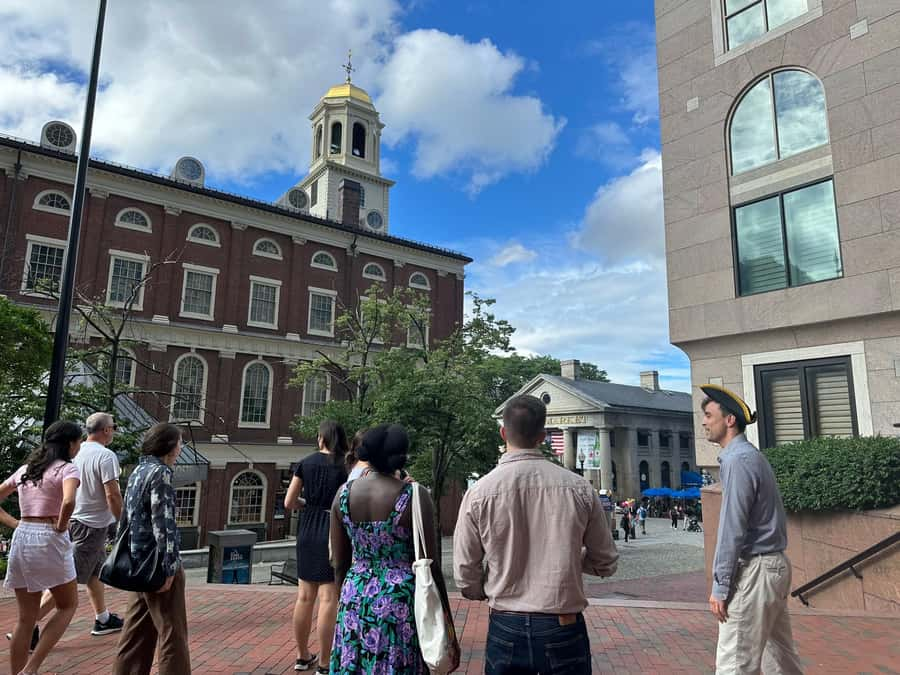
A walking tour sounds simple until you do it in older streets with lots of turning and stopping. For a 2-hour walk, you want to show up ready to move, but not exhausted.
Wear shoes you trust. Bring water if it is warm. If it is cold or rainy, dress for quick weather swings because you will be outside the whole time.
You do not need to be a marathon walker. The real goal is to stay comfortable enough to listen and look as the guide explains the significance of each stop.
One more practical note: the tour is listed as wheelchair accessible, which is great if you plan to bring a mobility device. Still, walking routes in older areas can involve curb cuts and uneven pavement, so plan accordingly and go slow if you need extra time.
Price and Value: Is $20 a Good Deal for a Private Guide?
At $20 per person for a 2-hour private walking tour, you are paying for two things that usually cost extra in cities: a guide who can explain context on the move, and the ability to keep your group small.
The value shows up in what you leave with. You are not just visiting Freedom Trail points, you are getting lesser known stories behind significant Revolutionary events. You are also learning how Boston transformed and how the press, messaging, and people’s reactions fed the fire.
Could you wander Boston on your own for cheaper? Yes, but you would be piecing it together. This tour reduces the guesswork. Instead of trying to connect the dots yourself, you get the dots connected for you in real time while you are standing where the story happened.
For history lovers on a budget, this pricing feels like a smart way to do Boston with depth without paying “big city private tour” rates.
Who Should Book This Freedom Trail Walk?
Book it if you want more than a route. You want a guided explanation of how the Revolution took shape in Boston, including the role of printing, messengers, and public emotion.
This also suits you if you are new to the topic. The tour is structured to bring the background into focus while you walk. You do not have to already know the story to follow it.
If you are traveling with a small party and you like asking questions, the private group of up to 2 format is ideal. It is also a good pick if you prefer museums earlier or later in your day and want a street-level alternative.
If you only want the shortest and most famous headline stops, you might feel the focus is more narrative than checklist. The trade-off is that you get the “how it worked” side of the Revolution.
Should You Book This Tour?
Yes, if you want a guided Freedom Trail experience that explains the ideas behind the famous moments. The tour’s biggest strength is how it connects places to causes, especially around the Tea Party era, the questioning of what happened on 5 March 1770, the role of Paul Revere, and how Boston’s presses moved public feeling.
I would skip it only if your priority is photographing specific landmarks above all else. This walk is for understanding, not for ticking boxes. If that sounds like what you want, this is a strong use of time at a very reasonable price.
FAQ
Where is the meeting point for this tour?
The tour meets at the corner of Tremont and Beacon streets, across from King’s Chapel.
How long is the walking tour?
The tour lasts 2 hours.
Is this tour private and how large is the group?
It is a private guided walking tour, designed for groups of up to 2.
Is the tour wheelchair accessible?
Yes, the tour is wheelchair accessible.
What language is the tour guide?
The live tour guide speaks English.
Can I cancel and get a full refund?
Yes. You can cancel up to 24 hours in advance for a full refund.
Is reserve now, pay later available?
Yes. You can reserve your spot and pay nothing today, with later payment flexibility.
More Tours in Boston





More Tour Reviews in Boston
The Red Line, Three More Ways


More around Boston, freshly written up
- The Boston Bash Scavenger Hunt★ 4.5 · 3 reviews
- Self-Guided Audio Tour of Boston North End★ 4.5 · 3 reviews
- Self-Guided Boston Christmas Tour★ 5.0 · 3 reviews
- Self Guided “The North End Pizza, Cannoli and Picnic” Solo Walking Tour★ 5.0 · 3 reviews
- Cambridge: Haunted Charles River Cruise★ 4.3 · 3 reviews
- Boston: Official Freedom Trail® Lantern Tour★ 4.7 · 3 reviews
Freedom Trail Walking Tours, compared.
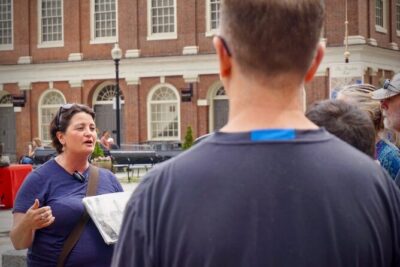 ★ 5.0Freedom Trail History Small Group Walking TourFrom $356,450 reviews
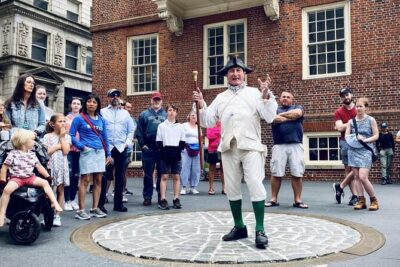 ★ 4.5Boston Freedom Trail Walking Tour with Costumed GuideFrom $262,531 reviews
 ★ 5.0Boston Food & History: Pizza, North End & Freedom TrailFrom $901,772 reviews
 ★ 4.9Boston’s Freedom Trail: A Revolutionary Walking TourFrom $311,748 reviews
★ 4.9Freedom Trail History Small Group Walking TourFrom $351,590 reviews
★ 5.0Boston’s Freedom Trail: A Revolutionary Walking TourFrom $311,343 reviews
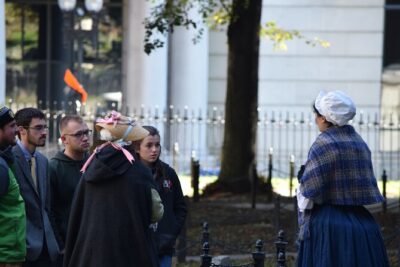 ★ 4.5Freedom Trail Walking Tour 250From $261,118 reviews
 ★ 5.0Boston Freedom Trail History Pub Crawl Small-Group TourFrom $60996 reviews
Also filed under