
REVIEW · FREEDOM TRAIL WALKING TOURS
Freedom Trail: Boston Common, Old State House, Faneuil Hall
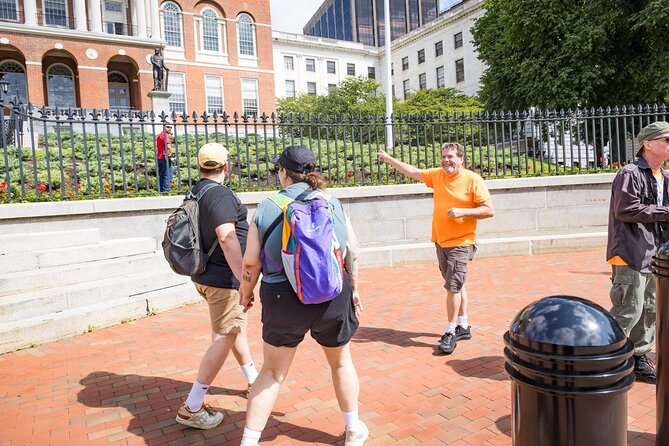
Your feet hit the Freedom Trail, fast. This 2-hour, small-group walk connects Boston Common, the State House, and Faneuil Hall with street-level detail and real context, led by local guide Brian. I love that the group stays small, so you get real chances to ask questions instead of nodding along to a script.
I also like the focus on the finer points, from the names in Granary Burying Ground to the moments tied to the Revolution. The main drawback to consider is pace: with about 15 minutes at each stop and lots of stories packed in, the tour can feel information-heavy if you prefer slower sightseeing.
Key things that make this Freedom Trail tour worth it
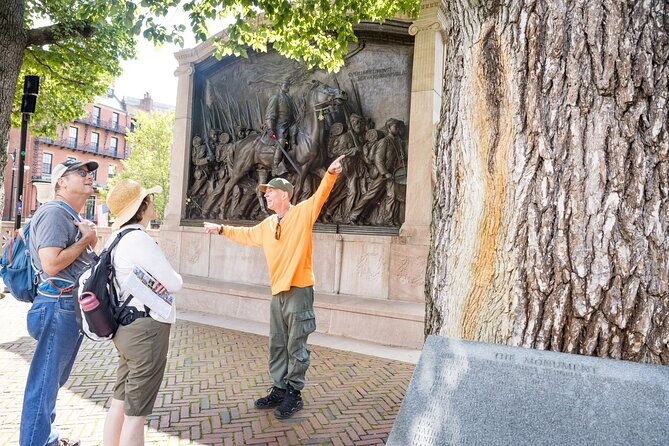
- Small group size (max 15): you are not lost in a crowd, and Q&A is actually possible
- Live local historian commentary: the details sound like Boston, not a lecture
- 8+ Freedom Trail stops in about 2 hours: efficient, without skipping the big anchors
- Extra angles beyond the obvious: the guide points out off-trail historical connections you may not expect
- Oldest-to-latest storyline: you move from early settlement sites to Revolution-era meeting places
- Walking-first approach: you get the city layout in your head, not just facts on a page
Other ways to walk the red brick, compared
Freedom Trail in 2 hours: why walking it with a guide works
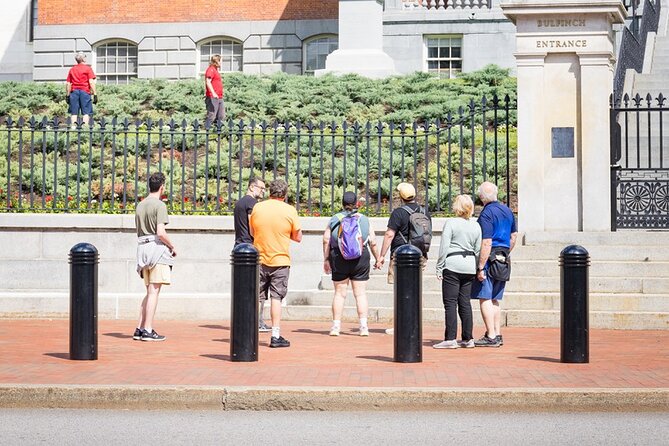
The Freedom Trail can be one of those “sounds simple” experiences that turns confusing fast. Yes, there is a line you can follow, but the meaning is in what happened at each spot, who was involved, and why the layout matters. A guided walk helps you connect the dots while you are still standing there.
This tour is built for that connection. You cover Boston Common through Faneuil Hall with 8+ stops, and each stop gets time to actually look and listen. With an organized flow, you do not spend your vacation time decoding where you are and what you just saw.
You also get a human layer. The guide is a local Boston historian, and the delivery is designed for the sidewalk, not a bus. In the best moments, people around you even lean in to hear what is being shared, which tells you this is not cookie-cutter storytelling.
Getting started at Tremont Street, what to know before you go
Start location is Tremont St and Park Street (near Winter St), with the tour starting at 10:30 am. It ends at Faneuil Hall Marketplace. That start-to-finish setup is handy because you finish right where you can keep walking, grab lunch, or continue exploring without retracing steps.
The group is capped at 15 travelers, which changes the whole feel of a history tour. When a guide is leading a small group, they can adjust to what you ask and how fast you are moving. It also makes it easier to hear the commentary without crowd noise taking over.
You get a mobile ticket, and the tour is offered in English. It is also near public transportation, which matters if you want to stitch this onto the rest of your day.
Finally, plan for comfortable walking. The tour is about 2 hours, so you should expect steady progress through the historic core rather than long sits down. If you want a slow museum-style pace, you might find this tour a bit brisk.
Stop 1: Boston Common, the calm starting point that anchors the story
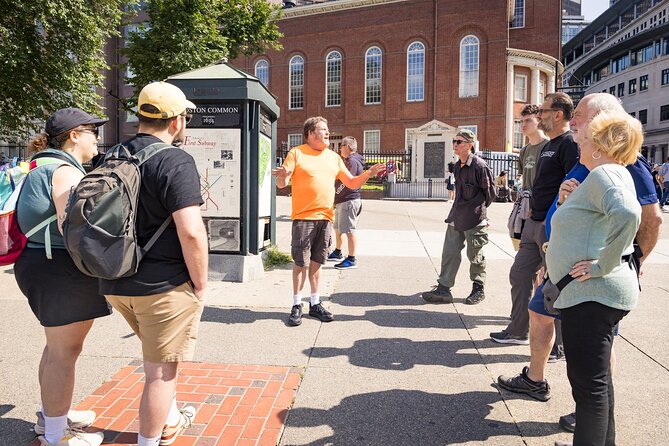
Boston Common is the start for a reason. Founded in 1634, it is America’s oldest public park, and it gives you a real “first chapter” feeling before you hit the more intense Revolution sites. The space works as a palate cleanser, so the rest of the trail feels more meaningful.
At this early stage, the best way to participate is to look at the setting, not only the facts. Notice how open the park is compared with the tight streets around it. That contrast helps you understand how public space shaped community life long before political speeches took center stage.
Admission here is free, so you can treat this stop as your low-stress warm-up. If you are the type who likes to get bearings fast, this park helps a lot because it is a clear geographic and emotional starting point.
Stop 2: Massachusetts State House, the golden-dome government backdrop
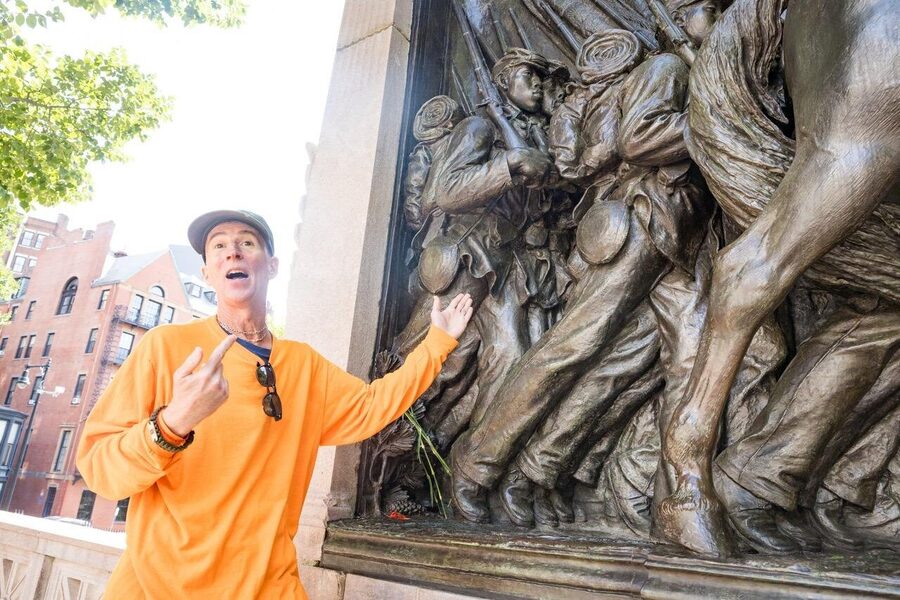
The Massachusetts State House is hard to miss once you are close. It was completed in 1798, and that famous golden dome signals power and authority. More than the photo, what I like is the way the guide frames the building as part of the state’s legislative story, not just architecture.
This stop is about government, process, and symbolism. When you know what the dome represents, it stops being a landmark and starts being a clue to how laws and public debate shaped the era.
Admission is free, and the time on site is around 15 minutes. Use that brief window to spot details and also listen for the story behind them. If you try to do a slow walk-around plus absorb the talk, you might feel rushed, so prioritize what the guide highlights.
More of the revolution, from the tea to the bridge

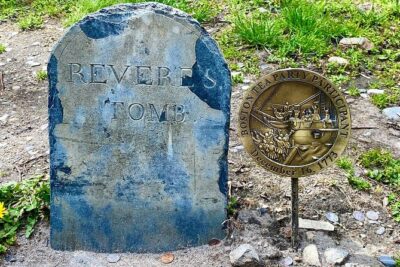
Stop 3: Park Street Church, anti-slavery speaking ground
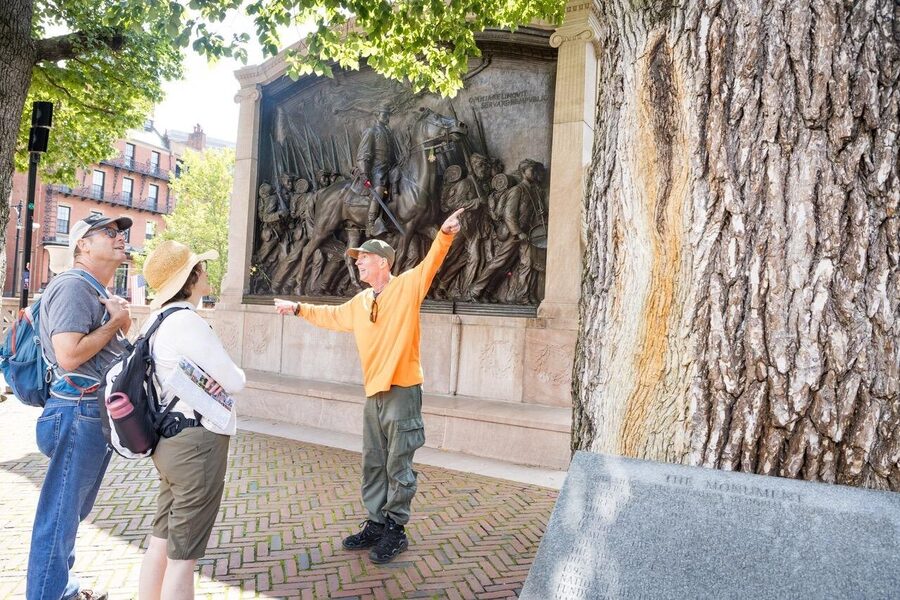
Park Street Church, erected in 1809, has one of those Boston connections that makes you sit up. It has been tied to significant events, including the first public anti-slavery address in the U.S. That is a powerful fact because it puts moral action into the same public space where political debate played out.
The steeple is a landmark in the skyline, but the most important part is the message trail. When you hear the anti-slavery connection explained, the church becomes part of the broader freedom story, not a separate religious side note.
Admission is free, and like the other first-day stops, the time is short. This is one of those spots where your best move is to focus on the guide’s key details and then take a quick photo if you want one.
Stop 4: Granary Burying Ground, where names make history personal
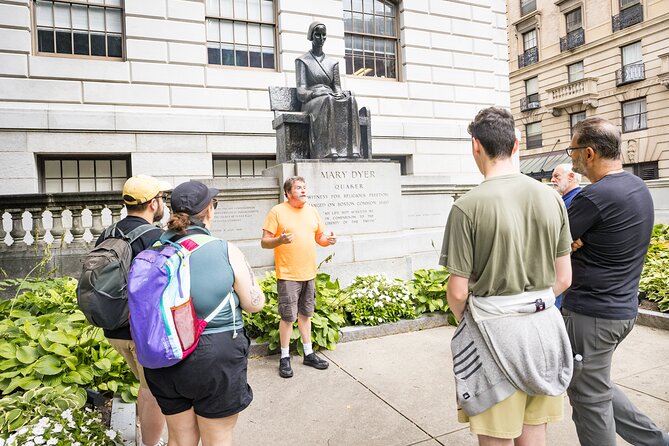
Granary Burying Ground is where a walking tour starts feeling emotional in the best way. It is one of Boston’s oldest historic cemeteries, and it is tied to major American Revolution figures, including Paul Revere, Samuel Adams, and John Hancock.
The real gut-check moment is Crispus Attucks, described as the first casualty of the Boston Massacre. Seeing that connection land in a cemetery changes the way you picture the events. It turns “history” into actual people who lived and died in the fight for freedom.
This stop includes admission, so it is the one point where your ticket is doing more than covering narration. The time is about 15 minutes, so come ready to listen, not ready to wander.
If you prefer reflective stops, this is your best one on the route. Just keep expectations realistic. In 15 minutes you will not read everything, but you can still grasp the major connections if you stay focused.
Stop 5: King’s Chapel, Georgian architecture with a Revolution-era twist
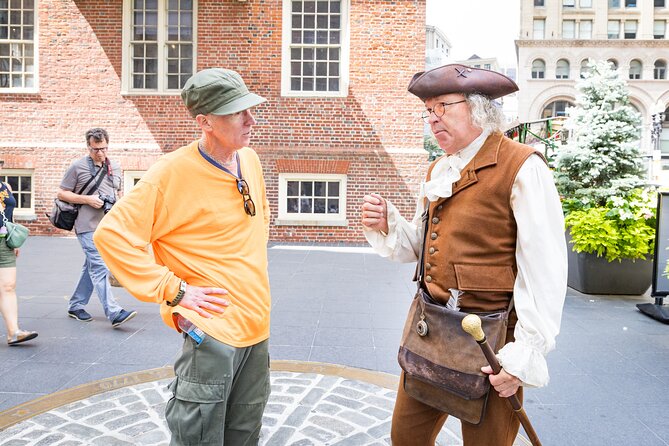
King’s Chapel was built in 1754, and it is a striking example of Georgian architecture. This stop adds a different texture to the story because it connects church life to the Revolution period, including ties to loyalist congregants.
That loyalist link is the sort of detail that helps balance the overall freedom narrative. Boston history is not one-note, and this is a spot where you see how communities split and how old institutions continued while politics changed outside.
Admission is free, and the stop length is around 15 minutes. I suggest you treat this stop as a “look plus listen” moment. Pay attention to what makes the architecture Georgian in the guide’s explanation, then let the loyalist context register.
Stop 6: Old South Meeting House, the Boston Tea Party begins as planning
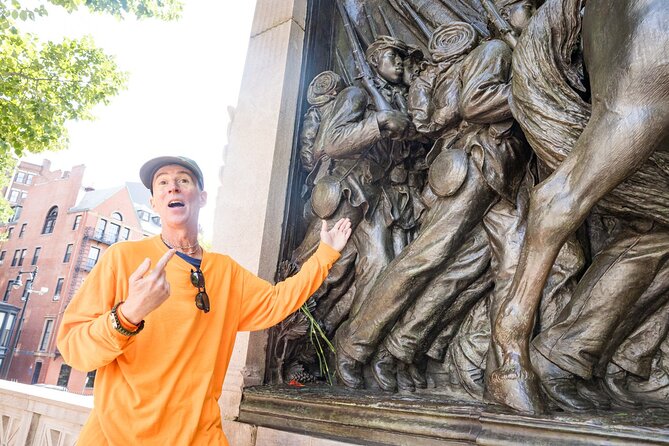
Old South Meeting House is where the tour’s Revolution momentum ramps up. Built in 1729, it is the site where plans for the Boston Tea Party were famously set into motion. The value here is that you are not only hearing about the event itself, you are seeing where the decision-making happened.
This helps you understand the Tea Party as more than a dramatic moment. It becomes a real political action, organized by colonists who were arguing for freedom and justice.
Admission is free, and you get about 15 minutes here. If you love cause and effect, this is one of the stops where the story will click. You start to feel how earlier public debate led to planned action, not random chaos.
Stop 7: Old State House, the balcony moment that helped ignite independence
The Old State House dates to 1713 and served as the seat of colonial government. It is also described as a stage for key moments leading to the Revolution, including the reading of the Declaration of Independence from the balcony.
That detail matters because it explains why a building can feel like a turning point. It is easy to think of independence as a single date. Standing here, the emphasis shifts to communication, crowds, and public declarations.
Admission is free, and the stop time is about 15 minutes. You will likely want to take a quick look at the balcony area and then focus on what the guide emphasizes about the event’s impact.
This is also a good time to ask a question if you have one about the Declaration moment or colonial government. With a max of 15 people, you are not fighting for hearing.
Stop 8: Faneuil Hall, the Cradle of Liberty and the end of the line
Faneuil Hall is often called the Cradle of Liberty, and the name fits. It has been a marketplace and meeting hall since 1742, hosting speeches and debates that pushed for independence.
By the time you reach Faneuil Hall, the tour story usually feels complete in your head. You have moved from community space (Boston Common), to government (State House and colonial authority), to speaking and organizing (church and meeting house), and then to open debate and action (Faneuil Hall).
Admission is free, and the tour ends here at Faneuil Hall Marketplace. I like finishing at a lively public space because it helps you turn “I learned stuff” into “I can keep exploring.” You are also set up well for food, because you will not need to travel far to reset after two hours of standing and walking.
The guide experience: what Brian’s style adds to your day
A lot of history tours sound the same once you hear three or four. This one avoids that by leaning into a local guide who knows how to talk to a walking group.
Brian is named in the guide feedback you have here, and multiple comments point to his standout energy and accuracy. One detail I take seriously is the way he shares extra historical stops or off-main-trail points. That is a big deal when you want more than the checklist view of the Freedom Trail.
The other practical piece is delivery volume and pacing. One note praises the tour as more intimate than a megaphone style. That matters because if the sound is too loud, you miss details. If the group can hear clearly, you remember more.
Two more tips if you want to get the most:
- Bring your questions on day one, not day four. Early stops are when your context questions make the biggest difference.
- Take a photo of any key name the guide highlights, especially from Granary. It is easier than trying to write everything down later.
One consideration from the feedback: the information load and high energy can overwhelm some people. If you are sensitive to fast talking, just plan to slow your own pace at the quieter moments and focus on the guide’s two or three most emphasized facts each stop.
Price and value: what $39 buys you in Boston’s historic core
At $39 per person for about 2 hours, you are paying for structure, pacing, and a local historian guiding you through 8+ stops. That is the main value. Without a guide, you can walk the Freedom Trail on your own, sure. But you would also be spending time figuring out meaning while you walk, and you would likely miss the “why this matters” thread the guide is delivering.
Another value factor is admissions. Most stops are free, and the itinerary includes at least one paid element at Granary that is marked as included. So your money is not just paying for standing outside buildings, you are paying for interpretation and for the moments where entry is part of the story.
You should also know gratuity is not included. That is standard for many guided walking tours, but it affects your final budget.
Who is this best for?
- First-time Boston visitors who want the Freedom Trail to make sense quickly
- People who like asking questions and hearing how one event connects to another
- History lovers who want accuracy and specific named details, not just general impressions
Who might want to adjust expectations?
- If you want slow and quiet, this route is short on time per stop
- If you are traveling with very young kids, this is mostly building viewing plus listening, so it may not fit everyone’s attention span
Should you book this Freedom Trail walk from Boston Common to Faneuil Hall?
If your goal is to understand the Freedom Trail in one efficient morning, I think this is a solid booking. The small group size, live local commentary, and tight stop-to-stop flow make it a good choice when you want meaning, not just movement.
Book it if you like walking with a guide who names key figures and explains how the Revolution story fits together. It is also a strong option if you want to finish at Faneuil Hall and keep going without hassle.
I would think twice if your style is slow, quiet, and minimal info. With about 15 minutes per stop, you have to be ready to take in a lot while you are moving. If you can handle that, you will likely come away with the Freedom Trail story much clearer than you would from a self-guided walk alone.
FAQ
How long is the Freedom Trail tour?
The tour runs for about 2 hours (approx.), covering 8+ stops along the Freedom Trail.
How much does the tour cost?
It costs $39.00 per person.
Where does the tour start, and what time does it begin?
It starts at Tremont St & Park Street, Winter St area in Boston, MA 02108. The start time is 10:30 am.
Where does the tour end?
The tour ends at Faneuil Hall Marketplace in Boston, MA 02109.
What’s included in the price?
The tour includes an award-winning guided walking tour with live commentary by a local Boston tour guide and historian, plus guidance through the Freedom Trail highlights across 8+ stops. Granary Burying Ground admission is included.
Is the tour mostly free to enter, or are there paid stops?
Most stops are free, and Granary Burying Ground has admission included.
Is gratuity included, and what about cancellation?
Gratuity is not included. Free cancellation is available if you cancel at least 24 hours before the experience’s start time for a full refund.
More of Beacon Hill






More Revolution in Boston




The Red Line, Three More Ways

More around Boston, freshly written up
- The Boston Bash Scavenger Hunt★ 4.5 · 3 reviews
- Self-Guided Audio Tour of Boston North End★ 4.5 · 3 reviews
- Self-Guided Boston Christmas Tour★ 5.0 · 3 reviews
- Self Guided “The North End Pizza, Cannoli and Picnic” Solo Walking Tour★ 5.0 · 3 reviews
- Cambridge: Haunted Charles River Cruise★ 4.3 · 3 reviews
- Boston: Official Freedom Trail® Lantern Tour★ 4.7 · 3 reviews
Freedom Trail Walking Tours, compared.
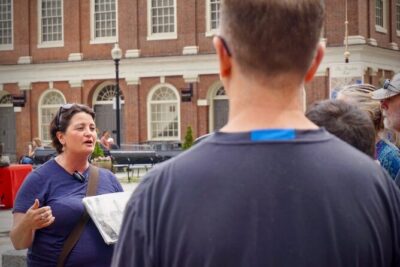 ★ 5.0Freedom Trail History Small Group Walking TourFrom $356,450 reviews
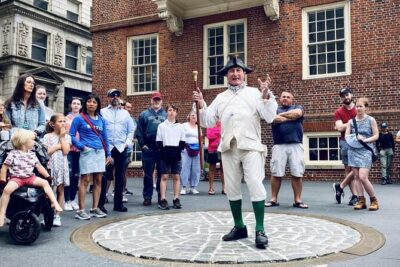 ★ 4.5Boston Freedom Trail Walking Tour with Costumed GuideFrom $262,531 reviews
 ★ 5.0Boston Food & History: Pizza, North End & Freedom TrailFrom $901,772 reviews
 ★ 4.9Boston’s Freedom Trail: A Revolutionary Walking TourFrom $311,748 reviews
★ 4.9Freedom Trail History Small Group Walking TourFrom $351,590 reviews
★ 5.0Boston’s Freedom Trail: A Revolutionary Walking TourFrom $311,343 reviews
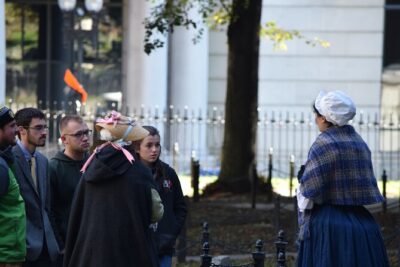 ★ 4.5Freedom Trail Walking Tour 250From $261,118 reviews
 ★ 5.0Boston Freedom Trail History Pub Crawl Small-Group TourFrom $60996 reviews