
REVIEW · FREEDOM TRAIL WALKING TOURS
Downtown Freedom Trail Walking Tour – History & Architecture
Boston runs on stories. This Freedom Trail walk strings them together with real architecture clues. You’ll cover key sites from Faneuil Hall to Boston Common, with the guide tying the buildings to the events that shaped the city.
I love the mix of big landmarks and small details. You get the kinds of moments you’d miss just walking on your own, like pausing for the exact spots connected to the Revolution and checking out the faces and forms of the churches and civic buildings along the way. And I also like the group size, capped at 20, so you can actually hear and ask questions without feeling like you’re in a crowded lecture hall.
One possible drawback: it’s a walking tour in the open air, and it runs in all weather. If you hate rain, cold wind, or slippery sidewalks, you’ll want to dress like you mean it.
Quick hits you can use
- Start at State Street near Congress Street, finish at Brewer Fountain on the Freedom Trail, with a 10:00 am start.
- 70- minute route through downtown focused on the Freedom Trail core, from Faneuil Hall toward Boston Common.
- Architecture gets equal billing with the political history, especially around church and government buildings.
- Lots of pause points, so you’re not just marching past.
- Family-friendly pace, but kids need an adult with them.
- Mobile ticket in English, easy to use once you’re at the meeting point.
Other ways to walk the red brick, compared
Why this Freedom Trail walk works so well downtown
The Freedom Trail in Boston is famous for a reason. It’s one of the fastest ways to understand how the American Revolution took shape right here, block by block. But downtown is also busy, and if you just follow the red line on your own, it can feel like a list of stops without a story thread.
This tour solves that problem by giving you context as you walk. Instead of turning every site into a standalone postcard, the guide connects them. You learn what happened, then you learn why the building matters and what it looked like to the people living around it. That makes the trail feel less like a scavenger hunt and more like a timeline you can walk through.
I also appreciate the practical setup. The tour is only about 70 minutes, so it fits neatly into a day of museum time and waterfront wandering. For first-time visitors, it’s a strong way to get your bearings fast. For families, it’s short enough to keep energy levels from collapsing before the kids start asking, Are we there yet?
And yes, you’ll still do plenty of walking, since it’s on foot the whole time. Come ready for sidewalks, and you’ll have a much better experience.
Meeting point and pacing: what your day should look like
You meet at State Street at Congress Street and the tour starts at 10:00 am. You end at Brewer Fountain on the Freedom Trail. The route is built around the downtown core, so most of the time you’re moving through areas that are already rich with restaurants and attractions.
The pacing is designed to cover a lot of ground without rushing. The tour is guided, not just narrated while you shuffle along. You’ll stop at multiple landmarks, which is key, because some of the details are easy to miss if you’re walking casually.
Also, keep your schedule realistic. Boston downtown crowds can slow things down, and if someone arrives late, it can throw off the group rhythm. One tip that helps a lot: arrive a bit early so you’re not trying to catch up while everyone else is already starting.
Group size matters here. With a maximum of 20 travelers, the tour avoids the “only the first rows hear anything” problem. If you’re traveling with someone who has trouble hearing in noisy streets, this smaller group format is a big plus.
Paying attention to architecture changes how you read each stop
A lot of Freedom Trail tours focus almost entirely on the political story. This one puts real emphasis on history plus architecture, and it changes the way you see the streets.
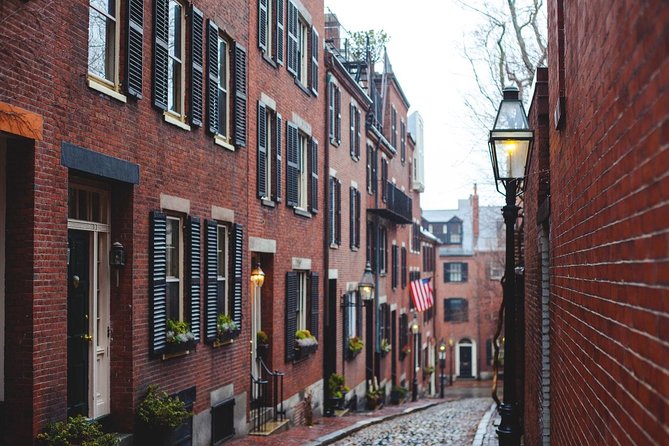
In Boston, buildings often served multiple roles over time. Churches were community hubs. Civic buildings evolved as the city’s government changed. Streets and plazas became stages for public action, speeches, and gathering. When you understand how the space worked, the Revolution-era events become easier to picture.
That’s also why this tour can feel different in good and bad ways, depending on what you want most. If your priority is political events only, you may find the architecture emphasis takes up more time than you expect. If you like seeing the past in physical form, the architecture angle is what makes the walk click.
Stop by stop: what you’ll see and why it matters
More of Boston on foot
Faneuil Hall and Quincy Market: the stage for protest
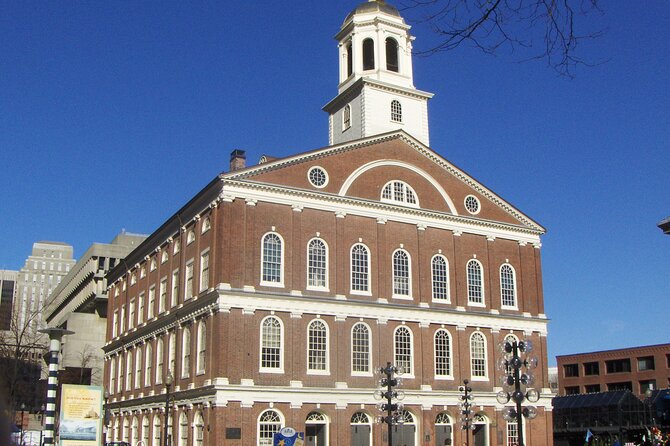
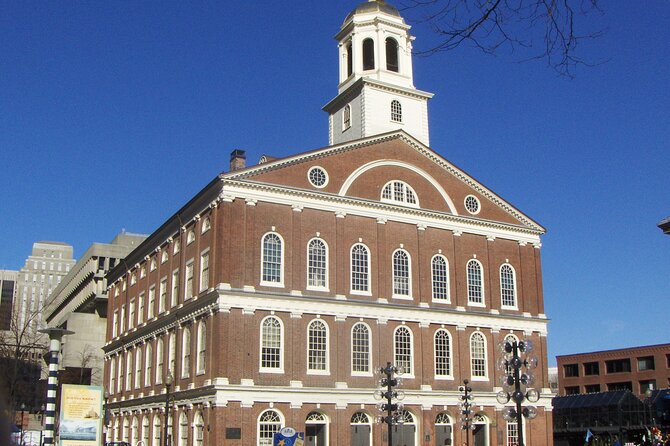
The trail begins in the “hot” part of the downtown story. You start around Faneuil Hall, the historic marketplace often described as the Cradle of Liberty. Here, public speech and protest weren’t side events. They were the system.
You’ll also have a chance to look around the broader market area near Quincy Market, which helps you understand how public life works in this part of Boston today. In other words, it’s not just a museum block. It’s still a place where people gather.
A small detail with big payoff: don’t skip looking up at the famous grasshopper weathervane. It’s one of those sights you remember because it gives the building a personality.
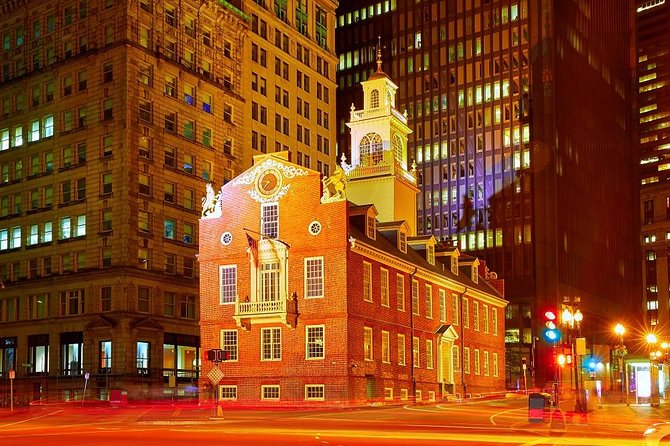
Old State House: government power in brick
Next comes the Old State House, a key structure from the British colonial period. The big takeaway is what happened there: the Declaration of Independence was first read to Bostonians from its balcony. That single detail gives the building a job beyond “historic.”
This stop is also a good example of why the architecture focus helps. The building looks like a civic monument because it was built as a center of authority. When you stand there, you can almost feel the difference between public space for rules versus public space for resistance.
Boston Massacre site: finding the exact ignition point
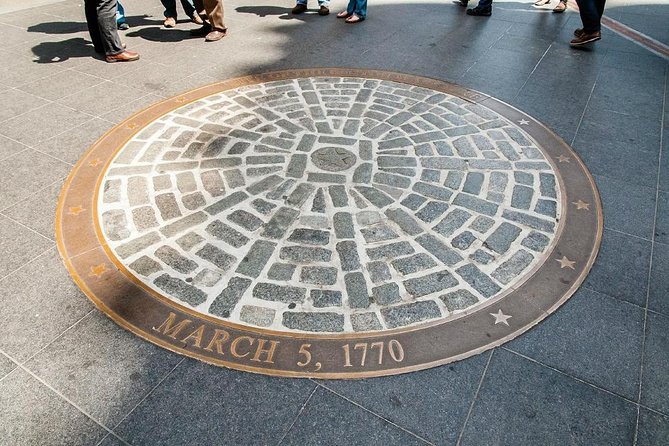
Then you hit the Boston Massacre site, marked by a cobblestone ring in the pavement. This is the kind of feature that feels dramatic because it’s precise. You’re not just hearing about a moment, you’re standing on the spot.
If you like interactive learning, this is one of the best stops on the route. Point, look, understand. The guide helps you connect the event to how the crowd and the street layout shaped what people saw in that tense period.
Park Street Church: where the trail keeps moving through community space
You’ll also pass by Park Street Church. The value here is less about one single dramatic headline and more about how religious institutions sat inside the city’s civic life. Boston’s downtown wasn’t split into separate worlds. Churches, meeting halls, government buildings, and markets all fed the same public conversations.
If you’re the type who likes to understand how neighborhoods work, this stop helps you see Boston as a living system rather than an open-air history book.
Old South Meeting House: signals, assembly, and influence
The Old South Meeting House is another anchor point. This is where you learn how organized public action worked at scale.
The guide explains how the meeting house links to the start of the Boston Tea Party signals in 1773, showing how communication and gathering were central to the Revolution story. Even if you already know the broad event, standing on a site built for assemblies makes the logic feel clearer.
Old Corner Bookstore and the author crowd
At the Old Corner Bookstore, the history shifts from politics to culture and business. The building at 283 Washington Street was built in 1718 as a residence and apothecary shop, and it became a bookstore later, in 1828.
What you’ll like here is the human angle. The guide points out how major writers once gathered in the store’s orbit, including Ralph Waldo Emerson and Charles Dickens. It’s a reminder that Boston’s role in American identity wasn’t only about protests and power. Ideas traveled through the city too.
Omni Parker House: the Revolutionary downtown meets dessert
Along the way, you’ll pass the Omni Parker House. It’s a neat contrast stop because it connects old Boston to a very modern kind of famous.
The building is tied to being the oldest continuously operating hotel in the United States, and it’s also noted as the birthplace of the Boston Cream Pie, Parker House Rolls, and even the term scrod. It’s not Revolution history. That’s the point. It shows how downtown momentum keeps going, even after the big political chapters.
Old City Hall: civic authority in a French Second Empire look
Next, you’ll take in Old City Hall, located at 45 School Street. The Boston City Council used this building from 1865 to 1969, and the structure is known for its French Second Empire style, designed by Gridley James Fox Bryant and Arthur Gilman.
This stop matters because it shows how Boston’s idea of government kept evolving. The architecture here acts like a time stamp. It looks confident, formal, and built to command respect.
First Schoolhouse site and Boston Latin School
You’ll also cover the First Schoolhouse site, plus the area tied to Boston Latin School, founded April 23, 1635. The guide explains that it was the first public school in America, originally providing classical education to boys, and it started on School Street.
Two details make this stop more vivid than you might expect:
- A statue of Benjamin Franklin marks the area.
- A sidewalk mosaic helps show where the school originally stood.
Even if you’re not a school-history person, this is one of the stops that helps you understand the Puritan era’s focus on education and structure.
King’s Chapel: 330 years of change in one place
King’s Chapel is another big stop. The guide places it in the larger Freedom Trail story but also makes clear that it has history unique to its own site. The church’s span goes from its founding in 1686, through the Revolution era, into modern-day Boston.
This stop is a good place to slow down and look carefully. The building isn’t just a backdrop. Churches were long-term institutions, so they hold layers of what Boston was, what it became, and how people kept worshiping through change.
Tremont Temple: an integrated church story with real context
Tremont Temple adds depth. You’ll hear how it formed in 1839 (originally The Free Baptist Church) and how its story ties to open attendance and racial inclusion.
The tour’s key points here include that it’s described as the first integrated church in America, and that the church initially offered open attendance without charge. The guide also shares examples of what the temple’s halls hosted publicly, including an Egyptian mummy display in 1850 and speeches against slavery by Sam Houston and Frederick Douglass.
This is one of those stops that doesn’t just teach dates. It teaches how social change shows up in community institutions.
Old Granary Cemetery: final resting places you recognize
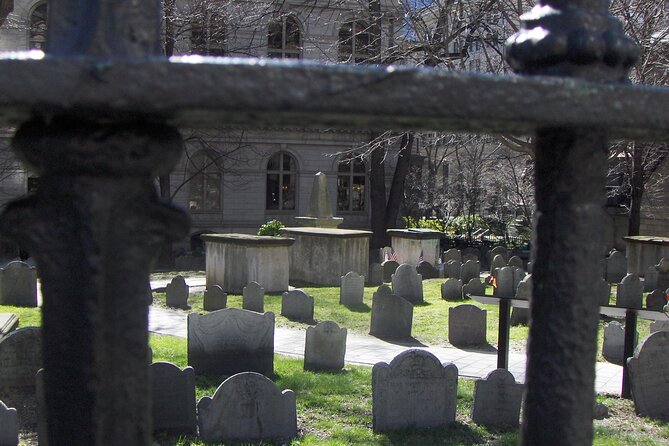
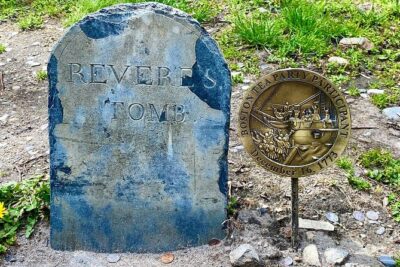
Then you reach Old Granary Cemetery, one of the most visited on the trail. Here, the big takeaway is who lies at rest there, including Paul Revere, Samuel Adams, and John Hancock.
This stop can feel quieter than the others, and that’s good. It gives your brain a breather between the public drama and the next stretch of architecture.
New State House and Boston Common: the modern government view
Finally, you end up at the New State House, built in 1798, with the iconic 23-karat gold dome overlooking Boston Common.
Boston Common is the oldest city park in the United States, totaling 50 acres, and it’s bounded by major downtown streets. The tour gives you enough context to understand why this open space mattered to Boston’s public life, not just as scenery.
If you want a clean finish to a history walk, this is it. You end with a view that connects the Revolution story to the city’s government today.
What makes the guide experience feel different (when it goes right)
The guide is the difference between a “walk to see stuff” and a “walk to understand Boston.”
On this tour, the tone tends to be friendly and engaging. Multiple people have praised guides for being welcoming, funny, and willing to answer questions. Names that have popped up in past groups include Alan and Andrew, both described as bringing humor and making the story easy to follow.
The best part of that style is how it affects your attention. You stop thinking, This is a tour. You start thinking, Oh, I see why that matters. That is not guaranteed. But when it works, the 70 minutes feel like more than 70 minutes.
One practical note: a microphone can be a big deal in outdoor crowds. A few people have said it was hard to hear at times. So if you care about audio quality, sit closer to the guide and try to keep your phone volume low so you can hear the details.
Who this tour is best for
This is a strong fit if you want a tight overview of the Freedom Trail without committing to a half-day plan.
- First-time visitors who want a guided orientation through downtown.
- History lovers who like events but also want to understand the physical setting.
- Families who need a short, structured walk with stops that feel concrete.
- Architecture fans who want buildings to do more than look old.
If your goal is purely political chronology, you might want to supplement this with a longer, more event-heavy tour. But if you want the city to make sense as you walk, this one does the job.
Price and value: is $45 fair for 70 minutes?
At $45 per person for about 70 minutes, the value comes from packing guided context into a short window. You’re not paying to enter big museums on this route. You’re paying for a professional guide to turn landmarks into a story, plus the tour handles the pacing and stop order.
Compared with many “Freedom Trail overview” options, the biggest value is that you cover downtown anchor points, then connect them to architecture, not just headlines. That connection helps the sights stick in your mind, and it makes the trail more rewarding later when you revisit on your own.
If you’re the kind of traveler who learns best from walking, asking questions, and seeing details up close, this price can feel very reasonable. If you’re already an expert on Revolutionary Boston, you may feel the time is a bit short for deeper subject matter.
Weather and comfort tips that actually matter
The tour runs in all weather conditions. So dress for the weather you’ll face, not the weather you hope for.
- Wear comfortable walking shoes with good grip.
- Bring a light rain layer if there’s any chance of rain.
- If it’s hot, plan to hydrate before you meet.
- The route is outdoors, so wind can matter as much as temperature.
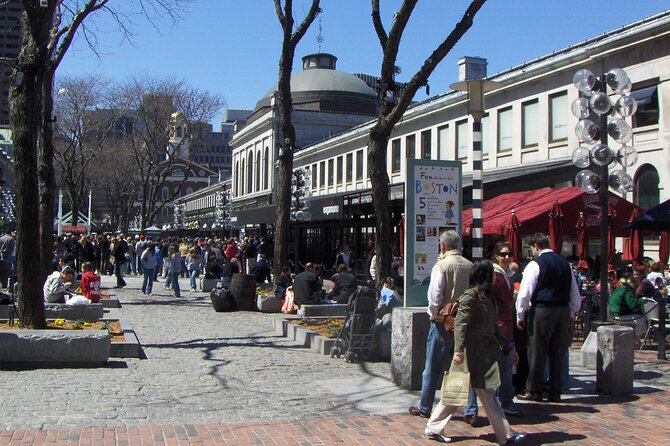
Also, the sidewalks downtown can get crowded near markets and major landmarks. A small group helps, but you’ll still want to move with the guide instead of drifting off to take your own photo every two seconds.
Should you book this Downtown Freedom Trail tour?
Yes, if you want a guided, stop-and-start version of the Freedom Trail that connects architecture and American history without turning your day into a marathon.
I’d book it if you’re:
- doing Boston for the first time,
- traveling with family and want a manageable length,
- curious about why buildings look the way they do and how that ties to public life.
I’d think twice if:
- you mainly want a strict, deep political lecture and less attention to buildings,
- you’re sensitive to outdoor walking in rain or cold,
- you need very loud audio (in that case, plan to stand where you can hear well).
If you want a practical first step into Boston’s downtown story, this tour is a solid choice.
FAQ
How long is the Downtown Freedom Trail walking tour?
The tour is listed at about 1 hour 10 minutes, and it is also described as a 70-minute walking tour.
How much does it cost?
The price is $45.00 per person.
Where do I meet the guide, and where does the tour end?
You start at State Street at Congress Street, Boston, MA 02203, and the tour ends at Brewer Fountain on Freedom Trail, Boston, MA 02108.
What time does the tour start?
The start time is 10:00 am.
Is the tour in English, and do I get a ticket on my phone?
Yes. The tour is offered in English, and it includes a mobile ticket.
What group size should I expect?
This experience has a maximum of 20 travelers.
Does the tour run in bad weather?
It operates in all weather conditions, so dress appropriately. If it is canceled due to poor weather, you will be offered a different date or a full refund.
Is the tour suitable for families and kids?
Most travelers can participate, and children must be accompanied by an adult.
What is the cancellation policy?
You can cancel up to 24 hours in advance for a full refund. If you cancel less than 24 hours before the start time, the amount paid is not refunded.
More Tours in Boston



More Tour Reviews in Boston
The Red Line, Three More Ways


More around Boston, freshly written up
- The Boston Bash Scavenger Hunt★ 4.5 · 3 reviews
- Self-Guided Audio Tour of Boston North End★ 4.5 · 3 reviews
- Self-Guided Boston Christmas Tour★ 5.0 · 3 reviews
- Self Guided “The North End Pizza, Cannoli and Picnic” Solo Walking Tour★ 5.0 · 3 reviews
- Cambridge: Haunted Charles River Cruise★ 4.3 · 3 reviews
- Boston: Official Freedom Trail® Lantern Tour★ 4.7 · 3 reviews
Freedom Trail Walking Tours, compared.
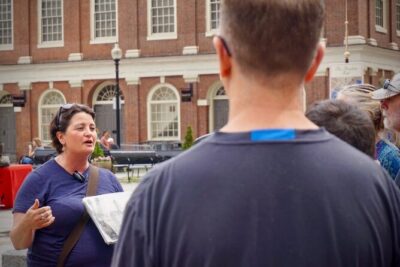 ★ 5.0Freedom Trail History Small Group Walking TourFrom $356,450 reviews
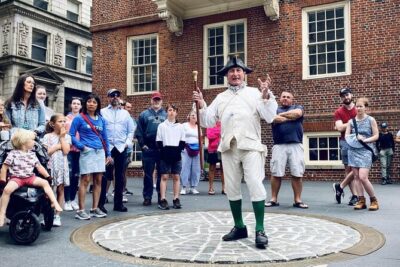 ★ 4.5Boston Freedom Trail Walking Tour with Costumed GuideFrom $262,531 reviews
 ★ 5.0Boston Food & History: Pizza, North End & Freedom TrailFrom $901,772 reviews
 ★ 4.9Boston’s Freedom Trail: A Revolutionary Walking TourFrom $311,748 reviews
★ 4.9Freedom Trail History Small Group Walking TourFrom $351,590 reviews
★ 5.0Boston’s Freedom Trail: A Revolutionary Walking TourFrom $311,343 reviews
★ 4.9Boston’s Freedom Trail: A Revolutionary Walking TourFrom $311,748 reviews
★ 4.9Freedom Trail History Small Group Walking TourFrom $351,590 reviews
★ 5.0Boston’s Freedom Trail: A Revolutionary Walking TourFrom $311,343 reviews
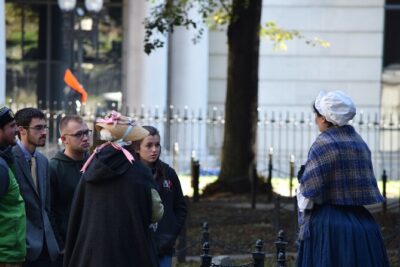 ★ 4.5Freedom Trail Walking Tour 250From $261,118 reviews
 ★ 5.0Boston Freedom Trail History Pub Crawl Small-Group TourFrom $60996 reviews
Also filed under