
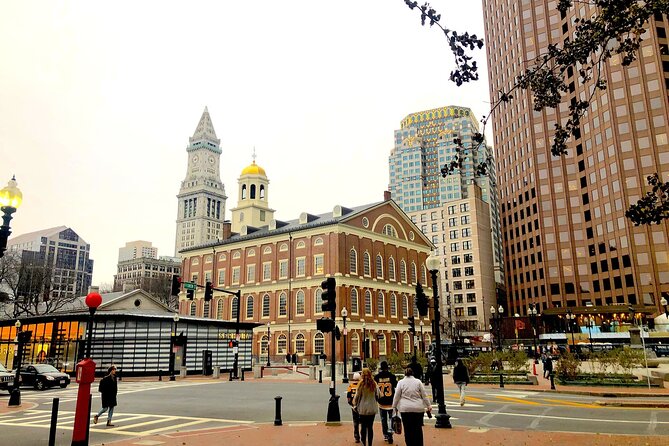
REVIEW · FREEDOM TRAIL WALKING TOURS
Boston’s Revolutionary Path The Freedom Trail Tour
Boston can feel big, but this route keeps you focused.
I like how this Freedom Trail walk mixes the famous Revolution sites with a more modern story at the start, The Embrace, and I also like the pace of an easy, guided 2-hour stroll. The group stays small, so you get real explanations instead of shouting over a crowd. One thing to weigh: it is a walking tour, and some stops are short, so if you want long museum time, you may feel a little rushed.
You’ll start at The Embrace on Boston Common and end near Faneuil Hall Marketplace, with stops in between that connect people, politics, and power in early Boston. I especially like the cemetery stops, because the guide helps you read the names and dates like a story, not just stone. The only drawback I’d flag is timing: you’ll cover a lot in about two hours, so wear shoes you trust and plan to do any extra wandering after the tour.
Key things to know before you go
- Small group, max 10 travelers means more chances to ask questions and hear details clearly.
- 2 hours on foot covers major highlights, including Boston Common, Beacon Hill, and the State House area.
- The Embrace (2023) at the start links themes of unity and justice to the rest of the walk.
- Two historic cemeteries you’ll actually understand: King’s Chapel Burying Ground (1630) and Granary Burying Ground (1660).
- Old State House to Faneuil Hall connects the Revolution story from speeches and documents to public protest.
- Quincy Market is a satisfying finish, with local food vendors, shops, and street performers.
Other ways to walk the red brick, compared
A focused Freedom Trail walk that starts with a modern symbol

The best way to think about this tour is as a guided “through-line” of Boston. You get the well-known Revolutionary landmarks, but you also get places that help you understand how people lived, believed, and fought before the United States existed.
It lasts about two hours, and that matters because the route is efficient. You are not meant to park yourself in a museum all afternoon. You’re meant to get your bearings fast, learn what to look for, and then decide what to revisit later.
Also, the tour is English and built for most visitors. Service animals are welcome, and the meeting and ending points are near public transportation, so you are not stuck with a car or complicated transfers.
Stop 1: The Embrace on Boston Common, where justice becomes personal
You begin at The Embrace at 139 Tremont St on Boston Common. It is a bronze sculpture unveiled in 2023, honoring Dr. Martin Luther King Jr. and Coretta Scott King.
The design is simple but powerful: their arms and embrace are intertwined, inspired by a famous photo of them hugging after Dr. King won the Nobel Peace Prize in 1964. The guide typically uses that moment to set the tone for the walk. This isn’t just Revolutionary history as text on a wall. It is about people, relationships, and the emotional fuel behind change.
Practical tip: since the first stop is brief, don’t plan on reading every nearby plaque. Instead, use it like a “program opener,” then let the rest of the walk explain how Boston’s fight for justice echoed across centuries.
Beacon Hill and Boston Common, two kinds of calm
Next comes Beacon Hill, one of Boston’s prettiest neighborhoods. You’ll notice the look of old Boston right away: cobblestone streets, gas lamps, and Federal-style brick homes. The tour gives you just enough time to stroll and absorb the atmosphere, including the area around famous streets like Acorn Street, plus nearby parks, shops, and cafes.
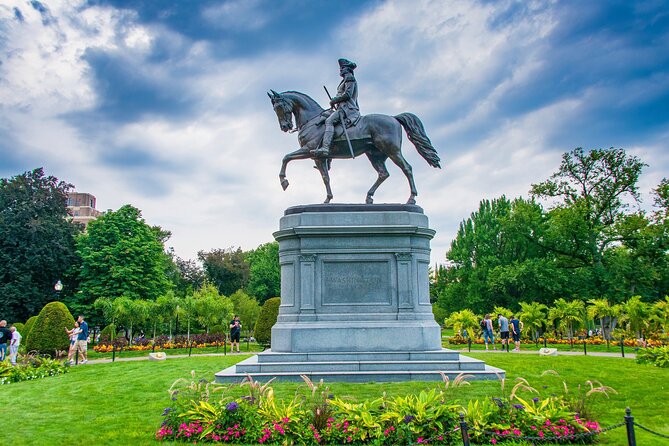
Then you head back into green space with Boston Common, the oldest public park in the United States. This is the calm counterweight to the politics-heavy stops. You get walking paths, ponds, and the kind of open air that makes it easier to take in what you just learned.
A nice detail here is that the guide points out the park’s seasonal rhythm and events when they’re happening. Even when nothing special is scheduled, Boston Common works as a mental reset between landmarks.
Consideration: these are short stops. If you love parks and want extra time for photos, you’ll probably want to return on your own after the tour.
The Massachusetts State House and Park Street Church, power and faith in the same neighborhood
On Beacon Hill, you reach the Massachusetts State House, an iconic government building with its golden dome. The structure is all about presence, and the guide helps you understand why that matters. This is the kind of place where architecture signals authority.
You’ll spend time on the grounds and learn about Massachusetts’ political story through what the guide highlights. Visitors can explore guided tours of the building itself, but even without going deep inside, the area teaches you a lot about how government shows itself to the public.
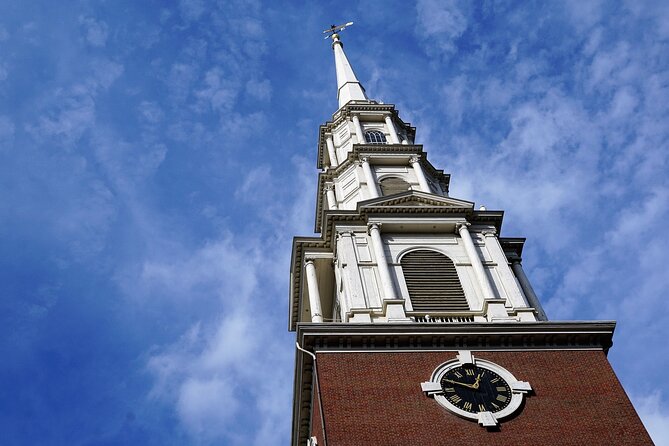
Then you swing to Park Street Church, a Downtown landmark with a striking white steeple built in 1809. What I like about this stop is the balance. The Revolution story often focuses on pamphlets, ships, and leaders. Here, you see how religious institutions were part of public life, including social and community events.
If you’re the type who reads buildings like clues, these two stops together are a strong combo: one is about civic rule, the other about community presence.
More of the revolution, from the tea to the bridge

King’s Chapel Burying Ground and Granary Burying Ground, history written in names
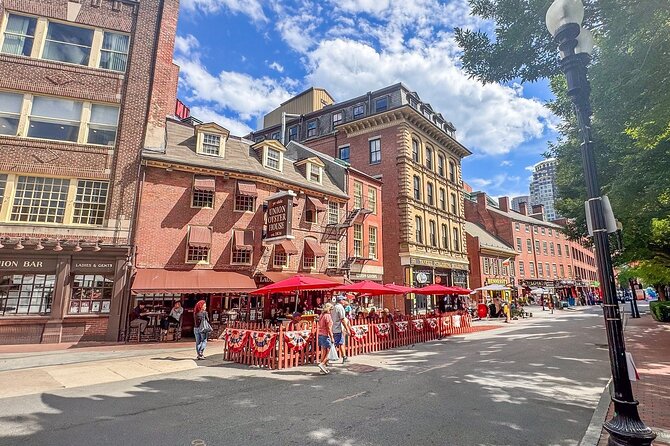
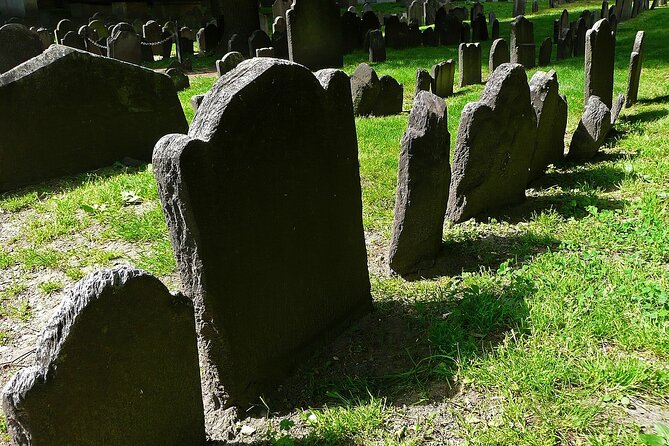
This part of the tour is where the walk turns reflective. You visit King’s Chapel Burying Ground, Boston’s oldest cemetery, dating back to 1630. It sits next to King’s Chapel, and it is tied to early Boston settlers.
One of the standout details is that you can find notable early figures here, including John Winthrop. The guide makes it easier to connect those names to what you learned about early governance and community life, not just the “who’s famous” list.
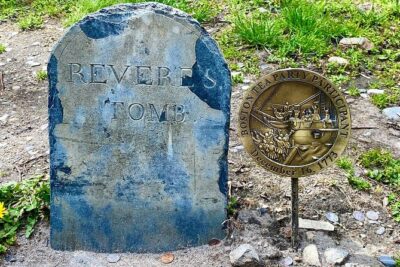
Next is Granary Burying Ground, which dates to 1660 and is located near Boston Common. This is where the Revolutionary legend gets personal. You’ll see gravestones for major figures such as Paul Revere, Samuel Adams, and John Hancock.
I find cemetery stops like this do something special: they slow the story down. Instead of memorizing dates, you notice patterns and the way a city remembers itself. Stone can feel cold, but with a guide’s framing, it becomes surprisingly human.
One consideration: cemeteries can be quiet and a bit still, which is great for learning. But they can also be less comfortable in hot sun or cold wind. Plan your outfit like you’re walking, because you are.
Old State House to Faneuil Hall, from documents to public protest
After the cemeteries, the tour hits the Old State House. Built in 1713, it is a key Revolutionary site where major events played out, including the reading of the Declaration of Independence.
This is the sort of stop where context makes everything click. Without explanation, the building can feel like “another old structure.” With it, you see the Old State House as a stage for turning ideas into action.
Then you go to Faneuil Hall, often called the Cradle of Liberty. It was built in 1742 and became a gathering place for early protests against British rule. Today, it serves two purposes at once: you get historical framing, and the building now functions as a hub with a marketplace and a museum.
This stop is especially good if you like the energy of public squares. You are not just learning in a quiet setting. You’re stepping into a place where talking, arguing, and organizing historically mattered.
Quincy Market finish, food and street performers as your reward
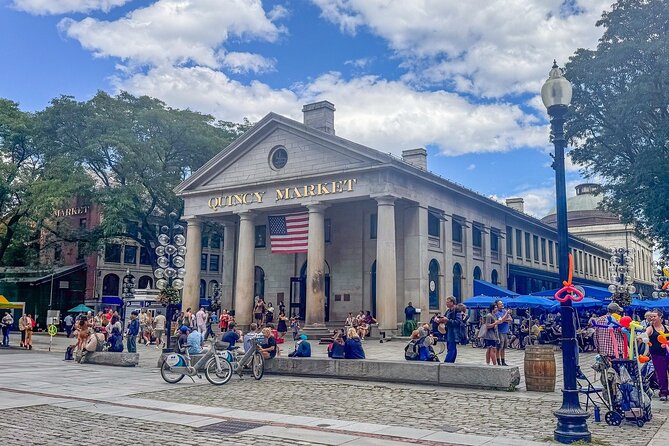
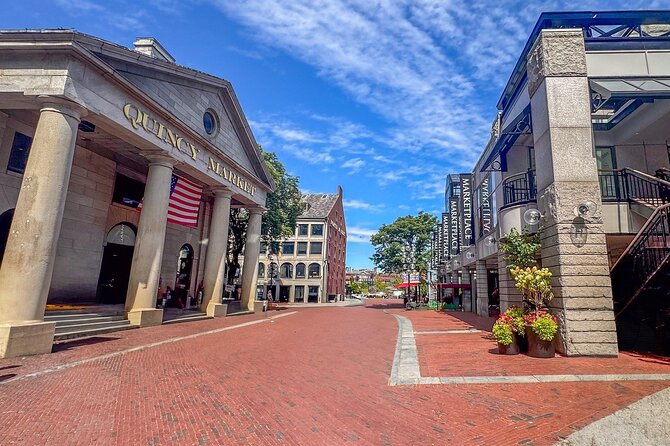
The tour ends at Faneuil Hall Marketplace, and from there you can explore Quincy Market. It’s a lively stop built for lingering, not for sprinting.
Quincy Market is known for local vendors and a mix of shops and snacks. Street performers add to the fun, so even if you’re tired, the atmosphere helps you unwind. I like using the market as a “landing zone.” Your brain has been working hard for about two hours, and this gives you something simple to enjoy right away.
Practical idea: plan to eat here, but keep your expectations flexible. You can grab something quick, but you may also want to browse for a treat that feels local.
Price and pace: does $45 feel fair?
At $45 per person for about two hours, this tour is priced like a guided highlight walk. The value comes from a few things working together.
First, the route includes major stops that are free to enter, at least based on the site access noted for the stops along the way. Second, you get a local, knowledgeable guide who can connect what you’re seeing to why it mattered. That connection is hard to replicate with a self-guided stroll unless you already know the story.
Third, the max of 10 travelers is a real quality factor. With a smaller group, you spend more time listening and less time straining to hear.
The main reason this might not be the best fit is if you want a slow, deep museum-style experience. This tour is designed to help you grasp the big picture and then choose what to revisit.
Also worth noting: this tour is often booked about 58 days in advance on average. If you’re traveling during a busy season or on a specific day, don’t wait until the last minute.
Who this tour suits best (and who should pick another plan)
This tour is a strong match for:
- First-time visitors who want a guided route that covers the core Freedom Trail landmarks plus a few smart additions.
- People who like learning how public buildings and everyday spaces connect to politics and protest.
- Anyone who enjoys walking and wants a short, structured plan with an easy ending near food.
It may be less ideal for:
- Travelers who hate walking or need very long breaks between stops.
- Anyone who expects museum time to be a major part of the schedule, since the tour is brief at each location.
- Visitors who want only the classic Freedom Trail sequence, with no added modern framing.
How to make the most of it on the day
A few things will help your experience feel smoother.
- Wear comfortable shoes. The route is compact, but it adds up fast in about two hours.
- Bring a phone with battery and use the mobile ticket when you meet.
- Use the guide’s framing as a lens. For example, when you’re in the cemeteries, look for what makes each person stand out in the story.
- Plan a little extra time at the end, especially at Quincy Market, so you can turn the tour momentum into a real snack or meal.
Should you book Boston’s Revolutionary Path Freedom Trail Tour?
I’d book it if you want a guided, small-group way to understand Boston’s Revolutionary-era landmarks without guessing where to look. The mix of stops makes the story feel human, especially with The Embrace starting the conversation about justice and unity, then moving through power centers, public protest spots, and cemeteries tied to major names.
I would skip or consider a different option if you need deep museum time, or if you prefer totally self-paced history exploration with lots of stops at your own speed. But if you like learning on foot, this is a solid use of a couple hours, and the finish near food makes it an easy win for most itineraries.
FAQ
How long is the Boston’s Revolutionary Path Freedom Trail Tour?
It’s about 2 hours.
Where does the tour start and end?
The tour starts at The Embrace, 139 Tremont St, Boston, MA 02108, and ends at Faneuil Hall Marketplace, Boston, MA 02109.
What is the price per person?
The price is $45.00 per person.
What is included in the tour?
It includes a local guide, a small group tour, visits to Beacon Hill, Boston Common, the Massachusetts State House, Park Street Church, King’s Chapel and Burying Ground, Granary Burying Ground, Old State House, Faneuil Hall, and Quincy Market.
Is the tour offered in English?
Yes, it is offered in English.
How large is the group?
The tour has a maximum of 10 travelers.
Do the stops require paid admission?
The information provided for each listed stop shows admission ticket free.
Is free cancellation available?
Yes. You can cancel for a full refund if you cancel at least 24 hours before the experience’s start time.
Are service animals allowed and is it near public transportation?
Yes, service animals are allowed, and the tour is near public transportation.
Keep Going in Boston






More Revolution in Boston





The Red Line, Three More Ways

More around Boston, freshly written up
- The Boston Bash Scavenger Hunt★ 4.5 · 3 reviews
- Self-Guided Audio Tour of Boston North End★ 4.5 · 3 reviews
- Self-Guided Boston Christmas Tour★ 5.0 · 3 reviews
- Self Guided “The North End Pizza, Cannoli and Picnic” Solo Walking Tour★ 5.0 · 3 reviews
- Cambridge: Haunted Charles River Cruise★ 4.3 · 3 reviews
- Boston: Official Freedom Trail® Lantern Tour★ 4.7 · 3 reviews
Freedom Trail Walking Tours, compared.
 ★ 5.0Freedom Trail History Small Group Walking TourFrom $356,450 reviews
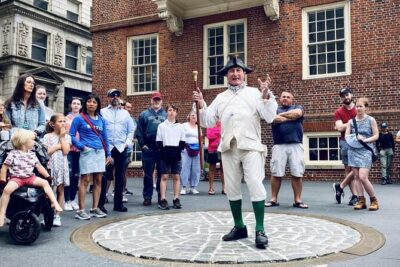 ★ 4.5Boston Freedom Trail Walking Tour with Costumed GuideFrom $262,531 reviews
 ★ 5.0Boston Food & History: Pizza, North End & Freedom TrailFrom $901,772 reviews
 ★ 4.9Boston’s Freedom Trail: A Revolutionary Walking TourFrom $311,748 reviews
★ 4.9Freedom Trail History Small Group Walking TourFrom $351,590 reviews
★ 5.0Boston’s Freedom Trail: A Revolutionary Walking TourFrom $311,343 reviews
 ★ 4.5Freedom Trail Walking Tour 250From $261,118 reviews
 ★ 5.0Boston Freedom Trail History Pub Crawl Small-Group TourFrom $60996 reviews