
Paul Revere stories start right at Faneuil Hall. This official North End Freedom Trail walking tour uses an 18th-century costumed guide to turn a simple 1-mile walk into a chain of street-level Revolutionary-era moments. I like that it stays focused on the North End and the official red-line route, so you are not hunting for the next “important thing” on your own.
My favorite part is the way the guide keeps the tour lively, with fun stories at each stop and time for questions. I also like that you see major landmarks like Old North Church and Copp’s Hill Burying Ground as real, specific places, not just names in a book. The one drawback is the tour is only 1.5 hours, so if you want deep, exhaustive detail on every Freedom Trail site, you may want a longer or add-on stop after the walk.
Quick hits: what matters most on this North End Freedom Trail walk
- 18th-century costumed guides help bring the Revolutionary stories to life.
- About 1 mile (1.6 km) of the official Freedom Trail, along the red-lined route.
- Old North Church and the two-lantern signal are front and center in the experience.
- Copp’s Hill Burying Ground is highlighted as colonial Boston’s largest graveyard.
- You get time for questions and photographs, which makes the stories stick.
- Some Freedom Trail sites have admission, so you can decide on the spot whether to add ticketed entry.
Other ways to walk the red brick, compared
Entering Boston’s North End on the official red line
The Freedom Trail in Boston is easy to recognize, and this tour uses that to your advantage. You follow the official red-lined path through the North End for about 1 mile, which is a manageable distance when you also want to listen and look.
It is also a smart length for people who want history without turning the day into a full-day homework assignment. In 1.5 hours, you cover key stops in Boston’s oldest neighborhood and get the core Revolutionary-era stories that connect them.
If you are doing Boston for the first time, this tour is a good way to get your bearings fast. If you are returning to Boston, it is still useful because it ties locations to the narratives you likely care about most.
Meeting at ArtsBoston near Faneuil Hall, then walking right into the story
You meet at the ArtsBoston ticket booth outside Faneuil Hall, near an Abercrombie and Fitch. Plan to arrive 15 minutes early, because you will need time to present your printed voucher and get lined up.
Bring comfortable shoes and water. This is an urban walking tour, and you will want steady footing for the whole route instead of doing the “just one more street” thing on sore feet.
One small but important rule: video recording is not allowed. Photos are the move here, so charge your phone, clear your camera storage, and be ready to capture the landmarks as you go.
How an 18th-century costumed guide changes the pace of learning
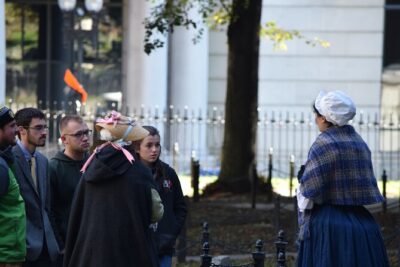
What makes this tour feel different is the guide style. You are walking with an 18th-century costumed guide who uses the stops as anchors for stories, not just dates on a timeline.
I like tours where the guide keeps the energy up and still answers questions directly. This one is built for interaction, with plenty of time for questions and photographs, so you can ask what you actually want to understand.
The tone also matters. Reviews highlight that the guide stays fully in character and can answer questions in a way that feels clear and engaging, not like you are being rushed from one photo spot to the next.
Stop 1: Old North Church and the two-lantern signal
Old North Church is one of the big “you have to see it” moments on the Freedom Trail, and this tour makes sure you do. You get to view the church associated with the famous signal, where two lanterns were lit as part of Paul Revere’s midnight ride story.
Even if you do not go inside any ticketed sites, the outside viewing still gives you a concrete reference point. That matters, because when you later read about the lantern signal, you can picture the exact place where it happened in the story.
If you do want to add interior exploring at a paid stop, remember that admissions are not included. The tour is about the guided walk and the historical storytelling, and ticketed sites are your optional bonus.
Still hungry? More of Hanover Street
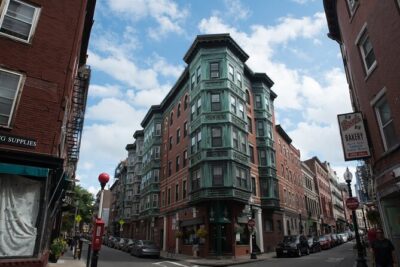


Stop 2: Copp’s Hill Burying Ground, Boston’s largest colonial graveyard
Copp’s Hill Burying Ground is the kind of location that changes how you see a city. It is described here as colonial Boston’s largest graveyard, and the setting naturally gives extra weight to the Revolutionary-era talk.
On a walking tour, cemeteries can feel like a detour. This one treats the space with purpose, connecting what you are seeing on the hill to what it meant in colonial life and why it is still important in Boston’s story.
I also appreciate that the tour does not just point at a plaque and move on. You spend time enough to understand why this place belongs in your Freedom Trail plan, instead of treating it as a quick photo stop.
Stop 3: Paul Revere’s midnight ride, told where it makes sense
Paul Revere’s midnight ride is the headline story most people come for, and this tour delivers it in a way that feels tied to location. You hear the tale as part of the walk through the North End, not as a lecture you only understand after the fact.
The value here is how the guide links the “what happened” with “where it happened.” When you stand near the landmarks connected to the story, the details stop feeling abstract.
This is also where the question time can be especially useful. If you have ever wondered how people communicated in that era, why the route mattered, or what the different landmarks signify, you are better off asking during the walk than trying to remember later.
Paul Revere House and the other Freedom Trail stops along the way
The tour includes mention of places like the Paul Revere House as part of the broader Freedom Trail experience. You also pass by other historic sites within Boston’s Freedom Trail network during the North End portion of the walk.
Some of these sites have admission fees, including the Old South Meeting House, Old State House, Old North Church, and Paul Revere House. The tour does not include entrance tickets, but you can buy them at the door for the paid stops.
I like having that choice handed to me in person. If you want to go inside and spend extra time, you can. If you are happy with the guided exterior viewing and the stories, you do not have to pay extra just because a location is famous.
Ticketed Freedom Trail sites, what you should plan for
A key detail: not every major Freedom Trail location on this route is included for admission. That means your time and money can go two ways, depending on what you want to do.
This tour is designed to help with pacing, and it also mentions skipping the ticket line. In plain terms, you can expect less dead time at the paid stops if you decide to enter, but you still need tickets yourself for the sites that charge admission.
So if you are budget planning, treat the $17 price as the guided walk cost, not a guarantee that every famous building will be included. The tour gives you the route, the guide, and the core stories, while paid sites are optional add-ons.
Price and value: is $17 for 1.5 hours worth it?
At $17 per person for a 1.5-hour guided walk, this is the kind of value that works well for most visitors. You are paying for a live guide in costume, a structured walk along the official trail, and guided time at key Revolutionary-era stops.
The price also helps you avoid common tourist traps. Instead of spending time figuring out where the trail goes in the North End, you follow the official red-line route with someone who knows exactly how to connect each place to the story.
The only “value risk” is your expectations. If you want an ultra-detailed, long-form lecture on every Freedom Trail stop, the short format may feel limiting. If you want the best-known North End chapter of the Freedom Trail with solid storytelling, this is a strong deal.
Who should book this North End walking tour?
I think this tour fits best if you want a guided highlight route through Boston’s North End. It is ideal for first-timers who want quick clarity, and it works for repeat visitors who want the story tied to specific locations.
It also suits people who enjoy interactive learning. The tour is structured with time for questions and photographs, and the guide is described as engaging and able to answer questions well.
If you are traveling with kids, this can be a good option because costumes and story pacing often land better than dry textbook history. If you are a hardcore history deep-dive person, you may enjoy it even more if you plan a follow-up stop at one or two paid sites afterward.
A practical plan for the rest of your day in the North End
Once the tour ends, you will likely have two kinds of momentum. Either you feel like you want to see inside one of the ticketed landmarks, or you want to keep exploring the neighborhood streets at a slower pace.
Because the tour focuses on the North End portion of the Freedom Trail, you can pair it with a casual walk afterward. You will already understand where you are, which neighborhoods and landmarks belong together, and why the stories connect the way they do.
If you want to maximize your time, consider keeping one “extra” slot for a paid stop you were curious about during the walk. That way, you do not commit money ahead of time, and you decide based on what the guide makes you want to learn more about.
Should you book this Boston North End Freedom Trail walking tour?
Book it if you want the Freedom Trail North End highlight package in 1.5 hours, with an 18th-century costumed guide and clear story connections at the landmarks that matter most. The biggest strength is the guide’s engagement plus the structured route along the official red line, including the Old North Church lantern story and the Copp’s Hill cemetery stop.
Skip it or plan alternatives if you know you need very deep, site-by-site history and lots of extra time at each location. This tour is built for effective storytelling and a solid overview, not for marathon detail.
FAQ
How long is Boston’s Official Freedom Trail North End Walking Tour?
The tour lasts 1.5 hours.
Where do I meet for the tour?
You meet at the ArtsBoston ticket booth outside of Faneuil Hall, near an Abercrombie and Fitch.
Is the Freedom Trail walk distance long?
It is about 1 mile (1.6 kilometers) along the official Freedom Trail historic sites.
What is included in the price?
The price includes the 1.5-hour walking tour with 1 mile of official Freedom Trail historic sites, 18th-century costumed guides, and local taxes and fees.
Are admission tickets to the sites included?
No. Entrance to ticketed Freedom Trail sites is not included, including the Old South Meeting House, Old State House, Old North Church, and Paul Revere House. Tickets can be purchased at the door.
What should I bring?
Bring comfortable shoes and water.
Do I need to bring a printed voucher?
Yes. Your voucher must be printed out and presented upon arrival.
Is the tour wheelchair accessible, and is video recording allowed?
The tour is wheelchair accessible. Video recording is not allowed.
Keep Going in Boston






Hanover Street, Keep Eating






The Red Line, Three More Ways

More around Boston, freshly written up
- The Boston Bash Scavenger Hunt★ 4.5 · 3 reviews
- Self-Guided Audio Tour of Boston North End★ 4.5 · 3 reviews
- Self-Guided Boston Christmas Tour★ 5.0 · 3 reviews
- Self Guided “The North End Pizza, Cannoli and Picnic” Solo Walking Tour★ 5.0 · 3 reviews
- Cambridge: Haunted Charles River Cruise★ 4.3 · 3 reviews
- Boston: Official Freedom Trail® Lantern Tour★ 4.7 · 3 reviews
Freedom Trail Walking Tours, compared.
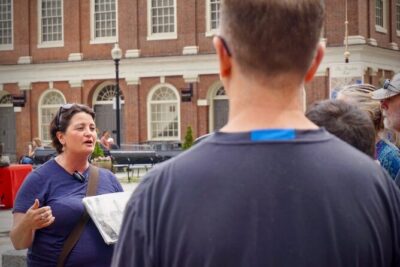 ★ 5.0Freedom Trail History Small Group Walking TourFrom $356,450 reviews
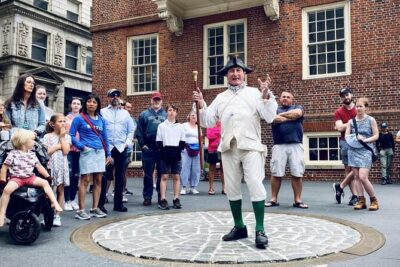 ★ 4.5Boston Freedom Trail Walking Tour with Costumed GuideFrom $262,531 reviews
 ★ 5.0Boston Food & History: Pizza, North End & Freedom TrailFrom $901,772 reviews
 ★ 4.9Boston’s Freedom Trail: A Revolutionary Walking TourFrom $311,748 reviews
★ 4.9Freedom Trail History Small Group Walking TourFrom $351,590 reviews
★ 5.0Boston’s Freedom Trail: A Revolutionary Walking TourFrom $311,343 reviews
 ★ 4.5Freedom Trail Walking Tour 250From $261,118 reviews
 ★ 5.0Boston Freedom Trail History Pub Crawl Small-Group TourFrom $60996 reviews