
REVIEW · FREEDOM TRAIL WALKING TOURS
Boston Walking Tour of The Freedom Trail, Small Group
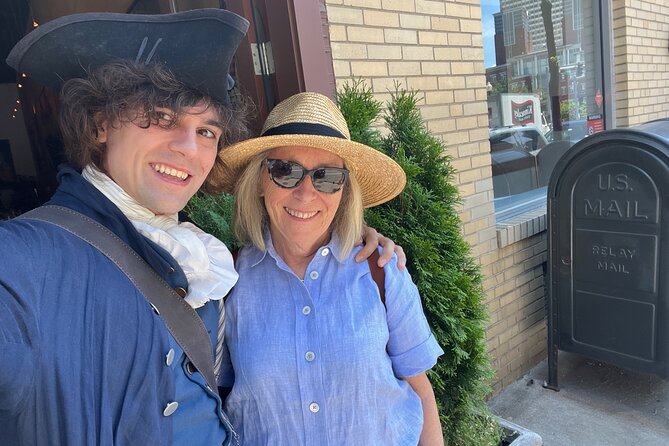
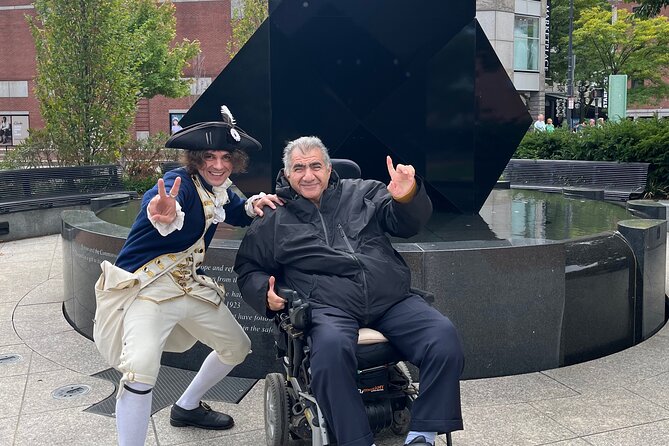
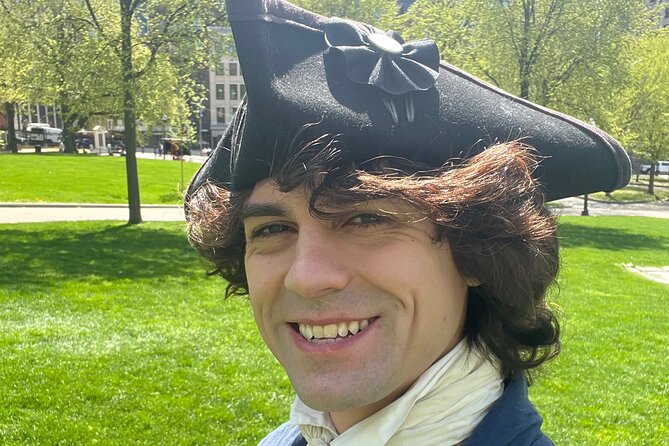
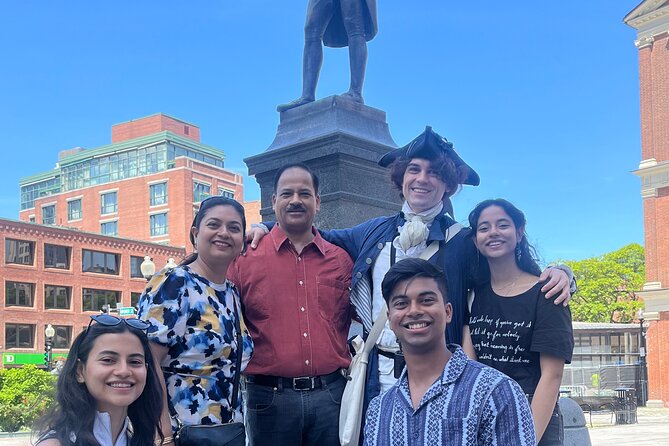
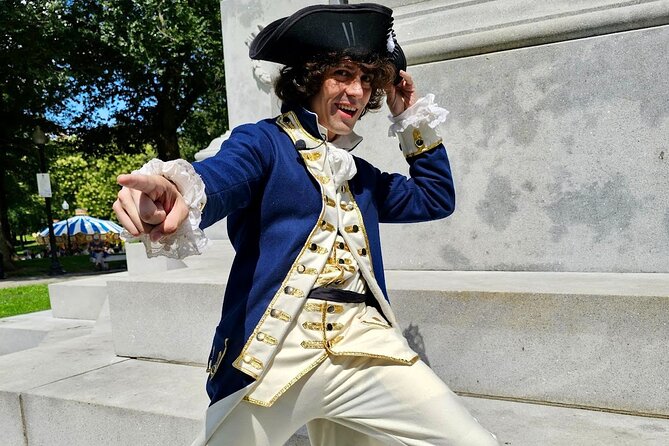
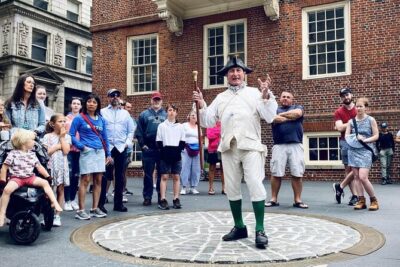
Follow the red line and rethink Boston. In about 90 minutes, this Boston Freedom Trail walking tour strings together Boston Common, the Massachusetts State House area, Granary Burying Ground, Old South Meeting House, and the Old State House, with clear narration using a microphone system. I especially like that the guide, Captain Pickles, is photo-friendly and makes it easy to talk with fellow history lovers, even while moving at a comfortable pace.
The one thing to keep in mind: you will cover a lot of key sites with short stops, so it is not the tour if you want long museum-style hangs at each location. Also, if you prefer slower storytelling, note that the energy can run high when Captain Pickles is sharing details and jokes.
Quick hits before you start
- A microphone system helps you catch every story without leaning in or playing guesswork
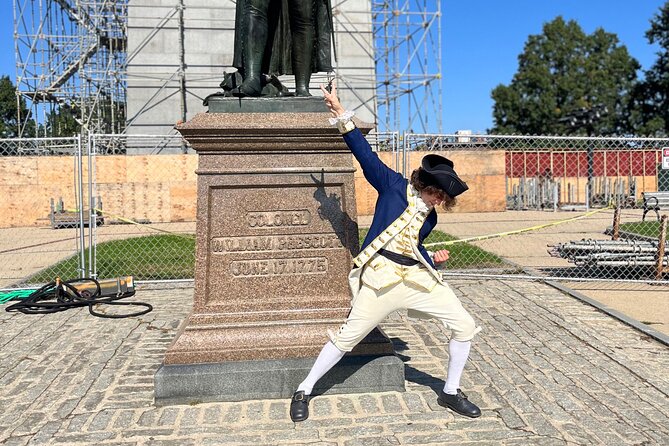
- Captain Pickles makes it photo-friendly and fun, with a lively way of telling the Revolution-era story
- Small-group feel with a max of 40 travelers, so the walk stays social instead of chaotic
- A tight route through the classic Freedom Trail core in about 1 hour 15 minutes
- Most stops are free to visit, so your money goes mostly to the guide’s storytelling
- You end at Faneuil Hall Marketplace, where you can grab food, use bathrooms, and find a free museum
Other ways to walk the red brick, compared
Boston Freedom Trail in 90 minutes, with Captain Pickles
The Freedom Trail is Boston’s red thread, and this tour treats it like a guided story walk, not a checklist. You start in the Boston Common area and wind through the sites that shaped early America, with plenty of chances to ask questions and connect with people who also care about the details.
The guide, Captain Pickles, is a major reason this tour feels different. From the way people describe him, he is high-energy, funny, and great at keeping the group engaged, even when the weather is cold. Expect lots of specific facts about buildings, plus human stories around names you already recognize.
The format matters. Each stop is brief, so you get momentum and context fast. You are not stuck for an hour in one spot, which is great if your schedule is tight. If you love stopping to read every plaque and stare at every doorway for 30 minutes, you might find the pace brisk. Still, the walk is meant to be easy and enjoyable.
Price and value: why $32 makes sense here
At $32 per person for roughly 75 to 90 minutes, you are paying for the guiding and interpretation, not entrance fees. The stops on the route are listed as free to access, so the cost is not doing double duty as a ticket to paid attractions.
For me, the best value angle is clarity. A good guide turns a line on the map into a sequence of cause and effect. You can see the same places on your own, but you would spend time figuring out what mattered and why. This tour saves you that mental workload, and the microphone system helps you keep up without constantly straining your ears.
There is also practical value in the route ending well. You finish at Faneuil Hall Marketplace, which means you are not left wandering with no plan. Bathrooms, local food, and a free museum are right there, so you can extend the day without extra transportation.
Where you start and where you end (and how to plan your day)
You meet at the Lafayette Mall Monument by Boston Common, on Tremont Street. The start time is 11:30 am. That is a helpful detail because it shapes how you should arrive. Get there early enough to find the guide and get your bearings before the walk begins.
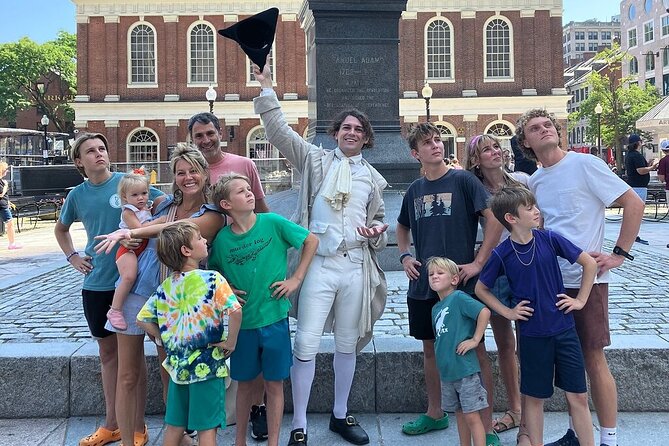
The tour ends at Faneuil Hall Marketplace, near the statue of Samuel Adams. This is a smart landing spot because it is central and convenient. After the last stop, you can eat, use the restroom, and keep learning through the free museum on site.
If you are planning the rest of your day, I recommend building in at least an extra hour after the tour. You will likely want time to snack, take photos, and poke around a bit before moving on.
Boston Common: the oldest city park sets the tone
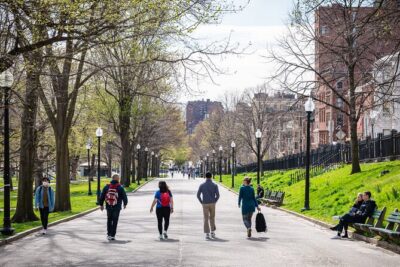
Boston Common is the starting heartbeat of the route. It is described as the oldest city park in the United States, and that alone makes it worth a look. Even if you have seen photos of the green space, being on the ground gives you a sense of why it became a gathering place.
This first stop is also a pacing tool. It is about 10 minutes, long enough to orient yourself to what you will see next. You start with a big idea, then you move into government and church, then you head toward the sites where revolutionary leaders and events left marks.
One practical upside: Boston Common is open and easy to navigate. It is a good first location for a tour group to regroup, take photos, and settle in, before the walk tightens into denser historic areas.
More of Boston from the top of the list
Massachusetts State House area: politics and power
Next you are at the Massachusetts State House area. John Hancock is tied to this spot, and the Statehouse is the seat of government for the Commonwealth of Massachusetts. Even from the outside, it is clear this is where political decisions shaped lives.
This is a stop where the storytelling matters. Seeing the building is one thing. Understanding why Hancock matters, and how government power worked in that era, makes the site feel like more than architecture.
The stop is short, around 5 minutes, so you should treat it like a meaning-setting moment. If you like to absorb slowly, you might want to circle back later on your own. If you like guided context with minimal downtime, this stop works well inside the flow.
Park Street Church: a living historic landmark
Park Street Church is next, founded in 1809 and described as an active evangelical congregational church. That combination, old and in use, gives the area a different feel than many purely historic sites.
This stop is about 5 minutes, so it is not a long architectural walkthrough. Instead, it gives you a cultural anchor. The Freedom Trail is often told like a sequence of battles and documents, but churches and community institutions were part of the same social fabric.
A small caution: if you want interior access, this tour is focused on the outdoors and quick stops. You should not count on going inside during the walk unless the group can do so on the day.
Granary Burying Ground: where major names rest
Granary Burying Ground is one of the most emotionally resonant stops on the route. You pause near final resting places of figures such as James Otis, Paul Revere, Samuel Adams, and others. It is also described as established in 1630 and noted as the oldest graveyard in the city, located on the Freedom Trail.
This is where a guide earns their pay. You will likely recognize a few names already, but you will get the story behind why their memory is placed here, and how the revolutionary era is preserved through people, not just events.
The stop is around 15 minutes, which is longer than most others. That extra time signals that the cemetery segment is meant for reflection and context. If you are visiting on a busy day, this pause also gives you a break from constant walking.
Benjamin Franklin and the Boston Latin School site
After Granary Burying Ground, the tour reaches a statue of Benjamin Franklin and references the Boston Latin School site. The information given also notes that it is currently where Old City Hall is located.
This is a good moment to zoom out. The Freedom Trail is not only about protest and conflict. It is also about education, civic life, and who got access to learning and influence.
Expect a quick stop, about 7 minutes. If you are the type who likes to read every plaque, you may want to return later when you can slow down. If you prefer to keep moving and let the guide connect the dots, this stop works well.
Old South Meeting House: the Boston Tea Party connection
Old South Meeting House comes next, built in 1729. It is tied directly to the Boston Tea Party, described as the organizing point on December 16, 1773.
This is a key Freedom Trail junction because it turns the abstract idea of protest into a specific location you can stand on. You can see the kind of gathering space where political energy could become coordinated action.
The stop is listed at about 7 minutes. That is short, but the significance is big. If you feel like you understand the Boston Tea Party better after this stop, that is exactly the purpose.
There is also an extra building fact mentioned around this area: a structure built in 1718 as a residence and apothecary shop, later becoming a bookstore in 1828. It is the kind of detail Captain Pickles tends to use, small threads that make the city feel lived-in rather than staged.
Boston Massacre Site: the Old State House connection matters
You then reach the Boston Massacre Site, located outside of the Old State House. This stop is about 5 minutes, but it is positioned with intent. The Old State House is where you will focus next, and linking the massacre location to the building helps everything click.
Even if you have heard the term Boston Massacre before, you might not have thought about how the setting amplified fear and anger. Standing there gives the event a place in space, not just in a textbook timeline.
Keep your expectations realistic here. This is not a long debate or a detailed courtroom replay. It is the guided setup that makes the next stop more meaningful.
Old State House: built 1713 and full of political drama
The Old State House is built in 1713 and is another anchor site on the route. It is described as the Old Provincial State House, which matters because it points to how governance evolved over time.
This is the kind of location where a good guide’s tone changes the experience. The guide can connect why political buildings were targets, why crowds formed, and how ordinary people got pulled into revolutionary momentum.
The stop is brief, around 5 minutes. Again, you are not meant to sink an hour here during this tour. You are meant to leave with enough understanding to look up and notice things on your own later.
Faneuil Hall Marketplace finish: food, bathrooms, and a free museum
The tour ends at Faneuil Hall Marketplace, by the statue of Samuel Adams. It is a practical payoff. You get a central place to cool down after the walk, use bathrooms, and find local food.
You also get a free museum option right at the finish area. That is a big value add because it extends learning without adding costs or extra travel.
If you want to keep the momentum going, treat this as your decompression time. Take photos, grab a snack, then return to the museum if you still have energy for more context. It makes the whole day feel like one continuous experience instead of a quick hit.
What small group really feels like on the ground
This tour is capped at a maximum of 40 travelers. That matters because you can actually hear what is going on and move as a unit. It also affects the social vibe. You are more likely to chat with other history-lovers while waiting at intersections or regrouping near the next stop.
Microphones are also a real quality-of-life factor. With the microphone system, you spend less effort turning your head toward the guide and more effort paying attention to details around you. That is especially useful on crowded sidewalks where you might otherwise lose the story.
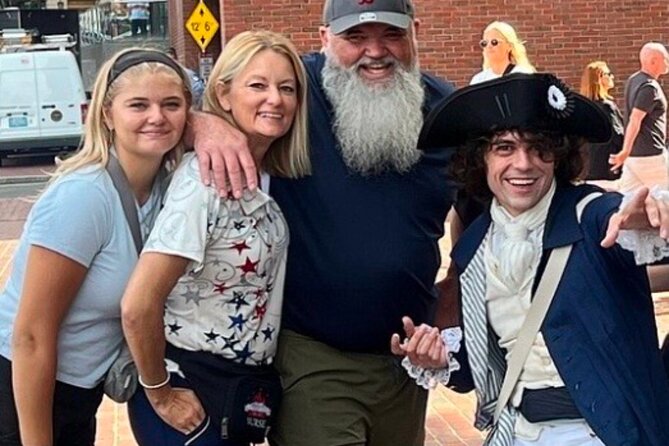
One more detail that shows up in how people describe Captain Pickles: he is comfortable posing for photos as you explore. That turns the tour into something you can keep, not just something you watch happen around you.
My practical advice: make the most of the walk
Wear comfortable shoes. You are doing multiple stops in a tight route, and your time goes by fast once you are moving.
Bring layers if it is cool out. The walk is outdoors, and the pace is steady enough that you may feel the weather before you fully warm up. If you are sensitive to wind, plan for it.
Arrive a bit early at the meeting spot by Boston Common. The route is easy to find, but you will enjoy the start more if you are not rushing to catch up.
Finally, ask one or two questions. This tour is built to be interactive. With the microphone system, you are not stuck shouting into background noise.
Who this Freedom Trail tour suits best
This tour is a strong fit if you want a structured way to see the classic Freedom Trail highlights without spending hours planning. It works well for first-time Boston visitors who want context fast, and for repeat visitors who would like a different angle on what they already know.
It is also a good family option because the guide’s storytelling style and humor can keep attention moving. If you are traveling with teens or kids who get bored with long lectures, the short stops and active pace help.
If you are the type who wants slow, independent time at each site, you might prefer a self-guided Freedom Trail plan. This walk is meant to be efficient and focused on big connections.
Should you book this Boston Freedom Trail small-group tour?
If your goal is to understand Boston’s early American story in a practical, fun, not-too-long walk, I would book it. Captain Pickles seems to be the right mix of facts, humor, and easy presentation, and the microphone system makes it comfortable to follow even when sidewalks get busy.
Choose a different option only if you want lots of unstructured time inside sites or you strongly dislike fast-paced storytelling. Otherwise, this is a solid use of your time, especially because you finish at Faneuil Hall with food, bathrooms, and a free museum waiting.
FAQ
How long is the Freedom Trail walking tour?
The tour lasts about 1 hour 15 minutes.
How much does the tour cost?
It costs $32.00 per person.
Where do I meet, and where does the tour end?
You start at the Lafayette Mall Monument in the Boston Common area (Tremont St, Boston). The tour ends at Faneuil Hall Marketplace, by the statue of Samuel Adams.
Is the tour offered in English?
Yes, the tour is offered in English.
What is the maximum group size?
The tour has a maximum of 40 travelers.
Do I get a mobile ticket?
Yes, it uses a mobile ticket.
Are service animals allowed?
Yes, service animals are allowed.
Does the tour run in all weather?
The tour requires good weather. If it is canceled due to poor weather, you will be offered a different date or a full refund.
What is the cancellation cutoff for a full refund?
You can cancel up to 24 hours in advance for a full refund. If you cancel less than 24 hours before the start time, the amount paid is not refunded.
More Tour Reviews in Boston



Keep Going in Boston
The Red Line, Three More Ways


More around Boston, freshly written up
- The Boston Bash Scavenger Hunt★ 4.5 · 3 reviews
- Self-Guided Audio Tour of Boston North End★ 4.5 · 3 reviews
- Self-Guided Boston Christmas Tour★ 5.0 · 3 reviews
- Self Guided “The North End Pizza, Cannoli and Picnic” Solo Walking Tour★ 5.0 · 3 reviews
- Cambridge: Haunted Charles River Cruise★ 4.3 · 3 reviews
- Boston: Official Freedom Trail® Lantern Tour★ 4.7 · 3 reviews
Freedom Trail Walking Tours, compared.
 ★ 5.0Freedom Trail History Small Group Walking TourFrom $356,450 reviews
 ★ 4.5Boston Freedom Trail Walking Tour with Costumed GuideFrom $262,531 reviews
 ★ 5.0Boston Food & History: Pizza, North End & Freedom TrailFrom $901,772 reviews
 ★ 4.9Boston’s Freedom Trail: A Revolutionary Walking TourFrom $311,748 reviews
★ 4.9Freedom Trail History Small Group Walking TourFrom $351,590 reviews
★ 5.0Boston’s Freedom Trail: A Revolutionary Walking TourFrom $311,343 reviews
★ 4.9Boston’s Freedom Trail: A Revolutionary Walking TourFrom $311,748 reviews
★ 4.9Freedom Trail History Small Group Walking TourFrom $351,590 reviews
★ 5.0Boston’s Freedom Trail: A Revolutionary Walking TourFrom $311,343 reviews
 ★ 4.5Freedom Trail Walking Tour 250From $261,118 reviews
 ★ 5.0Boston Freedom Trail History Pub Crawl Small-Group TourFrom $60996 reviews
Also filed under