

REVIEW · FREEDOM TRAIL WALKING TOURS
Boston Historical Freedom Trail and Cheers Landmark Tour
Boston history is better on foot. This 2.5-hour Freedom Trail style walk strings together the places tied to the push for American independence, then tops it off at Boston’s most famous pub, the Cheers bar. I like how the route keeps you moving, with real landmarks and short stops so you don’t get bored or bogged down.
Two things I especially like: you get an intimate small-group format (max 30) with a local guide who brings the stories to life. And you also get included entry at Faneuil Hall Marketplace and at Cheers, so you are not constantly hunting for ticket windows while the history is happening right next to you.
The main drawback to plan for is the walking. The tour covers uneven surfaces, cobblestones, hills, and stairs, and it is not recommended if you have limited mobility. One more practical consideration, there can be rescheduling if filming affects access near Cheers, so keep an eye on your confirmation details and messages.
Key highlights at a glance
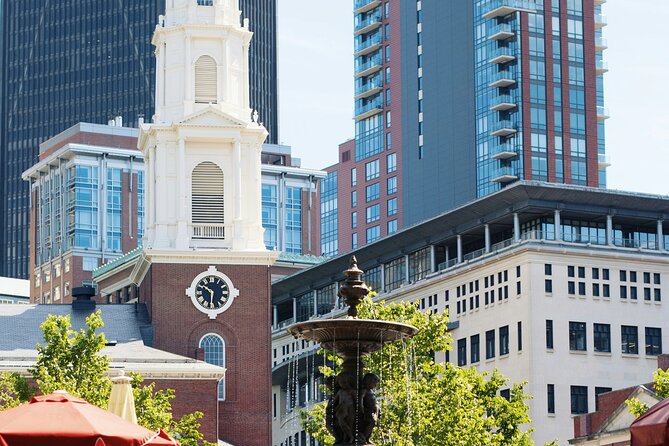
- Faneuil Hall Marketplace and Meeting Hall: a key meeting place dating to 1743, with time built in for photos and orientation
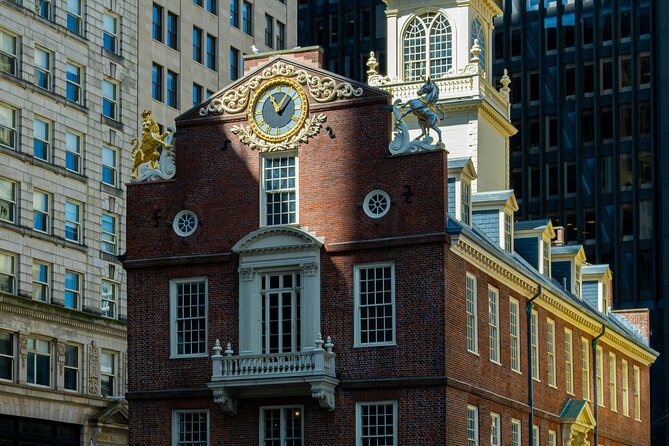
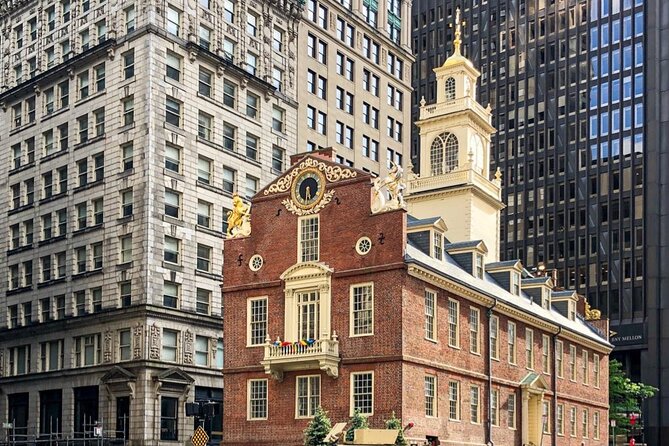
- Old State House exterior viewpoint: a look at the setting connected to the Boston Massacre and the public reading of the Declaration
- Old South Meeting House stop: time focused on how the revolution was planned
- Boston Common included: a long, relaxed stroll in America’s oldest public park area, plus the Make Way for the Ducks bronze statue
- Cheers bar finish: the Beacon Hill stop tied to the TV show, with an included admission component
Other ways to walk the red brick, compared
Freedom Trail momentum: how the route actually works
This tour covers a tight loop of Boston’s most famous Revolutionary-era touchpoints. The structure is simple: you start in the Faneuil Hall area, work your way through several independence-era sites, pause in Boston Common, then finish at Cheers in Beacon Hill. With stop times that add up to about 2.5 hours, it is designed for people who want context without spending an entire day in line.
A big plus is pacing. You are not stuck at any one stop for too long, which helps if you are on a busy visit and still want to see modern Boston city life around the historic blocks. It also helps if you prefer learning in chunks, then walking off the mental notes right away.
You should also note that this is an all-weather operation. If the forecast is messy, plan on dressing for it. Boston can shift from fine to annoying fast, and this tour keeps moving in the same conditions.
Price and value: what $49 buys you in Boston
At $49 per person, this is priced as a practical, guide-led highlights tour. The value comes from a few places, not just the “Freedom Trail” label.
First, you are getting included admission time at Faneuil Hall Marketplace and at Cheers. Those entry items help justify the cost compared with self-guided walking where you still have to figure out ticket options on the fly.
Second, you get an expert local guide for the full stretch, and the group cap stays at 30 people. That matters. A smaller group generally means the guide can keep the story moving and answer questions without the tour turning into a noisy bus lecture.
Third, the walking stops include both famous outside views and a couple of paid-entry moments. You get a blend of “see it from the street” history and “go in and look around” time. Even if you do not love museums, you are still getting enough access to feel like the guide led you somewhere worth paying for.
The one thing to weigh is that not all historic sites on the route have included entry. Old State House and Old South Meeting House are handled as exterior-focused stops in the tour format, and admission is not included for those. If you are the type who wants to go deep inside every site, you might pair this with one additional ticketed visit on your own later.
Your guided route, stop by stop
Below is what to expect at each stop, plus the small “make the most of it” tips that help you enjoy the walk instead of just surviving it.
Stop 1: Faneuil Hall Marketplace, the early sparks
You start at the Samuel Adams Memorial near Faneuil Hall Marketplace, and then your first real stop is the marketplace and meeting hall area tied to 18th-century political organizing. Faneuil Hall opened in 1743, and it is strongly linked with speeches by figures like Samuel Adams and James Otis that pushed independence from Great Britain.
Why this stop matters: it gives you a clear sense of how public gatherings turned into political pressure. If you only remember Revolutionary history from textbooks, this is the kind of place that helps the words connect to real streets, real crowds, and real speeches.
The practical angle: you get about 30 minutes here, and admission is included for this stop. That time is long enough to orient yourself, take photos, and still feel like you learned something rather than just walked past.
More of Boston from the top of the list


Stop 2: Old State House, Boston Massacre context from outside
Next comes an exterior look at the Old State House. This stop is about seeing the setting connected to the Boston Massacre, plus the place associated with George Washington reading out the first public hearing of the Declaration of Independence.
You should treat this as a “picture-in-your-head” moment rather than a walk-through museum stop. Since it is an exterior tour and tickets are not included for entry, the value is in the guide’s storytelling and your ability to connect the building’s location to the events.
If you enjoy “how the city looked then” thinking, this is a good stop for it. Stand, look, and let your brain place what the guide describes into the streets around you.
Stop 3: Old South Meeting House, where planning happened
Then you reach the Old South Meeting House stop. This is another short, focused moment, and it is centered on the site’s role in planning the American Revolution.
Here’s what makes it work for most people: it reinforces the difference between two kinds of history. There is the history of speeches and symbols, and then there is the history of meetings and strategy. This stop helps you feel that shift.
Admission is not included for this stop, and the tour time is around 20 minutes. So if you want to do extra research later, consider taking photos and jotting a couple of notes so you can search the details when you get back to your hotel.
Stop 4: Boston Common stroll, plus the Make Way for the Ducks statue
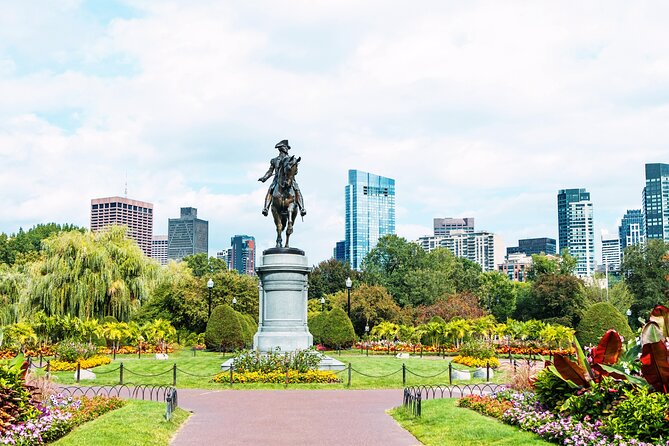
After the tighter, Revolution-focused stops, you get a more relaxed section: Boston Common. You walk through America’s oldest public park area, with roots going back to the 1630s, and the tour includes time to look at major sights inside the park.
One especially fun photo moment is the Make Way for the Ducks bronze statue created by Nancy Schön. It is a nice reset in tone. After heavy political history, this brings back a lighter side of Boston.
You get about 40 minutes here, and entry is free as part of the tour. That extra time is a gift. Use it to slow down. Sit for a minute if you can, and take in how the park functions as real public space today.
Stop 5: Cheers in Beacon Hill, the TV-famous finish
The final stop is Cheers in Beacon Hill. The tour frames it as the most famous bar in America and as the inspiration for the popular TV show, so yes, expect plenty of people taking photos in the same spots.
Admission is included at this stop, and you get about 35 minutes. That length is enough to go in, grab your photo, and still have time to enjoy the place without feeling rushed.
One practical caution: this stop can be affected by filming. There have been cases where access near Cheers is impacted and the tour has had to be rescheduled. It is rare, but it is real. The good news is that if this happens, you should receive clear communication, and refunds are available in cases where the tour cannot proceed as scheduled.
The guide factor: why the stories land
This kind of walking history tour is all about the guide. A place can be famous and still feel flat if the guide does not connect the details into a clean narrative.
One name that comes up often is Bob. When Bob is the guide, you can expect fast, organized explanations and a style that makes Boston’s events feel specific rather than vague. People also mention that the storytelling can make it easy to take photos because you know what you are looking for.
If your guide is strong, the tour feels like a guided map for your brain. You stop at each site, then you immediately understand what question the next site answers. It is history with momentum.
Walking and weather realities you should plan for
Let’s talk shoes, because Boston pays you back in cobblestones. The tour involves walking over uneven surfaces, including cobblestones, plus hills, inclines, declines, and stairs. Comfortable shoes are non-negotiable.
This tour also says it operates in all weather conditions. That means you should bring layers, and if rain is possible, plan to stay comfortable rather than tough it out.
It is not recommended for people with limited mobility. If walking is a challenge for you on normal sidewalks, this route will likely be too much.
Group size is capped at 30, and the tour runs in English. That combination usually means the group stays together, but it also means you will want to keep your pace consistent so you do not fall behind.
Who should book this tour, and who might want to rethink it
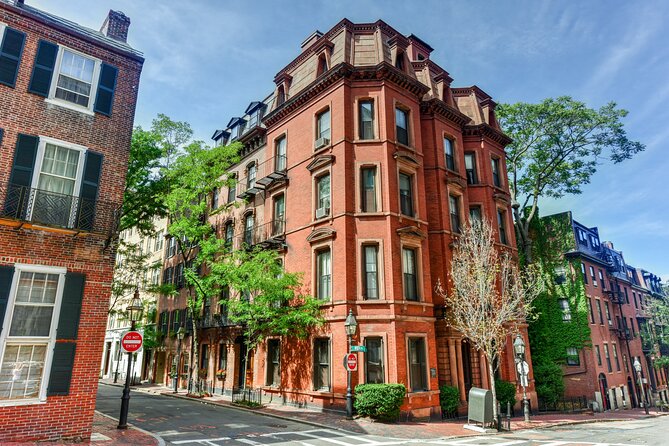
This tour is a great fit if you want a guided overview of the Freedom Trail-style landmarks without needing to research every stop on your own. It is also ideal if you like a mix of “outside views plus one or two ticketed moments,” plus a fun pop-culture finish at Cheers.
You might want to rethink if:
- you do not handle uneven walking well or you need mobility accommodations
- you want full museum-style time inside each historic building
- you are the type who gets stressed when plans shift due to filming, even if communication is provided
On the other hand, if you are planning a first time Boston trip, this is one of those tours that helps you get your bearings fast. You start in the core of the historic waterfront and meeting hall area, then you fan out into Beacon Hill and Common. By the end, you have a mental route you can reuse on future walks.
Should you book the Boston Historical Freedom Trail and Cheers Landmark Tour?
If your goal is a smart, guided highlights loop, I think booking makes sense. The $49 price is fair for what you get: a 2.5-hour guided walk with included entry at Faneuil Hall Marketplace and Cheers, plus a long stop at Boston Common with free access.
The main decision point is your tolerance for walking. If you can handle cobblestones and some stairs, this tour is a great use of time. If you have limited mobility, you are better off looking for an itinerary with easier terrain and fewer steps.
Also, keep your expectations aligned with how the stops work. Some sites are exterior focused, and not every venue has included tickets. Think of this as guided context and photo-ready stops, not as a day of deep museum time.
FAQ

What is the tour price per person?
The price is $49.00 per person.
How long is the tour?
The duration is about 2 hours 30 minutes.
What time does the tour start, and where is the meeting point?
It starts at 9:30 am. The meeting point is Samuel Adams Memorial, 6 Faneuil Hall Sq, Boston, MA 02109.
Where does the tour end?
The tour ends at the Cheers area, 84 Beacon St, Boston, MA 02108. The tour details also reference Boston Common as the final end point.
What is the maximum group size?
The tour has a maximum of 30 travelers.
Is the tour in English?
Yes, it is offered in English.
Are admission tickets included?
Admission is included for Faneuil Hall Marketplace and Cheers. Admission tickets are not included for Old State House and Old South Meeting House.
Does the tour include Boston Common?
Yes. Boston Common is included with time to stroll, and it is free.
Does the tour include Quincy Market?
Yes. Quincy Market and the historical Faneuil Hall area are included as part of the experience.
Is the tour suitable for limited mobility?
It is not recommended for travelers with limited mobility. The route includes walking over uneven surfaces, cobblestones, hills, and stairs.
More Tour Reviews in Boston






Keep Going in Boston

The Red Line, Three More Ways


More around Boston, freshly written up
- The Boston Bash Scavenger Hunt★ 4.5 · 3 reviews
- Self-Guided Audio Tour of Boston North End★ 4.5 · 3 reviews
- Self-Guided Boston Christmas Tour★ 5.0 · 3 reviews
- Self Guided “The North End Pizza, Cannoli and Picnic” Solo Walking Tour★ 5.0 · 3 reviews
- Cambridge: Haunted Charles River Cruise★ 4.3 · 3 reviews
- Boston: Official Freedom Trail® Lantern Tour★ 4.7 · 3 reviews
Freedom Trail Walking Tours, compared.
 ★ 5.0Freedom Trail History Small Group Walking TourFrom $356,450 reviews
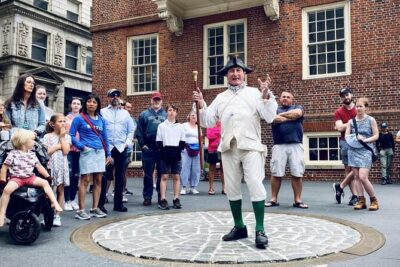 ★ 4.5Boston Freedom Trail Walking Tour with Costumed GuideFrom $262,531 reviews
 ★ 5.0Boston Food & History: Pizza, North End & Freedom TrailFrom $901,772 reviews
 ★ 4.9Boston’s Freedom Trail: A Revolutionary Walking TourFrom $311,748 reviews
★ 4.9Freedom Trail History Small Group Walking TourFrom $351,590 reviews
★ 5.0Boston’s Freedom Trail: A Revolutionary Walking TourFrom $311,343 reviews
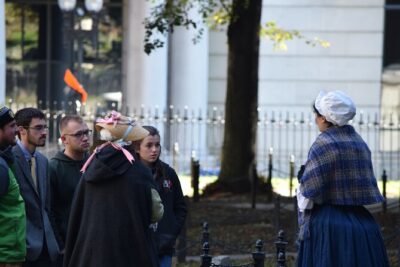 ★ 4.5Freedom Trail Walking Tour 250From $261,118 reviews
 ★ 5.0Boston Freedom Trail History Pub Crawl Small-Group TourFrom $60996 reviews
Also filed under