
REVIEW · FREEDOM TRAIL WALKING TOURS
Boston: Freedom Trail History and Food Tour
Boston can feel like a museum. This tour keeps it human, with history plus food stops. You’ll cover classic Freedom Trail landmarks like Paul Revere’s home and Old North Church, then pair them with choices like clam chowder, baked beans, and cannoli-style bites along the way.
I love how the route blends big-name sites with everyday places that locals actually use. Starting at Boston Public Market, you get into the city’s food rhythm fast, then you’re walking real streets toward places that shaped early America.
One possible drawback: the food part is optional, not a full set-menu tasting. Some people feel the history wins while the snack stops vary by guide and by what you choose to buy.
Key Points Worth Your Time
- A 2-hour Freedom Trail walk that stays at an easy pace, about 1.2 miles total.
- Boston Public Market + Haymarket keep the vibe local, with classic market bites and a historic marketplace tradition on Fridays and Saturdays.
- Rose Kennedy Greenway gives you a calm break and city views between the heavier history stops.
- Paul Revere House and Old North Church add architectural and story depth, not just photo ops.
- Food budget is on you, with recommendations that can add up to about $30 if you sample everything.
Other ways to walk the red brick, compared
Freedom Trail History, Plus Snacks You Actually Want
This is the kind of Boston tour that makes sense if you have limited time. In about two hours, you get a guided walk that links famous people and events to the places you’d otherwise walk past without stopping. The focus stays on understanding what you’re looking at, then sampling a few classic items when it’s offered.
The distance is manageable. It’s about 1.2 miles and done at a leisurely walking pace. That matters because Boston streets are not built for racing. If you’re doing this day-to-day along with other sights, this format fits cleanly without wiping you out.
Also, the tour feels designed for real decision-making. Food is not forced on you. Your guide shares recommendations, but you choose what to buy. That’s great if you want a couple of tastes, and it’s fine if you mostly want the history with only a small snack budget.
Starting at Boston Public Market, Then Rolling Into Haymarket
You begin at the Congress Street entrance of Boston Public Market, where Congress meets Hanover Street. Your guide will wear an orange hat that says ExperienceFirst, so it’s pretty easy to find the group.
Boston Public Market is a smart first stop. It’s a “get your bearings fast” kind of place because it instantly shows you how Boston eats now. You’ll get guidance on what to try, including classics like chowder and baked beans. It’s a good warm-up for the whole day, because it gives you a sense of flavor and local staples before you head into the old-town stories.
From there, you’re pointed toward Haymarket. On Fridays and Saturdays, the tour includes the chance to see the 300-year-old Haymarket tradition in action. That’s the kind of detail that turns a market stop from generic sightseeing into something you can sense as living history, not just architecture.
Between the market blocks, you’ll also pass through areas that help connect the dots of commerce and city life. If you enjoy learning how Boston grew and where trade happened, these stops make the Freedom Trail feel more grounded.
Quincy Market, History You Can Walk Past, and Why It Matters
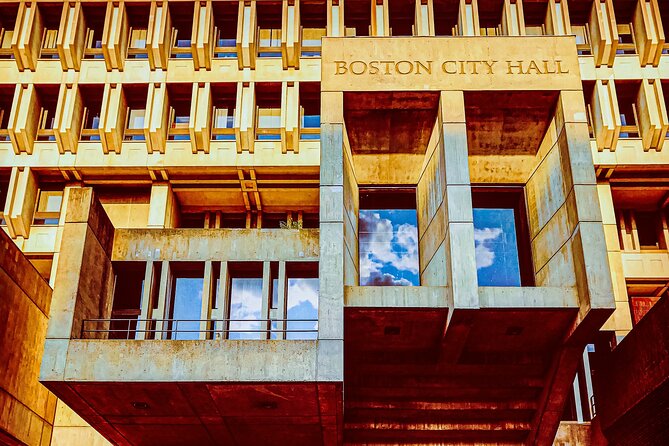
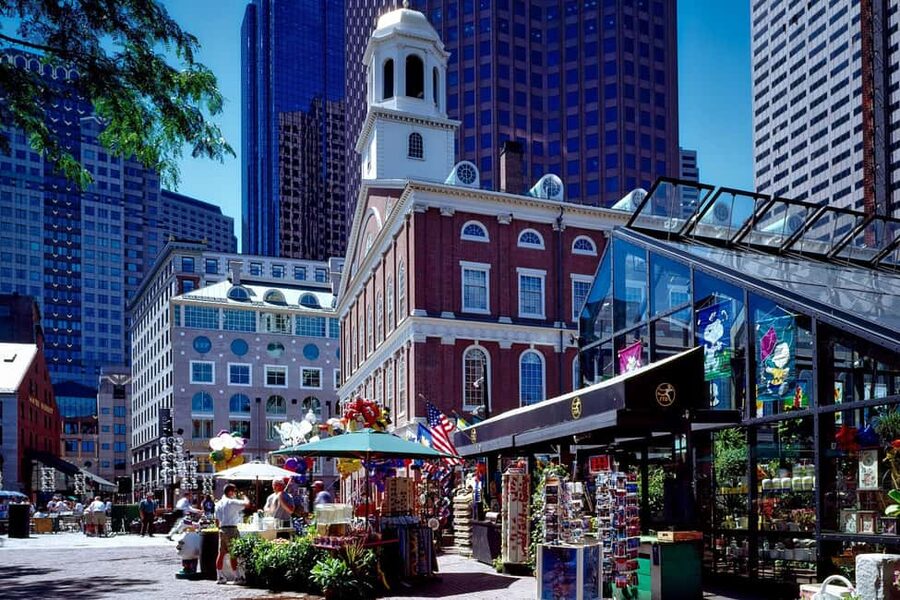
Quincy Market is one of those places people rush through. This tour slows you down enough to notice what’s around you. Instead of treating it like an outdoor food court, you get context for why these public spaces mattered in the first place.
The vibe is simple: it’s a busy Boston hub, surrounded by buildings and streets that have held crowds for a long time. Your guide’s job is to help you see how civic life, commerce, and community energy fit together. When it works well, that’s where this tour earns its money. You stop thinking of the Freedom Trail as a straight line of landmarks and start understanding it as a network of places people gathered, traded, and argued about life.
A quick practical note: if you’re the type who hates crowds, you’ll want to be mentally prepared for lively market areas. The pace is leisurely, but this is still central Boston, so expect foot traffic.
Rose Kennedy Greenway: The Breather Between Heavy Stops
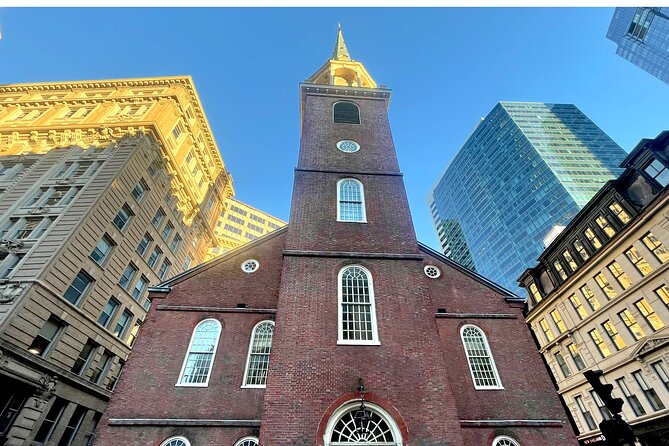
One of my favorite parts of a walking tour is the built-in reset, and this one includes it. You’ll stroll the Rose Kennedy Greenway, a transformed stretch of city space that gives you room to breathe between major historic sites.
This is the spot where the tour often feels most enjoyable. The Greenway creates a contrast: you go from tight streets and landmark structures to an open, calmer walkway with city views. It’s not just a “pass through.” It’s a chance to absorb Boston’s present while you’re waiting for the next step back into early American life.
You’ll also see references related to memory and place, including the Holocaust Memorial park area. Even if your history interests are broad rather than deep, these stops make the walk feel reflective, not just chronological.
More of Boston from the top of the list
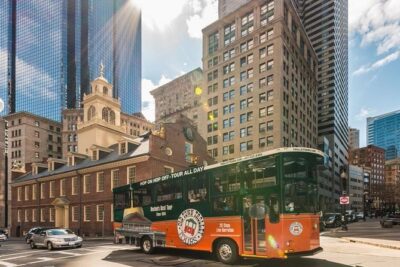
Paul Revere House: The Story Feels Close-Range
Then you hit one of the core reasons people pick this tour: Paul Revere House. This is where the Freedom Trail stops stop being abstract. You’re stepping into an early American setting tied to a real person whose legend grew from specific moments.
The tour guide experience here is key. You’re not just walking into a building and getting a fact list. You’re getting story framing that helps you understand why the house matters, how it fits the neighborhood’s timeline, and what role people like Revere played in the city’s sense of urgency.
If you like history told in a way you can picture, this is the moment. The best guides connect the physical space to the behavior of people at the time. You can almost feel the difference between a museum display and a place that originally held normal life.
Old North Church: Architecture and a Built-In Sense of Drama
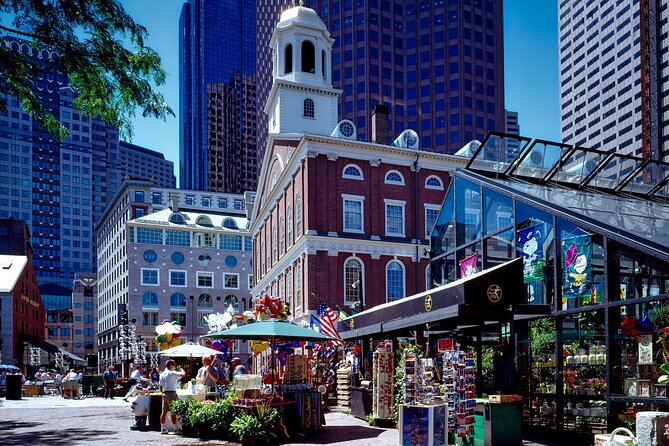
After Paul Revere House, you head to Old North Church, another Freedom Trail anchor. This stop adds architecture to the mix. It’s not only about what happened, it’s about what you can see, the shapes, and the design choices that made the church recognizable then and now.
For a lot of visitors, Old North Church is where the stories start sticking. Even if you’ve heard the basics before, the way a guide frames the church’s role in Boston helps you understand why it became such a lasting symbol.
This is also a good checkpoint stop. By this point, you’ve eaten your way through the morning, walked a good chunk of the route, and reached two major landmark points. If you want photos, you usually have enough time and focus here to capture images without feeling rushed.
Salumeria Italiana, Bakeries, and the Food Reality Check
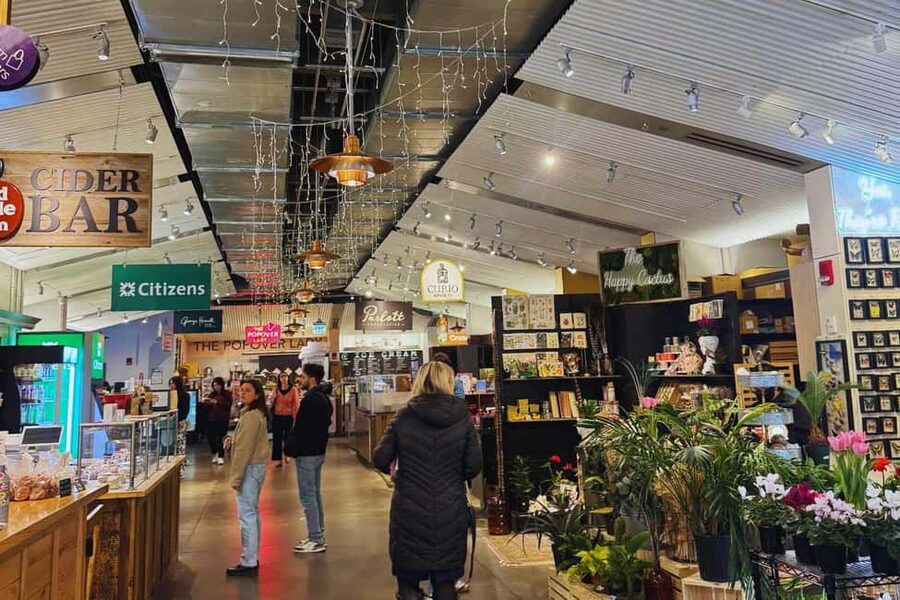
Here’s the honest part: the food side of this tour can be excellent, or it can feel like suggestions more than an actual tasting. The tour includes food recommendation stops such as Salumeria Italiana and later Parziale’s Bakery, and it ends at Polcari’s Coffee.
The food you might sample includes classic items you already associate with Boston and North End flavors, such as chowder, baked beans, and cannoli-style bites. If you follow your guide’s guidance and buy a bit at multiple stops, the cost for sampling everything is estimated around $30.
Where people get disappointed is when they expect a full food tour format, with food included and served as a set. The tour model here is different. You’re paying for the walk and the storytelling, and the food is optional. One review called out that the food side felt non-existent, while another praised specific stops like the bakery and pizza place.
My advice: treat this as a Freedom Trail tour with food opportunities, not the other way around. Go with a small budget mindset for snacks. If you want to fully snack, ask your guide what items are worth buying at each stop, and don’t wait until the end to decide.
Guide Quality Is the Whole Ballgame

Your guide can make or break a walking tour like this. The best versions of the tour feel like walking with a friend who knows how to point out the story behind what you’re seeing.
In the reviews you provided, two guide names come up clearly. Charlie gets high praise for guiding, and Paul is described as outstanding, sharing both history and good places to eat, with a feeling that the group was walking through his hometown. That’s the vibe you want: someone who makes you feel comfortable asking questions and who connects the sites with practical local suggestions.
At the same time, there are mixed notes. One review complained about professionalism and said the tour was not interesting. Another felt the food side did not match the expectations for a combined Freedom Trail and food tour. That tells me something important: your experience likely depends on the guide and on whether your expectations match the tour’s true structure.
So if you book, I’d do one simple thing: be clear with yourself about what you want. If you want heavy history plus optional snacks, you’re in the right lane.
Price, Time, and Value for $39
At $39 per person for a 2-hour walking tour, the math depends on how you use the food part. Food recommendations are included, but food costs are not. The tour suggests that sampling everything you’re recommended could run about $30.
So what are you really paying for? You’re paying for a guided walk that covers major Freedom Trail landmarks plus market stops. In practical terms, that means time savings and better context. Without a guide, it’s easy to visit Paul Revere House and Old North Church and still leave wondering what you missed. A good guide helps you connect the buildings to the stories, and it helps you decide where to spend money on food you’ll actually enjoy.
If you keep your snack purchases modest, the total cost stays reasonable. If you go all-in on tastings, you’re likely adding another $30-ish. Either way, you’re getting a structured route that’s about as efficient as it gets for seeing both historic sites and local food culture.
Who This Tour Fits Best (And Who Might Skip It)
This tour is a strong fit if you want:
- Freedom Trail landmarks without long travel between stops
- A mix of history and food stops you can choose
- A guide who can explain what you’re seeing in a way that makes it stick
It also works well for families and groups that need mobility options. The tour is listed as wheelchair accessible, and it’s suitable for both wheelchairs and strollers. It covers about 1.2 miles at a leisurely pace, so most people can manage it if they come prepared with comfortable shoes and water.
You might consider skipping if:
- You’re expecting an all-inclusive tasting menu with food provided at each stop
- You want a deep, food-first experience rather than history-first
- You’re sensitive to crowds in market areas
Should You Book the Boston Freedom Trail History and Food Tour?
I’d book it if you’re the type who likes your sightseeing to have a spine: a walk route with a clear story, then a few well-chosen food stops to keep you energized. The best version of this tour is the one where the guide connects the landmarks to daily life in Boston, and where your food choices match your appetite without feeling like a forced deal.
If you’re food-motivated, go in with the right expectations. Think of it as Freedom Trail history with optional snacks, not a fully paid tasting experience. Plan to spend a little extra if you want multiple bites at the markets and bakery stops.
Bottom line: for a first time in Boston, especially if you want both culture and flavor in a tight time window, this is a smart value play.
FAQ
How long is the Boston Public Market to Freedom Trail tour?
The tour lasts 2 hours at a leisurely pace.
Where do I meet my guide?
Meet your guide at the Congress Street entrance of the Boston Public Market, at the intersection of Congress Street and Hanover Street.
Is the tour guide included in the price?
Yes. The tour includes a professional tour guide and the guided walking tour portion.
Is any food included in the $39 price?
No. Food costs are not included. Food is optional, and the recommended sampling total is estimated at about $30.
What food might I be offered to try?
The tour highlights include samples like chowder, baked beans, and cannoli, plus other recommendations at various stops.
Which major sites are part of the tour?
You’ll visit Boston Public Market, Paul Revere’s home, and Old North Church, along with other landmark areas like Haymarket and Quincy Market.
When can I see the Haymarket tradition in action?
On Fridays and Saturdays, you may see the 300-year-old Haymarket tradition in action.
Is this tour wheelchair accessible?
Yes. The tour is wheelchair accessible and also suitable for strollers.
What should I bring?
Bring comfortable shoes and water.
More Tour Reviews in Boston


Keep Going in Boston
The Red Line, Three More Ways


More around Boston, freshly written up
- The Boston Bash Scavenger Hunt★ 4.5 · 3 reviews
- Self-Guided Audio Tour of Boston North End★ 4.5 · 3 reviews
- Self-Guided Boston Christmas Tour★ 5.0 · 3 reviews
- Self Guided “The North End Pizza, Cannoli and Picnic” Solo Walking Tour★ 5.0 · 3 reviews
- Cambridge: Haunted Charles River Cruise★ 4.3 · 3 reviews
- Boston: Official Freedom Trail® Lantern Tour★ 4.7 · 3 reviews
Freedom Trail Walking Tours, compared.
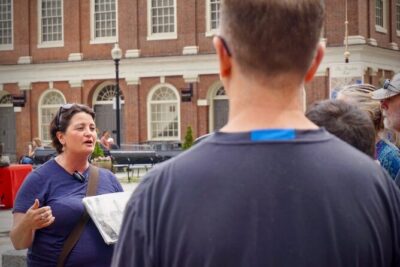 ★ 5.0Freedom Trail History Small Group Walking TourFrom $356,450 reviews
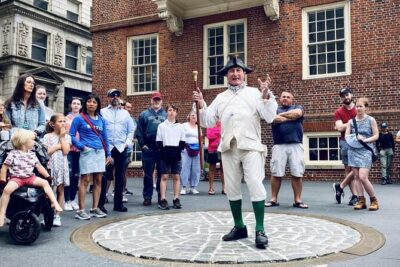 ★ 4.5Boston Freedom Trail Walking Tour with Costumed GuideFrom $262,531 reviews
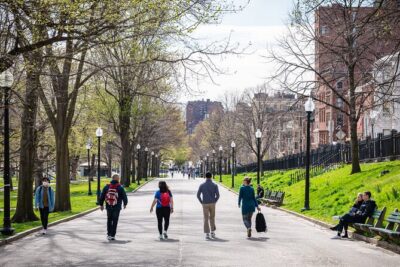 ★ 5.0Boston Food & History: Pizza, North End & Freedom TrailFrom $901,772 reviews
 ★ 4.9Boston’s Freedom Trail: A Revolutionary Walking TourFrom $311,748 reviews
★ 4.9Freedom Trail History Small Group Walking TourFrom $351,590 reviews
★ 5.0Boston’s Freedom Trail: A Revolutionary Walking TourFrom $311,343 reviews
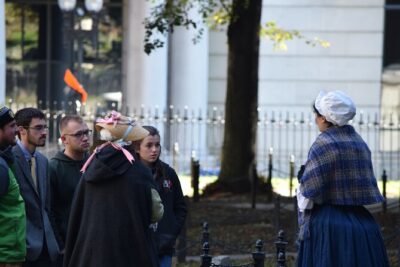 ★ 4.5Freedom Trail Walking Tour 250From $261,118 reviews
 ★ 5.0Boston Freedom Trail History Pub Crawl Small-Group TourFrom $60996 reviews
Also filed under