
REVIEW · FREEDOM TRAIL WALKING TOURS
Boston: Freedom Trail History and Architecture Walking Tour
Boston’s past is close enough to touch. This short Freedom Trail walking tour strings together downtown landmarks and explains how Boston’s architecture evolved. I like that you get both the big story and the street-level details, without needing an all-day commitment.
Two things I especially like are the walk itself, which follows the Freedom Trail through central Boston from Faneuil Hall toward Boston Common, and the way the tour ties architecture to history as you go. You’ll also be guided in a way that makes the city feel like a place with a living culture, not just a list of sites, led by a professional local guide from Boston CityWalks.
One consideration: this is a live English tour, and if your English is not very strong, you may need extra focus to keep up with the guide’s explanations and questions along the way.
Key Highlights You’ll Care About
- Faneuil Hall to Boston Common context in just 70 minutes, with the Freedom Trail as your route
- Old and New State House, Park Street Church, King’s Chapel and more, all tied to what Boston became
- Architecture over time, so you see styles as clues, not just scenery
- Professional local guide in English who keeps the walk story-focused and question-friendly
- Downtown walking flow through quirky streets and major civic spots, from government to meeting houses to common areas
Other ways to walk the red brick, compared
Freedom Trail in 70 Minutes, the Way Boston Actually Feels
Boston is a city you can read from the sidewalk. That’s what makes the Freedom Trail such a useful idea for first-timers, and why this tour format works. You’re not just checking boxes. You’re walking the same historic corridor that locals use as a mental map of the city, then hearing what changed and why, from early settlement through modern downtown life.
The time commitment is also realistic. Seventy minutes sounds short until you realize the downtown core is walkable and the guide keeps you moving from one meaning-packed stop to the next. If you only have one morning or you want an easy first anchor before you explore more on your own, this is a solid starting point.
Price and Value: How $30 Lands for a Guided Morning Walk
At $30 per person for a 70-minute guided walk, the value is all about what you get for that money: a professional local guide plus a story that connects architecture and history across multiple stops. You’re paying for guidance and interpretation, not just route access.
If you try to do the Freedom Trail alone, you can absolutely piece things together from signs and your own reading. But most first-time visitors end up wishing they understood the “why.” This tour is built to give you that context while you’re still standing in the right places, including the Old and New State House, Faneuil Hall, and the Boston Common area.
Where You Start on State Street, and Why the First Minute Matters
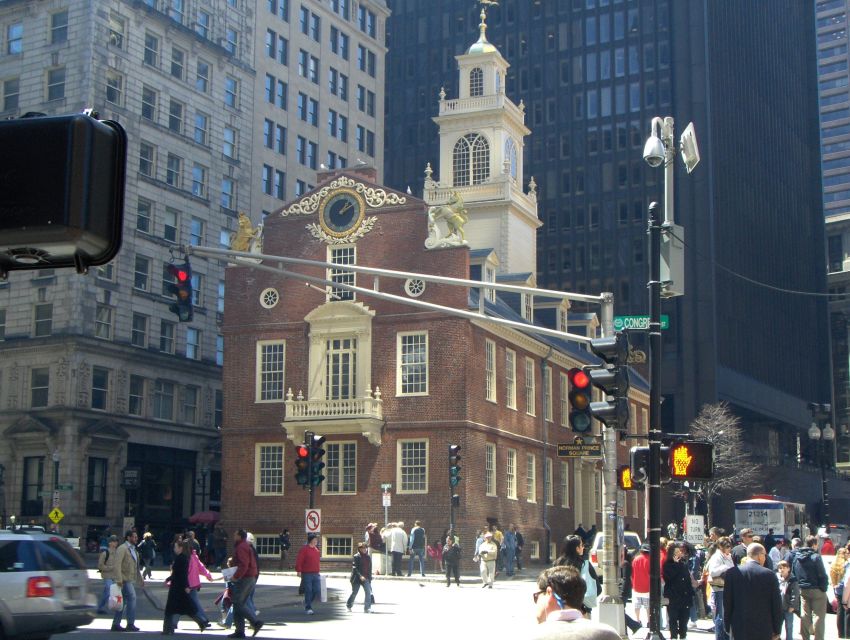
You meet at the NW corner of State and Congress Streets, outside 28 State Street (Citizens Bank), across the street from the Old State House. That matters because it drops you right into the civic core at the start. You begin your walk understanding that Boston’s story is not just about famous speeches. It is about how the city organized itself, governed itself, and built the spaces where decisions happened.
Before you go, it helps to be ready for a brisk walking pace. You’ll want comfortable shoes, and you’ll do best if you can listen while moving. This kind of downtown tour is most enjoyable when you focus on the route as a sequence, not as separate sightseeing moments.
Faneuil Hall to Boston Common, the Core Segment You’ll Learn to Read
This walk focuses on the Freedom Trail stretch from Faneuil Hall through the downtown historic areas toward Boston Common. That route is especially good for first-time visitors because it hits multiple layers quickly: civic power (state and city institutions), public debate (meeting houses), religion and community (churches and chapels), and a “reflect and remember” component (cemeteries and memorials).
The guide also frames the city’s architecture as evidence. You’ll start to notice how buildings reflect the era that built them, and how Boston’s layout nudges people toward certain kinds of community life, from meetings and politics to worship and public gathering.
More of Boston from the top of the list


Old and New State House: Government Buildings as Timeline Clues
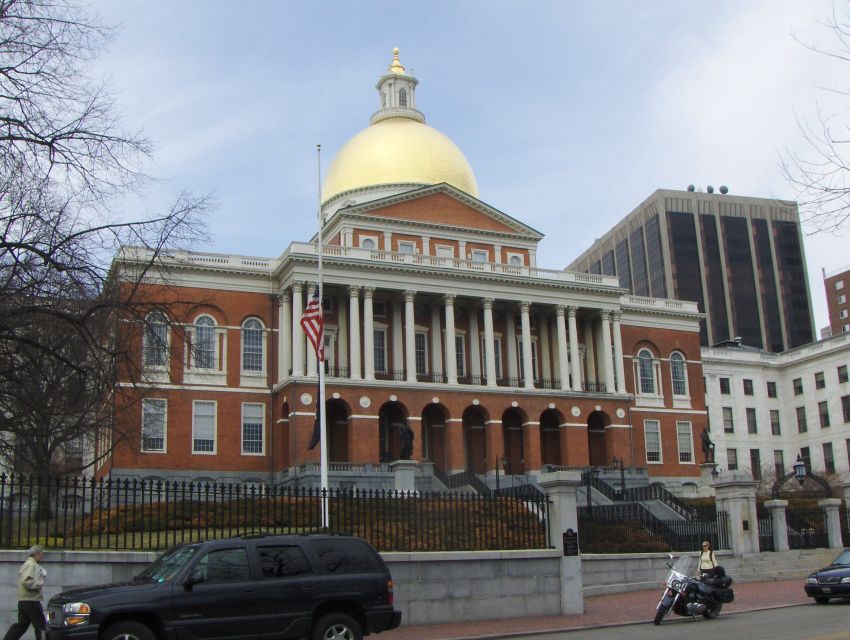
One of the standout stops is the Old and New State House. Seeing both in one tour gives you a quick lesson in how Boston’s government kept changing, even when the city stayed in essentially the same downtown zone.
The Old State House is one of those places that makes you think about public life in plain terms. Government was meant to be visible and accessible, not tucked away. Then, paired with the New State House nearby, you get a physical reminder that Boston did not stop evolving just because a famous event happened.
Drawback to consider: because this is a key downtown zone, you’ll be navigating busy streets and sidewalks at street level. Keep your attention on the guide and the group so you don’t miss the small context clues the guide gives while you’re near the buildings.
Faneuil Hall and the Boston Massacre Site: When Streets Become Stories
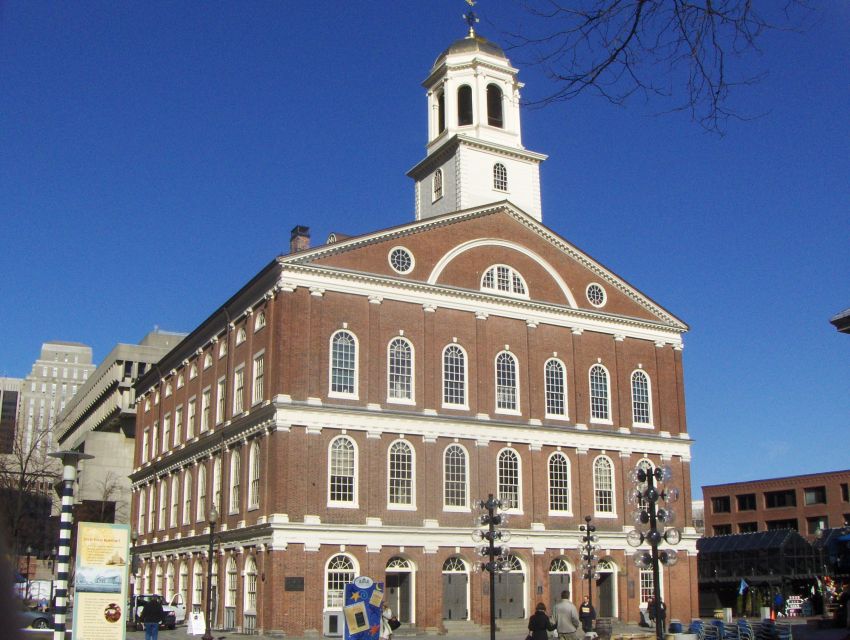
The tour includes Faneuil Hall and the Boston Massacre Site, and that pairing does something smart. It connects public speech and public tension in the same downtown story line.
Faneuil Hall works well as a symbol of community voice. It’s the kind of stop where the “people gathered here” idea becomes real fast because you’re standing in the exact public-facing setting. Then the Boston Massacre Site adds a sharper, harder edge. The guide’s job is to keep both moments in context so you understand why the city’s identity grew out of conflict, not just celebration.
Tip: if you like asking questions, this is often the part of the walk where a good guide will invite them. If you want to understand what caused what, come prepared with one or two questions about the political mood of the era.
Park Street Church and King’s Chapel: Religion, Style, and Neighborhood Meaning
You’ll also see Park Street Church and the King’s Chapel. Religious buildings are great for learning architecture because styles and design choices often reflect how communities wanted to show themselves.
These stops also add variety to the tour. After the more political and civic landmarks, you get places that highlight community life and the public presence of faith. Even if you are not a “church architecture” person, you’ll likely start noticing details like how the buildings face the street and how they shape the feel of the neighborhood.
One practical note: these are indoor-outdoor city stops, meaning you can get the architecture perspective from the exterior and immediate surroundings. If you prefer a lot of inside viewing, this may not feel like enough time. But for architectural context and downtown orientation, it works well.
Old South Meeting House and Old Granary Cemetery: Public Debate and Private Memory
Two of the tour’s most memorable elements are the Old South Meeting House and Old Granary Cemetery. Together, they create a balanced emotional rhythm. Meeting houses reflect the public argument. Cemeteries reflect the human side of history, because you see how memory and commemoration get built into the city.
Old South Meeting House is the kind of place that helps you understand how people gathered to talk, argue, and influence events. The cemetery stop then slows the pace just enough to make the past feel personal. You’re not only hearing about events. You’re walking through a city that chose to keep its memories visible.
If you’re traveling with teenagers, this is one of the best points of the tour to pay attention. It’s easier for younger visitors to grasp history when it includes places where people’s lives were literally located and remembered.
Old City Hall and First Schoolhouse Site: The Everyday Side of History
The tour includes Old City Hall and First Schoolhouse Site. This is a key value-added stop because it shifts your attention from the loudest moments to the everyday structures that shaped life.
Government buildings explain how the city handled civic duties. Schoolhouse sites explain how education and community planning took root. When you hear those stories together on a walking route, you start to understand that Boston’s identity was built through systems, not just famous confrontations.
Practical tip: take a moment at these stops to look around the street layout. Even if you cannot “feel” the old days instantly, you can see how the downtown grid and walkable distances helped people access civic institutions.
Old Corner Bookstore, Boston Common, and the Irish Famine Memorial
The walk also features Old Corner Bookstore, Boston Common, and the Irish Famine Memorial. This trio helps you connect history to culture you can still recognize today.
Old Corner Bookstore is a reminder that Boston’s cultural life includes publishing and public ideas, not only government and religion. Boston Common is the big open space where the city gathers. It acts like a reset point after the more specific historic sites, and it helps you understand why Boston’s downtown feels like it has both intensity and breathing room.
Then the Irish Famine Memorial brings the story forward in a way that is harder and more direct. It’s not about old-time architecture. It’s about remembrance, and it gives the walk emotional context that many classic city tours skip.
What the Guide Adds, From Answering Questions to Keeping the Pace Friendly
The tour includes a professional local guide, and that matters because the difference between seeing buildings and understanding them is the guidance you get while you’re there. A standout detail from guide feedback is how friendly and personable the leadership can be, including a guide named Allan who was described as very personable and knowledgeable, with a patient approach toward questions.
That question-friendly style is especially helpful if you travel with mixed ages. When the guide can handle good and not-so-good questions without making anyone feel awkward, the walk becomes more than a lecture. It becomes a conversation with the city.
Still, remember the tour is time-limited at 70 minutes. So if you want lots of deep questions, pick the ones that match your travel goals. Ask about architecture you see right in front of you, or about what a site means in the broader downtown story.
How This Tour Helps You Explore Boston After the Walk
One of the best outcomes of a short guided route is that it gives you a mental map. After you finish, you’re likely to feel confident moving through downtown because you now understand how the stops connect.
You’ll be able to look at another historic building and ask better questions, like:
- What era does this style belong to?
- Why is this civic building located here?
- How did the city’s public spaces shape community life?
And because the tour includes major anchors like Boston Common and Faneuil Hall, you can turn the rest of your day into a choose-your-own adventure. You know where the center is, and you know why those key streets matter.
Who Should Book This Freedom Trail Tour
This is a strong fit for:
- First-time visitors who want orientation fast
- Travelers who like history explained through architecture
- People who want a short morning activity that still feels substantial
- Families with teens, since the format works well when questions are welcomed
It may be less ideal if you want a long, slow tour with lots of interior time. This experience is built around a downtown walking arc and interpretation at the stops, not a full-day museum-style schedule.
Should You Book? My Practical Recommendation
If you want one morning in Boston where you get a clear storyline, a guided walk through the Freedom Trail core, and practical context for the architecture you’ll see, then yes, book it. The price is reasonable for the amount of guided interpretation you get across multiple major landmarks in only 70 minutes.
Book it especially if you’re the kind of traveler who likes to understand what you’re looking at. With a professional local guide from Boston CityWalks and an English-speaking format, you’ll leave with a stronger sense of how Boston went from early settlement to the lively downtown you see now.
FAQ
How long is the Boston Freedom Trail walking tour?
The tour lasts 70 minutes.
How much does the tour cost?
The price is $30 per person.
Where do we meet the guide?
Meet at the NW corner of State and Congress Streets, outside 28 State Street (Citizens Bank), across the street from the Old State House.
What part of Boston does the tour cover?
It walks the Freedom Trail through Downtown, from Faneuil Hall toward Boston Common.
Which sites are included on the tour?
Stops include the Old and New State House, Faneuil Hall, the Boston Massacre Site, Park Street Church, the King’s Chapel, the Old South Meeting House, the Old Granary Cemetery, the Old City Hall and First Schoolhouse Site, the Old Corner Bookstore, Boston Common, and the Irish Famine Memorial, among others.
Is the tour in English?
Yes, the live tour guide speaks English.
What is included with the booking?
A professional local guide is included.
Can I reserve now and pay later?
Yes. You can reserve now and pay later, keeping your plans flexible.
Is there free cancellation?
Yes. You can cancel up to 24 hours in advance for a full refund.
More Tour Reviews in Boston





Keep Going in Boston

The Red Line, Three More Ways


More around Boston, freshly written up
- The Boston Bash Scavenger Hunt★ 4.5 · 3 reviews
- Self-Guided Audio Tour of Boston North End★ 4.5 · 3 reviews
- Self-Guided Boston Christmas Tour★ 5.0 · 3 reviews
- Self Guided “The North End Pizza, Cannoli and Picnic” Solo Walking Tour★ 5.0 · 3 reviews
- Cambridge: Haunted Charles River Cruise★ 4.3 · 3 reviews
- Boston: Official Freedom Trail® Lantern Tour★ 4.7 · 3 reviews
Freedom Trail Walking Tours, compared.
 ★ 5.0Freedom Trail History Small Group Walking TourFrom $356,450 reviews
 ★ 4.5Boston Freedom Trail Walking Tour with Costumed GuideFrom $262,531 reviews
 ★ 5.0Boston Food & History: Pizza, North End & Freedom TrailFrom $901,772 reviews
 ★ 4.9Boston’s Freedom Trail: A Revolutionary Walking TourFrom $311,748 reviews
★ 4.9Freedom Trail History Small Group Walking TourFrom $351,590 reviews
★ 5.0Boston’s Freedom Trail: A Revolutionary Walking TourFrom $311,343 reviews
 ★ 4.5Freedom Trail Walking Tour 250From $261,118 reviews
 ★ 5.0Boston Freedom Trail History Pub Crawl Small-Group TourFrom $60996 reviews
Also filed under