
REVIEW · FREEDOM TRAIL WALKING TOURS
A Taste of the Freedom Trail: Boston’s Iconic Food & History Tour
Boston does food better when it has stories.
This 3-hour Freedom Trail food tour turns a walk through downtown into a hands-on way to learn Boston’s food culture and street-level layout, all in a small group. I love the plan because it pairs big-name landmarks with real bites, not just photos. I also love the guide style, fun and factual without turning the whole thing into a lecture. One thing to consider: with all the tasting, you really should plan on eating light before the tour, or you will be very full by dessert.
You start in the middle of the city, and the route keeps you moving in a way that makes the Freedom Trail easy to understand. You’ll make stops at places like Beantown Pub, Faneuil Hall Marketplace, and the historic Omni Parker House, with tastings timed so you get enough food for a hearty lunch. If you hate walking, this tour may feel like a workout, since it’s designed to cover key areas on foot in about three hours.
If you want a Boston tour that feels practical, tasty, and human-sized, this is a strong pick. The price is $135.45 per person, and the value comes from four guided tastings plus the food-and-place storytelling along the way. My main advice is simple: show up hungry, wear comfortable shoes, and bring your curiosity.
Key highlights worth knowing before you go
- Small-group format (up to 12 people) means more interaction and easier pacing.
- Four generous tastings at local spots, designed to equal a real meal, not tiny samples.
- Freedom Trail, food-first learning at multiple historic locations with insider-style tips.
- Historic tavern stop at Bell in Hand with a Boston seafood classic plus wall-painting trivia.
- Finish at Omni Parker House where Boston Cream Pie and Parker House Rolls come with the backstory.
Other ways to walk the red brick, compared
Price and what you really get for $135.45
At $135.45 per person for about 3 hours, this tour is not a cheap snack walk. But it is priced like a guided experience with actual food costs built in, including all fees and taxes.
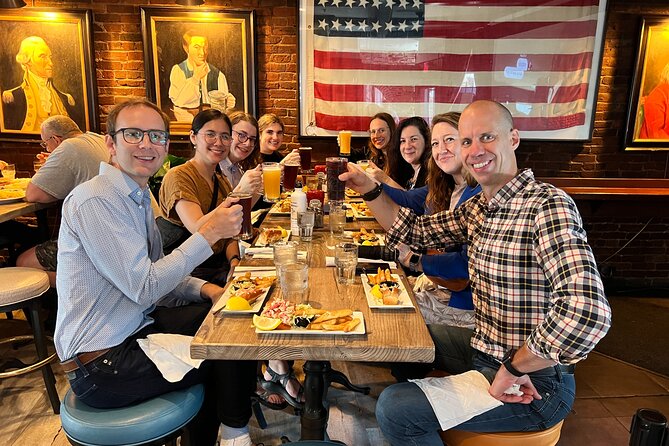
Here’s what makes it feel worth it: you’re not paying just for access to sights. You’re paying for four structured tastings at local eateries, plus a guide who connects each bite to the place you’re standing in. The tastings are generous enough that you can skip a full meal afterward, and the whole arc is designed from early savory to dessert.
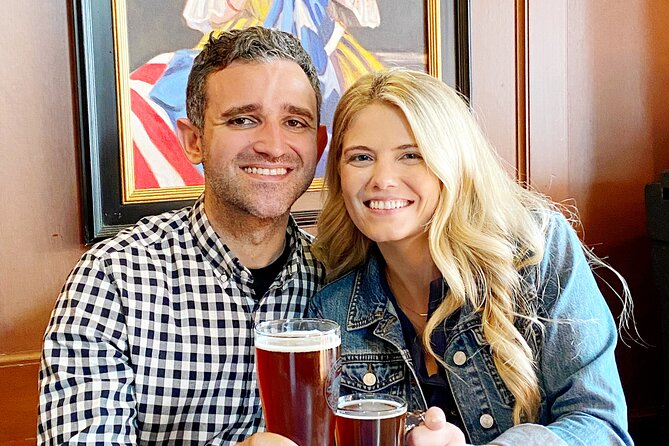
You also have one optional upgrade if you want it. During booking, you can add either two local craft beers or one handcrafted cocktail. Alcoholic beverages are listed as optional, so plan on non-alcoholic tastings included as part of your ticket either way.
If you’re budgeting, compare it to paying for a guide plus multiple meals on your own. This tour bundles the guided walking, storytelling, and food stops into one plan, which saves time, reduces planning stress, and keeps your “what should we eat?” questions out of your day.
The Freedom Trail food route, mapped for walking and orientation
This tour is built to do two jobs at once: feed you and teach you how Boston fits together. You’ll walk the downtown corridor of the Freedom Trail, stopping at major nodes while your guide shares food history tied to the route.
That matters because Boston’s center can feel confusing until you see it in motion. By moving from Beantown-area streets to Government Center, then into the Freedom Trail core, you start recognizing landmarks in your own future wanderings. After this, you’ll likely know where the Trail goes and how the neighborhoods connect.
The route also keeps you from feeling like you’re stuck waiting in long lines. The tour’s stops are timed in short blocks, so you stay in “walk, eat, learn, repeat” mode. The pacing is part of why people say the time flies.
Practical note: the tour starts at 11:00 am and typically runs about 3 hours, and it’s booked around 30 days in advance on average. If your trip is during a busy season, I’d book early so you get the time slot that matches your schedule.
Start at Beantown Pub, where Boston Classics begin
You kick off at Beantown Pub on Tremont Street, right in the heart of downtown. This is a classic meeting-point kind of place: casual and local, with the feeling of a neighborhood bar even while you’re in tourist territory.
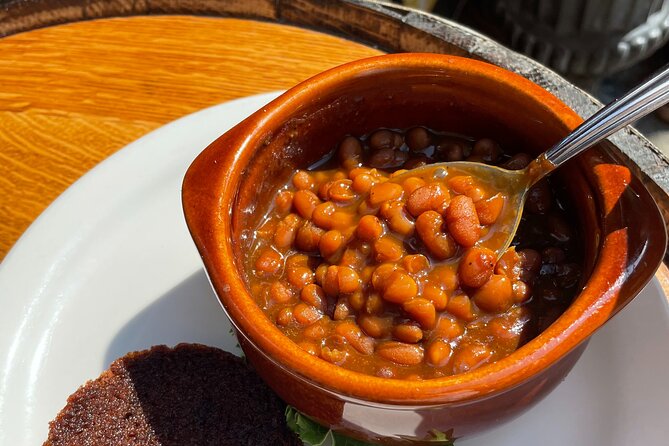
What you get here is the first tasting, and it’s positioned like the opening course. Beantown Pub is described as having a special place in the story because it’s one of the only remaining spots where you can find two Boston Classics on the menu. The tour also mentions a slow-cooked supper dish on offer, and that’s the kind of regional comfort food that works well as your first stop while you’re still hungry.
Why this stop is smart: you’re fed early, so you don’t spend the first half of the walk thinking about food. Also, starting in a bar or pub helps the tone click. Boston’s food culture often lives in casual places, not just fancy dining rooms, so this sets the right expectation for the rest of the route.
If you’re picking what to wear, plan for bar-to-street movement. Comfortable shoes matter because you’ll be outside and walking for the duration of the tour.
Freedom Trail stops and food history you can feel
After the first tasting, the tour shifts into the walking heart of the day: the Freedom Trail itself, with food history threaded through the landmarks. Instead of just telling you the famous revolutionary moments, the guide connects lesser-known food stories to the sites you see.
This is where you start getting real context for what you’re tasting. Boston’s food identity did not grow in a vacuum. It’s shaped by port life, neighborhood change, and the way taverns and markets fed workers, travelers, and locals.
The tour is described as having stops to savor iconic local dishes at four beloved eateries, each with its own story to tell. If you’ve come to Boston for the classics, this format helps you avoid the common problem of ordering the “right” thing in the “wrong” place. You’re tasting the food, but you’re also learning why it belongs here.
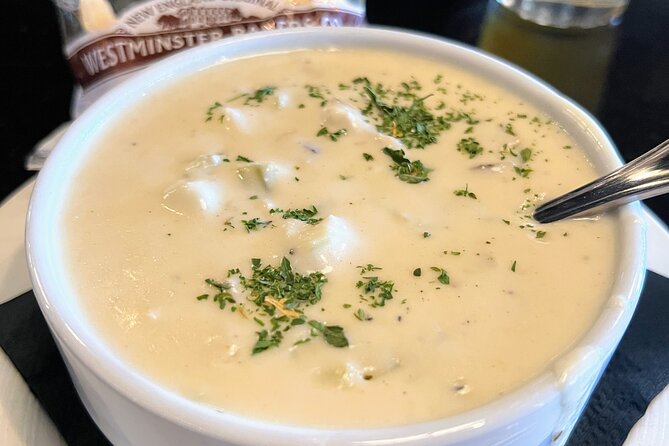
Based on guide feedback from the tour experience, the classic menu arc commonly includes staples like Boston baked beans and brown bread early on, then moves through seafood favorites (including clam chowder and lobster roll), and ends with the city’s signature dessert.
More of Boston from the top of the list
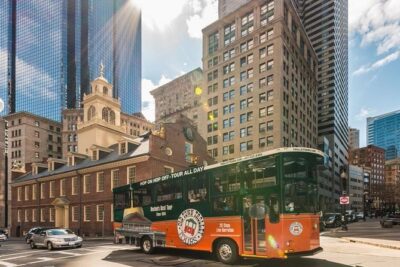
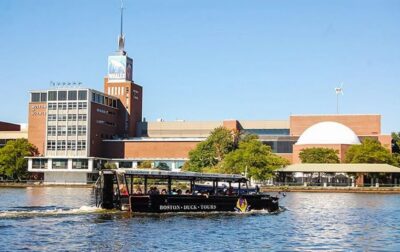
Boston Sign photo moment, then Faneuil Hall’s living street energy
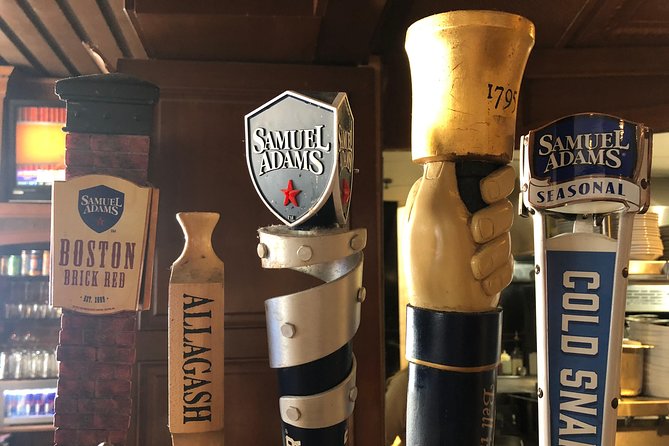
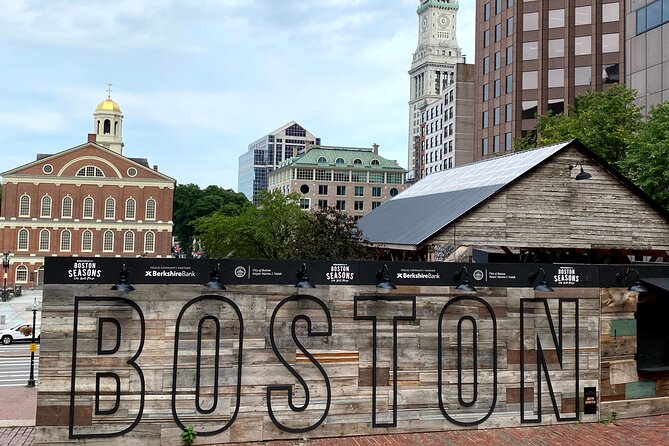
You get a quick photo stop at the Boston Sign near Government Center, right in the mix where modern city life meets historic downtown. It’s short by design, but it’s useful. You’re getting oriented while the guide keeps the walking flow going.
Next you head to Faneuil Hall Marketplace, a lively Freedom Trail hub known for street performers and a mix of vendors and shops. Even if you’ve seen pictures, being there in person changes things. The place has a “people-watching is part of the attraction” feel, and it’s easy to imagine why it became a meeting point long before it became a foodie stop.
Why I like this portion of the day: it’s not all heavy history. You get a moment that feels like Boston in the present, while the guide connects the site back to earlier public life. That contrast is exactly what makes the Freedom Trail interesting when you’re traveling with limited time.
One consideration: if you hate crowds, this stretch can be busy, since it’s a major public gathering area. The tour timing helps, but you should still expect some city noise.
Bell in Hand Tavern, seafood, and tavern-wall stories
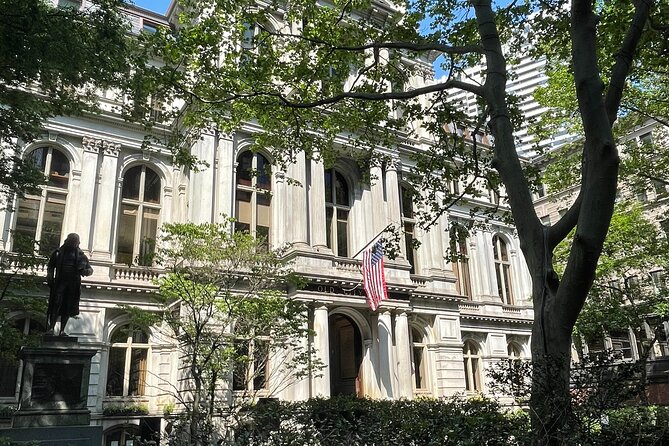
From Faneuil Hall you continue to Bell in Hand Tavern, just steps away. This is one of those Boston institutions that feels like it has been there forever. The tour highlights it as the oldest continuously operating tavern in the country, with service dating back to the 1700s.
You also get a tasting here: a coastal New England seafood classic, and the experience adds extra spice by tying it to tavern culture. There’s even a mention of secret whimsy about paintings adorning the walls, which is the kind of fun detail that turns a historic stop from “we walked in” into “we noticed things.”
This is a strong stop for two reasons. First, tavern food is where many of Boston’s signature dishes actually lived and spread. Second, a guided moment like this helps you read the space. You’re not only eating, you’re learning how and why places like this mattered.
If you’re doing this tour as part of a first Boston visit, Bell in Hand is a good “anchor” stop. It gives you a real sense of tradition before the day moves toward dessert history.
Markets on the Freedom Trail stretch: Haymarket and Boston Public Market
The tour includes market time in two different styles, which I think is a clever way to show Boston food culture. You’ll hear about Haymarket, described as an open-air market tradition dating to the early 1800s, with vendors selling produce and seafood every weekend.
Then there’s Boston Public Market, an all-indoor, year-round marketplace showcasing local vendors, including fresh produce, seafood, and regional specialties.
Why these market stops matter on a food tour: they show how food supply works in Boston, not just where tourists go to eat. You get a sense of what locals buy, how variety is presented, and how markets act like everyday food hubs.
The main drawback is time. Market stops are part of a fast-moving 3-hour experience, so you should treat this like a taste of the market vibe, not a full shopping trip. If you want to browse and buy, you may need to return on your own with more time.
Government Center and the tea-themed landmark hunt
You finish the middle portion of the route at Government Center, which the tour frames as Boston blending old and new. You’ll get a short stop near civic buildings, plus a prompt to keep your eyes open for a shining landmark connected to Boston’s tea-loving past.
This part is brief, and that’s the point. It’s a quick pause to lock in the city layout and point you toward a specific historic visual you can recognize later.
Even if you’re not a history buff, this stop helps you connect the Freedom Trail story to modern downtown geometry. Boston’s civic center is part of the city’s identity, and it helps the Trail feel less like a straight line and more like a set of connected “worlds” that share space.
Omni Parker House finish, where Boston Cream Pie lives
The final stop is Omni Parker House at 60 School St, where the tour ends. This is a historic anchor for Boston food lore, founded in 1855 and famous for Boston Cream Pie and Parker House Rolls.
If you’ve heard the joke that Boston Cream Pie is neither pie nor cream, the guide story is the reason it sticks. It’s dessert mythology you can taste, right where it became famous.
Why this ending works: dessert at the end feels like a payoff, not an afterthought. You’ve already filled up through savory tastings and seafood, and then you get a signature Boston finale tied to a specific birthplace story. People often say the last stop feels the nicest, and I get that. It’s the kind of finish that turns a food tour into a memory you’ll keep.
Also, the tour ends very close to where it starts, with the end point less than two blocks from the starting location. That means you’re not stuck far from your hotel or transit.
Guides, pacing, and how the small group changes the feel
This tour runs with a maximum of 12 people, which is the sweet spot for a walking food experience. In a group that size, you’re less likely to get lost, and the guide can keep you together while still answering questions.
The experience is led by local guides, and names mentioned include Katie, Judy, Alissa, and Maggie. Across those guides, the common thread is that the history and food facts feel fun and organized, not heavy-handed. You’ll learn stories and insider tips about food culture, plus some landmark context that helps you see the city more clearly.
Pacing is also part of the value. The tastings are spaced in short segments, with about 30 minutes allocated at key food stops and smaller blocks for photos and walk-through sections. That makes it realistic for a broad range of visitors, as long as you can handle downtown walking for a few hours.
If you’re the type who likes to ask questions, the small group size is especially helpful. You’ll likely get better answers than if you’re stuck listening from the back of a large crowd.
Should you book this Freedom Trail food tour?
Book it if you want a first-time Boston food-and-history experience that does not waste your time. The structure is built for orientation, the tastings are generous enough to replace a lunch, and the Freedom Trail context helps you make sense of what you’re seeing later on your own.
Skip it if you hate walking or if you already have a tight plan for lunch and dessert. Also, if you have a very specific diet preference, you’ll want to check what’s being served before committing. The tour does include classic Boston dishes like baked beans and seafood, so it may not fit everyone’s tastes.
My bottom-line take: for $135.45, you’re paying for a guided, food-forward day with a real city payoff at the end. If that sounds like your kind of travel, this is an easy yes.
FAQ
How long is the tour?
The tour lasts about 3 hours.
What is the price per person?
The price is $135.45 per person.
How big is the group?
The tour has a maximum of 12 travelers.
What language is the tour offered in, and do I get a ticket on my phone?
The tour is offered in English, and you receive a mobile ticket.
What food is included?
The tour includes generous food tastings at 4 local eateries.
Can I add beer or a cocktail?
Yes. There is an optional upgrade that includes either two local craft beers or one handcrafted cocktail.
Is gratuity included?
No. Gratuity for the guide is not included.
What happens if weather is bad or the minimum number of travelers is not met?
The experience requires good weather. If canceled due to poor weather, you’ll be offered a different date or a full refund. If the minimum number of travelers is not met, you’ll be offered a different date or a full refund.
What are the meeting and ending points?
You meet at Beantown Pub, 100 Tremont St, Boston, MA 02108. The tour ends at Omni Parker House, 60 School St, Boston, MA 02108.
More Tour Reviews in Boston

Keep Going in Boston
The Red Line, Three More Ways

More around Boston, freshly written up
- The Boston Bash Scavenger Hunt★ 4.5 · 3 reviews
- Self-Guided Audio Tour of Boston North End★ 4.5 · 3 reviews
- Self-Guided Boston Christmas Tour★ 5.0 · 3 reviews
- Self Guided “The North End Pizza, Cannoli and Picnic” Solo Walking Tour★ 5.0 · 3 reviews
- Cambridge: Haunted Charles River Cruise★ 4.3 · 3 reviews
- Boston: Official Freedom Trail® Lantern Tour★ 4.7 · 3 reviews
Freedom Trail Walking Tours, compared.
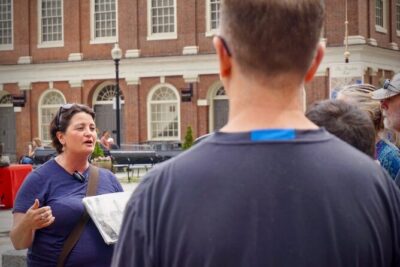 ★ 5.0Freedom Trail History Small Group Walking TourFrom $356,450 reviews
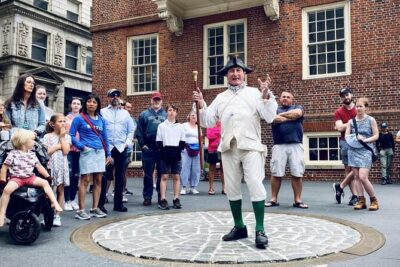 ★ 4.5Boston Freedom Trail Walking Tour with Costumed GuideFrom $262,531 reviews
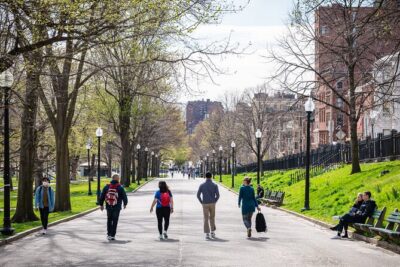 ★ 5.0Boston Food & History: Pizza, North End & Freedom TrailFrom $901,772 reviews
 ★ 4.9Boston’s Freedom Trail: A Revolutionary Walking TourFrom $311,748 reviews
★ 4.9Freedom Trail History Small Group Walking TourFrom $351,590 reviews
★ 5.0Boston’s Freedom Trail: A Revolutionary Walking TourFrom $311,343 reviews
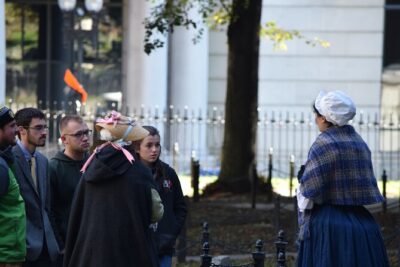 ★ 4.5Freedom Trail Walking Tour 250From $261,118 reviews
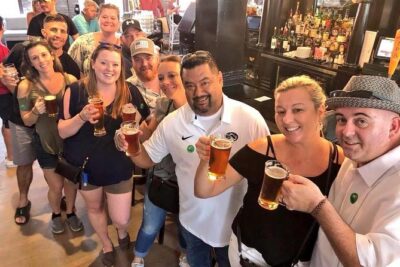 ★ 5.0Boston Freedom Trail History Pub Crawl Small-Group TourFrom $60996 reviews
Also filed under