
REVIEW · BOSTON TRUE CRIME AND MAFIA TOURS
True Crime Tour of Boston
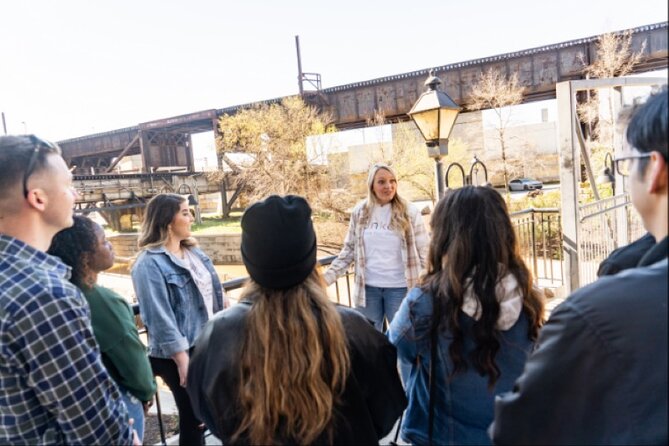
True crime in Boston? It turns familiar streets into a story map. This 2 hour walking tour uses real cases and local landmarks to give you historical context, with a guided narrative that keeps heavy material structured and respectful.
I like that it moves at a relaxed pace and still packs in a lot. The storytelling style can be funny and engaging too, with guides like Kai, Andrew, and Kyle getting specific praise for making the cases easy to follow.
One thing to consider is that the subject matter is dark. If you want only the most famous crimes, you might feel the case mix is uneven, and like any live tour, the quality can depend on the guide and day.
Key things to know before you go
- 2 hours, 10 stops across Boston, paced for an easy-going walk
- $32 per person for a guided route through major landmarks, with all stops listed as free to enter
- Mobile ticket and an English narration
- Cases range from serial killers and fraud to the Boston Marathon bombing and anti-Quaker laws
- Group size is capped at 20 people, so you are not packed in shoulder-to-shoulder
- The tour ends near the Mary Dyer statue at the Massachusetts State House area
More of Boston from the top of the list
Price and Time: what $32 gets you
At $32 for about 2 hours, this is priced like a value-focused specialty tour, not a big museum day. You are paying for the guide, the walking route, and the narrative glue that ties each landmark to a specific case.
The schedule is built for a “stop and learn” rhythm. Each location is roughly 12 minutes, so you get enough time to understand the why behind the headlines, without getting stuck at any one spot for too long. It also helps that the stops are free to access, so you are not stacking extra ticket costs on top.
Practical note: there is no food or drink included. If you are doing this right after a lunch plan, bring a snack and water if you think you will need it, especially in summer.
The walk from George Washington Statue to Mary Dyer statue
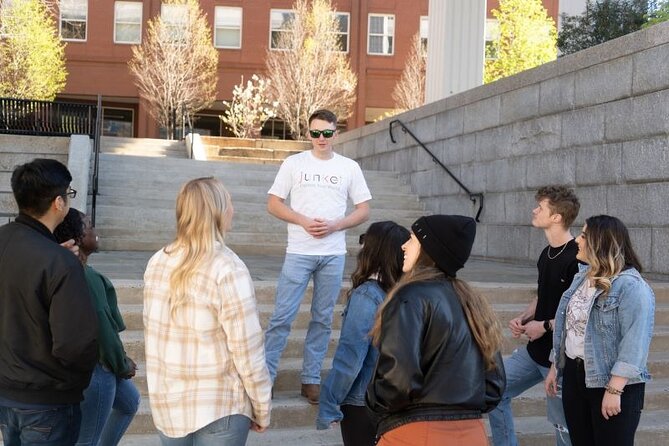
The tour starts at the George Washington Statue in downtown Boston (3:00 pm start time) and finishes at the Massachusetts State House area near the Mary Dyer statue. That end point is a smart anchor if you want to keep exploring after, since you are already in the core of the city.
You will spend the whole experience on foot, with a moderate fitness level recommended. It is not described as a tough hike, but it is still a city walk with multiple stops, so comfortable shoes matter.
Also, it is offered in English and the area is described as near public transportation, which makes it easier to tack onto a broader Boston day.
Ten true crime stops that shape the Boston story
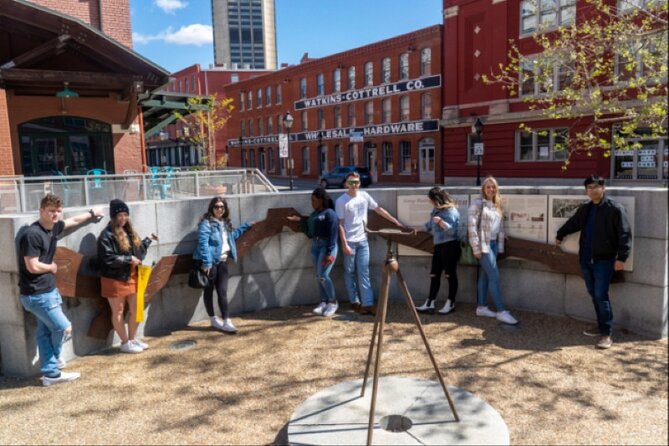
This is the part that makes the tour click. You are not just hearing crime trivia. Each stop is a small chapter, tied to a place you can actually see.
1) Boston Public Garden, the Ether monument
You start in Boston Public Garden at the Ether monument. The story connected to it is the tale of the first female serial killer, told through the lens of how Boston remembers and marks certain parts of its past.
What I like about this opener is that it sets expectations: the tour is about context, not shock value. The downside is that a monument stop can feel quick, so you will want to listen closely because you are moving on fast.


2) Boston Marathon Survivor Memorial
Next up is the Boston Marathon Survivor Memorial. This stop shifts the tone from older crime stories to the terror and aftermath around the Marathon bombing, with a focus on bravery and the days that followed.
This is a good check-in point if you are worried the tour will stay stuck in serial killer headlines. Still, it is emotionally heavy, so if your comfort level is limited with tragedy, pace yourself here.
3) Copley Square, a notorious haunting
At Copley Square, you hear about the Craiglist Killer and where the case intersected with the city. The location is busy and visually open, which can make it feel less like a “crime scene” and more like a history conversation in public space.
It can be a strong stop if you like modern case narratives. If you prefer older or more widely known stories, you might wish for deeper time here, since the format keeps each stop brief.
4) Central Burying Ground, grave robbing history
Central Burying Ground brings in a different angle: grave robbing. You learn that in the 18th and 19th centuries, raids could happen for reasons that were not purely sinister, and the tour frames the grim subject through the reality of that era.
This is one of those stops where the location itself does half the work. The drawback is also the nature of the site. It is a cemetery setting, so plan for a respectful, quiet mindset.
5) Emerson College, the Hitchhiker Killer
At Emerson College, the tour discusses the Hitchhiker Killer from the 1970s, describing the case as one that terrorized Boston for about eight months. The stop uses the institution setting to bring a modern city landmark into an older crime story.
This one often works well for history-minded crime fans. The quick timing means you get the arc, but not endless detail, so it helps if you can keep track of names and timelines as you go.
6) Parkman Bandstand and the Parkman family tale
Parkman Bandstand is where you hear about the Parkman family, including a story shaped by debt and death and tied to how the bandstand got its name. It is a fun switch because it leans more into a family saga than a one-case headline.
If you like stories that connect people, money, and power, this stop should land well. The only caution is that it is still “true crime,” so it does not turn into pure entertainment.
7) Boston Common Frog Pond, suicide attempt and intrigue
At Boston Common near Frog Pond, the tour investigates a suicide attempt linked to intrigue, forgeries, and family strife. Boston Common is one of those places you can visit in daylight and forget it holds darker layers beneath.
I appreciate that this stop is about motivations and social conflict, not just the dramatic event. The drawback is emotional sensitivity. If you would rather avoid suicide-related stories, consider whether this is the right fit.
8) 27 School St, Charles Ponzi’s start
At 27 School St, you look at the structure where Charles Ponzi started the fraud that later became known by his name. This is a strong mid-route moment because it broadens the tour beyond “serial killer” stories into fraud and public harm.
It also gives you a practical way to remember what you heard, since the site is tied to a named figure and a very specific kind of crime.
9) John Adams Courthouse, a historic trial
Next is the John Adams Courthouse, where the tour discusses the youngest serial killer in American history and the trial tied to this place. Courthouse stories naturally focus on process, judgment, and how the system handled cases.
This stop can feel more analytical than spooky. If you want pure thriller vibes, this is more “history of justice” than “crime scene drama.”
10) Massachusetts State House, Mary Dyer and anti-Quaker laws
The tour ends at the Massachusetts State House area near the Mary Dyer statue. Here, you hear the tragic story of Mary Dyer and three other women who were put to death for violating unfair anti-Quaker laws.
This ending is heavy, but it also makes sense for Boston. It connects true crime themes to the legal and religious conflicts that shaped the city. It is a solid finale if you like your true crime grounded in law and society.
What the guides do well, and where it can vary
The biggest strength of this tour is the guided narrative. The structure keeps sensitive topics from turning into chaos. You get a planned route, and the guide is there to connect each landmark to the larger story.
In the reviews, the guides named Kai, Andrew, and Kyle are repeatedly praised for keeping things interesting, often with humor. That matters because “dark history” can become monotonous fast if the delivery is flat.
At the same time, one negative experience described a guide who seemed to read word-for-word and lacked personality. Another issue involved a no-show situation where communication failed. Those are edge cases, but it is worth knowing that your experience is only as good as the person leading you that day.
My advice: if you book, show up a little early, and if something feels off, seek help on the spot.
Is this Boston true crime tour worth it?
I’d call this a good fit for three kinds of people:
First, if you like history as context. The tour spends time connecting events to the place and the era, instead of just listing facts.
Second, if you are a true crime fan who wants a city-walk format. The route is built around landmarks, so you get a tour experience, not a lecture that could happen anywhere.
Third, if you want an alternative to the usual Boston history loop. You will hit Boston Public Garden, Boston Common, and the State House area, but you will be looking through a different lens.
The main reason not to book is if you only care about a narrow set of famous crimes. The lineup includes fraud, legal history, and emotionally difficult topics. If that case mix is not your thing, you might feel the tour is crime-related but not tailored to your exact interests.
Practical tips to make the 2-hour route easier
This tour is straightforward, but small details make it smoother.
Wear comfortable walking shoes. You will be on foot for the whole 2 hours, with multiple short stops.
Bring a layer. Boston weather changes quickly, and you are standing around while the guide talks.
If you have moderate mobility needs, keep your pace steady. The tour is described as having a moderate physical fitness level, so it is not framed as strenuous, but it still involves continuous movement.
Finally, expect public spaces. Boston Common, the Public Garden, and Courthouse areas are outdoors and open. It helps to be mentally ready for a normal city sound level while you listen.
Should you book this True Crime Tour of Boston?
I think this tour is a solid choice if you want a guided walk through Boston’s best-known landmarks, paired with crime and legal history that is told in a structured way. At $32, the value comes from the route and the storytelling, especially if you end up with a guide who brings energy like Kai, Andrew, or Kyle.
Skip it if you are sensitive to topics like suicide attempts or court cases, or if you need only the most famous cases. In those scenarios, it is easy to feel like you are getting a mixed bag.
If you do book, arrive ready to listen. This one works when you treat each stop like a short chapter, not a full documentary.
FAQ

How long is the True Crime Tour of Boston?
It runs for about 2 hours.
What does the tour cost?
The price is $32.00 per person.
What time does the tour start and where does it end?
It starts at 3:00 pm at the George Washington Statue in Boston and ends near the Mary Dyer statue by the Massachusetts State House.
Is the tour available in English?
Yes, the tour is offered in English.
Do I get a ticket on my phone?
Yes, it includes a mobile ticket.
What is included in the price?
A professional local guide and thorough, researched, accurate history are included.
Are admissions required at the stops?
The listed admissions for the stops are free.
How big are the groups?
The tour has a maximum of 20 travelers.
Is free cancellation available?
Yes, you can cancel up to 24 hours in advance for a full refund.
More Tours in Boston





More Tour Reviews in Boston
Keep Going in Boston

More around Boston, freshly written up
- The Boston Bash Scavenger Hunt★ 4.5 · 3 reviews
- Self-Guided Audio Tour of Boston North End★ 4.5 · 3 reviews
- Self-Guided Boston Christmas Tour★ 5.0 · 3 reviews
- Self Guided “The North End Pizza, Cannoli and Picnic” Solo Walking Tour★ 5.0 · 3 reviews
- Cambridge: Haunted Charles River Cruise★ 4.3 · 3 reviews
- Boston: Official Freedom Trail® Lantern Tour★ 4.7 · 3 reviews
Boston True Crime and Mafia Tours, compared.
 ★ 5.02-Hour Beacon Hill True Crime Expert Guided TourFrom $35182 reviews
 ★ 5.0Boston Crime TourFrom $3475 reviews
 ★ 5.0Mobsters, Mayhem and Murder Walking TourFrom $2967 reviews
 ★ 4.1In Cold Blood True Crime Guided Walking TourFrom $3550 reviews
 ★ 5.0Beacon Hill True Crime Walking TourFrom $3519 reviews
 ★ 4.0North End Boston Mafia Exploration Game and TourFrom $79 reviews
 ★ 5.0Salem Through a New Lens: Anniversary of Joseph White MurderFrom $368 reviews
 ★ 5.0Boston Untold History Walking Tour7 reviews
Also filed under