
REVIEW · REVOLUTIONARY BOSTON HISTORY TOURS
Small Group Revolutionary Tour of Lexington, Concord, and Boston
Paul Revere’s route becomes real, fast. This small-group Revolutionary day strings together the moments that led to April 19, 1775, from Old North Church to Bunker Hill Monument. I like how the timeline is easy to follow, so the story clicks instead of feeling like a list of facts.
Two things I really liked: you get a focused small group (max 9), which makes it easier to ask questions and hear the details, and you visit the actual sites tied to the Midnight Ride, the first shot, and the Concord resistance. One consideration: it is a long day (about 7 to 9 hours), and lunch and snacks are not included, so plan to eat during the Concord break.
Key points before you go
- Small group pace with up to 9 travelers, great for questions
- Old North Church lantern moment plus access to a major historic interior stop
- Battle Road trail stops at Lexington and Concord sites tied to April 19, 1775
- Concord Museum artifacts including the real lantern used in the Old North Church signal night
- Scenic and strategic viewpoints like seeing Concord from the British officers’ perspective at Old Hill Burying Ground
- A Boston closer with Washington locations and Bunker Hill Monument’s famous battle story
More of the revolution, from the tea to the bridge
A Revolutionary day trip that actually follows a timeline
The best way to describe this tour is: it moves like the events did. You start in Boston’s North End, then you trace the Midnight Ride and the British push out through Lexington and Concord, and you close with the Boston chapter that came right after. If you’ve ever read about the Revolution and thought, I know the names, but I do not know how it all connects, this format helps.
I also like that the day is broken into bite-size stops. Some are only about 10 to 20 minutes, but they are long enough for the story to land, and then you move on before you get museum-weary. You are on an air-conditioned vehicle for the drives, and the guide keeps the historical thread tight so you are not just staring at plaques.
You should also know the rhythm: you will do walking and standing at multiple outdoor sites. You only need a moderate fitness level, but comfortable shoes help a lot.
Paul Revere Mall and Old North Church: the signal that started the clock
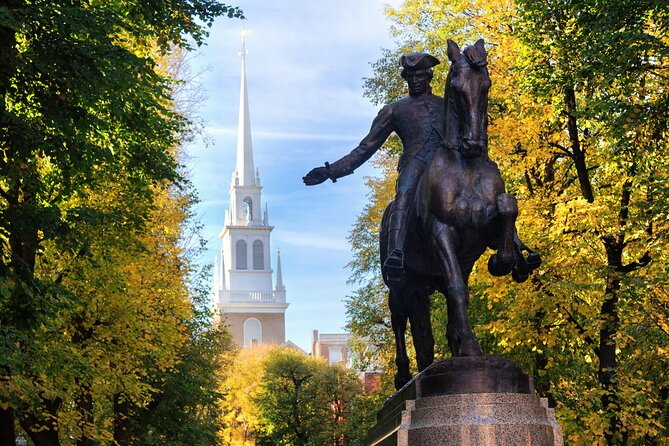
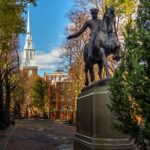
The day starts at the Paul Revere statue at Paul Revere Mall. The setting matters here. You are in the North End, and with Old North Church as the backdrop, the stories stop being abstract and start feeling like something people could actually spot from the street.
Next comes Old North Church & Historic Site, where you learn about the famous lantern signal. It is one of those Boston moments that you have heard about in passing, but here you get the context for why those lanterns mattered and how quickly the message had to travel. The site also has a longer stop, so you are not rushing through.
Practical note: these early stops are great for photos because the area is so recognizable. If you want a calm first shot, arrive with your camera settings ready. The tour starts at 10:00 am, so you will not have time for a long wander before the story begins.
The Midnight Ride route into Lexington Green
After the Boston signals, you shift to the route that connects the Midnight Ride to Lexington. One stop that makes this feel real is Hancock-Clarke House. You follow the actual route of Paul Revere’s ride out toward Lexington, then you hear what happened as warnings reached key people. This is where you start seeing how the Revolution was not just battles, it was communication, timing, and local networks.
From there, you go to Lexington Green, the location of the first shot of the American Revolution. You learn what happened on the morning of April 19, 1775, and it helps to be there instead of reading it on a poster. Lexington Green turns “the first shot” into a place with distance and direction, and you can almost feel why both sides were thinking in minutes.
A drawback to keep in mind: because these stops are outdoors and historically significant, there can be uneven ground and lots of standing. It is totally manageable, but if you get restless standing for 20 to 25 minutes, bring your patience. The guide’s storytelling helps, but you will still be out in the elements.
Tavern stops and the capture story that keeps the pace moving
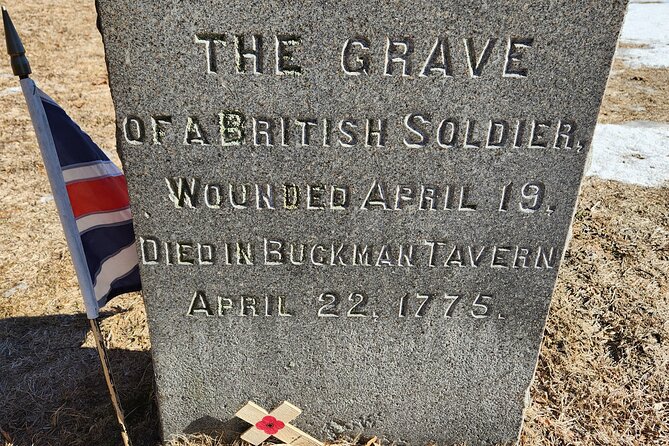
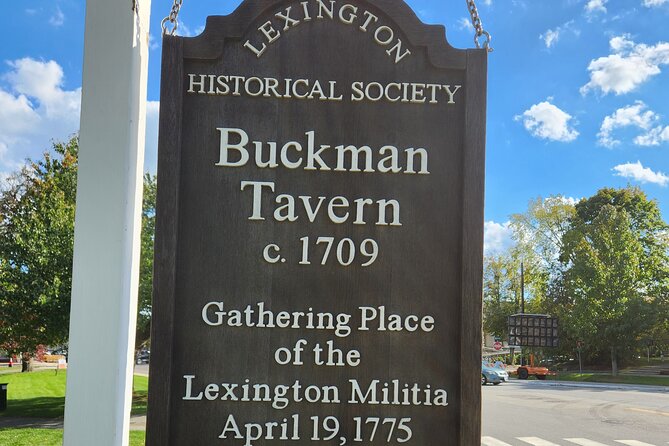
The tour continues with a mix of battlefield-adjacent sites and smaller locations that add texture. Buckman Tavern is brief, but it matters. You get a sense of the waiting that happened while colonists awaited the arrival of the British.
Then you move to the Paul Revere capture site. This is not the romanticized version you might expect. You get the real story of what happened and where he was captured, which makes the whole ride feel more human. It also keeps the timeline honest: the Revolution was dramatic, yes, but it was also messy and risky.
From there you stand at the Old North Bridge. This is where you connect the phrase the shot heard around the world to the physical spot. The bridge is a good moment to pause, look around, and understand that events can turn on a small gap of time.
Other trips to the battle greens
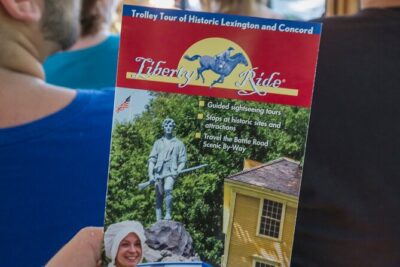


Concord: from British viewpoint to a well-timed lunch break
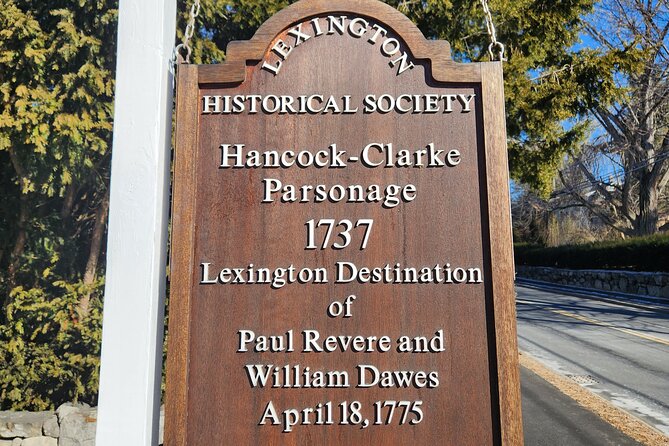
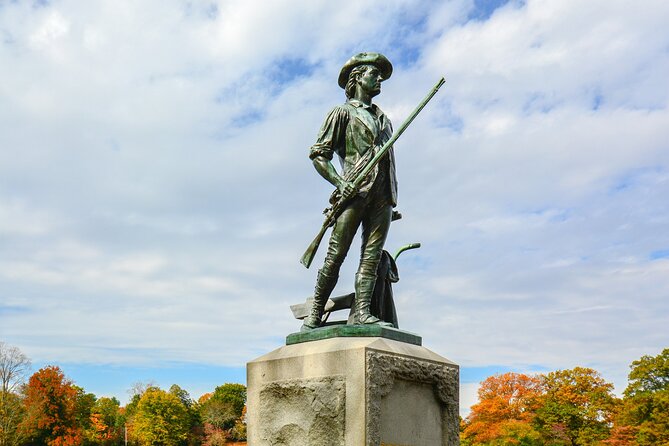
Once you cross into Concord, the tour expands the perspective. Old Hill Burying Ground gives you a viewpoint from the position of British officers. You can see the town from that vantage, and the guide shares how Concord residents hid war supplies. That kind of detail makes Concord feel like a community, not just a battlefield.
Then you get into Concord itself with free time for lunch and shopping, about 1 hour 15 minutes. Lunch is not included, but the break is long enough to eat somewhere nearby and reset. If you like to plan ahead, this is where you can quickly refuel before you head to the museum portion.
One practical tip: since snacks are not included, consider grabbing a small bite during your Concord free time rather than assuming you will find something quick later. The day is long, and you will appreciate having energy for the final stretch.
Concord Museum and the real lantern artifact
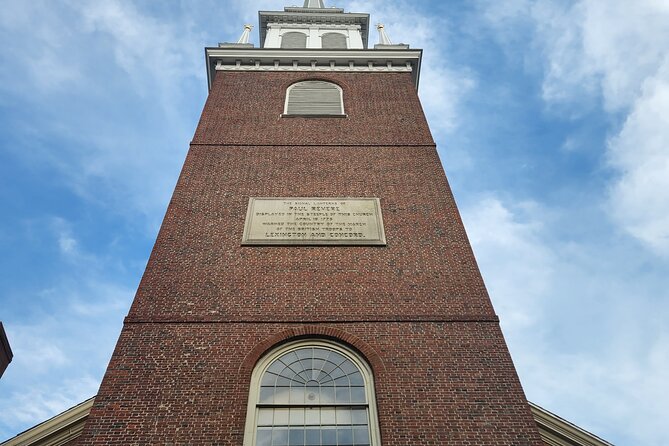
Concord Museum is where the tour slows down in the best way. You get admission included, and you see the real lantern that hung in the Old North Church on the night of April 19, 1775. That alone turns the story from legend into an object you can point to and say, this was physically there.
You also get to view many preserved artifacts from the Revolution. Even if you are not a museum person, this stop helps you connect what you heard outdoors to tangible evidence. The museum makes the day feel less like drive-by sightseeing and more like a coherent learning arc.
After the museum, you keep rolling along the Battle Road area with stops like Hartwell Tavern. You see part of the best preserved stretch of the trail and hear about the bloody retreat of the British from Concord. Thomas Nelson Jr. House Site is another important stop because the tour connects it to the revenge that came after earlier casualties. And Munroe Tavern is a drive-by that gives you a different side of the war, used by the British as a field hospital and headquarters, with George Washington later staying there on his commemorative tour of Lexington.
These stops are short, but they do a useful job. They show the Revolution was not just marching and shouting. It involved care, improvisation, and control of space.
Washington and Bunker Hill: how the story lands back in Boston
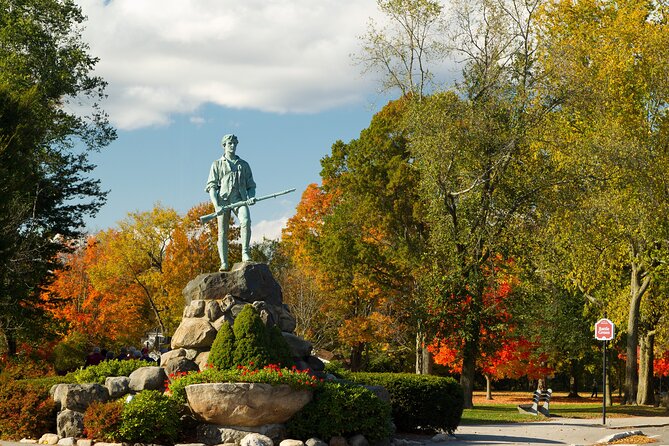
The final stretch brings you back into the Boston storyline. Cambridge Common is one of the key moments, with the stop placed at the exact spot where George Washington first assumed command of the Continental Army. Hearing that placed in a real location helps you understand why Boston mattered beyond just the battles.
Then you get drive-by views like Wadsworth House, where Washington lived for six months while commanding the newly formed colonial army out of Harvard University. You are not spending hours here, but being shown the spot is enough to create context as you head toward Bunker Hill.
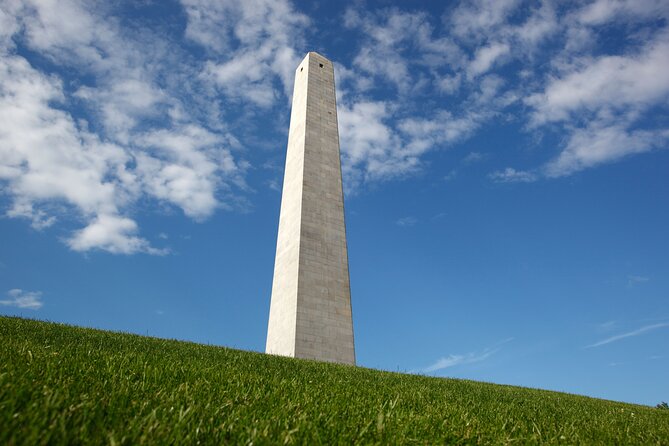
Finally, you see the Bunker Hill Monument and learn about the first official battle of the American Revolution. The guide also shares the story behind the famous line about not firing until you see the whites of their eyes. Even if you have heard the phrase before, the setting and the emphasis make it feel connected to how people actually fought, not just how history textbooks quote them.
Timing, comfort, and what to bring for a 7 to 9 hour day
The tour runs about 7 to 9 hours and starts at 10:00 am. You get bottled water included, and you travel in an air-conditioned vehicle. Parking fees are included too, which is a big deal in Boston where getting in and out can eat time.
What is not included is lunch and snacks. You do get a free lunch and shopping window in Concord, but outside that break, you should plan on buying your own food and water as needed. Since bottled water is included, you might just need a small snack plan so you are not hungry during the later stops.
Wear comfortable walking shoes. You are on your feet at key stops, and you will stand for stories at multiple sites. If you are sensitive to heat or cold, dress in layers, because the day mixes indoor-style learning moments with outdoor viewpoints.
If you like using your phone for maps, this is easier than you’d think. You are constantly moving between connected story points, so it helps to glance at where you are heading. A mobile ticket keeps entry smooth at the places where admission is included.
Value check: is $225 worth it?
At $225 per person, this is not a budget activity. But for what you get, it can feel like good value, especially if you want structure and reliable access to key sites.
Here is the practical math of it:
- You get bottled water, an air-conditioned vehicle, and parking fees covered.
- Several admission components are included, including Old North Church & Historic Site and Concord Museum.
- You also get free admission at a long list of outdoor and historic stops throughout Lexington and Concord, so you are not constantly paying entry fees one by one.
- The group size cap of 9 keeps the experience personal. That matters when you want the timeline explained clearly, not just heard at a distance.
Where the cost might feel heavier is if you are the type who prefers to wander at your own speed. This day is scheduled for a reason, and it is built around moving between linked sites. If you want long museum time, you may feel slightly constrained by the pacing. Still, the mix of short stops and a real museum visit is a solid balance.
Who this tour fits best (and who might want something else)
This works especially well if you:
- want a clear explanation of how April 19, 1775 unfolded from Boston to Lexington to Concord
- enjoy history you can see with your feet on the ground
- like small group energy, with time for questions
- prefer not to drive and park all day on your own
You might want a different option if you:
- need lots of free time beyond the Concord lunch window
- dislike standing around outdoors for short story stops
- want a more flexible, less structured schedule
Should you book this Lexington, Concord, and Boston tour?
I would book it if you want the Revolution laid out in a way that you can follow without getting lost. The combination of key landmarks, short but meaningful stops, and a museum visit with a real artifact makes the story stick.
If you are paying $225, go in with the right expectations: it is a structured, guided day. Bring snacks if you think you will need them, wear comfortable shoes, and plan for a full day away from your hotel. For me, the best sign is the consistent praise for how educational it is, and for guides who make the timeline feel meaningful. If that is what you want, you are in the right place.
FAQ
How long is the Lexington, Concord, and Boston tour?
It lasts about 7 to 9 hours.
What time does the tour start?
The start time is 10:00 am.
Where do I meet the guide?
You meet at the Paul Revere Statue, Paul Revere Mall, Boston, MA 02113.
Is lunch included?
No, lunch is not included. You do get free time in Concord for lunch and shopping.
What is included with the tour?
Included items are bottled water, an air-conditioned vehicle, fuel surcharge, and parking fees. Admission is included for Old North Church & Historic Site and Concord Museum.
Are there snacks provided?
Snacks are not included.
How big is the group?
The tour has a maximum of 9 travelers.
Is a mobile ticket used?
Yes, the tour offers a mobile ticket.
Is free cancellation available?
Yes, you can cancel for a full refund up to 24 hours in advance of the experience start time.
Keep Going in Boston




Back to the Battle Greens



More Revolution in Boston



More around Boston, freshly written up
- The Boston Bash Scavenger Hunt★ 4.5 · 3 reviews
- Self-Guided Audio Tour of Boston North End★ 4.5 · 3 reviews
- Self-Guided Boston Christmas Tour★ 5.0 · 3 reviews
- Self Guided “The North End Pizza, Cannoli and Picnic” Solo Walking Tour★ 5.0 · 3 reviews
- Cambridge: Haunted Charles River Cruise★ 4.3 · 3 reviews
- Boston: Official Freedom Trail® Lantern Tour★ 4.7 · 3 reviews
Revolutionary Boston History Tours, compared.
 ★ 4.5Boston Tea Party Ships and Museum AdmissionFrom $352,512 reviews
 ★ 5.0The Full Revolutionary Story Epic Small Group Boston Walking TourFrom $552,356 reviews
 ★ 4.8Boston Tea Party Ships and Museum Interactive TourFrom $351,926 reviews
 ★ 4.9Boston’s Freedom Trail: A Revolutionary Walking TourFrom $311,748 reviews
★ 5.0Boston’s Freedom Trail: A Revolutionary Walking TourFrom $311,343 reviews
 ★ 5.0Entire Freedom Trail Walking Tour: Includes Bunker Hill and USS ConstitutionFrom $79732 reviews
 ★ 5.0Boston’s Revolutionary and Drunken Past with Ye Olde Tavern ToursFrom $91195 reviews
 ★ 4.8Boston History & Highlights Tour: From Revolution to TodayFrom $44178 reviews