

REVIEW · REVOLUTIONARY BOSTON HISTORY TOURS
Public Authentic Revolutionary Boston Walking Tour
A Revolution that feels current, not dusty. This walking tour strings together Boston’s most important Revolutionary-era sites with brand new research, plus a story that speaks to the issues people face in the 21st century, not just the past. You’ll also get a mobile ticket and a plan that moves fast enough to keep you oriented without turning it into a sprint.
I especially like the inclusive, discussion-friendly approach, where the story is presented for modern audiences and nudges you toward active citizenship and critical thinking. I also like the guide style, described as affable and charismatic, with enough flexibility to customize the walk to what your group wants to focus on.
One consideration: several major stops are guided from the outside, and separate museum admission is required if you want to go in at places like King’s Chapel, Old South Meeting House, and Old State House.
Quick Hits: What Makes This Walk Worth Your Time

- A 90 to 120 minute Revolution-focused route that keeps momentum and context.
- Max group size of 16, which makes it easier to ask questions and keep the vibe personal.
- Outside stops at top sites, with optional inside visits when you buy separate tickets.
- Boston Common to Haymarket routing, so the geography helps you understand how events unfolded.
- Modern relevance built into the narrative, including freedom, power, and civic responsibility.
- Guide praise stands out, including standout comments about Adam’s humor and patient explanations.
More of the revolution, from the tea to the bridge
A Boston Revolution Story That Connects to Today

This is not the kind of tour that treats the Revolution like a closed chapter. The pitch is clear: the history is meant to feel relevant to the world you live in now, and that shows in how the walk is framed.
Instead of only listing dates and heroes, the tour is built around ideas you can chew on. You’ll hear about how different groups fit into the story, and you’ll get a version of events that aims to be diverse and inclusive for modern audiences. The goal is to help you think, not just remember.
It also leans into civic thinking. The Revolution is presented as something that matters for what people decide and how communities hold leaders accountable. If you like history that gives you angles, questions, and context you can use later, you’ll probably enjoy this format.
Price and Value: What $45 Gets You in 1.5 to 2 Hours
At $45 per person, this falls into the “worth it if the guide is strong” category. The good news is that the tour includes the biggest variable, the guide. The tour description calls out passionate, articulate, professional guides as part of every program, and the reviews back up that confidence.
You’re also buying time efficiency. The route hits key Revolutionary-era landmarks without you having to stitch together your own plan. That matters in Boston, where locations are close but history is dense, and it’s easy to waste time bouncing between sites without context.
The catch is admissions. Several stops are outside pauses, and inside entry at certain private sites is not included. If you want to go in everywhere, you may need to budget extra. If you mostly want interpretation, photo angles, and street-level context, the $45 can feel like a solid bargain.
Finally, look at the booking window. The tour is typically booked about 47 days in advance, which suggests demand is steady. If you’re traveling in peak season, booking ahead is smart so you can pick a time that matches your day.
Meeting at Boston Common, Ending Near Haymarket
The tour starts at Boston Common Visitors Center, 139 Tremont St, Boston, MA 02111, and ends at Haymarket, 100 Hanover St, Boston, MA 02108. That end point is convenient if you’re continuing on foot or bouncing to transit afterward.
A mobile ticket is included, and the tour notes that it’s near public transportation. That combination is practical. You won’t be scrambling for paper tickets, and you can line the walk up with the rest of your Boston plans.
The route can travel further depending on walking speed and time available. That’s a small detail, but it affects expectations. If you’re the type who likes a very strict schedule, you might prefer a tour with fewer “flex” elements. If you like adaptability, this approach can be a plus.
And because the tour is capped at 16 people, you’re less likely to get shoved into the back of a massive group. That makes it easier to hear the guide and to ask questions without the tour feeling like a conveyor belt.
Boston Common: The Revolution’s Starting Point in Plain Sight
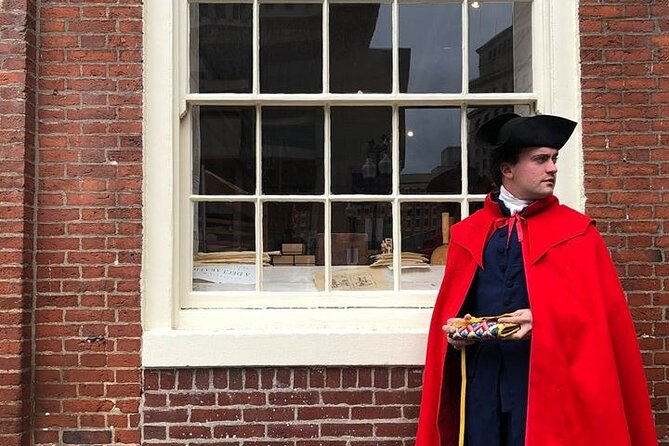
The walk begins at Boston Common, described as the oldest public park in the US. Even if you’ve seen Boston Common before, this is a useful anchor for Revolutionary history because it’s tied to the way the city shaped public life.
As a starting point, Boston Common does two things for you. First, it gives you a mental map for where power and people gathered. Second, it lets the guide set the tone for what the Revolution meant on the ground, not just in documents.
It’s also a free, easy stop. The plan lists about 15 minutes here, and the admission ticket is free.
If you like to arrive early and orient yourself, Boston Common is the right place to do that. You can get your bearings fast, then let the tour’s story add the why.
More of Boston from the top of the list
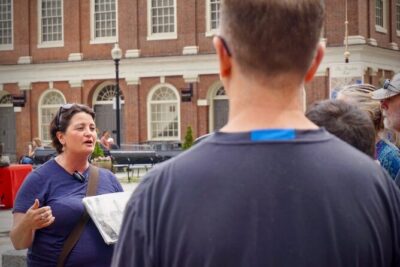


Granary Burying Ground: Reading History Through Names and Places
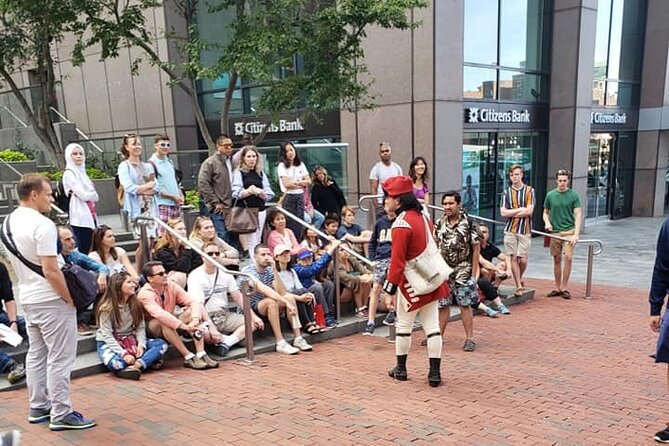
Next is Granary Burying Ground, with about 10 minutes on the schedule. This is one of those sites where the “lesser known details” matter, because the cemetery is doing double duty: it’s telling personal stories, and it’s reflecting what the city valued.
Cemeteries can feel heavy, but they’re also one of the most direct ways to connect to past communities. The tour uses this stop to expand beyond the headline Revolution narrative into how people lived, suffered, and shaped the community over time.
Admission is listed as free here too, so you can focus on what the guide points out without thinking about entry logistics. If you’re the type who enjoys background context, this stop is likely to reward you.
King’s Chapel: Global Reach of the Revolution, Plus Ticket Reality
The tour pauses at King’s Chapel for about 8 minutes. The framing here is important: the guide doesn’t treat it as just a pretty church. Instead, the emphasis is on the international scope of the Revolution in Boston.
That matters because Boston’s Revolutionary story wasn’t isolated. Ports, ideas, and people moved around the Atlantic world. A stop like this can help you see that the Revolution’s “home base” was still connected to larger systems.
Here’s the key practical detail: you’ll speak outside, and entrance into the Chapel requires a separate private ticket. The tour listing also notes that the museum has a separate ticket requirement.
So, consider your priorities. If you want the explanation and a few good photos, the outside pause can be enough. If you’re hoping for a deeper inside visit, plan extra time and buy the site ticket ahead of walking.
Old South Meeting House: The Tea Party Starts to Make More Sense
The tour also pauses at Old South Meeting House for about 8 minutes. It’s described as the building that spawned the Boston Tea Party, but the tour is careful to place that famous event in a broader significance.
This is a smart way to handle a well-known moment. The Tea Party is famous, but the “why now” and the “why this place” can get lost when you only hear the headline. Having the guide explain the wider context can turn a quick stop into a clearer story.
Again, this is mostly an outside stop. Entrance into the Meeting House requires a separate private ticket. If you’re the type who likes to go inside, factor that in because the tour itself is designed for walking and explanation rather than full museum time.
Old State House: Where the Boston Massacre Story Comes Into Focus
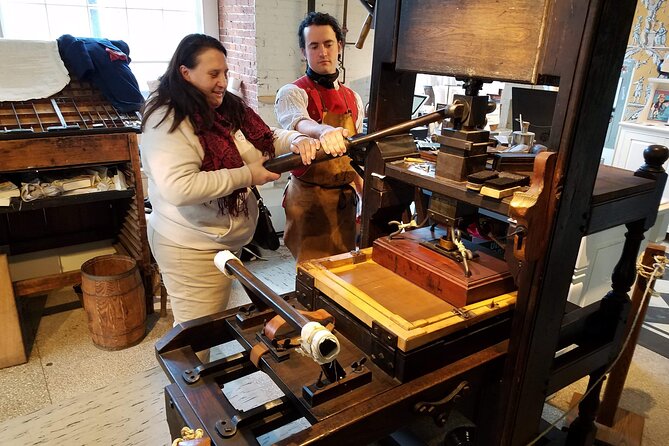
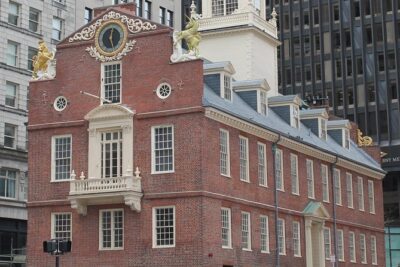
Next is Old State House, with about 6 minutes. This stop centers on the diverse story and legacy of the Boston Massacre. The tour plans for the guide to pause and speak outside, with inside entry requiring a separate private ticket.
This is one of those locations where the street-level setting is part of the lesson. You’re not just hearing about conflict. You’re standing in the kind of place where power, public messages, and anger could collide.
If you want to add more depth, buying an admission ticket for the inside site can make sense. If you’re short on time, the outside framing still has value because it helps you connect what you see nearby with what happened.
The Boston Massacre Spot, Plus Other Street-Level Clues
After Old State House, the route includes a walk over the infamous Boston Massacre spot. The tour description adds a practical note, don’t stay in traffic. That tells you the guide’s trying to keep the pace tight and help you move through downtown Boston efficiently.
There are also a few additional outside stops listed in the plan that sound like the guide will connect multiple Revolutionary-era themes, including:
- a Revolutionary meeting space, a marketplace, and a British armory
- a church famous for lanterns that signaled the Revolution
- the paradox of freedom and bondage, which the tour uses to confront uncomfortable truths
Even without inside admissions, these are powerful angles. Lantern signals highlight coordination and secrecy. Meeting spaces and marketplaces show how public life and political decisions intertwined. The freedom and bondage theme is the tour’s most sobering promise, because it keeps the story honest.
If you want a Revolution tour that doesn’t sanitize the past, these sections are likely to be highlights.
How the Guides Shape the Experience (Adam Is a Real Plus)
The reviews focus hard on guide quality, and you should care about that. A walking tour lives or dies on the guide’s ability to explain and keep people engaged without losing accuracy.
One name comes up repeatedly: Adam. Comments describe him as knowledgeable, patient, funny, and easy to get along with, and that he dresses for the part. The humor isn’t random, it’s used to keep the story moving while still answering questions.
That matters because Revolutionary history can be dense. If your guide can make complex connections feel human and understandable, you’ll finish the walk with better recall and a clearer sense of how everything fits together.
The tour also states that guides can customize based on your needs. In a group of up to 16 people, that flexibility is more realistic than on bigger tours. If your focus is ideas like representation, civic responsibility, or who got left out of the standard story, this format is set up to handle that.
Outside Stops vs. Paying for Inside Tickets
This tour is built around walking, pausing, and interpreting. You’ll spend time at Boston Common and Granary Burying Ground with free stops, then shift to three key private sites where inside entry is extra.
Specifically, the plan flags that separate admission is needed for:
- King’s Chapel
- Old South Meeting House
- Old State House
So, how should you handle that?
If you want the simplest, smoothest experience, treat the tour stops as interpretations from the street. You’ll still get the guide’s framing, and you won’t be stuck juggling lines or squeezing in last-minute ticket purchases.
If you’re a “see it all” person, decide in advance which inside site matters most to you. The three major options are all conceptually important, so the decision should come down to your personal interests. Buying tickets for multiple stops can add cost, but it also turns a 90 to 120 minute guided walk into a more full-bodied museum-and-history day.
Either approach works, but the tour shines when you use the guide to make sense of what you see outside.
Who This Tour Is Best For
This is a great fit if you want your Revolution history to feel relevant, not like a list. The modern relevance, inclusive storytelling, and emphasis on active citizenship and critical thinking make it appealing for people who like conversations about how societies work.
It’s also a good choice if you’re short on time. With a tight 1 hour 30 minutes to 2 hours schedule, you’ll cover a lot of ground and connect the dots between key events and places.
It may be less ideal if you only want inside museum time. The tour clearly signals that several stops require separate tickets, and the planned time at each site is brief.
A final note: the tour allows service animals, and it’s described as near public transportation with most people able to participate. If you’re comfortable walking city blocks at a moderate pace, you should be fine.
Should You Book This Revolutionary Boston Walking Tour?
Yes, if you want a guided Revolution walk that focuses on meaning, not memorization. For $45, the value is strongest when you care about how the story is told, especially the inclusive, modern angle and the guide-led interpretation at multiple landmarks.
Book it especially if:
- you like asking questions and want a smaller group feel (max 16)
- you want Boston Common and central downtown sites tied to clear explanations
- you’re okay with optional inside visits, rather than expecting everything to be included
Skip or rethink it if:
- you want long museum time at every stop, since inside admission is separate for several key sites
- you prefer strict, no-flex schedules, because the route can go further depending on time and walking speed
If you’re building a first-time Boston plan, start here for context. Then, pick one or two inside sites for deeper reading. That combo is a smart way to get both the story and the details without burning a full day.
FAQ
How long is the Public Authentic Revolutionary Boston Walking Tour?
The tour runs about 1 hour 30 minutes to 2 hours.
What does the tour cost?
It costs $45.00 per person.
Where does the tour start and end?
It starts at Boston Common Visitors Center, 139 Tremont St, Boston, MA 02111, and ends at Haymarket, 100 Hanover St, Boston, MA 02108.
Is admission included for King’s Chapel, Old South Meeting House, and Old State House?
No. The tour notes that you will pause outside, and entrance into those private sites requires separate private tickets.
What ticket type do I get?
You receive a mobile ticket.
How many people are in the group?
The tour has a maximum group size of 16 travelers.
What is the cancellation policy?
Free cancellation is available. You must cancel at least 24 hours in advance for a full refund. If you cancel less than 24 hours before the start time, the amount paid is not refunded.
More Tour Reviews in Boston






Keep Going in Boston

More Revolution in Boston





More around Boston, freshly written up
- The Boston Bash Scavenger Hunt★ 4.5 · 3 reviews
- Self-Guided Audio Tour of Boston North End★ 4.5 · 3 reviews
- Self-Guided Boston Christmas Tour★ 5.0 · 3 reviews
- Self Guided “The North End Pizza, Cannoli and Picnic” Solo Walking Tour★ 5.0 · 3 reviews
- Cambridge: Haunted Charles River Cruise★ 4.3 · 3 reviews
- Boston: Official Freedom Trail® Lantern Tour★ 4.7 · 3 reviews
Revolutionary Boston History Tours, compared.
 ★ 4.5Boston Tea Party Ships and Museum AdmissionFrom $352,512 reviews
 ★ 5.0The Full Revolutionary Story Epic Small Group Boston Walking TourFrom $552,356 reviews
 ★ 4.8Boston Tea Party Ships and Museum Interactive TourFrom $351,926 reviews
 ★ 4.9Boston’s Freedom Trail: A Revolutionary Walking TourFrom $311,748 reviews
★ 5.0Boston’s Freedom Trail: A Revolutionary Walking TourFrom $311,343 reviews
 ★ 5.0Entire Freedom Trail Walking Tour: Includes Bunker Hill and USS ConstitutionFrom $79732 reviews
 ★ 5.0Boston’s Revolutionary and Drunken Past with Ye Olde Tavern ToursFrom $91195 reviews
 ★ 4.8Boston History & Highlights Tour: From Revolution to TodayFrom $44178 reviews
Also filed under