
REVIEW · BOSTON SEAFOOD AND LOBSTER TOURS
Local Legends and Lobster Roll Tour
Provincetown tastes like stories. I love the tight mix of waterfront stops and food breaks, including real lobster roll moments, and I love how the route layers in Lobster Pot and Anthony Bourdain links so the town feels personal, not just scenic. One thing to consider is that some stops run seasonally, so timing can affect which food spots are open.
This is a private, English-speaking tour led by Cathy, starting at 12:30 pm at Cannery Wharf Park. You’ll spend about 2 hours on foot, getting your bearings fast on Commercial Street and the harbor side, then ending at a different location so you can keep wandering on your own.
Key takeaways before you go
- Cathy keeps the pace upbeat, with clear stories tied to places you can actually point at.
- Lobster roll time is built into the experience, not just a generic food stop.
- Cannery Wharf Park connects whaling, fishing, and the 2019 waterfront comeback in one walkable area.
- Bourdain shows up in more than one stop, including career and archive connections.
- Plan for seasonal hours, especially if you’re aiming for classic sit-down seafood spots.
- Commercial Street is the spine of it all, so you get a useful overview of how the town grew.
Other Cape Cod outings we have been through in detail.
Getting your bearings on Commercial Street in just 2 hours
Provincetown can feel like a maze at first, especially when you’re hungry and the harbor is doing its thing. This tour gives you a fast mental map because the route is built around the town’s key threads: the waterfront economy, the arts and writing scene, and the places where food became part of the culture.
You start at Cannery Wharf Park (387-395 Commercial St) at 12:30 pm and you’re on your feet for about 2 hours. Because it’s private, it’s easier to ask questions and keep things moving without the group chaos that slows everything down.
If your goal is to go beyond What’s this place called? and get the Why behind it, this format works well. You’ll learn as you walk, then you can use that context to choose where to eat and what to explore next.
Cannery Wharf Park: the wharf that kept getting rebuilt
Your first real dose of Provincetown storytelling is at Cannery Wharf Park. Historically, this wharf was painted and photographed for a reason. The offset pier sheds and cupola created a striking silhouette, the kind of view artists love because it looks like a postcard and a working port at the same time.
The site connects different eras of maritime work. It started as a hub for outfitting whaling and fishing vessels under David Conwell in the 19th century. In 1882, L. Pickert & Company turned it into a fish-packing and canning operation, with adjacent Small’s Wharf used for smoking fish.
Then came the real-world heartbreak of coastal weather. In 1926, a storm damaged the wharf when the Coast Guard cutter USCG Morrill sliced it in half. The waterfront didn’t just fade away though. In 2019, the Town of Provincetown acquired the half-acre parcel using land bank funds and a $400,000 grant, turning it into the park you see now.
Practical tip: treat this stop like your first photo target and your first “okay, I get it” moment. Once you understand that this area once handled fish processing at scale, the rest of the route makes more sense.
Provincetown Public Library: a church, a schooner, and an archive
Next up is the Provincetown Public Library on 356 Commercial St. The building is the star here before you even get to the books. It’s housed in a historic Second Empire-style structure, the Center Methodist Episcopal Church built in 1860, converted into a library in 2002.
Inside, you get a visual history lesson. The library displays a half-scale replica of the schooner Rose Dorothea, a 66-foot fishing vessel, in the main reading room. It’s the kind of detail you’d miss if you only walked past for sightseeing, so I love that the tour pulls you into places with meaning.
There’s also a real archival connection to modern pop culture and local identity. The library holds a major collection donated in 2023, the Anthony Bourdain Collection, with manuscripts and materials tied to his Provincetown time.
This stop works for you even if you’re not a museum person. A library is a practical, human space. It also reminds you that Provincetown isn’t only summer scenery, it’s a working community with memory.
Governor Bradford: lobster rolls, beer garden energy, and sea-floor vibes
At the Governor Bradford (312-314 Commercial St), you’re stepping into a long-running Provincetown seafood-and-bar tradition. The restaurant itself was established in 1960, but the site had eateries since the 1930s, so it has that local continuity you can feel.
The vibe is nautical without going costume-y. The venue sits across No. 312 and No. 314, with a bar and a restaurant split by the street numbering. It leans into maritime artifacts, plus a mural by James Wingate Parr.
Food-wise, this is one of your lobster roll stops. They’re known for local seafood, lobster rolls, and a raw bar. Pair that with the craft beer program, and you get the kind of straightforward lunch or early dinner that fits the whole tour theme.
One more reason I like this stop is the atmosphere. Recent renovation added an outdoor beer garden and a modernized industrial look, while keeping the community feel. It’s also year-round, and that matters in Provincetown when some places switch seasons.
If you prefer quiet, you might find the bar buzz is part of the point. This is a good stop when you want character, not a hushed museum tone.

Old Colony Tap: the cash-only dive bar that locals keep using
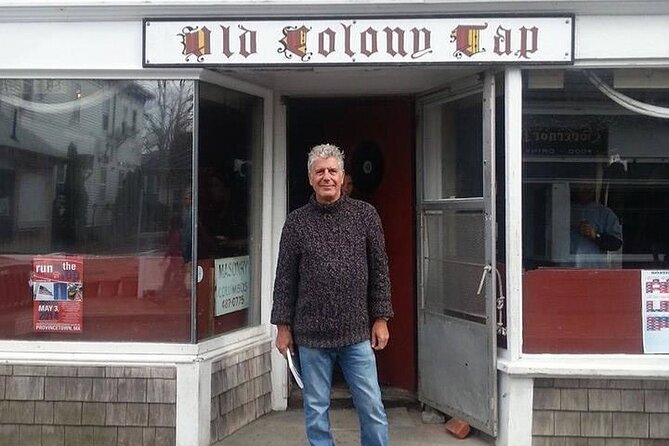
For a different side of Provincetown, you hit Old Colony Tap at 323 Commercial St. This is the kind of place people mean when they say go where the fishermen eat, in the most literal way. It’s been family-owned since the Enos family bought it in 1954, and it started in 1937 under Manuel G. Cook.
The decor does not try to be polished. You’ll see weathered driftwood elements, crooked floors, and local art from creators like James Wingate Parr and Ernesto, who famously used a blowtorch for his contributions.
The best practical detail here is the cash-only policy. If you forget to bring cash, you’ll feel it fast.
Drink-wise, it’s got classic, affordable comfort, including Pabst Blue Ribbon on tap, plus a jukebox. The bar is also tied to big names, like Norman Mailer, and Anthony Bourdain even visited in a 2014 Parts Unknown episode.
This stop is a great counterbalance to the more formal landmarks on the route. You come out of it knowing Provincetown has a spine made of working people and artists, not just visitors.
The Lobster Pot: neon icons, Portuguese flavors, and Anthony Bourdain’s first job
The route swings to The Lobster Pot at 321 Commercial St, a Provincetown tradition that began in 1979. The neon lobster sign is the obvious landmark, but what I like is how many different cravings it covers without losing its identity.
It’s known for fresh seafood, Portuguese specialties, steaks, and even vegetarian dishes. But for me, the standout is the award-winning clam chowder and the two waterfront dining rooms with Provincetown Harbor views.
There’s also a strong cocktail culture here, including signature drinks at the Top of the Pot bar. The restaurant runs seasonally from April to November, which is one reason the tour’s timing can matter for food choices.
One of the most useful bits of context on this stop is the connection to Anthony Bourdain. He began his career in the 1970s working here as a dishwasher. That detail is more than trivia because it helps you read the place as a launch pad for real culinary work, not just a tourist stop.
If you’re visiting during peak season, this is one of the easiest places to justify a sit-down meal.
Lopes Square and Commercial Street: the maritime anchors under your feet
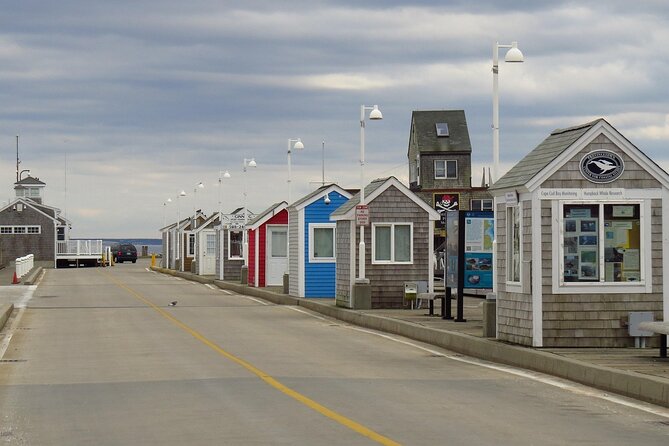
You’ll spend time at Lopes Square, right in the heart of Provincetown on Commercial Street. It’s named for Manuel N. Lopes, a local fish dealer killed in World War I’s Battle of Château-Thierry in 1918.
The square’s signature piece is an anchor from 1801, recovered in 1959. It’s about 10½ feet long and it gives you a physical object for the maritime story you’re already hearing.
The space was revitalized in 2005 with new paving, seating, and lighting. In winter, there’s a lobster pot Christmas tree created by artist Julian Popko, which is a fun reminder that Provincetown keeps its waterfront humor even off-season.
From here, the tour keeps you close to the pulse of town. Commercial Street itself is the backbone. It started as Front Street laid out in the early 19th century, running parallel to Provincetown Harbor for fishermen and whaling commerce. By the mid-1800s it became Commercial Street as the town grew into a business corridor with fish sheds and merchant activity.
Then the arrival of the Old Colony Railroad in 1873 brought tourists and artists, turning Provincetown into a cultural destination. Portuguese immigrant businesses, like the Provincetown Portuguese Bakery around 1900, added another deep layer through Azorean heritage.
So when you’re walking here, you’re not just seeing shops. You’re seeing the town’s growth plan, laid out as a street.
Luke’s Lobster at MacMillan Pier: compare the roll style with the harbor breeze
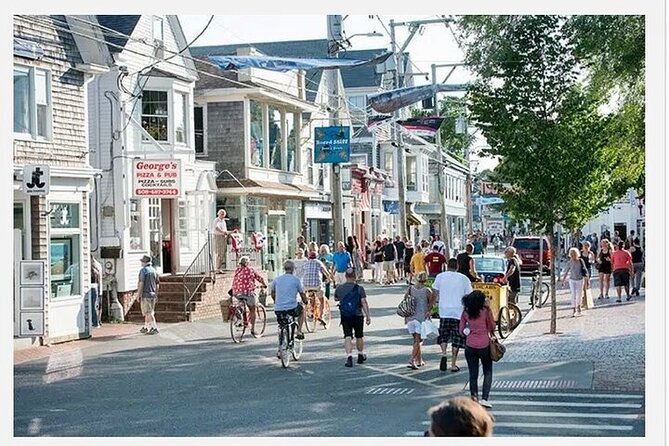
Next, you’re at Luke’s Lobster at MacMillan Pier. This stop is handy because it’s a clean, focused way to experience a Maine-style lobster roll in a waterfront setting.
They serve lobster, crab, and shrimp in toasted buns, chilled with mayo, lemon butter, and secret seasoning. Luke’s approach is all about consistent taste and a simple menu, so it works well inside a tour where you’re also taking in history.
What I like about having this after the older landmarks is the contrast. The waterfront story explains why people come to eat seafood here. The lobster roll tasting lets you experience the payoff.
If you want to get nerdy for a minute, you can use this stop to notice the differences in mayo, butter, and seasoning style compared with other roll options you try later on your own.
Unitarian Universalist Meeting House: Provincetown’s only surviving steeple
A change of pace brings you to the Unitarian Universalist Meeting House of Provincetown at 236 Commercial St. This is a Greek Revival church built in 1847, designed by Benjamin Hallett for a congregation founded in 1829.
Its landmark feature is a telescopic tower with Greek ornamentation. It’s listed on the National Register of Historic Places in 1972, and it’s Provincetown’s only surviving steeple, so it’s a true navigational point for seafarers and visitors.
The message of the congregation also matters in how you understand the town. The community is inclusive, built on principles of acceptance and compassion and welcoming all regardless of belief. Even if you never attend a service, you’ll see that the town makes space for different kinds of people, not only one type.
The meeting house also has community connections, like SKIP, the Soup Kitchen in Provincetown, and an AIDS ministry started in 1995. It holds Sunday services at 11 a.m. in the summer, and it has a theater and meeting space in Acker-Bosworth Hall.
This stop is a reminder that Provincetown’s identity is not only seafood and nightlife. It’s also community care, and it’s built into the historic places.
A-House at the Atlantic House: writers, musicians, and LGBTQ+ refuge
Then you step into the A-House, also known as the Atlantic House. This is one of the most important cultural stops on the route because it explains why Provincetown became a magnet for writers, artists, and LGBTQ+ community life.
The Atlantic House’s bar history traces back to 1798. It began as a tavern by Daniel Pease, who was also Provincetown’s first postmaster. The A-House became a gathering spot for writers during the early 20th century arts colony years.
Names tied to this place include Tennessee Williams and Eugene O’Neill, plus Norman Mailer, who was a regular. It also became a musical venue, with iconic singers like Ella Fitzgerald, Billie Holiday, and Eartha Kitt performing in 1955.
The LGBTQ+ story here is direct and historical. The A-House is widely recognized as one of the oldest continuously operating gay bars in the United States, with roots as a safe haven by the 1920s.
Even if you’re not chasing nightlife, this stop helps you understand Provincetown as a place where outsiders could become part of the story.
The U.S. Postal Service tie-in: how mail shaped a seafaring town
You also get a quick but meaningful stop connected to communication and maritime commerce: the United States Postal Service. Provincetown’s first post office was established in 1804, with Daniel Pease appointed as the first postmaster, operating out of the tavern that later became the A-House.
In the early years, mail could arrive sporadically via ship from Britain and other colonies. It’s a small detail, but it explains why a port town needs a different kind of scheduling for daily life.
The broader postal system expansion also matters here. The formal postal service in Provincetown tied into the wider U.S. postal network authorized by the Postal Service Act of 1792 under President George Washington.
This stop is short, but it links you to how people actually lived and kept contact in a world shaped by tides, not calendars.
Spiritus Pizza: 25-cent slices, late nights, and the riot that changed things
If you’ve ever wondered how Provincetown turns into a place you want to stay out late, Spiritus Pizza gives you the answer. It’s a family-run pizzeria founded in 1971, famous for serving 25-cent slices on napkins.
In 1976, they added an ice cream counter, which made it even more of a gathering spot. The walls are covered in local art, and the pizza is thin-crust with that no-fuss neighborhood vibe.
Spiritus is also known for late hours, open until 2 a.m. The place became a late-night hangout for the LGBTQ+ community and others, especially after the Spiritus Riot in the 1990s, when protesters challenged police harassment and helped spur reforms.
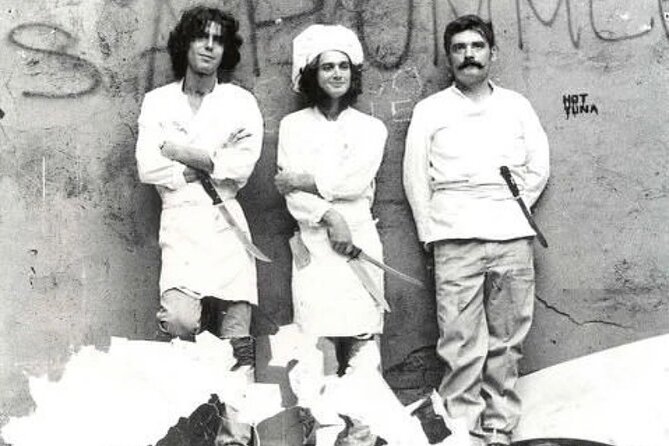
Anthony Bourdain’s connection is personal. He knew the owners in the 1970s and, when homeless, he slept atop the restaurant’s walk-in freezer.
Even though you may not be eating here during the main food breaks, this stop is a strong way to connect the dots between nightlife, community, and the role of food as a shelter.
Boatslip Resort: where the Tea Dance legend lives
Near the end of the tour area, you get to Boatslip Resort, a waterfront hotel and beach club that opened in the late 1960s era and became iconic for a very specific reason. It’s tied to the daily Tea Dance, an afternoon dance party on the harborside deck that started in the disco era and helped define gay Provincetown culture.
The resort is an over-21 destination and welcomes a diverse crowd. The property includes air-conditioned rooms, private balconies, a heated pool, and a huge 10,000-square-foot sundeck.
There’s also a story of resilience. Financial struggles in 1991 led to bankruptcy, but it rebounded and stayed a cultural staple. From a practical point of view, it also puts you right near Commercial Street’s shops and nightlife, so you can roll into your own plans right after the tour.
Price, pacing, and value: is $105 a fair deal?
At $105 per person for about 2 hours, this tour earns its price in three ways.
First, you get a guided walkthrough of major Provincetown landmarks rather than just a food-only crawl. That’s important if you want the lobster roll to feel like it belongs in a real place, not just something you ate between photo stops.
Second, the route mixes workday town details with art and LGBTQ+ cultural context. You’re not only learning what to see, you’re learning why Provincetown works as a magnet for outsiders who become insiders.
Third, the tour is private, so you’re not guessing where to stand or how to ask questions. Your guide, Cathy, also shows up in the reviews as both enthusiastic and solid on facts, and that combination tends to make the time feel like it flies.
The only real “watch this” is timing. If you’re traveling in the off months, some restaurants on the route may be closed, and your lobster roll experience may depend on what’s running that week.
Who should book this tour
This tour is a great fit if you want a quick, walking-oriented Cape Cod lobster roll tour with more story than just menu talk. It also suits you if you like Provincetown’s mix of seafood, literature, and LGBTQ+ heritage, and you’d rather learn while you move than sit in one place.
If you hate walking, or you don’t want to be near bar and restaurant scenes, you might find parts of the route less your style. And if cash-only places make you nervous, just plan ahead.
Final call: should you book
I’d book this if you’re spending a limited time in Provincetown and you want the whole town vibe, not just one postcard moment. The best outcome is simple: you walk away with better choices for your next meal and the confidence to explore Commercial Street without getting lost in the surface stuff.
If your trip timing lines up with seasonal hours, even better. If not, you can still use the stories to guide where you eat on your own.
FAQ
Where does the tour start?
The start point is Cannery Wharf Park, 387-395A Commercial St, Provincetown, MA 02657.
What time does the tour begin?
The start time is 12:30 pm.
How long is the tour?
The duration is about 2 hours.
Is this tour private?
Yes. It’s listed as a private tour/activity, so only your group will participate.
What language is the tour offered in?
The tour is offered in English.
Is a mobile ticket used?
Yes. The tour includes a mobile ticket.
Are service animals allowed?
Yes, service animals are allowed.
What if I need to cancel or the weather is poor?
You can cancel for a full refund up to 24 hours in advance. The tour requires good weather. If it’s canceled due to poor weather, you’ll be offered a different date or a full refund.
More Tours in Cape Cod





More Tour Reviews in Cape Cod

More around Cape Cod, freshly written up
- Ziplining and Climbing at The Adventure Park on Cape Cod★ 3.5 · 3 reviews
- Provincetown West End History Tour★ 4.5 · 3 reviews
- Private and Fully Customizable Cape Cod Dream Boating Adventure★ 5.0 · 4 reviews
- Provincetown Self-Guided Walking Audio Tour★ 5.0 · 5 reviews
- Provincetown Prowl Scavenger Hunt★ 4.5 · 6 reviews
- National Seashore Tour with Guided Hike★ 5.0 · 7 reviews
Boston Seafood and Lobster Tours, compared.
 ★ 5.0Boston North End Food Tour of 6+ Tastings, Cannoli, Lobster RollFrom $1191,404 reviews
 ★ 5.0Boston Seafood Tour: Behind the Scenes at the Historic Fish PierFrom $80267 reviews
 ★ 5.0Boston Seafood Lovers Food and History Walking TourFrom $159208 reviews
 ★ 5.0Boston Private Food Tour of 6+ Tastings, Cannoli, Lobster RollFrom $395165 reviews
 ★ 5.0Boston Seafood Private Tasting TourFrom $173102 reviews
 ★ 4.9Guided Seafood Tasting and History TourFrom $7990 reviews
 ★ 5.0Boston to Kennebunkport with Optional Lobster TourFrom $12544 reviews
 ★ 5.0Seafood Tasting & Historical Walking TourFrom $15928 reviews
Also filed under