
REVIEW · REVOLUTIONARY BOSTON HISTORY TOURS
Full-Day Minivan Tour of Revolutionary Boston, Lexington and Concord
Revolutionary Boston makes way more sense when you have a route. This full-day minivan tour links the key sites into one clear story, moving from Boston to Lexington and Concord with air-conditioned comfort and a guide who connects dates to real places.
I like how Peter Brennan brings the era to life with details you miss on your own, and I also like the quick-hit pacing, from photo stops like Acorn Street to the longer video stop at Old North Bridge.
One thing to consider: you will spend a lot of the day outside and in short walks, so if you want deep museum time at every stop, you may feel a bit rushed in the middle.
Key things I’d plan for
- Private minivan comfort: air-conditioned ride, bottled water, and pickup right at your home or hotel
- A tight, logical route: Boston first, then the Lexington and Concord sites that follow the same storyline
- Free admission stops: many featured stops are listed as admission ticket free in the itinerary
- Good time blocks where it matters: 15 minutes at Lexington Green, and about 40 minutes at Old North Bridge with an 8-minute video
- Literature and philosophy stops: Little Women locations, Emerson House, and Thoreau’s Walden Pond are part of the day, not an afterthought
- Small group feel: up to 6 people, so the guide can keep things personal
More of the revolution, from the tea to the bridge
Why this minivan format beats a patchwork of stops
This tour is built for efficiency without turning into a stressful sprint. A private minivan means you spend less time figuring out parking, schedules, and transit connections, and more time looking at the actual places where the Revolution took shape.
The group size is up to 6, which matters more than you’d think. With a small group, you get a smoother flow through crowded areas like downtown Boston, and your guide can adjust the narration if you have questions. You also get a bottled water and an air-conditioned ride, which helps on warmer days or if you are simply doing a lot of walking.
Also, the schedule is clearly meant to give you orientation. If you are only in Boston for a few days, this is a practical way to build a mental map fast. And if you plan to return for extra wandering later, you will know where to go.
Boston first: learning the setting behind the Revolution
The day starts in Boston proper, then gradually stretches outward. That order is smart. You get the early Puritan-era roots and the politics of the city before you head to Lexington and Concord, so the later story lands with more weight.
The Paul Revere House, oldest Boston architecture
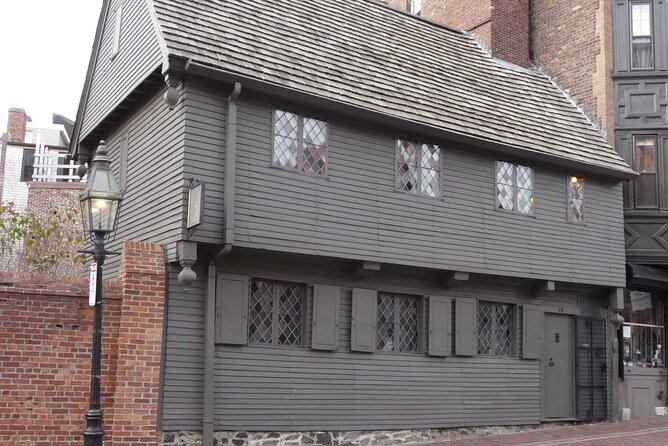
The Paul Revere House is the oldest house in Boston proper, and it helps you see how early New England building styles lasted. Puritan architecture shaped New England for a long time, and this stop gives you a quick visual anchor for the time period. The stop is short on the schedule, but you are not just standing outside. Admission is listed as free on the tour details.
Practical note: even with a short visit, you may want your phone camera ready. The big value here is context. If you have never seen early Boston architecture up close, this is the kind of stop that makes you notice details later on.
Old North Church and the message that still echoes
Next is Old North Church and Historic Site, where you connect the story behind Longfellow’s poem to the place itself. The famous line one if by land, two if by sea becomes much more than a classroom phrase when you are standing near the real historic setting. Admission is listed as free, and the stop is brief.
This is one of those stops where you can easily spend two minutes staring, then realize you have actually learned a lot in that time because your guide frames it. If you enjoy getting stories tied to landmarks, this is a highlight.
Other trips to the battle greens


USS Constitution, the oldest commissioned warship
USS Constitution is a major landmark, and the itinerary is clear about why: she is the oldest commissioned warship in the world, and you learn the nickname Old Ironsides. This is a great moment to shift from political talk into military reality, because ship power and naval readiness mattered in the larger conflict.
The stop is listed as short. That works well in a 6-hour day. You get the big picture and the why, without losing the rest of your day to one location.
Faneuil Hall Marketplace, the political meeting point
At Faneuil Hall Marketplace, you get the cradle of liberty vibe: Sons of Liberty met here to plan the Revolution. It’s an easy stop to enjoy because it is part of downtown life, but your guide turns the everyday setting into a political stage.
Admission is listed as free, and the time is short. If you want to linger, you can after the tour, but the narration here helps you understand what you are looking at.
Old State House, the Boston Massacre context
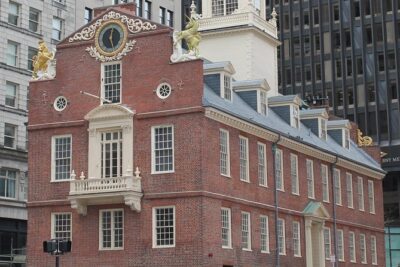
Old State House is where you hear about the Boston Massacre that happened nearby. Again, the stop is brief, but it is exactly the kind of short stop that becomes powerful once you have the right context. When you understand what tension looked like on the ground, the history stops feeling abstract.
King’s Chapel, Anglican roots in 1700s Boston
King’s Chapel is an early Anglican church built in 1742 to replace an earlier wooden church from the 1680s. This is not the typical stop people remember from a basic Revolution itinerary, and that is the value. You see that the story is not only about one group. Boston’s social and religious life mattered too.
Granary Burying Ground, graves that read like a roster
Granary Burying Ground brings you face-to-face with key Revolutionary-era figures, including Samuel Adams, Paul Revere, and John Hancock. When you see the people who shaped decisions, you start to feel the era as real lives, not just famous names.
This stop is short, so you will want to listen carefully to what your guide points out. The payoff is the sense of lineage, the way the same names keep showing up across politics, messages, and momentum.
Boston Common, the oldest public park
Boston Common is the country’s oldest public park, established by Puritans in 1634. Even if you are not a park person, this stop helps you understand how public spaces functioned. Places where people gathered became places where ideas spread.
The itinerary includes about 5 minutes here. That is enough for a reset and some quiet looking, and then you are back into the momentum.
Louisburg Square and Acorn Street, Beacon Hill photo breaks
Louisburg Square is a Federalist neighborhood on historic Beacon Hill. Then you end with Acorn Street, the most photographed street, where you can take your own pictures. These stops work as breathing points. After centuries of story and political pressure, you get a chance to absorb what the city looks like today.
You will likely hear the history, but the main value is the contrast. You can see how present-day Boston still carries fingerprints from the era.
Old South Meeting House and the Boston Tea Party Ships & Museum
Old South Meeting House is where you hear about the meetings leading up to the Boston Tea Party. Then you shift to Boston Tea Party Ships & Museum, seeing replica ships in the harbor that represent those involved.
The stop at Old South Meeting House is short, then the ships museum is also brief. That’s the tradeoff of a one-day plan: you do enough to build understanding, but not enough to become a museum scholar. Still, this is a very effective combo because you get the political meeting setting and then the tangible action in the harbor.
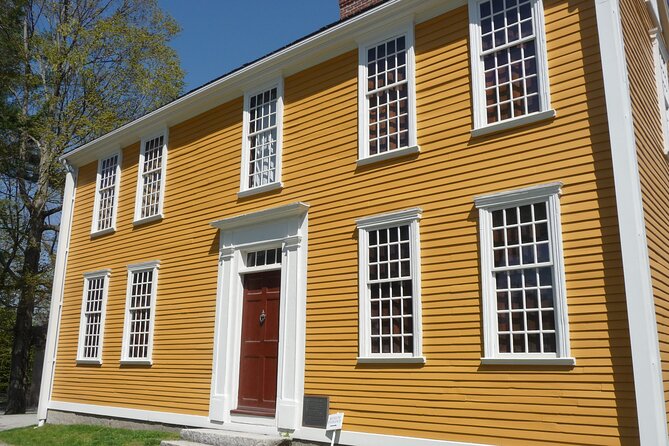
Hancock-Clarke House, the warning moment
At Hancock-Clarke House, you learn about a key warning story: Paul Revere woke Sam Adams and John Hancock to alert them the British might look for them. This is a moment where you feel urgency. It’s also one of those stories that ties together multiple threads you heard earlier.
You get about 5 minutes at this stop. That means your guide’s narration is the main event, so listen for how the warning fits into the next day’s events.
Lexington and Concord: the day turns from politics to action
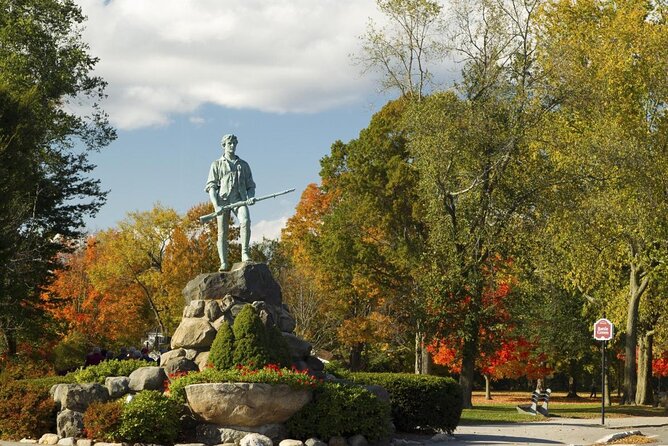
Once the tour leaves Boston, it becomes more about movement, timing, and what happened when people finally had to respond. This is where the Revolution shifts from debate into consequences.
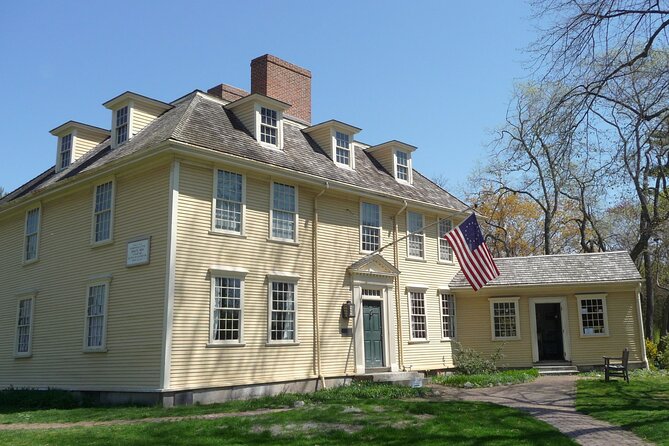
Buckman Tavern and the militia wait
Buckman Tavern is connected to the Lexington Militia waiting for the arrival of British troops before the skirmish on Lexington Green the next morning. It’s a calm moment before the storm, which is exactly why it matters.
The stop is short. You are not here to wander. You are here to understand that the night before mattered, and the people involved had to make decisions under pressure.
Lexington Green and the start-line feeling
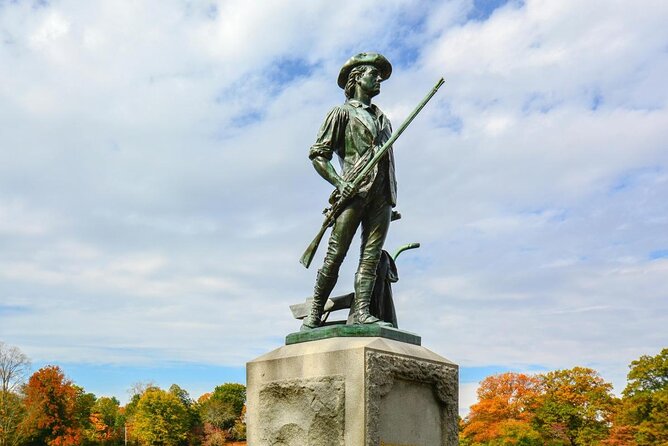
Lexington Green gets about 15 minutes, longer than most stops. You see the site and hear the story of the skirmish. Many consider this the birth of the Second Amendment to have taken place, and your guide explains the significance tied to that idea.
If you like “standing where it happened,” this is one of the places that delivers. The extra time helps you read the ground, not just hear a speech.
Practical tip: wear shoes that can handle outdoor time. Lexington Green is not designed to be conquered in slippery conditions, so go prepared.
Old North Bridge, the longer video stop
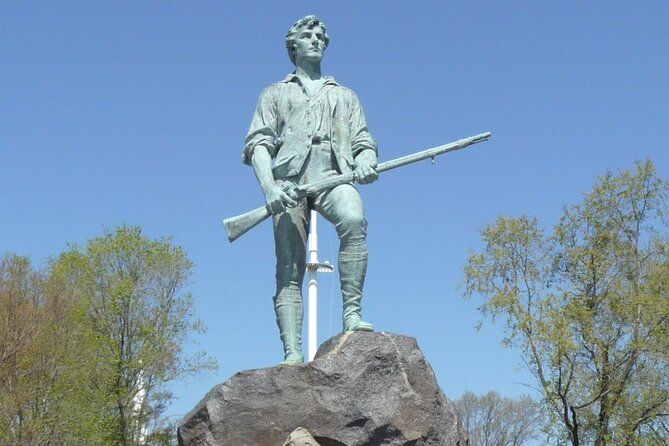
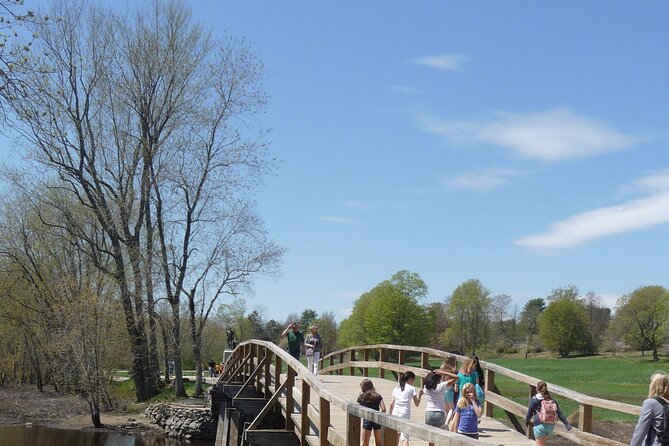
Old North Bridge is the big story stop of the Concord side. The itinerary mentions traveling through the national park, hearing the story of the night in 1775 when shots were first fired by patriots at the British. You also visit the visitors center and view an 8-minute video presentation plus related exhibits.
This is where the tour slows down in a good way. Forty minutes total is enough to take in the video and still have a moment to look around. If you remember nothing else from the day, a short video can make the timing and location click.
Also, this is a natural moment to ask questions, because you are not racing immediately to the next car line.
Literature, philosophy, and famous houses after the battlefield
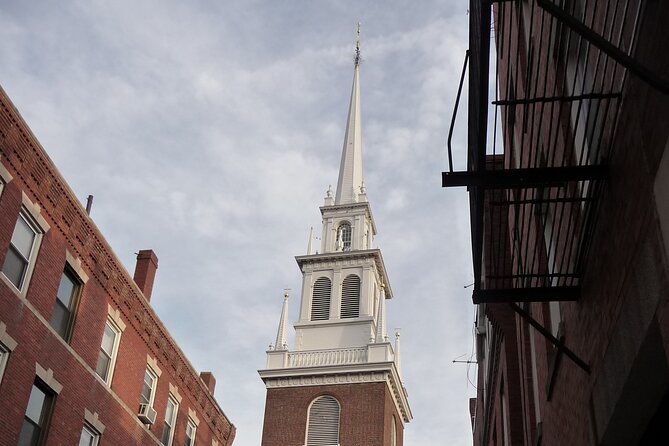
The last part of the day shifts from war sites into the thinkers that shaped America’s later voice. That mix is part of what makes this tour feel like a full story, not just a series of monuments.
Louisa May Alcott’s Orchard House, Little Women roots
Louisa May Alcott’s Orchard House is connected to where she and her sisters were raised, and where she wrote Little Women. This stop is short, but it adds warmth after the intensity of the earlier sites.
Even if you are not a big Alcott fan, it helps you see Concord as more than battlefield history. It is also a place where writers and ideas lived.
Ralph Waldo Emerson House, philosopher presence
Ralph Waldo Emerson House introduces another major thinker. You see the home of one of America’s influential poets and philosophers, and the stop is brief.
This is perfect for a 6-hour structure. It gives you a name, a place, and a feeling for why Concord mattered in the broader cultural story.
Walden Pond State Reservation, Thoreau’s spark
Walden Pond State Reservation is where Henry David Thoreau’s imagination captured him, leading to his most famous and important work. You get about 10 minutes here.
This is a great stop if you like the idea that American history is not only wars and politics. Thoreau’s story turns the day toward reflection, and even a short visit can feel grounding.
Longfellow House, Washington headquarters turned literary home
The day closes with Longfellow House Washington’s Headquarters National Historic Site, where George Washington lived when he commanded the Continental Army, and later it became Henry Wadsworth Longfellow’s home.
This is a nice bookend. You finish with a place that connects military leadership and later literary fame in one location. The stop is short, but it makes you understand why these towns attracted famous people across generations.
Guide magic: what Peter Brennan adds to the route
The guide experience is a huge part of the value here. Peter Brennan is repeatedly described as friendly, personable, and a subject matter expert who makes history understandable and at times entertaining. That matters, because Revolutionary Boston is full of names and events. Without a strong guide, it is easy to lose the through-line.
A small detail that comes through in the descriptions of his work is how he handles pacing. You are not constantly running to stay on schedule, and you still get a full day’s worth of stops, including the longer video stop at Old North Bridge.
You also may get extra road education on the way back, such as a drive tour of Harvard and MIT, depending on timing and route. That is not the core of the day, but it is a fun bonus if you enjoy seeing the city from the car after a history-focused morning.
Price and value: what $975 per group really buys
$975 per group up to 6 for about 6 hours is a serious chunk of money. The key question is whether you hate the hassle part of travel.
For me, the value math makes sense if any of these are true:
- you want a private ride and do not want to piece together transit or taxis
- you have limited time and want a structured orientation to Boston plus Lexington and Concord
- you care about narrative, not just photo stops
- you are traveling with family members who may not enjoy long self-guided days
If you are a solo traveler who loves planning every detail, the price might feel steep. But if you are splitting cost across a small group, it becomes closer to paying for convenience plus expert guidance, not just transport.
Also, bottled water and a comfortable air-conditioned vehicle are included, and the itinerary lists many stops as admission ticket free. That combination helps keep your on-the-ground spending more predictable.
Who this tour fits best
This is a strong fit for:
- families who want a guided day without tiring logistics
- couples who want a compact Revolutionary history plan
- solo travelers who value a calm, guided structure
- people who want history explained clearly rather than scattered across guidebooks
It may be less ideal if you want long museum deep dives at every stop, or if you struggle with frequent short walks and outdoor time. Most stops are intentionally short, so the guide’s narration is the main way you get value.
Should you book this Revolutionary Boston, Lexington and Concord tour?
I’d book it if you want the fastest way to understand how Boston’s political pressure became battlefield action. The minivan format removes the stress, the small group size keeps things human, and the route covers both Revolutionary sites and the Concord literature and philosophy thread.
I would think twice if your top goal is museum time over storytelling, or if you want to fully control the pace at each site. In that case, you might do better with separate self-guided tickets plus one private guide session.
If you are aiming for a well-paced primer that helps you decide what to revisit later, this tour is a very practical choice.
FAQ
What is the price for the tour?
The price is $975.00 per group, up to 6 people.
How long is the tour?
The duration is about 6 hours.
Does the tour use a minivan?
Yes. It includes an air-conditioned vehicle.
Is pickup included?
Yes. Pickup is offered at your home, hotel, or any convenient location.
What language is the tour offered in?
The tour is offered in English.
Are tickets or admission included for the stops?
Many stops in the itinerary are listed as Admission Ticket Free.
Is there a lunch break?
Yes. Time for a lunch break will be allowed.
Is bottled water provided?
Yes. Bottled water is included.
What time does the tour operate?
The provided opening hours are Monday through Sunday, 10:00 AM to 12:00 PM.
What is the cancellation policy?
Cancellation is free up to 24 hours in advance for a full refund. If you cancel less than 24 hours before the start time, you will not receive a refund.
Keep Going in Boston


Back to the Battle Greens



More Revolution in Boston




More around Boston, freshly written up
- The Boston Bash Scavenger Hunt★ 4.5 · 3 reviews
- Self-Guided Audio Tour of Boston North End★ 4.5 · 3 reviews
- Self-Guided Boston Christmas Tour★ 5.0 · 3 reviews
- Self Guided “The North End Pizza, Cannoli and Picnic” Solo Walking Tour★ 5.0 · 3 reviews
- Cambridge: Haunted Charles River Cruise★ 4.3 · 3 reviews
- Boston: Official Freedom Trail® Lantern Tour★ 4.7 · 3 reviews
Revolutionary Boston History Tours, compared.
 ★ 4.5Boston Tea Party Ships and Museum AdmissionFrom $352,512 reviews
 ★ 5.0The Full Revolutionary Story Epic Small Group Boston Walking TourFrom $552,356 reviews
 ★ 4.8Boston Tea Party Ships and Museum Interactive TourFrom $351,926 reviews
 ★ 4.9Boston’s Freedom Trail: A Revolutionary Walking TourFrom $311,748 reviews
★ 5.0Boston’s Freedom Trail: A Revolutionary Walking TourFrom $311,343 reviews
 ★ 5.0Entire Freedom Trail Walking Tour: Includes Bunker Hill and USS ConstitutionFrom $79732 reviews
 ★ 5.0Boston’s Revolutionary and Drunken Past with Ye Olde Tavern ToursFrom $91195 reviews
 ★ 4.8Boston History & Highlights Tour: From Revolution to TodayFrom $44178 reviews