
REVIEW · REVOLUTIONARY BOSTON HISTORY TOURS
Colonial Newport Walking Tour
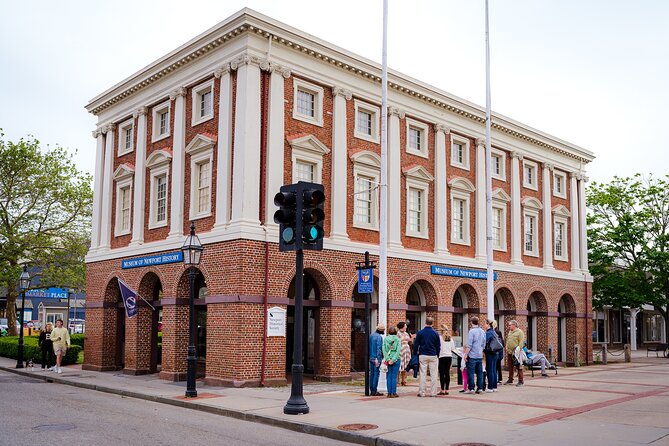
Colonial Newport clicks into place quickly. I love how the tour starts at the Museum of Newport History in the old Brick Market and then races you through the ideas that shaped the city at Washington Square. I also like that it connects everyday places like a tavern to big moments like statehouse politics. The one drawback is simple, it is not recommended if you have mobility or walking issues.
It runs about 1 hour to 1 hour 15 minutes, starting at 11:00 am, and you get a mobile ticket plus bottled water. Most stops are outside, so you trade long lines for clear context and quick, well-paced storytelling.
One more smart note, the museum is included but you are not “doing the museum” during the walk. Plan to arrive a bit early or pop in after, so you do not miss the second-floor exhibits.
Key Highlights You’ll Feel on This Walk

- Brick Market check-in and second-floor museum admission, with a 10% discount at the shop
- Washington Square, where civic buildings mattered more than a central church
- Big ideas at small places, like how a meeting on the Square helped lead to Rhode Island College
- Religion in multiple styles, from Quaker meeting houses to Baptist roots and the Episcopal church
- Revolutionary Newport close up, including Rochambeau’s headquarters at Vernon House
- Touro Synagogue and the Artillery Company are separate, so you can choose to add them with your own ticket
More of the revolution, from the tea to the bridge
Why This Colonial Newport Walk Works in About 75 Minutes
Newport can feel like a choose-your-own-adventure city. This walk gives you a strong spine to hang your day on, and it does it fast. In about an hour to an hour and 15 minutes, you move through the places that shaped civic life, religious freedom, and political drama.
What makes the tour hit is the way the stops connect. You start with the museum context, then you land in Washington Square and keep following the thread: tolerance, institutions, and power. You are not just looking at old buildings. You are hearing why those buildings were placed where they were and what that meant to real people.
I also like that it is a private tour for your group. That usually means you can ask a question without feeling rushed or swallowed by a crowd. And because it is mostly outside, you can keep your momentum, even if the weather changes your pace.
If you want an easy win for your first visit, this is it. You walk away with a mental map and a set of names you will start seeing across town.
Starting at the Brick Market Museum, With a Smart Time Plan
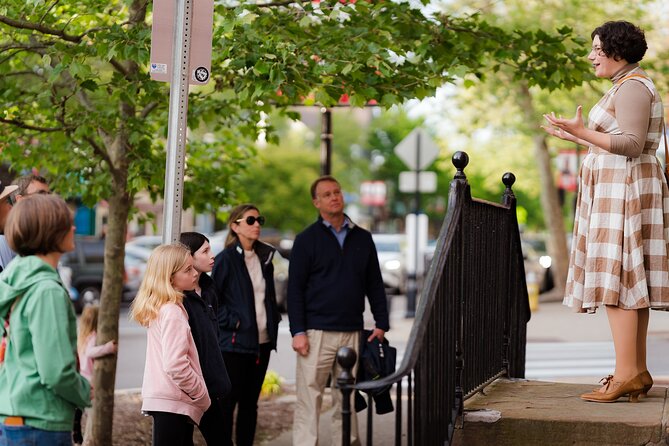
The tour check-in happens inside the historic Brick Market building, dated around 1762. You get free admission to the Museum of Newport History, and that admission is for the museum space on the second floor.
Here is the key detail: the museum itself is not part of the walking program. The tour uses the check-in as a starting point, then you are out on the street for stories. That means you should plan your museum visit strategically.
My practical tip is to arrive a little early. You get the ticket included, and you can get your bearings before the tour begins. If you arrive at 11:00 am and rush into the tour straight away, you might regret not seeing the second-floor exhibits.
Also, there is a nice bonus for the shop. Tour guests receive a 10% discount on store purchases. So if you like local books, prints, or small history souvenirs, this stop makes that extra fun instead of just a quick wait.
One more thing: bottled water is included. It is not a full picnic plan, but it helps on a warm day when you will be walking and listening.
Washington Square: Newport’s Civic Center Without a Central Church
Washington Square is the colonial center of Newport, and your guide uses it as the big idea stop. This is where you learn how Newport’s identity formed around tolerance and diversity, not around one dominant church.
The standout concept here is physical. Instead of a central church dominating the Square, the civic buildings are the focus. You learn how the Colony House and Brick Market anchor the space, and how that arrangement reflected the city’s founding principles and commercial importance.
Even if you are not a history nerd, you can feel the planning logic. Squares are about power and daily life. When the civic buildings are at the center of the stage, you get a hint that government and trade were meant to run alongside religious variety.
Expect your time here to be short, around 5 minutes. But it is a concentrated stop. You will likely leave Washington Square knowing what to look for, like why certain buildings feel more “public” than “religious,” and how that played into the story of Newport.
8 Washington Square: A House That Helped Point Rhode Island Toward Brown
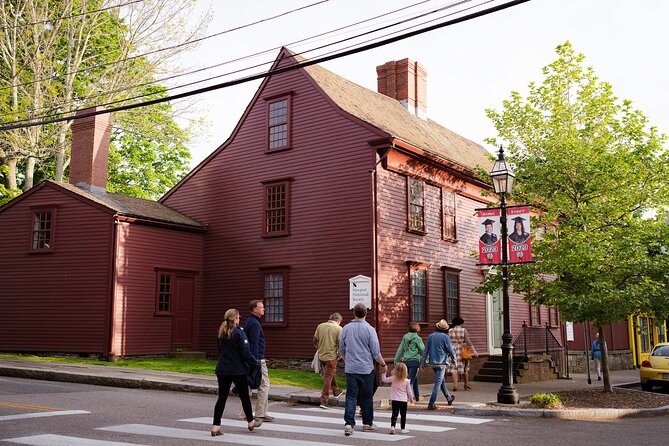
From the civic center, you move to one of the oldest houses on the Square: 8 Washington Square. This one is tied to John Rathbun originally, then later owned by John Gardner.
The tour connects the building to something surprisingly influential. In summer 1763, Gardner and others used the space as a meeting place to propose establishing a Baptist college in Rhode Island. That push helped lead to the chartering of Rhode Island College the following year, which is now Brown University.
This is the kind of detail I love on walking tours, because it makes history feel less like a distant timeline. A small room in a small house gets linked to an institution that still shapes a major city today.
You only get about 5 minutes at the stop, so focus on absorbing the names and the timeline. When you hear Rhode Island College and Brown mentioned in that context, it clicks differently than if you just read it later in a guidebook.
More of the Gilded Age, down the coast


Old Colony House: Where State Power and Revolutionary Timing Meet
Next is the Old Colony House, the nation’s fourth oldest extant statehouse and a National Historic Landmark. Your guide frames it as the hub where the General Assembly met and where major events unfolded.
One moment you’ll hear about is the reading of the Declaration of Independence in 1776. That detail matters because it reminds you that independence was not a single dramatic day. It was acted on, read aloud, and turned into public meaning.
At about 5 minutes, this stop is again short, but it is dense. You will probably start noticing how statehouses are built to signal authority. Even from the outside, the building communicates “government lives here.”
If you enjoy Revolutionary Era context, this is one of the stops that will give you the most payoff. You will likely spend a few minutes after the tour looking back at the building, even if the route moves on quickly.
White Horse Tavern: Why Taverns Matter More Than You Think
After the government beat, the tour shifts to everyday life with a stop outside the White Horse Tavern. You learn the background of one of the oldest operating taverns in the United States.
Taverns are not just for drinks in colonial towns. They were where news moved, where strangers met, and where political ideas traveled faster than official pamphlets. On this stop, the story tends to make the tavern feel like a community bulletin board with better lighting.
You only spend about 5 minutes here, but the point lands. Once you learn that role, you start spotting the logic behind why taverns sit where they do and why they mattered even when you were not talking politics.
If you are the type of traveler who likes “how people really lived,” this tavern stop is a good match.
Great Friends Meeting House: Quaker Influence in Plain Form
Next comes the Great Friends Meeting House, described as the oldest place of worship in the state. Your guide explains the Society of Friends, meaning the Quakers, and their influence in early Newport history.
What I like about including a meeting house in a colonial civic tour is that it widens your lens. You are not only learning about the institutions that ran laws and commerce. You are also learning about the communities that held their own moral and spiritual frameworks.
Quaker history tends to be associated with strong principles and practical ways of living. Even without going inside, you can understand how a worship space designed with simplicity in mind would shape behavior, community trust, and how outsiders perceived the group.
This stop runs about 10 minutes, which is longer than several others. That extra time helps the story breathe a bit.
17 Broadway: Governors, Tories, Patriots, and Martin Howard
Then you hit 17 Broadway, a National Historic Landmark and described as Newport’s earliest restored museum house, dating around 1697. This stop is about how complicated “loyalty” could be in colonial times.
Your guide covers that the house was home to colonial governors, and it was also connected to Tories and patriots. You’ll hear the name Martin Howard, a wealthy lawyer and Tory supporter during the Stamp Act era.
The reason this stop works is that it gives Newport conflict a human face. It is easy to think of history as neat sides. Places like this remind you that people navigated pressure in real ways, and that politics could split family lines and friendships.
Again, the time is short, about 5 minutes. Use that time to learn the name and the era. Then when you walk away, you can connect it to the larger Revolutionary narrative you are already hearing.
United Baptist Church: John Clarke, the Charter, and Religious Civic Freedom
The route keeps turning toward religious history at the United Baptist Church. You learn about Newport’s Baptist roots starting in 1639, led by minister John Clarke.
This stop includes a major legal and political thread. John Clarke authored Rhode Island’s 1663 charter and presented it to King Charles II. The guide explains that this secured freedom of religious and civic governance, and it is framed as an early separation of church and state in North America.
That is a lot of weight for a single stop, but the tour’s pacing makes it digestible. Instead of listing dates endlessly, your guide uses the church as the anchor point so you understand what the charter would have meant to people on the ground.
If you like stories that connect law to lived experience, this is one of the more satisfying stops. It helps you see why Newport’s founding principles could produce a city layout where Washington Square did not need a central church to define itself.
Plan on about 5 minutes, but expect your brain to keep working on this one after you move on.
Seeing Touro Synagogue From Outside, and Choosing Your Ticket
The tour includes a stop outside Touro Synagogue, described as the oldest synagogue in North America. You will learn about the history of Jews in Newport.
Important practical note: the walking tour does not go inside. Separate admission is required, and the listed price is $14. You can buy before or after your walk.
This setup is honestly a good way to handle it. You get the context on the street, then you decide whether you want the interior experience. If you buy the ticket, you can usually schedule it right after, when the stories are still fresh in your head.
If you want maximum value, consider adding this synagogue visit. It is the one stop on the walk where your choice directly affects how much you see. With the right timing, you can turn the walk into a longer, deeper historical circuit without changing your core plan.
Trinity Episcopal Church and Christopher Wren Influences
After the synagogue stop, you move to Trinity Episcopal Church, built in 1726 by Richard Munday. The tour points out architectural influences from Christopher Wren.
This is a “spot the style” stop more than a “major event” stop. It helps you balance the earlier civic and religious story with the built-world changes that shaped Newport’s look over time.
Wren influence is a clue that colonial architecture in Newport was not isolated. Ideas traveled, styles traveled, and builders borrowed techniques from older European traditions.
You will spend about 5 minutes here. Use it to notice details you normally skip. Even a quick glance can turn into a clearer sense of time periods across the city.
Vernon House: Rochambeau’s Headquarters and Meetings With Washington and Lafayette
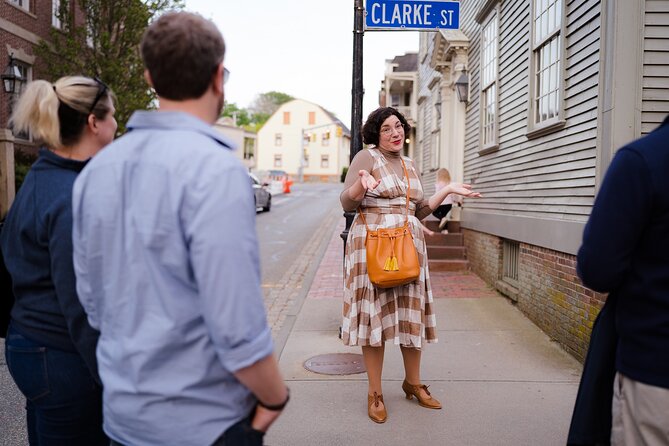
One of the biggest payoff moments on the tour is outside Vernon House, dated to 1708 on Clarke Street. Your guide explains that during the Revolutionary War, the house served as headquarters for Rochambeau.
You’ll also hear that it hosted significant meetings with Washington and Lafayette.
This stop helps the tour feel more than local lore. It links Newport’s streets to the wider campaign story you likely associate with famous names. That contrast, from everyday places like meeting houses and taverns to headquarters-level buildings, makes the city feel larger than its size.
Because the tour keeps moving, you only get about 5 minutes. Still, it is one of those times where you will probably walk away thinking about how often major decisions happened behind ordinary doors.
If you are a first-time visitor who cares about the Revolution, Vernon House is a highlight.
Artillery Company of Newport: Another Separate Museum Stop
The final cluster includes an outside look at the Artillery Company of Newport. Your guide stops outside to explain the organization and its role, but the walk does not include admission into the Artillery Company museum.
The museum is described as a separate attraction, viewable on weekends, before or after your tour.
This matters because it affects how you plan your day. If you want the inside version, you need extra time around the walk and you should check weekend hours before relying on it.
Think of this stop as a teaser. You get the story point, and then you decide if the museum is worth the additional time. For some visitors, it is a must. For others, the walking tour is the right dose of context.
Either way, having the choice is better than feeling forced into a ticket you did not plan for.
Price and Value: What $25 Buys You in Real Terms
The price is $25 per person. For a tour around 1 hour to 1 hour 15 minutes, that can feel like a small splurge until you add up what is actually included.
Your ticket includes:
- Museum of Newport History admission (second floor)
- Bottled water
That museum admission is not just a token. It gives you access to context you would otherwise need to pay for separately or research later. On top of that, the museum shop discount is a nice little “bonus for the book lovers.”
Not included items to plan for:
- Parking fees, if you drive
- Private transportation
- Entry to Touro Synagogue ($14 per person)
- Entry to the Artillery Company museum, since it is separate
So the smart way to think about the $25 is this: you pay for a guided, high-value way to understand Newport, and the museum ticket helps you expand that understanding without paying twice for the same learning time.
Language is English, and most travelers can participate. It is also listed as requiring good weather, so on a rainy day you may need to reschedule or choose another date.
Finally, you do not have to worry about mixing into random walking groups. It is set up as a private tour/activity where only your group participates.
Who This Tour Fits Best, and Who Might Skip It
This walking tour is ideal if you want:
- A fast introduction to colonial Newport
- Clear connections between religion, government, and everyday civic life
- Enough stops to cover the big names without feeling trapped in one building
It is also a strong fit if you like short, story-driven stops. Many of the stops are around 5 minutes, so the guide’s job is to make each one count. If you like learning quickly and moving on, this format keeps you engaged.
On the other hand, it is not recommended for travelers with mobility or walking issues. Even if you are fine with short distances, the overall route and street walking may not suit you.
One more “fit” thought based on the typical guide experience: the narrative tends to be informative and organized, but if you end up with a newer guide, you might notice a more basic delivery. The route still covers the key spots, but the polish could vary slightly.
If you can handle walking and you want a solid overview you can build on, this is a great use of an hour.
Should You Book the Colonial Newport Walking Tour?
Yes, if you want a smart first pass through colonial Newport. This is the kind of walk that gives you names, places, and the big ideas that make later sightseeing easier. The museum ticket included is a real value perk, especially since you can choose when to see the second-floor exhibits.
You might think twice if:
- You have mobility limitations and cannot comfortably handle a street-based route
- You only want interior visits and hate walking-by stops
- You are visiting on a day when weather looks unreliable
My best-case advice is to pair the walk with at least one add-on you control, especially Touro Synagogue, since you get outside context first and then the option to go in. If you want extra museum time, plan for the Artillery Company museum only if it is open when you are in town.
If your goal is to understand Newport rather than just admire it, book it. You will come away with a clearer sense of why this city developed the way it did, and that clarity will make your next stops feel a lot more meaningful.
FAQ
How long is the Colonial Newport Walking Tour?
It runs about 1 hour to 1 hour 15 minutes.
What time does the tour start?
The start time is 11:00 am.
How much does the tour cost?
The price is $25.00 per person.
What is included with the tour ticket?
Included items are Museum of Newport History admission and bottled water.
Does the tour include entry to Touro Synagogue?
No. The guide stops outside Touro Synagogue only, and separate admission is required. The listed price is $14.00 per person.
Does the tour include the Artillery Company museum?
No. The guide stops outside, and admission to the Artillery Company museum is separate.
Where does the tour start and end?
The tour starts at Old Colony House – State House on Washington Square area, and it ends at 51 Touro St, Newport, RI 02840, across from Washington Square and near the start area.
Is this tour suitable for people with mobility issues?
It is not recommended for travelers with mobility or walking issues.
What happens if weather is bad?
This experience requires good weather. If it is canceled due to poor weather, you will be offered a different date or a full refund.
More Tour Reviews in Newport



More Gilded Age Houses
More Revolution in Newport

More around Newport, freshly written up
- Twilight Cruise: After The Sun Goes Down★ 5.0 · 3 reviews
- Private Downtown Newport Walking Tour★ 5.0 · 4 reviews
- Parasailing in Newport, Rhode Island★ 5.0 · 4 reviews
- Newport Downtown Historic Audio APP Self Guided Smart Phone Tour★ 4.5 · 5 reviews
- Nutty Newport Scavenger Hunt★ 3.5 · 7 reviews
- Early Bird Mimosa Cruise – Family Friendly!★ 5.0 · 7 reviews
Revolutionary Boston History Tours, compared.
 ★ 4.5Boston Tea Party Ships and Museum AdmissionFrom $352,512 reviews
 ★ 5.0The Full Revolutionary Story Epic Small Group Boston Walking TourFrom $552,356 reviews
 ★ 4.8Boston Tea Party Ships and Museum Interactive TourFrom $351,926 reviews
 ★ 4.9Boston’s Freedom Trail: A Revolutionary Walking TourFrom $311,748 reviews
★ 5.0Boston’s Freedom Trail: A Revolutionary Walking TourFrom $311,343 reviews
 ★ 5.0Entire Freedom Trail Walking Tour: Includes Bunker Hill and USS ConstitutionFrom $79732 reviews
 ★ 5.0Boston’s Revolutionary and Drunken Past with Ye Olde Tavern ToursFrom $91195 reviews
 ★ 4.8Boston History & Highlights Tour: From Revolution to TodayFrom $44178 reviews