
REVIEW · NEW ENGLAND TROLLEY AND DUCK BOAT TOURS
1 or 2 Day HOP-ON & HOP-OFF Narrated Trolley Tour of Boston
A trolley ride that stitches Boston together fast. I like the 1- or 2-day flexibility and the included free GPS self-guided walking tour app you can use after the trolley. One possible drawback: if you try to do every stop in one day, you may end up with more walking than you expected.
This is a simple, efficient way to see a lot of Boston’s big landmarks without committing to a full day of guided pacing. At $48 per person for about 1 hour 20 minutes on the trolley route, it can be good value, especially if you plan a second round at the places you like most.
From the route design to the app tools like live tracking and Find My Stop Google directions, you get help getting oriented fast. On the narration side, some drivers bring the stories with high-energy commentary, with guides like Hugo, Joey, Jesse, and Viola turning the trip into more than just an audio loop.
Key points at a glance

- 1- or 2-day consecutive passes let you choose how much time you want to spend on Boston’s highlights
- Free location-aware GPS walking tours (9 included) that stay valid for four days
- Live trolley tracking plus Find My Stop makes it easier to locate your next ride
- Driver-led narration when available can be fun and story-driven, with guides like Hugo, Joey, Jesse, and Viola often praised
- Discounts are built in for a 60-minute harbor cruise, Old North Church, and the Sports Museum
More trolleys, and a few more duck boats
Price and value: what $48 really buys you
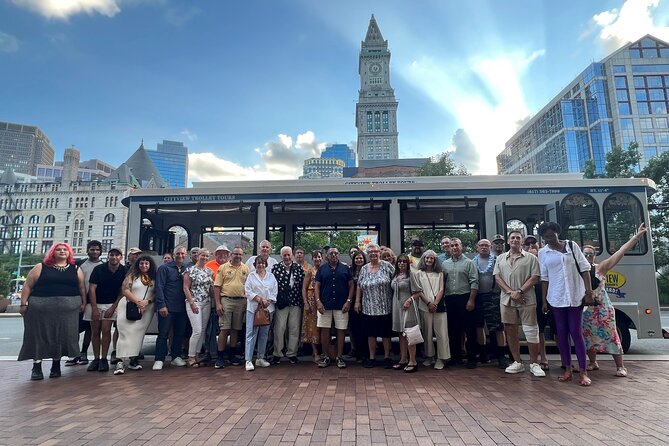
The ticket price is $48 per person, and the trolley experience runs about 1 hour 20 minutes. The best way to think about it is not as a ticket to one attraction, but as a moving “map” of Boston, with stops positioned around famous sights.
What makes the value easier is the add-ons that come with the ride. You get a bonus 9 GPS self-guided walking tours via an app, and that’s specifically described as a $24 value free of charge. Those walking tours are location-aware and also valid for four days, so the trolley day is not the only day you benefit.
Then there are attraction discounts included with your ticket, including 20% off a 60-minute harbor cruise, 40% off Old North Church, and 50% off the Sports Museum. If you were already thinking about at least one paid add-on, the trolley can pay for itself faster than you might expect.
The only part to keep straight: this ticket is for the trolley tour only. It does not include admission to the attractions you see at the stops.
How the hop-on hop-off route helps you plan your day
This route works because it strings together several classic Boston clusters. You start along the waterfront and historic marketplace area, then transition toward the Freedom Trail corridor and Charlestown, and finally end up downtown and toward Beacon Hill, with Chinatown and South Station on the far end.
The hop-on, hop-off approach is ideal when you have mixed interests, like one person who wants monuments and photos while you prefer museums or neighborhoods. You can also choose a 1-day or 2-day option, with the 2-day pass valid for two consecutive days.
A practical note: some people find hop-on hop-off tours easiest when they treat them like a first draft. Ride the route once, then come back on foot or with a second day of trolley time to the stops that grabbed you.
Where to board, and how to avoid stop confusion
There is no hotel pickup included. The trolleys depart from Atlantic Avenue, on the side of the building at 255 State St on the day of travel. The good news is that the experience is near public transportation, so you are not limited to taxis or rideshares.
To help with finding your way, the tour includes tools like live trolley tracking and Find My Stop Google directions to the stops. This matters because the stops cover multiple downtown areas, and Boston streets are not always intuitive if you are arriving for the first time.
If you are starting from a cruise terminal or a transit hub, give yourself extra time to reach the correct trolley location. One trip described signage being hard to find and having to call for help, so I recommend not assuming the pickup point will be obvious when you are rushed.
Narration style: live guides, recorded segments, and how to work with it
One reason people rate this tour so well is the human factor. Guides like Hugo, Joey, Jesse, and Viola are mentioned as standout drivers who add local stories and personality to the narration. If you catch a live-narration driver, you can get a clear picture of what you are looking at and why it matters.
That said, narration may not be identical the whole way. Some riders reported that parts of the route used a recording, and one mentioned that when a question came up, the response was basically to consult the map. So think of the trolley narration as directional guidance, not a Q and A session.
If you want answers, do it in two ways:
- Ask the driver if you can while you are on board.
- Use the app walking tours at the stop to guide what you do next.
Either way, your best outcome comes from pairing the trolley overview with a focused off-trolley plan for 30 to 60 minutes.
More of Boston from the top of the list
Stop-by-stop guide: what to expect and how long to linger
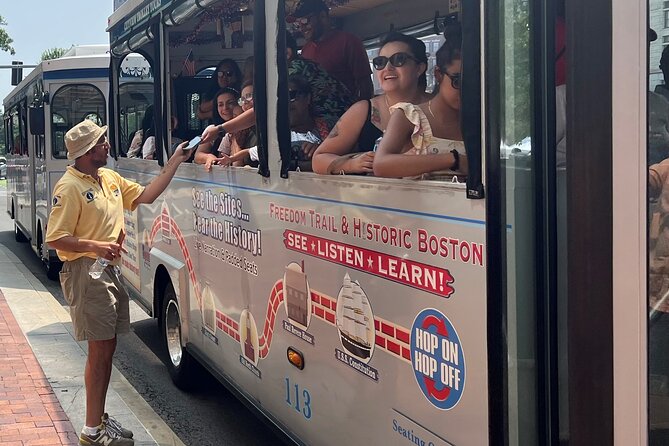
Atlantic Ave to Quincy Market and the waterfront
Your first major area stop sits at 206 Atlantic Ave, covering the Quincy Market and Faneuil Hall Marketplace zone, plus the Aquarium, Little Italy, and Long Wharf.
This is a smart place to begin because it is tourist-friendly and easy to orient yourself. If you want food, souvenirs, and easy strolling, this is where you can build momentum early. It is also a practical start if your day includes waterfront photos or a later harbor cruise.
The drawback is that this area is busy. If you want quiet, you might find you lose time in crowds before you even get to the sites you came for. Still, it is a good choice as a warm-up stop.
North End and the Old North Church corridor
Next you head to Commercial St at Fleet St, which lines up with the Old North Church, the Paul Revere House, and Christopher Columbus Park.
This segment is especially good for first-time Boston planning because it keeps the most famous historic names close together. You can hop off, see a couple of key Revolutionary-era anchors, then return without feeling like you are crossing town to reach each place.
A plus is that the route is built for quick reboarding. You are not locked into one attraction ticket, and the app can help you return to the correct stop.
Copp’s Hill, the Great Molasses Flood, and another Old North-area stop
You continue on to Commercial St opposite Hull St, adding Copps Hill Burying Ground, another Old North Church stop, and the Great Molasses Flood site.
This is a different kind of Boston stop, more about layered stories and place-based history than about one landmark. Copp’s Hill is a strong option if you like cemetery grounds and views, since the site is positioned for atmosphere and walking.
One practical caution: cemeteries and historic sites often reward slow pacing. If you try to do too much here in a short window, you may feel rushed by the time you get back on board.
Charlestown and USS Constitution area
At 115 Constitution Rd, you move into the Charlestown-adjacent theme with Old Iron Sides, the USS Cassin Young, the Constitution Museum, and quick access to Bunker Hill.
This stop is the one that can turn your day from “overview” into “real commitment.” If you like ships, military history, and museum-style stops, this is where you should consider giving yourself extra time.
If you prefer lighter touring, you can still use this stop for landmark photos and a walk around the area. Just remember that the nearby attractions are admission-based, so plan whether you want to spend money today or save it for your second visit.
TD Garden and North Station convenience
At 186 Canal St, you reach TD Garden, the Sports Museum, and North Station.
This stop is useful for two reasons. First, it gives you a clear way to connect to major transit. Second, it is a good “choose-your-own” moment, because not everyone wants the same type of history.
There is also a 50% off Sports Museum discount included, so if that sounds interesting, this is the place to act on it. If not, you can use the area just as a pivot back toward downtown.
State Street to Old South Meeting House and memory sites
Next is State Street at Congress Street, covering the Boston Massacre site, the Old South Meeting House, and the Holocaust Memorial at Old Sculley Square.
This segment is powerful because it shows how Boston’s story spans different eras. You get a Revolutionary-era anchor with the Massacre and Old South, then you shift into a memorial space that changes the tone of the visit.
If you are short on time, you can do this as a quick hop for a couple of photo moments plus a respectful stop. If you like to read plaques and slow down, budget extra minutes here.
Boston Common and Public Garden plus a pop culture stop
At 111 Boylston St, you connect to Boston Common, the Public Garden, Central Burying Ground, Swan Boats, Cheers Bar, and Newbury Street.
This is the stop that works for almost everyone. Boston Common and the Public Garden are the kind of open areas where you can reset, walk, and watch city life. Newbury Street is where you can shift from monuments to neighborhoods and shopping.
The Cheers Bar mention is a fun add if you are a TV fan, because it gives you a low-commitment, playful detour. One consideration: this stop can be a time magnet, because you can easily turn one hour into two if you start wandering.
Beacon Hill, the Shaw Memorial, and Granary Burying Ground
At 29 Beacon St, you move into Beacon Hill. This stop includes the New State House, Granary Burying Ground, Park Street Church, the Robert Gould Shaw Memorial, and the Black Heritage Trail.
Beacon Hill is compact and walkable in a way that rewards planning. The route puts you close to multiple meaningful sites, so you can build a short themed walk rather than trying to see everything at once.
This is also a good stop if you like the “Boston look,” with brick streets and historic buildings. Give yourself a realistic time window, since it is easy to keep extending your walk once you are there.
South Station area, Chinatown, and the Tea Party Ship
Finally you reach Summer St at South Station, near the Red Line entrance. This includes the Tea Party Ship & Museum, the Children’s Museum, South Station, Chinatown, and the Welcome Gate.
This is a smart finish point because it is both cultural and practical. South Station is a transit anchor, so it can help you end the trolley day without feeling stuck far from the rest of Boston.
If you want Chinatown food after the historic sites, this is where you can tack on dinner with minimal planning. The Tea Party Ship & Museum can also be a strong choice if you like early American maritime storytelling.
Getting the most from the free GPS walking tours
The app includes a 9 GPS self-guided walking tour at trolley stops, and the walking tours are designed to play stories automatically based on your location. You can use them on your trolley day, then keep exploring because the GPS walking tours stay valid for four days.
This is one of the most practical pieces of value in the whole experience. Hop-on, hop-off tours can be hit or miss because people get off, wander, and forget what they were aiming for. Location-aware narration fixes that problem by giving you a ready route tied to where you are standing.
My practical suggestion: use the trolley first to spot what you care about, then use the app to guide your walking time at those places. You will spend less effort “figuring out what to do next,” and more time actually doing it.
Best plan for a 1-day vs 2-day pass
For a 1-day pass, I would ride the route once, then choose one or two stop clusters to linger at. If you like Revolutionary-era sites, put your time into the Old North area and the Charlestown USS Constitution stop. If you prefer parks and neighborhoods, Boston Common plus Beacon Hill is a great pairing.
For a 2-day consecutive pass, I’d split the day themes. Day one can focus on waterfront, Old North, and downtown landmarks. Day two can shift into Charlestown and Beacon Hill in a calmer rhythm, with Chinatown for an easy finish.
The main thing to watch is your stamina. Reviews show that walking adds up fast when you try to do every stop up close. With two days, you can reduce the stress and actually enjoy the neighborhoods.
What can go wrong, and how to reduce frustration
Even with live tracking and Find My Stop, the tour still depends on street-level navigation and the trolley arriving at each stop. One rider described a stop where doors were not opened and the trolley left when the bus was full. Another noted that finding a trolley pickup point at South Station was hard without clear signage.
Here is how to lower the odds of a bad experience:
- Arrive a little early at your chosen stop.
- Use live tracking and the Find My Stop directions feature before you commit your time.
- If you need a certain driver, plan to ride again on your second day if you can.
Also, be mindful about the loop expectations. One review mentioned the ticket being good for only one complete circle, and the tour provider referenced a multiple loop upgrade available at Trolley Stop #1 for $18. If you want to roam between stops repeatedly, confirm how loop access works for your ticket before you start.
Who this Boston trolley tour is perfect for
This tour fits best if you want an efficient overview and a plan that flexes. It is especially good for:
- First-time visitors who want major landmarks in a single morning or afternoon
- People who want options, not pressure, at each stop
- Families who prefer jumping on and off instead of committing to one long walking route
It can be less ideal if you want a fully guided, stop-by-stop conversation experience with guaranteed live narration throughout. The narration style can vary depending on the driver and how the route is operating.
Should you book this Boston trolley tour?
I’d book it if you want a practical Boston orientation with real flexibility. The included free GPS walking tours valid for four days are a strong bonus, and the discounts make it easier to justify the ticket if you plan one paid add-on like the harbor cruise or Old North Church.
I would think twice if you already know you want a deeper dive guided only by experts you can quiz nonstop, or if you are highly sensitive to missed signage and boarding confusion. Also, if you need mobility support, one review mentioned mixed help with a walker, so it’s smart to contact the operator in advance so you know what assistance to expect.
If your goal is to see the highlights, get your bearings fast, and then choose where to spend real time, this Boston hop-on hop-off trolley is a solid deal for $48.
More Tour Reviews in Boston



Keep Going in Boston
More Trolleys and Duck Boats
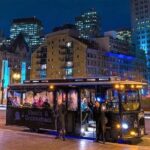
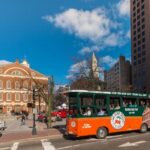
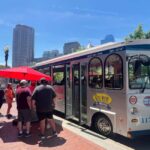
More around Boston, freshly written up
- The Boston Bash Scavenger Hunt★ 4.5 · 3 reviews
- Self-Guided Audio Tour of Boston North End★ 4.5 · 3 reviews
- Self-Guided Boston Christmas Tour★ 5.0 · 3 reviews
- Self Guided “The North End Pizza, Cannoli and Picnic” Solo Walking Tour★ 5.0 · 3 reviews
- Cambridge: Haunted Charles River Cruise★ 4.3 · 3 reviews
- Boston: Official Freedom Trail® Lantern Tour★ 4.7 · 3 reviews
New England Trolley and Duck Boat Tours, compared.
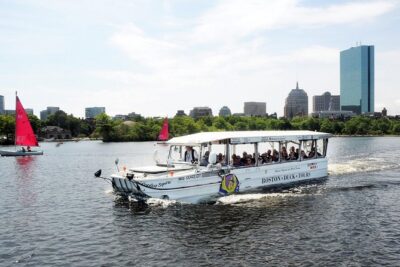 ★ 4.5Boston Duck Boat Sightseeing City Tour with Cruise Along Charles RiverFrom $599,378 reviews
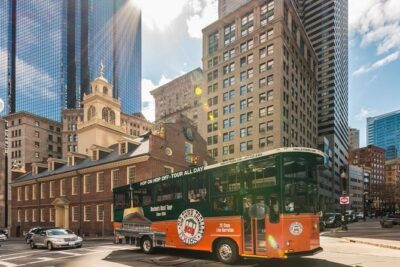 ★ 4.5Boston Hop-On Hop-Off Trolley Tour with 13 StopsFrom $525,576 reviews
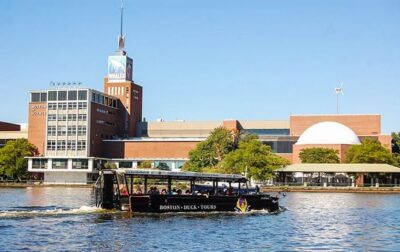 ★ 4.6Boston Duck Tour: The Original and World-FamousFrom $603,935 reviews
 ★ 5.0Newport Gilded Age Mansions Trolley Tour with Breakers AdmissionFrom $473,785 reviews
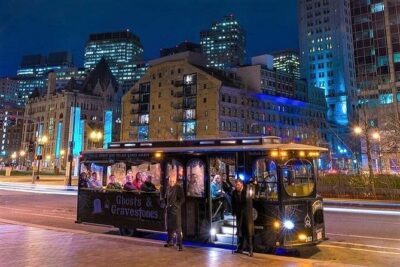 ★ 4.5Boston Ghosts and Gravestones Trolley TourFrom $472,413 reviews
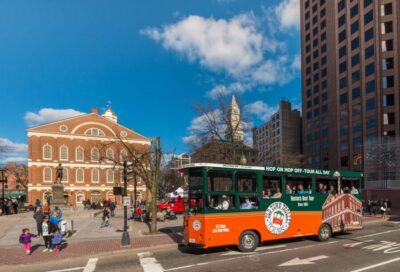 ★ 4.5Hop-on Hop-off Old Town Trolley TourFrom $522,121 reviews
 ★ 5.0Newport Trolley Tour with Breakers Mansion – Viking ToursFrom $451,624 reviews
 ★ 5.0Newport Trolley Tour – Viking Scenic OverviewFrom $25839 reviews
Also filed under