
REVIEW · HARVARD MIT AND CAMBRIDGE TOURS
Public Innovation Trail Tour in Cambridge
Cambridge is full of science you can actually walk to.
This 1 hour 30 minutes guided Public Innovation Trail Tour turns Kendall Square into a living classroom, with stories that connect today’s gene editing, anti-aging tech, and AI to older inventions from Boston and Cambridge. You’ll pay $20 per person, get a mobile ticket, and spend the afternoon stopping at major tech and research addresses while a guide helps you connect the dots across science, medicine, and entrepreneurship.
I love two things most on this style of tour. First, the stops are real, specific places in Cambridge, not a generic “innovation recap,” which makes the explanations feel grounded. Second, the tour is led by an in-person guide whose energy matters, with names like Julia and Jul highlighted for enthusiastic, easy to follow storytelling.
One consideration: this is not a pass to wander into active labs. Most sites are view from public areas, and some indoor spaces like lobby exhibits can be closed depending on the day.
Key things to know before you go
- Kendall Square focused route that connects modern breakthroughs to older inventions around Boston and Cambridge
- Free admission listed at multiple stops, including time at the MIT Museum
- A guide-led, stop-by-stop format that fits about 90 minutes without dragging
- Small group size with a maximum of 25 people, which keeps the pacing conversational
- Real tech anchors in the stories, like iRobot, the Roomba, Apollo software, and mod-RNA
- Limited interior access for active labs, so plan on walking and looking rather than touring restricted spaces
More across the river in Cambridge
A 90-minute walk that treats innovation like a story
You can tour Cambridge a dozen ways, but this one is built around cause and effect. The route is designed for a tight timeline, so instead of spending hours in one museum, you get short, focused stops across tech, biotech, robotics, and software. The promise here is simple: you’ll leave with a clearer picture of how ideas evolve, how industries form, and how yesterday’s inventions become today’s tools.
The guide does the heavy lifting by building connections across fields that can feel separate in real life. Gene-editing and anti-aging sound totally different from guidance computers for spacecraft, until you realize the same skills show up again and again: applied science, problem solving, and teams willing to test and improve what already exists.
Where the tour starts and how the route flows
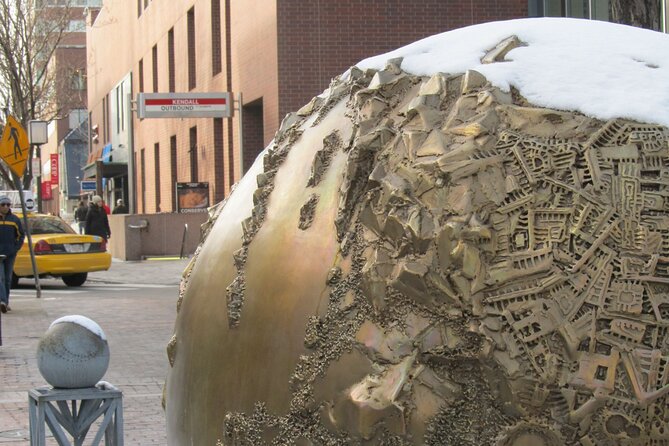
The experience starts at 50 Broadway, Cambridge, MA 02142 at 2:00 pm. It ends at MIT Media Lab, 75 Amherst St, Cambridge, MA 02139.
That start-to-end setup is useful. You’re not just turning around and retracing steps. Instead, you’re moving through the same tech corridor people associate with Kendall Square and MIT, with short distances between stops that fit the time limit. Expect mostly on-foot time, and the tour is best for people with moderate physical fitness, since you’ll be walking between addresses and moving through outdoor or public-facing areas.
Stop by stop: what each landmark teaches you
Stop 1, Entrepreneur Walk of Fame
The tour kicks off with the Entrepreneur Walk of Fame, and that’s a smart move. It sets the tone by framing innovation as human work, not just lab equipment. You’ll get familiar with names and stories that become reference points later when the tour reaches tech giants and research institutions.
Even if you think you already know Cambridge tech, this opening gives you a “map in your head” before you start seeing the addresses for real.
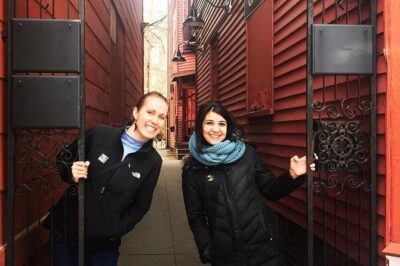

Stop 2, CIC Cambridge at 245 Main
Next is CIC Cambridge @ 245 Main, formerly the Cambridge Incubator, founded by MIT Business School graduate Tim Rowe. This stop matters because it places entrepreneurship in the same spotlight as inventions.
A lot of “innovation tours” focus only on research. Here, you’re also reminded that companies need spaces, mentorship, and infrastructure to survive the jump from idea to impact. It’s a good early lesson in how ecosystems build momentum.
Stop 3, MIT Museum (reopened in 2022)
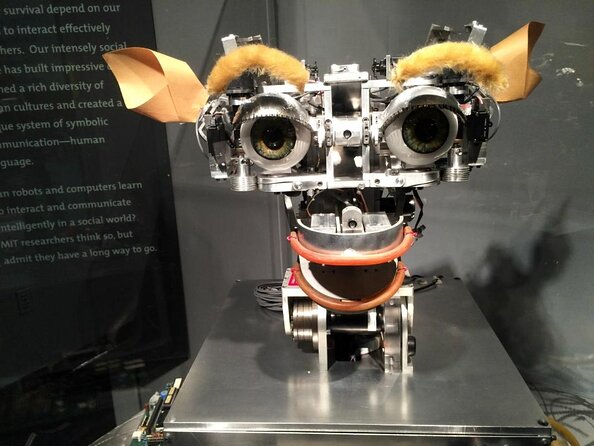
You then head to the MIT Museum, which reopened in October 2022. This is one of the longer stops at about 10 minutes, and the museum angle is key: it shows how MIT frames its role as a place on the cutting edge of tech advancement.
This is also where you might slow down mentally. After walking past offices and institutional addresses, it’s easier to see the “through line” of experimentation and invention as part of MIT’s public identity. If you’re the kind of person who likes to connect big ideas to artifacts and visuals, you’ll probably enjoy this stop the most.
Stop 4, 355 Main St and the Cambridge tech connection
At 355 Main St, you’ll learn about Cambridge’s relationship with tech giants, with a specific mention of Google and creativity coming out of these doors, like Android. This is a quick stop, but it gives you a useful lens: tech companies don’t land in a vacuum. They plug into talent, research culture, and networks that already exist around them.
It’s the kind of context that helps you understand why certain products show up when they do.
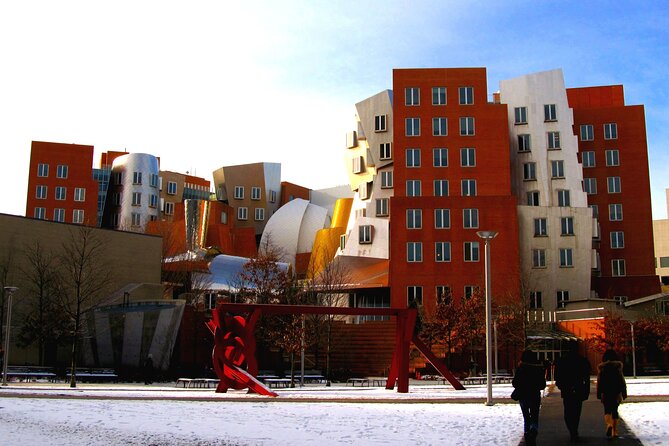
Stop 5, MIT Stata Center and the lab culture behind robotics and AI
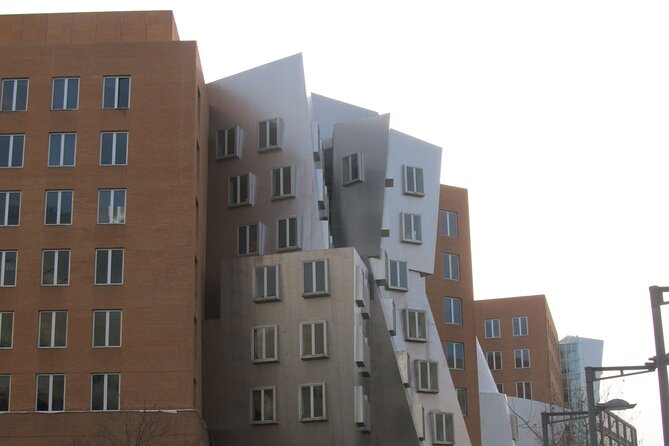
The Stata Center is next, and it has a lot going on in just a brief window. Inside, the focus is on labs working in computer science, artificial intelligence, and robotics. The tour also points you to an example with iRobot Corp., the maker of the Roomba robotic vacuum cleaner.
There’s also a small ground-floor exhibit about student hacks, or pranks, through the years. That detail is more than a fun aside. It helps explain the culture that often powers breakthroughs: smart people tinkering, not waiting for permission, and learning by doing.
This stop is about mindset as much as it is about technology.
Stop 6, Broad Institute of MIT and Harvard
Now you move into the biomedical world with the Broad Institute of MIT and Harvard. The mission here is to better understand the roots of disease and narrow the gap between new biological insights and creating impact for patients.
Even if you’re not a science person, this stop gives you a practical takeaway: innovation isn’t only about inventing gadgets. It’s also about translating knowledge into real outcomes, and that translation requires specialized teams and sustained work.
It’s also a helpful reset after the tech stops, reminding you that “innovation” has multiple meanings depending on the field.
Stop 7, Whitehead Institute and the Human Genome Project vision
At the Whitehead Institute connection, the tour highlights the Human Genome Project at Whitehead. Whitehead was created in 1982 by philanthropist Jack Whitehead and David Baltimore, an MIT professor and Nobel Prize winner.
The story emphasizes an unusually specific philosophy: bring top researchers together in one building, limit bureaucracy, and remove obstacles to discovery. The point of sharing this isn’t just to name the famous people. It’s to show that organizational choices shape what gets invented and how fast.
If you like hearing how institutions operate, this is one of the most interesting stops in terms of “how the system works.”
Stop 8, 225 Binney St and Biogen’s founding story
At 225 Binney St, you’ll meet Biogen, described as a biotech trailblazer. The stop connects the company’s founding to two Nobel Prize winners and focuses on its history of innovation.
This is a quick stop, but biotech has a habit of feeling abstract until you hear how it was built. You get a sense of why Nobel-level science isn’t just prestige, it becomes the starting platform for later work and company direction.
Stop 9, 145 Broadway and Akamai’s “move content closer” idea
At 145 Broadway, it’s Akamai, with an explanation of the Internet Accelerator concept. The original idea was to set up a network of servers around the world to cache content closer to where people want to access it, making web browsing faster.
The tour then adds a memorable example: in 1999, Akamai’s early successful large-scale demonstrations included delivering a Star Wars: The Phantom Menace movie trailer and ESPN’s March Madness coverage.
This is one of those “wait, that happened here?” moments. It shows how infrastructure innovation can be just as groundbreaking as flashy apps.
Stop 10, Draper at 555, Apollo guidance computers, and software engineering
The tour continues down Broadway, then turns left at Technology Square, reaching Draper Labs at 555. Expect a landmark feature in the lobby: a giant moon.
The major story here is Apollo spacecraft guidance computers. It’s also where the tour links technology to people, specifically mentioning Margaret Hamilton, a software developer credited for code that ran those guidance computers. She later founded companies and is credited with helping define the field of software engineering.
If you’ve ever wondered why software is treated like engineering today, this is the kind of story that makes it make sense. It’s also a strong reminder that innovation is not only about hardware. It’s about logic, testing, and reliability under pressure.
Stop 11, Moderna and mod-RNA
At Moderna, the focus is on the company’s founding in 2010 to explore modified RNA molecules, with the name mod-RNA hinted right in the explanation. The stop connects this approach to treating diseases or serving as a vaccine.
Even in a short stop, it reinforces a major theme for the whole tour: innovation builds on earlier breakthroughs. RNA science didn’t appear overnight, and the tour’s job is to show that the cutting edge still depends on the hard work that came before.
Stop 12, LabCentral and how buildings shape innovation
LabCentral is next, introduced as a place that once held Davenport Car Works, Walworth Manufacturing Company, and Polaroid. The takeaway is clear: some buildings have housed generations of innovators.
That’s valuable because it’s easy to think of innovation as location-independent. The reality is more physical. Labs, workshops, and repurposed spaces help people collaborate, refine prototypes, and keep experimenting.
Stop 13, 810 Main St and the last operating candy factory
Finally, you reach 810 Main St, which covers Cambridge’s candy-making legacy. The tour notes there used to be 66 different candy companies in Cambridge, and it mentions inventions like the Fig Newton cookie in 1891, even though the name ties to nearby Newton.
Today, this building is described as the last operating candy factory in Cambridge, owned by Tootsie Brands, and it’s not offering tours. The explanation includes why, with candy production described as secretive. Inside, they make 26 million pieces of candy a day.
It might sound silly compared to genes and robots, but it’s a great closing lesson: innovation is also industrial, practical, and sometimes about processes people keep guard over. Plus, it’s a reminder that Cambridge history includes manufacturing as well as research.
What the free admissions add to the value
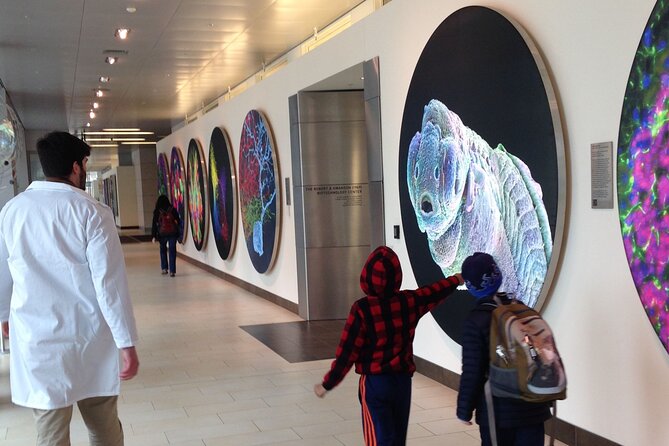
The tour lists free admission at multiple stops, including the MIT Museum, which is the clearest “go inside” opportunity on paper. For the rest, the emphasis is on seeing key public-facing elements and hearing the story behind them.
Either way, the $20 price feels reasonable because you’re not paying for an all-day museum itinerary. You’re paying for a structured, guide-led route where the talking points cover tech, biotech, robotics, software, and entrepreneurship in about 90 minutes. A guide can make a big difference here. Without context, many of these buildings are just impressive addresses. With context, they become a chain of why’s.
How the guide approach makes the information stick
This kind of tour lives or dies on the guide. The standout quality here is clear, energetic explanation. Names like Julia and Jul are associated with enthusiasm and the ability to connect technical stories to something human, including robotics and the history behind Hugh Herr, plus moments like the Danny Lewin Memorial courtyard.
Those kinds of details are more than trivia. They give you anchors, so later, when you read about companies or breakthroughs, you remember the connections. You also get an easier time spotting themes like software engineering roots at Draper or the infrastructure logic behind Akamai.
Logistics you should plan for
This tour works best if you’re okay with short stops rather than long indoor experiences. Some indoor lobby displays may not always be open, and you should expect limited entry at several active research sites.
Also, build in a little patience for timing. With 13 stops across a compact area, the guide keeps things moving. If you tend to linger, you’ll want to keep your pace steady so you don’t miss the next explanation.
The good news is the group size stays small, with a maximum of 25 people. That keeps conversations possible and helps everyone hear the stories.
Who this tour is for, and who might skip it
You’ll probably love this tour if you:
- want a short, guided overview of Cambridge’s tech and biotech scene
- like learning how software, science, and industry connect
- enjoy historical context that doesn’t feel like a lecture
You might skip it if you’re looking for a tour that includes lots of deep lab access or long museum time. This is mostly a walking and storytelling experience, not an all-access behind-the-scenes pass.
Should you book the Public Innovation Trail Tour in Cambridge?
If your goal is to get your bearings in Kendall Square and come away with a clear understanding of how Cambridge innovation links back to earlier inventions and institutions, I’d book it. For $20 and about 90 minutes, it’s one of the most time-efficient ways to see major names, learn the “why,” and connect topics like robotics, software engineering, and gene-related research into one coherent route.
If you prefer slow, indoor-only sightseeing or you need frequent long stops inside buildings, look at other options. But for most people who want a smart, energetic, practical introduction to Cambridge’s innovation engine, this is an easy yes.
FAQ
How long is the Public Innovation Trail Tour?
It runs for about 1 hour 30 minutes.
How much does the tour cost?
The tour is $20.00 per person.
Do I need to print anything, or is there a mobile ticket?
You’ll use a mobile ticket.
Where do I meet, and where does the tour end?
Meet at 50 Broadway, Cambridge, MA 02142. The tour ends at MIT Media Lab, 75 Amherst St, Cambridge, MA 02139.
Are any stops inside buildings included?
Some locations list free admission, but most spaces are active labs, so you do not enter these spaces.
What kind of walking should I expect?
The tour calls for a moderate physical fitness level, since it’s a guided walk between multiple stops.
How big is the group?
The tour has a maximum of 25 travelers.
What happens if the weather is bad?
This experience requires good weather. If it is canceled due to poor weather, you’ll be offered a different date or a full refund.
Can I cancel and get a refund?
Free cancellation is available. You can cancel up to 24 hours in advance for a full refund. Cancellation within 24 hours of the start time is not refunded.
More Tours in Cambridge






More Tour Reviews in Cambridge
More Across the River
More around Cambridge, freshly written up
- Harvard’s Secret Society: Exploration Game and Tour★ 4.0 · 3 reviews
- Union Square, Somerville Neighborhood Food Tour★ 5.0 · 4 reviews
- Harvard Square Cambridge Food & Walking Tour★ 5.0 · 5 reviews
- Boston: Harvard & Cambridge Walking Food Tour★ 5.0 · 18 reviews
- Public Innovation Trail Tour in Cambridge★ 5.0 · 19 reviews
- Delicious Donuts of Harvard Square: A Historical Walking Tour★ 5.0 · 31 reviews
Harvard MIT and Cambridge Tours, compared.
 ★ 4.6Cambridge: Harvard University Student-Guided Walking TourFrom $223,931 reviews
 ★ 4.5Harvard University Campus Guided Walking TourFrom $233,632 reviews
 ★ 4.6Massachusetts Institute of Technology Public TourFrom $22604 reviews
 ★ 4.7Cambridge, Massachusetts: MIT and Harvard Walking TourFrom $49486 reviews
 ★ 4.5MIT Campus Guided Walking TourFrom $22175 reviews
 ★ 5.0Illustrious Schools: Group Tour of MIT And HarvardFrom $50107 reviews
 ★ 5.0Tour de Cambridge Guided Bicycle TourFrom $7834 reviews
 ★ 5.0Private City Tour of Boston and CambridgeFrom $46033 reviews
Also filed under