
REVIEW · REVOLUTIONARY BOSTON HISTORY TOURS
Newport: Colonial History Walking Tour
Colonial Newport is all walkable and human. This 75-minute walking tour links Newport’s pre-colonial roots to colonial life, with stops that explain who lived here and why it mattered. You start inside the Old Colony House (1739) and then move through the Historical District toward landmark sites like the Great Friends Meeting House and the Touro Synagogue.
What I like most is how the tour balances storytelling with real places you can see. I also like that you get both a guided walk and access to the Colony House second floor for a self-guided look, so you can slow down where your curiosity kicks in.
One possible drawback: the tour is short, and the listening experience depends on the guide’s volume and pacing. If you struggle to hear on foot tours, pick a spot where you can clearly face the guide.
Key highlights to watch for
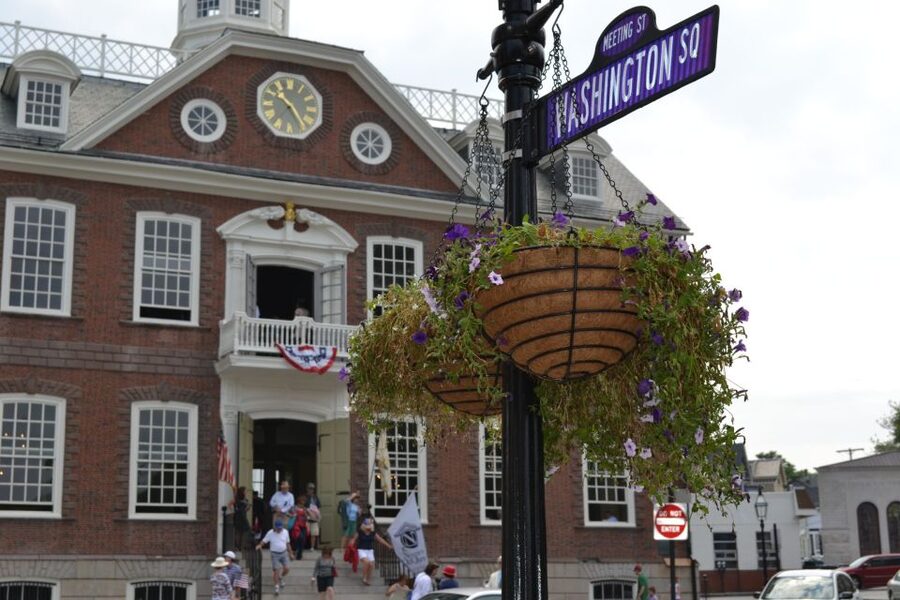
- Old Colony House (1739) start, so you get context before you hit the streets
- Walking the Historical District in a logical time-and-people flow
- Faith communities side by side, including the Great Friends Meeting House and Touro Synagogue
- Colonial homes and civic power through stops like the Wanton-Lyman-Hazard House and City Hall
- A timed blend of guided and self-guided time, with second-floor access included
More of the revolution, from the tea to the bridge
Old Colony House start: the fastest way to get oriented
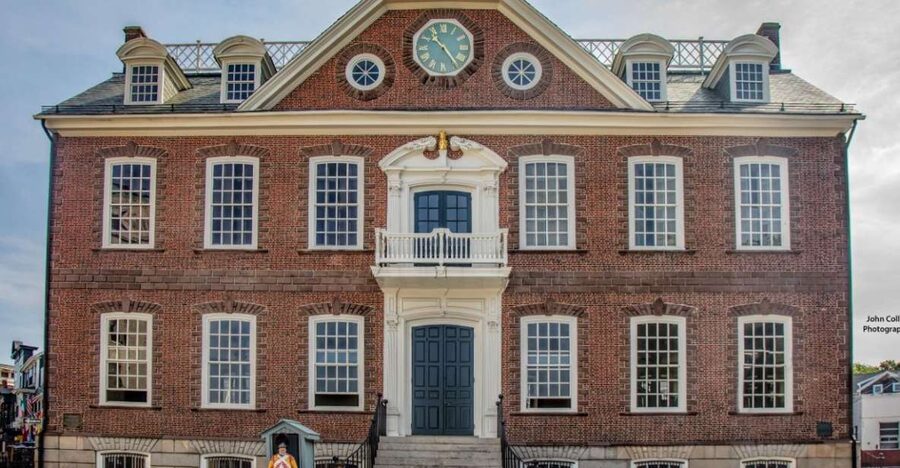
Most Newport history tours start with pretty buildings. This one starts with government paperwork energy, inside the Old Colony House built in 1739. That matters, because colonial Newport was not just charming street scenes. It was administration, trade, and power, and the tour helps you connect those dots early.
You meet inside the Museum of Newport History and Shop, then head into the Old Colony House to begin. I like this approach because you’re already inside a historic structure, so you’re not trying to learn the basics while also navigating the outdoors. You get grounded in the setting right away, then the walk through the Historical District becomes easier to follow.
The tour is built around a simple concept: tracing settlement history through time. It begins from the pre-colonial era and then walks you through how diverse groups shaped Newport over the past 400 years. That theme is what turns a handful of stops into a coherent story, instead of a checklist.
The 75-minute rhythm: enough time for meaning, not too long to drag
A 75-minute duration is a sweet spot for a first pass. Long enough to build context. Short enough that you can still keep the rest of your Newport day flexible.
You’ll walk through the Historical District as the tour moves through time. Expect a pace designed to keep moving between key sites, rather than lingering for long lectures at every corner. That’s a feature, not a bug, especially if you like seeing how neighborhoods connect. It also means you should come ready to listen, not expecting a full deep-dive at each stop.
And since the second floor of the Colony House is included for self-guided time, the structure helps you control your speed at least once during the tour. If you want to zoom in on details, you have that chance. If you prefer the guide story first and questions later, you can do that too.
Old Colony House second floor: self-guided time you can actually use
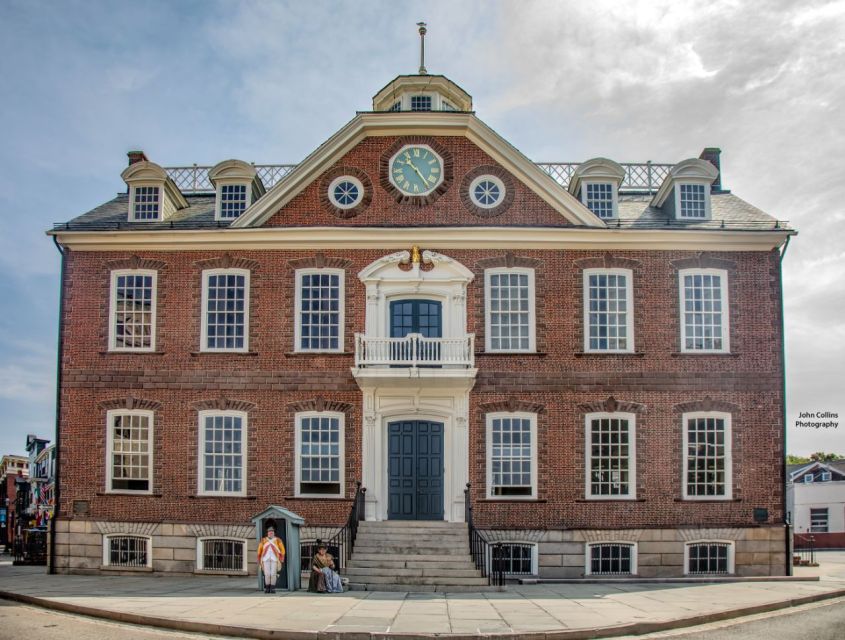
Your ticket includes guided tour time, plus entrance to the second floor of the Colony House for a self-guided visit. This is a smart inclusion because it gives you flexibility after the guided portion.
Here’s how I’d use it: treat the guided portion as your roadmap. Then, on the second floor, focus on whatever your guide highlighted most. If you’re the type who reads every sign, you’ll get more out of it. If you skim, at least you’ll be reading with context, not guessing.
One practical tip: self-guided time can tempt you to wander. Don’t overrun it. Scan first for what links to your tour stops and themes, then do deeper reading only where it connects to the story you’re hearing on the street.
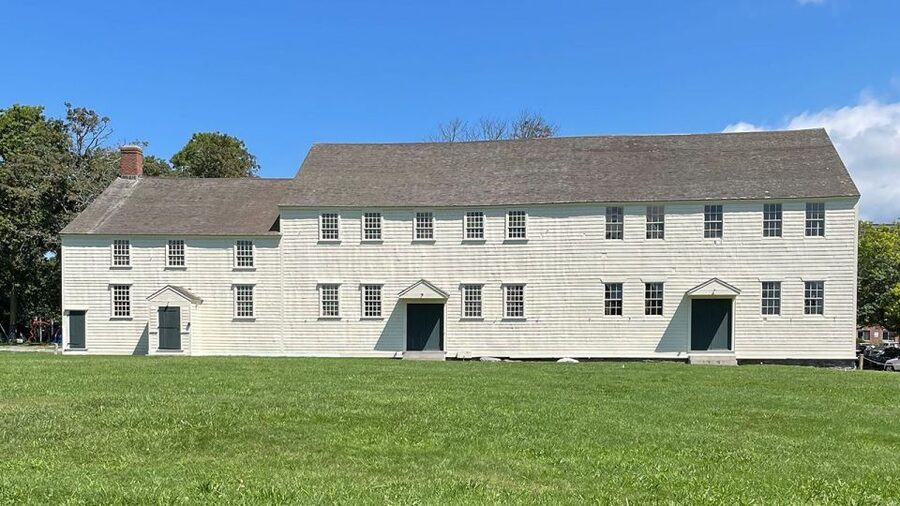
Great Friends Meeting House: faith, community, and daily life
The tour includes a stop at the Great Friends Meeting House. That’s a big deal, because it points beyond the obvious idea of colonial Newport as just a set of forts and fancy houses.
Meeting houses represent community structure. They also reflect the beliefs and social networks that helped shape how people lived, organized, and interacted. Even if you’re not a history buff, this kind of stop gives you a clearer picture of how ordinary people formed shared rules and responsibilities.
What I like about including a site like this is that it balances the civic and commercial themes you’ll hear elsewhere. Newport’s story isn’t just politics and wealth. It’s also how groups held themselves together.
More of the Gilded Age, down the coast



Touro Synagogue: one stop that widens the whole story
Then you visit the Touro Synagogue. The tour places it within the wider timeline of settlement and community, which is key. It’s not treated like a single isolated landmark. It becomes part of the broader message about diversity in Newport over centuries.
If you care about how history actually spreads through people, this stop is especially valuable. You’re seeing a lasting physical reminder that communities existed here not as tourists or temporary visitors, but as part of Newport’s long-term social fabric.
The best way to get value here is to pay attention to how your guide connects the synagogue to the rest of the tour stops. When you hear the same themes repeated in different locations, it sticks.
City Hall and colonial governance: where decisions got made
Next up in the tour flow is City Hall. This is the moment where the tour can feel especially practical. Newport wasn’t a free-for-all. It had civic structure, rules, and decision-making processes that affected real life.
When you pair City Hall with the Old Colony House start, it helps you see the continuity: governance over time, not just a single “old building” moment. If you’re the type who wants to know how a place worked, this is where the tour earns its keep.
Don’t expect this stop to feel like a museum lecture. In a walking tour, governance becomes understandable when you can mentally place it next to homes, meeting places, and other civic landmarks you’ve already seen.
Wanton-Lyman-Hazard House: homes that hint at power
The tour also includes the Wanton-Lyman-Hazard House. House stops are useful because they tell a different kind of story than monuments do.
Buildings like these help you picture class, status, and the everyday reality of colonial life. They also help explain how wealth and influence showed up not only in government, but in who owned what, where they lived, and how the neighborhood functioned.
I like that this tour includes a homes stop after the civic and faith locations. It prevents the story from becoming abstract. Instead of only asking, What happened? you also get closer to the question, Who had the resources to shape Newport?
Price and value: what $20 buys in real-world terms
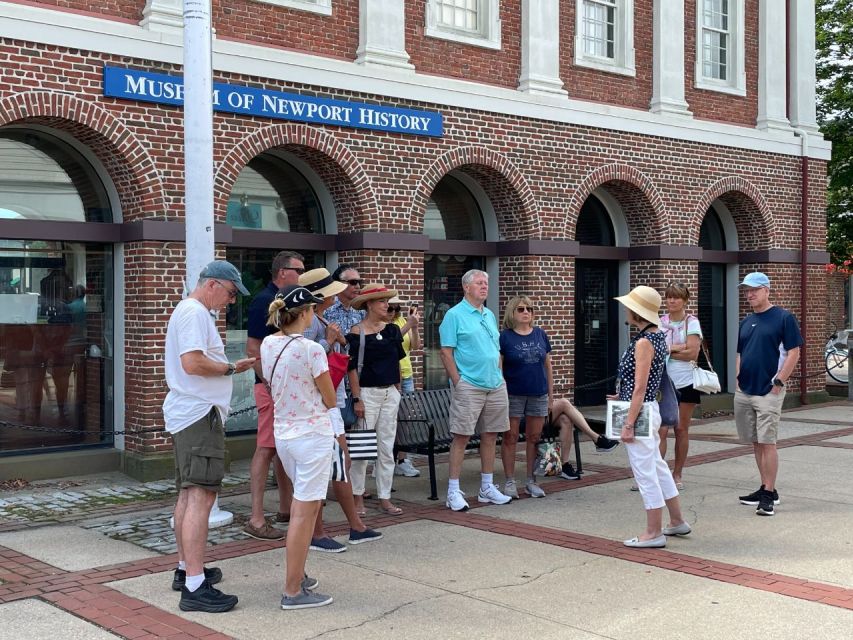
At $20 per person for a 75-minute guided walk plus second-floor access, the value is pretty straightforward. You’re paying for two things: a live guide and an added included entry component. That combination matters more than people think.
If you only paid for entry tickets, you’d still need context to understand what you’re looking at. The guide does that work for you, and the self-guided time lets you keep the details that matter to your interests.
Also, you’re walking in an area where Newport’s historic sites can feel scattered if you try to plan it alone. A focused route saves you time and guesswork. You get a “best order” for seeing key colonial-era landmarks, which is valuable if you only have one day in town.
The end-of-tour option: the Brick Market museum stop
At the end of the tour, you’ll have the opportunity to visit the Newport Historical Society Museum and Shop at the Brick Market.
If you go, plan for the museum part to involve a suggested donation of $4 for adults and $2 for children over age five. That’s not included in the tour price, but it’s a nice way to extend the story after your guided walk.
I’d treat this as optional enrichment. If you’re still fired up, it’s a good next step. If you’re museum-fatigued, you can skip it and still have gotten a complete overview from the walking portion.
Guide quality and hearing: how to get the most from the narration
A key theme from the experience is that guide delivery can change your experience. One person found their guide hard to hear and felt they picked up only a few facts. On the flip side, many people praised informative content, enthusiasm, and good pacing.
So here’s how you protect yourself in practical terms:
- Position yourself where you can clearly see and hear the guide.
- Stay attentive early. The tour starts in a major landmark, and that early context makes later stops easier to understand.
- If you’re the kind of person who likes notes, bring a small notebook. You’ll remember more when you capture names and place connections.
Also, at least one guide name is specifically called out as effective. Patsy is mentioned as delivering a strong tour. That’s reassuring, because it suggests consistent effort from the people leading these walks.
Who should book this tour (and who might skip it)
This tour is a great fit if you want a first pass through Newport’s colonial era without spending your whole day inside museums. It’s also ideal if you like stories that connect people, faith communities, government, and homes, not just architecture.
You might skip it if you already know Newport colonial history in depth and want a longer, slower format. It’s 75 minutes, so it can’t cover everything. But it can still work as a smart orientation walk that makes your later independent exploring more meaningful.
Should you book the Newport Colonial History Walking Tour?
I’d book it if you’re short on time and want a structured route through Newport’s key colonial landmarks, starting in the Old Colony House. The included second-floor access adds value, and the mix of civic sites, faith sites, and notable houses helps you understand Newport as a lived-in, diverse community rather than a set of isolated attractions.
Book it especially if you care about the “how did people shape this place over centuries” angle. If you’re worried about hearing or you prefer long stops, just plan to stand where you can see the guide and expect a brisk but meaningful walk.
More Tour Reviews in Newport Rhode Island


More Gilded Age Houses
More Revolution in Newport Rhode Island

More around Newport Rhode Island, freshly written up
- Breakers, Marble House, Downtown Newport DayTrip from Boston★ 5.0 · 4 reviews
- Newport: Golden to Gilded Age Guided Walking Tour★ 4.2 · 10 reviews
- Newport, Rhode Island: Cliff Walk Gilded Age Audio Tour★ 4.3 · 9 reviews
- Native Newporter Tours★ 5.0 · 4 reviews
- Newport and the American Revolution Guided Tour★ 4.6 · 11 reviews
- Newport, RI: Evening Cruise on Newport Harbor★ 4.8 · 12 reviews
Revolutionary Boston History Tours, compared.
 ★ 4.5Boston Tea Party Ships and Museum AdmissionFrom $352,512 reviews
 ★ 5.0The Full Revolutionary Story Epic Small Group Boston Walking TourFrom $552,356 reviews
 ★ 4.8Boston Tea Party Ships and Museum Interactive TourFrom $351,926 reviews
 ★ 4.9Boston’s Freedom Trail: A Revolutionary Walking TourFrom $311,748 reviews
★ 5.0Boston’s Freedom Trail: A Revolutionary Walking TourFrom $311,343 reviews
 ★ 5.0Entire Freedom Trail Walking Tour: Includes Bunker Hill and USS ConstitutionFrom $79732 reviews
 ★ 5.0Boston’s Revolutionary and Drunken Past with Ye Olde Tavern ToursFrom $91195 reviews
 ★ 4.8Boston History & Highlights Tour: From Revolution to TodayFrom $44178 reviews