
REVIEW · WALKING TOURS
Boston Walk Through History Private & All-Inclusive Tour
Boston can feel like a lot of stops and a lot of dates. This private tour turns it into a smooth, walkable story across the city’s key landmarks. You’ll start in the heart of downtown, hit Revolutionary-era sites, and then connect the dots through the Freedom Trail and surrounding neighborhoods, with time to see how Boston grew from colonial core to modern city.
I especially like the private guide setup, because the pace and focus can actually match what you care about. Second, I like that the route mixes major sights with neighborhood texture, including time at Faneuil Hall and Boston’s North End, so it’s not just a list of monuments. You’ll also get signature food context, which is a smart add-on because Boston’s history is tied to where people lived, ate, and traded.
One thing to consider: the route is time-boxed, and some parts are quick walk-bys. If you hate feeling rushed or you want long indoor time, you may want to keep your expectations realistic about how much you can see in a 3 to 6 hour window.
Key things I’d watch for on this Boston private history walk

- Private-only group means the guide can tailor the flow to your pace, not the crowd’s.
- Frequent free-entry stops keep the day moving without budgeting extra ticket costs for many landmarks.
- Freedom Trail time is built in at about 1.5 hours, which helps you cover the big ideas without getting lost.
- Revolutionary anchors like the Paul Revere House and Old North Church make the Boston story feel immediate.
- Downtown to neighborhood transitions give you a sense of how Boston’s geography shapes its identity.
- Guide-supported ending at South Station helps you wrap up without hunting for your next step.
More of Boston from the top of the list
Entering Boston’s story at Boston Common and the Massachusetts State House
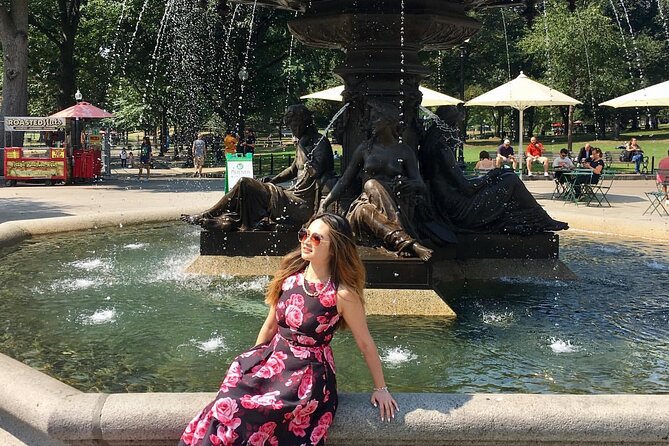
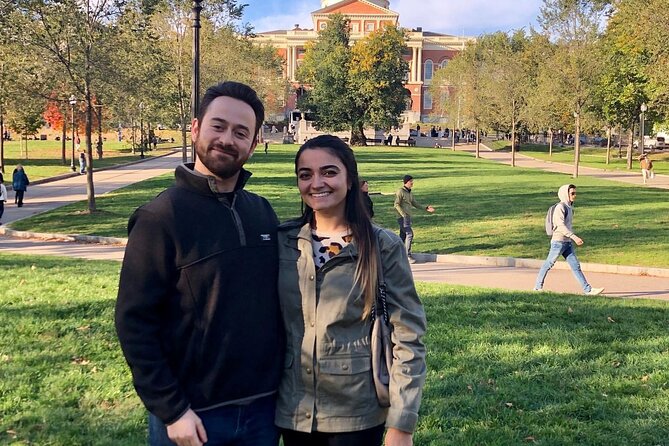
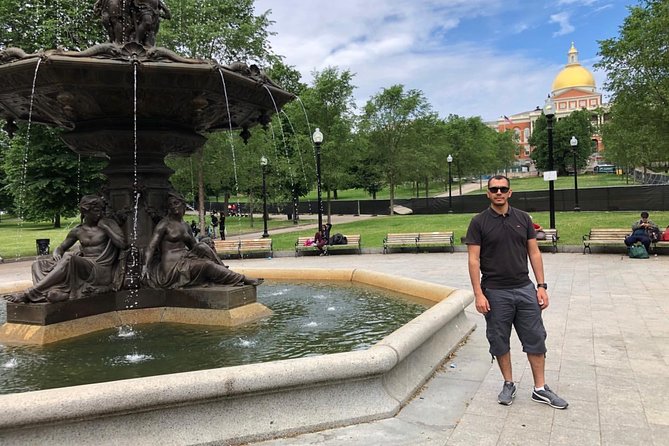
Most people start Boston trips on the water or in the museums. This tour starts in the civic heart, and that choice helps the city click faster. Boston Common is the oldest city park in the United States, dating to 1634, and even with a short visit, it’s a strong first “anchor point” for understanding early Boston life.
From there you move to the Massachusetts State House, in Beacon Hill. This is an easy win because you get a real sense of Boston as a government and institutions city, not just a collection of old buildings. You’ll spend about 15 minutes here, so it’s enough to orient yourself and learn what the building represents, without turning the morning into a waiting game.
Tip for your day: if you’re only doing one major Boston overview, time at Common plus the State House gives you a useful framework before the Revolutionary sites and the Freedom Trail start. It’s the kind of warm-up that makes later stops easier to understand.
Granary Burying Ground and King’s Chapel: quick stops with big atmosphere
Next up are two stops that feel different in tone, but both sharpen your sense of how Boston changed over time.
Granary Burying Ground, founded in 1660 and located on Tremont Street, is Boston’s third-oldest cemetery. A 15-minute visit is short, but cemeteries tell stories fast: names, eras, and the way communities remember themselves. Even if you don’t read every marker, you’ll come away with a clearer feel for who lived here and when Boston’s identity was being shaped.
Then you’ll visit King’s Chapel. The church’s identity is tied to a mix of theology and worship style, and that matters because it reflects how Boston’s religious life evolved. The stop is about 15 minutes, so think of it as a focused snapshot rather than a long interior experience.
Consideration: if you’re a detail-first history fan who loves slow, deep reading, these 15-minute windows can feel tight. If you’re more into big picture connections and quick orientation, they’re a good rhythm.
Faneuil Hall Marketplace and the Paul Revere House: the Revolution becomes personal
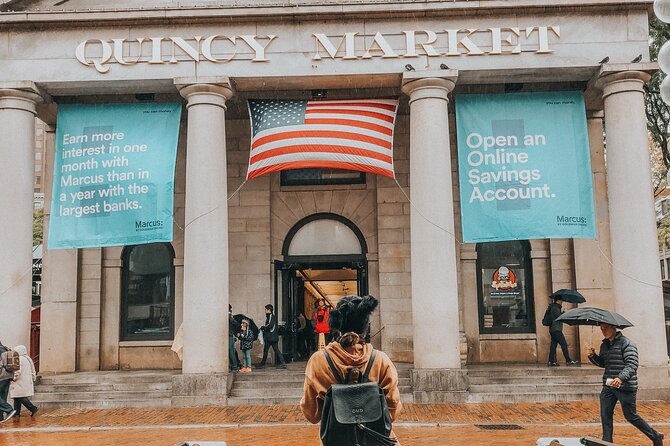
Faneuil Hall Marketplace is where Boston stops being abstract. It’s a cluster of historic market buildings plus a promenade, and you’ll spend about 45 minutes here. That extra time is useful. You’re not just looking at a facade, you’re in the kind of place where street life and commerce mingle, which is exactly the context you want before you hit the Revolutionary-era sites.
You’ll also learn about Boston’s signature foods along the way. The tour doesn’t need to turn into a full eating tour to make this valuable. Food culture helps explain how neighborhoods functioned, what people could afford, and why certain areas became magnets for trade and community life. Faneuil Hall is a great place to absorb that lesson because it’s a natural bridge between history and what people do today.
Then comes the Paul Revere House, built around 1680, where you’ll spend about 15 minutes. This is a strong stop because it shifts the story from events to the lived world of a specific person tied to the American Revolution. Seeing a preserved colonial home helps you picture how Boston families actually lived inside the era you’ve been learning about.
Practical note: since many of these stops are outside or quick-inside, wear comfortable shoes. You’ll be moving enough that good foot comfort matters more than anything glamorous.
Old North Church and the Freedom Trail: how to connect 16 landmarks without getting lost
Old North Church, in the North End, is one of those Boston stops that carries a famous story. You’ll spend about 15 minutes here, and the big takeaway is the legend of the signals: one by land, two by sea. Even if you already know the tale, it lands differently when you’re standing where it’s said the signal related to the plot was sent.
From there, you shift into the Freedom Trail, about 2.5 miles long and passing 16 locations significant to United States history. Your tour includes around 1 hour and 30 minutes on the trail, with free entry noted for the sites. This is a smart use of time. Instead of trying to manage the whole trail on your own and potentially missing context, you get the main connections explained while you walk.
Why the Freedom Trail time matters: Boston’s downtown can feel like one long corridor of street names. The trail gives it structure. A guided chunk helps you understand why each location matters, so it’s not just a line of plaques.
What to watch for: the trail is walking. If you’re traveling with anyone who gets tired quickly, plan for breaks at key points rather than pushing through the whole stretch nonstop.
More of Boston on foot
Beyond the classics: Beacon Hill, the North End, Fenway, and museum options
A 3 to 6 hour private tour can only fit so much, so this experience uses the time window to mix “must-see” classics with high-value Boston neighborhoods and culture.
Beacon Hill often comes up in a big way because it’s central and it has a specific social history. In the tour context, the South Side of Beacon Hill is described as home to Boston’s old-money families, known locally as Brahmins. Even if you only get a glimpse, it helps explain why certain areas look and feel the way they do today.
Then you may spend time around the North End, where the culture is known for its Italian character and lively flair. This neighborhood is a great place to connect history to daily life, because you’re not just visiting the past, you’re seeing a living neighborhood. It’s also a natural place for the tour’s food angle to click, since the North End is where many people go after history walks to eat their way through the city.
The tour also includes an option to factor in Fenway Park. It’s described as Americas most beloved ballpark, and even if you do not follow sports closely, it’s still a fun way to see Boston’s identity through a landmark people treat like a civic ritual.
Finally, the information provided includes major museums you might work in depending on your schedule: the Museum of Fine Arts and the Museum of Science. The MFA is noted for Impressionist works plus ancient Egyptian treasures, Asian and Persian fine arts, and collections tied to ancient Greece and the Middle East. The Museum of Science is framed as hands-on learning, with science and technology experiences that are not only for kids.
Reality check for museum time: the tour duration is approximate, so you might only get exterior context or short interior time depending on how the day flows. If museums are your top priority, you may want to ask your guide to prioritize one, not try to do both.
Harvard time: the student-led campus walking tour option

If your route includes time for Harvard University, you’ll benefit from a built-in way to understand campus without wandering blindly. Harvard is described as the oldest institution of higher learning in the United States, founded in 1636, and the tour notes a free option guided by a student through the Harvard Information Center.
This is useful because a student perspective tends to be more personal than a facts-only approach. You’ll also get campus lore and history in a way that feels current, not like a scripted lecture.
Consideration: Harvard time can be a trade-off. If you’re doing the Freedom Trail plus multiple downtown stops, Harvard might only work if you move efficiently and keep indoor time focused.
Price, value, and what all-inclusive really means here
The price is $339.00 per person for a private tour lasting about 3 to 6 hours. That can feel steep at first glance, but private guides change the math. You are paying for flexibility, continuity, and fewer gaps in context.
Here’s why it can feel like solid value if it matches your travel style:
- Many stops are free admission as listed, so you’re not stacking ticket costs on top of the guide fee.
- The private-only group helps you avoid the common problem of waiting around while others rush or linger.
- You get a guided walk that includes the Freedom Trail time, which would be harder to replicate well on your own without extra effort to learn the story.
What might make it feel expensive is if you want lots of long indoor museum time, or if you like to linger for 30 minutes at each stop. This is a walk-and-learn structure, not a slow sit-down day.
My practical advice: match the tour to your goal. If your goal is to get your bearings and understand Boston fast, this price can make sense. If your goal is deep museum time and minimal walking, you might do better with a different format.
When this tour shines, and when to choose a different style
This is a good fit if you:
- Want a private guide who can set the pace for your group.
- Like big-picture history connected to real places, not just reading about them.
- Appreciate neighborhood context, especially areas like Beacon Hill and the North End.
- Want to learn about Boston’s signature foods as part of the story, even if you are not taking a dedicated food tour.
It may not be ideal if you:
- Need lots of time inside churches, museums, or other buildings beyond short stops.
- Really hate any sense of being hurried, since the schedule includes several 15-minute segments.
- Have a strict departure deadline that could get tricky if a guided day starts late. In one case tied to the experience, a traffic-related incident delayed the start by over an hour, which is rare but worth keeping in mind.
Final call: should you book this Boston Walk Through History tour?
If you want a guided way to understand Boston’s main threads, I’d book it. Starting at Boston Common, connecting through Beacon Hill, then landing on Revolutionary-era anchors like the Paul Revere House and Old North Church gives you a coherent storyline. The Freedom Trail time is also the kind of value that can save you from doing a “tourist loop” without context.
The biggest reason to skip or adjust your expectations is time pressure. With multiple 15-minute stops plus a guided walk segment, it’s not built for marathon sightseeing at each site. If you want slow travel and deep dives, consider pairing this with extra independent time afterward, or choosing a shorter version focused on fewer neighborhoods.
If you do book: wear comfortable shoes, bring a light layer for the weather, and tell your guide what you want most. That simple conversation can shape the day in a big way, and it’s exactly where private tours tend to pay off.
FAQ
How long is the Boston Walk Through History private tour?
It runs for about 3 to 6 hours.
Where does the tour start and end?
The meeting point is Tremont St opp Temple Pl, Boston, MA 02108. The tour ends at South Station, 700 Atlantic Ave, Boston, MA 02110, and your guide will help you board the subway.
Is this tour private?
Yes. It is a private tour, with only your group participating.
What language is the tour offered in?
The tour is offered in English.
Are admissions included for the stops?
The itinerary lists admission tickets as free for the stops shown, and the tour uses the landmarks as included stops throughout the route.
What happens if weather is poor?
The experience requires good weather. If it’s canceled due to poor weather, you’ll be offered a different date or a full refund.
More Tours in Boston





More Tour Reviews in Boston
Keep Going in Boston

More around Boston, freshly written up
- The Boston Bash Scavenger Hunt★ 4.5 · 3 reviews
- Self-Guided Audio Tour of Boston North End★ 4.5 · 3 reviews
- Self-Guided Boston Christmas Tour★ 5.0 · 3 reviews
- Self Guided “The North End Pizza, Cannoli and Picnic” Solo Walking Tour★ 5.0 · 3 reviews
- Cambridge: Haunted Charles River Cruise★ 4.3 · 3 reviews
- Boston: Official Freedom Trail® Lantern Tour★ 4.7 · 3 reviews
Walking Tours, compared.
 ★ 5.0History and Hauntings of Salem Guided Walking TourFrom $3614,564 reviews
 ★ 5.0Freedom Trail History Small Group Walking TourFrom $356,450 reviews
 ★ 4.6Cambridge: Harvard University Student-Guided Walking TourFrom $223,931 reviews
 ★ 4.5Harvard University Campus Guided Walking TourFrom $233,632 reviews
 ★ 4.5Boston Freedom Trail Walking Tour with Costumed GuideFrom $262,531 reviews
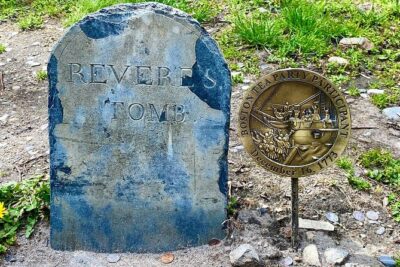 ★ 5.0The Full Revolutionary Story Epic Small Group Boston Walking TourFrom $552,356 reviews
 ★ 5.0Salem Voodoo, Vampires, and Ghosts Guided Walking Tour1,931 reviews
 ★ 5.0Bewitched Walking Tour of SalemFrom $351,895 reviews
Also filed under