
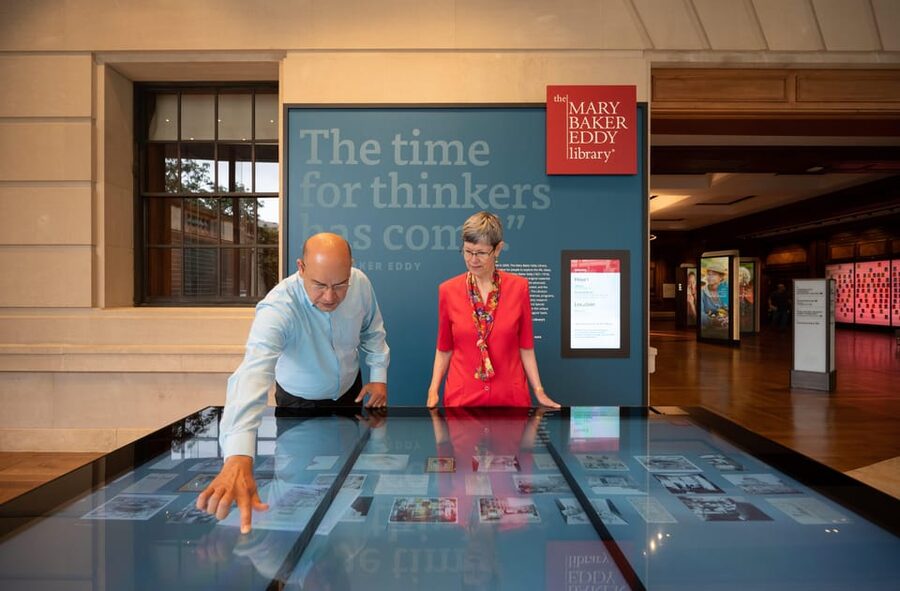
REVIEW · BOSTON MUSEUM AND ATTRACTION TICKETS
Boston: Mapparium® globe + How Do You See the World?™
A globe you can actually walk inside. I love the three-story stained glass Mapparium globe and the way it gives you a literal inside view of the world frozen in 1935. I also like the state-of-the-art multimedia exhibits that turn global history into something you can move through, not just read about.
The main thing to plan for is timing. The Mapparium globe is timed entry, so if you show up late, you may have to wait for the next slot. Also note the rules, no food and drinks, which matters if you are lingering with the extra exhibits.
Key takeaways before you go

- Step into the Mapparium globe and get the rare feeling of standing at the center of a world map
- Timed ticket only for the globe, while the rest is free and no timed entry is needed
- A 1935 time capsule, with exhibits built around what changed afterward
- Focus on progress with a human lens, including human rights, science, and exploration
- Mary Baker Eddy and The Christian Science Monitor context add meaning beyond the visuals
- Good value at $6, because more of the experience is free once you are inside
Other tickets worth buying ahead
Entering the Mapparium globe in 1935, inside Boston’s three-story stained glass world
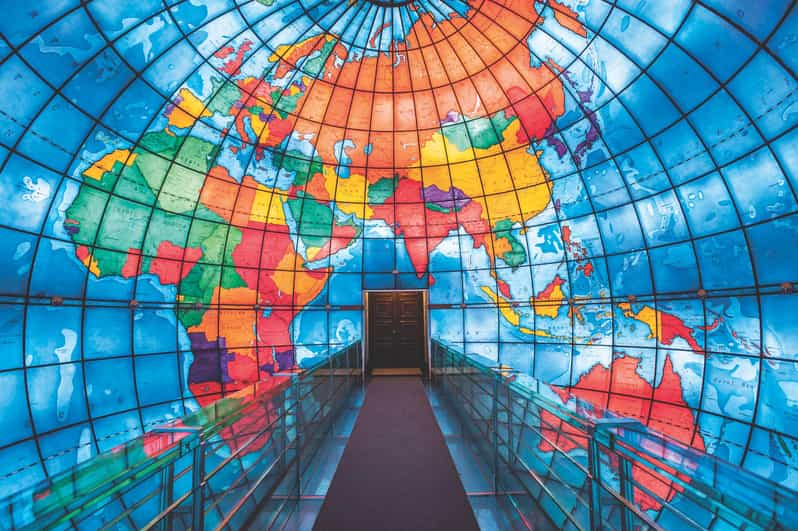
If you like maps, design, or the way old ideas shaped how people viewed the planet, this starts fast. You are not looking at a globe behind glass. You are walking inside the three-story stained glass Mapparium globe, which is frozen in the year 1935. The effect is part museum, part planetarium, part architecture lesson, and it is genuinely memorable because you get height and scale as you move through it.
The globe is the centerpiece of the How Do You See the World?™ experience. What makes it work is the storytelling setup. Instead of sending you around a room with panels, you experience narration from within the globe itself. That matters, because it changes how you read the world. You stop thinking in terms of modern borders and start thinking about how people in the 1930s might have grouped oceans, countries, routes, and regions.
It is also a smart idea for Boston visitors because it connects local sightseeing to world thinking. You are in Massachusetts, but the globe pulls you into a different mental century, one before World War II. That gives the rest of the exhibits extra weight, since you can later compare what the world became.
Practical note: aim for the time on your ticket and give yourself a little buffer. The Mapparium portion is timed, and you want your best viewing moments, not a sprint.
How Our World: Mapping Progress reframes the story since 1935
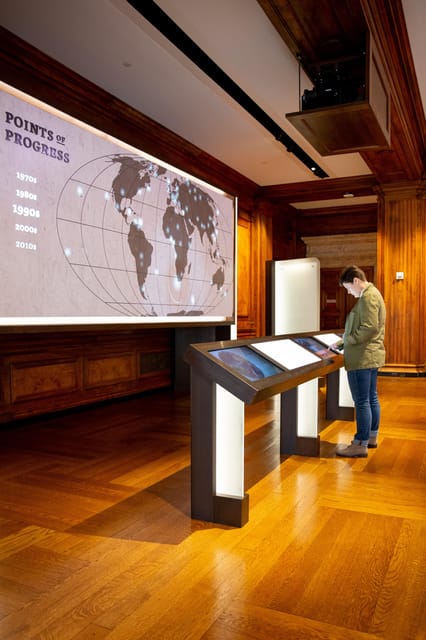
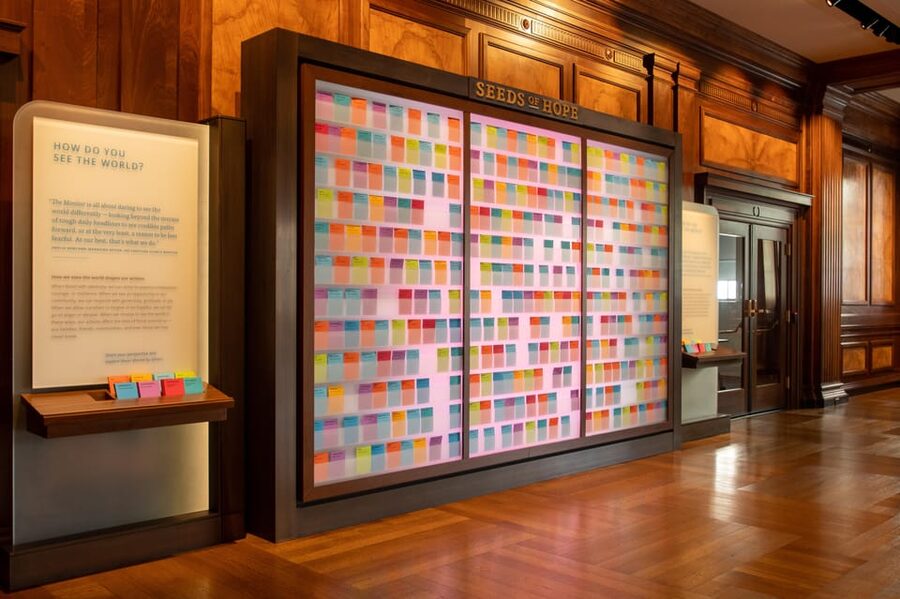
Once you come out of the globe, the exhibition shifts gears. The next area, Our World: Mapping Progress, is built around the idea of measuring change from 1935 forward. This is not about cold statistics. It is about progress, and it tries to land on hope for the future.
What I like about this part is how it keeps you moving from the past into the present without drowning you in details. After you have just stood inside a 1935 worldview, it is satisfying to see how the exhibit treats the decades that followed. You get the sense that progress is happening in many directions at once, not just one headline category.
You will also notice the emotional structure of the exhibit. It is designed to make you think: What did humans learn, invent, organize, and protect after that earlier snapshot of the world? The exhibit framing supports that kind of reflection, especially if you tend to travel with curiosity rather than checklists.
If you are the type who loves a clear theme, this section delivers one. It helps you connect the Mapparium’s time capsule to a bigger question: what counts as advancement, and who benefits?
Points of Progress: human rights, science, exploration, and the post-war lens
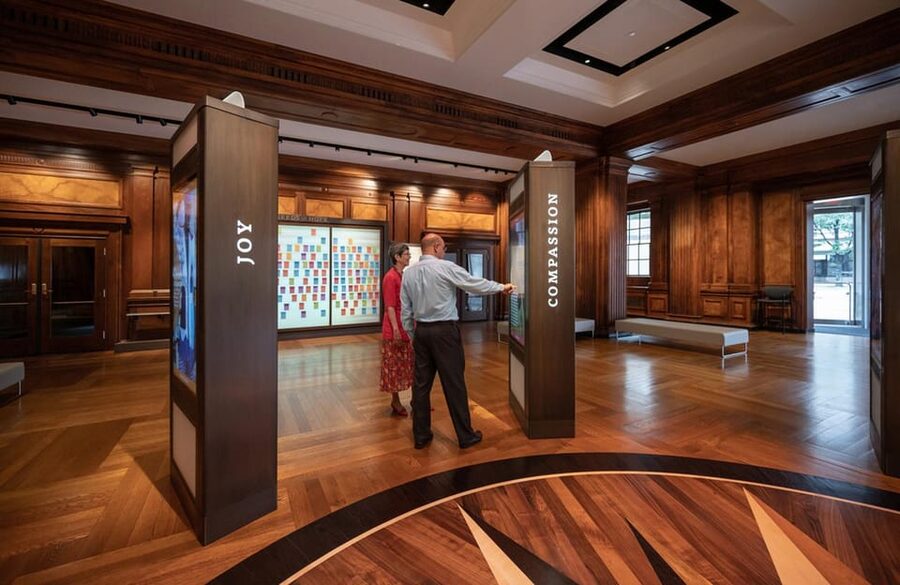
After Mapping Progress, you move into Points of Progress. This one is more dynamic in topic and tone. It highlights pivotal moments in areas like human rights, scientific breakthroughs, and exploration, spanning the post-war era.
This section is a good match for the Mapparium effect. The globe gives you a snapshot of how the world was seen in 1935. Then Points of Progress acts like a response to that snapshot, showing how the post-war period reshaped thinking about rights, knowledge, and global reach.
The exhibit’s strength is the range of categories. Science and exploration are not treated as isolated wins, and human rights are not treated as a side note. By placing them together, the exhibition nudges you to see progress as interconnected.
If you are short on time, you still get enough variety here to feel you covered meaningful ground. If you have extra energy, you can slow down and read more carefully, because the topics are distinct and each one gives you a different angle on the same overarching theme.
Christian Science Monitor interactive stories, and why Mary Baker Eddy matters here
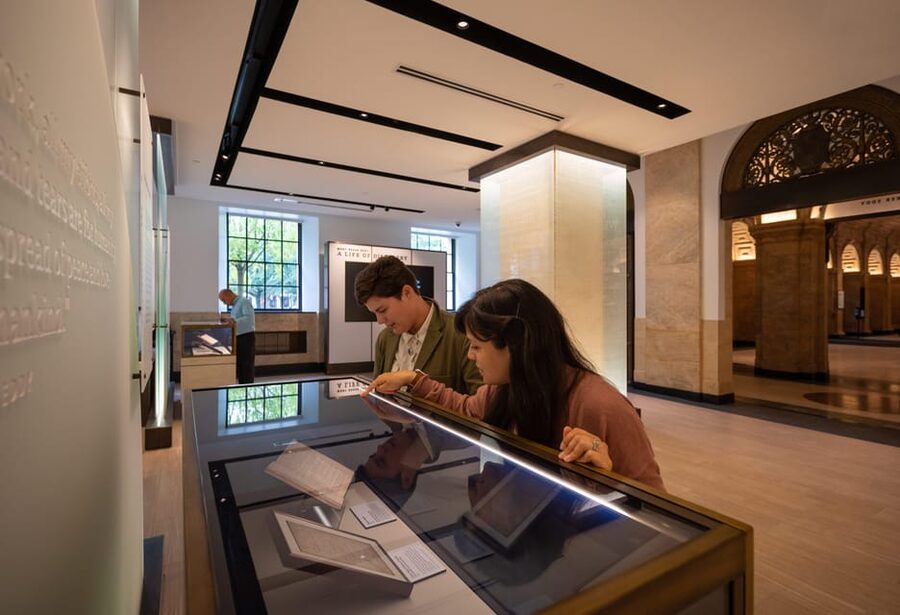
One of the more interesting moves in this experience is that it does not stop at technology and history. It adds a communication and values layer through The Christian Science Monitor and its founder.
Inside, you will find exhibits like Christian Science and Mary Baker Eddy and The Mary Baker Eddy Library and Exhibit. These sections help you connect the museum story to a person: Mary Baker Eddy. You learn about her role as the founder of the Monitor and the Christian Science church.
You also get to the Monitor itself: founded in 1908, Pulitzer Prize-winning, and driven by a mission to injure no man, but to bless all mankind. The exhibit frames the Monitor as a source of global reporting, with daily and weekly editions that focus on resilience and progress.
Then there is the interactive side. You are guided through eight sets of interactive stories that focus on individuals shaping their communities worldwide through the Monitor’s lens. That is a key detail for your expectations. This is not purely a guided exhibit where you passively watch screens. It is built so you can interact, pick up different stories, and see how the concept of progress can be grounded in real people rather than just events.
This part is also where the experience becomes more personal, even if you are not coming from a faith background. Learning about Eddy’s ideas and her ongoing interest in Bible relevance gives you context for why a news organization and a world-view shaped by those ideas would build a project like this.
One extra detail worth flagging from the experience culture: some visitors have mentioned being able to catch additional moments in the church setting, including the presence of a large organ. I would not plan your schedule around that, but if your timing lines up, it can add a memorable bonus.
More of Boston from the top of the list


The on-site flow in about 20 minutes, plus how to use your time smartly
Let’s talk timing because this is where the experience can feel either smooth or stressful.
The main timed piece is the Mapparium globe. The overall activity duration is listed as about 20 minutes, which tells you you are not signing up for a long museum crawl. The ticketing setup also reinforces that: the globe needs a timed entry, while the rest of the exhibits are always free and do not require a timed ticket.
So what is the best way to do it? My advice is to treat the globe as your anchor and use the free exhibits as flexible add-ons.
Here is a practical approach:
- Use your timed window to focus fully on the Mapparium. Let the narration and the three-story view do the work.
- After that, head straight to Our World: Mapping Progress so the 1935 to post-1935 storyline stays fresh.
- Then go to Points of Progress for the thematic highlights like human rights, science, and exploration.
- Finish with the Eddy and Monitor areas so you leave with meaning, not just visuals.
You will save time by not trying to read everything like it is a textbook. The exhibit format is designed to be accessible and time-aware. If you really love one theme, spend extra moments there. If you are here with a group, this pacing keeps everyone engaged without turning it into a slow slog.
Price and value: what $6 gets you, and why it feels fair
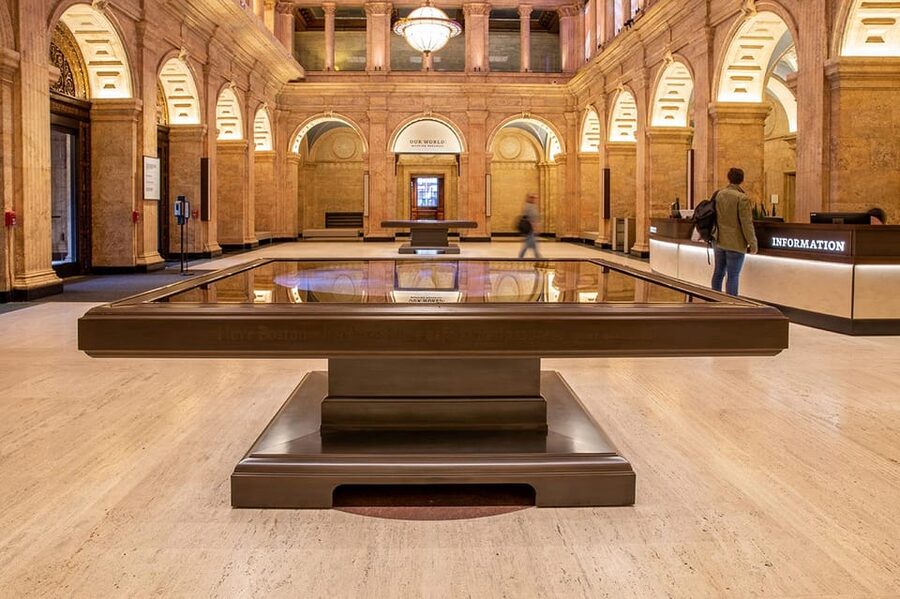
At $6 per person, this experience punches above its weight. The reason is not just cost. It is what is included in that price.
Your ticket includes:
- Timed entry for the Mapparium globe
- Entry to the How Do You See the World?™ experience area
- Entry to Christian Science and Mary Baker Eddy
- Entry to The Mary Baker Eddy Library and Exhibit
Then you also have the advantage that the rest of the exhibits are free and do not need timed booking. In plain terms, you pay for the globe and structured entry, and then you get more exhibit time without added ticket fees.
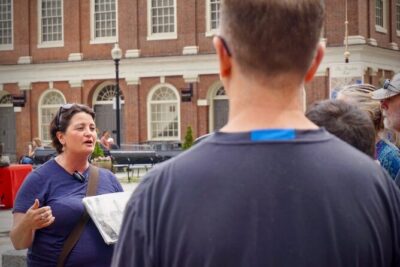
Is it the kind of museum day where you will spend hours? Not really. But for a compact, high-impact stop in Boston, it is strong value. It also works well when you are mixing sightseeing styles. You might be doing a classic history walk outside, then add this one as a “thinking-in-visuals” break.
If your goal is to squeeze in something unique without committing half a day, this is the right kind of priced experience.
Practical tips: meeting point, what not to bring, and who it suits best
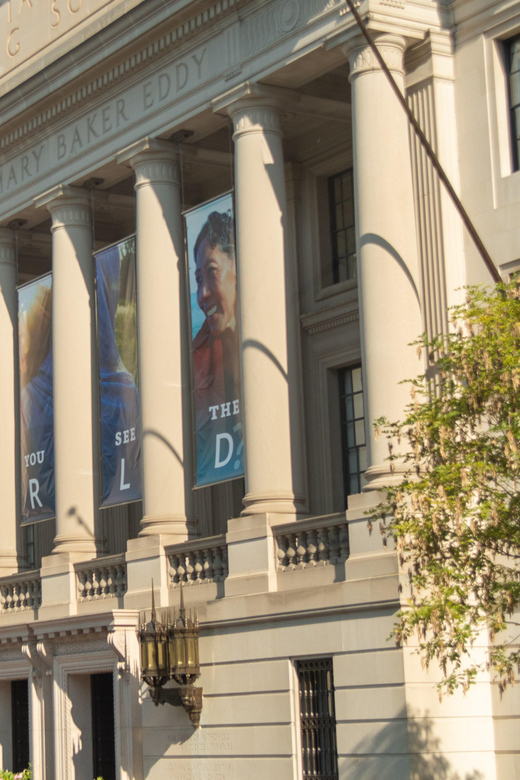
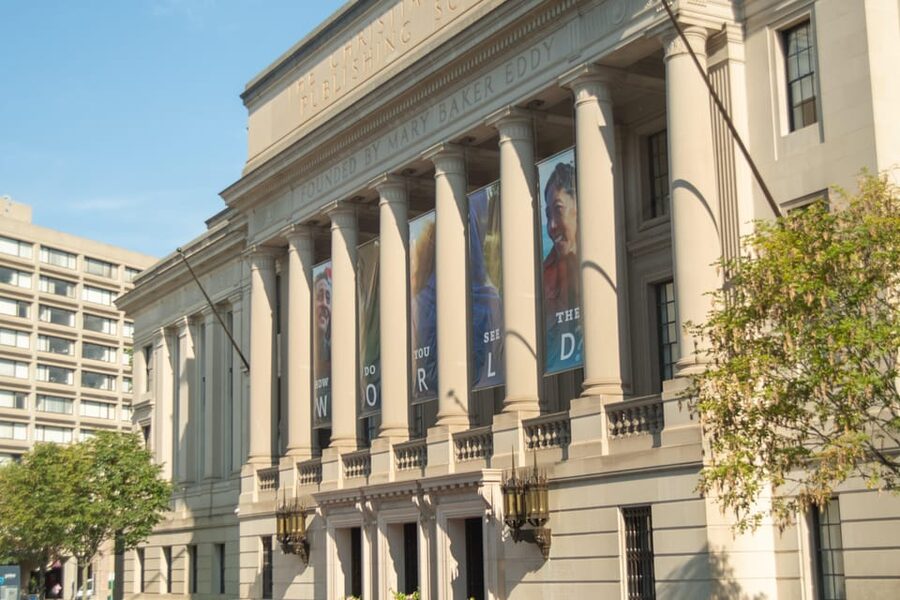
You will want to find the entrance area fast, because the best experience starts with low stress. The meeting point is marked by large banners that read How Do You See the World? on the building next to the church. If you are looking around and the banners are not obvious, check the building next door and scan for that signage.
A few other practical points:
- No food and drinks are allowed. Plan on a quick snack before you go in or after you finish.
- The experience is in English, since the host or greeter is English-speaking.
- It is wheelchair accessible, which is helpful for mobility needs and also for families with strollers.
Who will like it most:
- People who love world maps, geography, and visual design
- Visitors who enjoy short, structured museum stops
- Travelers who want a fresh angle on history, not another postcard view
Who might find it less satisfying:
- If you are looking for a long-form, deep scholarly museum session where you can spend hours reading, this is probably too short. The best use is as a focused stop with a strong “wow” moment.
Should you book How Do You See the World and the Mapparium globe?
If you want a memorable Boston stop that is compact, visual, and genuinely different from the usual sightseeing, I think it is worth booking. The Mapparium globe is the headline for a reason: standing inside a stained glass world frozen in 1935 is a rare experience, and the narration setup makes it more than a photo opportunity. Then the free exhibits extend your visit with Mapping Progress and Points of Progress, so you leave with a story about how the world changed after that snapshot.
If you hate timed entry, then plan around it. Otherwise, treat the timed globe as the fixed point and enjoy the rest at your pace.
My bottom line: book it if you like world history in a visually guided format, and you can handle a short, timed museum moment. Skip it only if you need a long, reading-heavy experience or you are traveling with a schedule that cannot flex for the timed window.
FAQ
How long is the Mapparium globe and How Do You See the World experience?
The experience duration is listed as 20 minutes.
How much does it cost?
The price is $6 per person.
Where do I meet for the experience?
Look for the large banners that read How Do You See the World? on the building next to the church.
Do I need a timed ticket for the Mapparium globe?
Yes. The Mapparium globe is a timed, ticketed exhibit, and the timed entry ticket is included.
Do I need timed tickets for the other exhibits?
No. The other exhibits are free and do not require a timed ticket.
Is the experience wheelchair accessible?
Yes, it is wheelchair accessible.
Are food and drinks allowed inside?
No, food and drinks are not allowed.
More Tour Reviews in Boston






Keep Going in Boston

More Tickets Worth Buying


More around Boston, freshly written up
- The Boston Bash Scavenger Hunt★ 4.5 · 3 reviews
- Self-Guided Audio Tour of Boston North End★ 4.5 · 3 reviews
- Self-Guided Boston Christmas Tour★ 5.0 · 3 reviews
- Self Guided “The North End Pizza, Cannoli and Picnic” Solo Walking Tour★ 5.0 · 3 reviews
- Cambridge: Haunted Charles River Cruise★ 4.3 · 3 reviews
- Boston: Official Freedom Trail® Lantern Tour★ 4.7 · 3 reviews
Boston Museum and Attraction Tickets, compared.
 ★ 4.7View Boston Observation Deck Entry TicketFrom $341,451 reviews
 ★ 4.5New England Aquarium Entry + Optional Simons TheatreFrom $39746 reviews
 ★ 4.0New England Aquarium Admission Ticket in Boston446 reviews
 ★ 4.3Franklin Park Zoo Entry TicketFrom $24430 reviews
 ★ 3.9Salem Witch Museum Admission TicketFrom $18417 reviews
 ★ 4.0Boston Pass: 40+ Things To Do – Includes Franklin Park ZooFrom $79359 reviews
 ★ 4.5View Boston Observation Deck Admission TicketsFrom $34314 reviews
 ★ 4.1Boston Pass: Save up to 50% – Includes Franklin Park ZooFrom $79304 reviews
Also filed under