

REVIEW · BOSTON MUSEUM AND ATTRACTION TICKETS
Boston: Children’s Museum Entry Ticket
One great rainy-day plan for families in Boston: the Boston Children’s Museum. I love how the exhibits are made for hands-on play and how the museum hits multiple interests, from movement and fitness to building and culture. If you want two standouts fast, start with the three-story climbing structure and then head to the Japanese House.
One thing to consider: this is a children-and-families place. Everyone over 1 needs a ticket, and kids 15 and under must stay with an adult 16+ (adults unaccompanied have an ID requirement at Admissions).
Key things to know before you go

- Three-story climbing structure: a big, physical activity that helps kids burn off energy without leaving the building.
- Construction Zone: hands-on building and making, perfect when you need screen-free time that still feels exciting.
- Japanese House: a 100-year-old house that adds cultural learning to the play mix.
- Kid Power: interactive health and fitness activities that make movement feel like play.
- PlaySpace + STEAM Lab: toddler-friendly play and science-style experimentation in the same day.
- Rotating exhibits: you can catch something new, so repeat visits can still feel fresh.
Other tickets worth buying ahead
Boston Children’s Museum Entry: what 1 day feels like

If you’re planning a family day in Boston, this museum works because it doesn’t force you into a rigid agenda. You get entry for 1 day, and you can flow with your kids’ energy. Some days you’ll chase movement. Other days you’ll slow down at building stations, art, puzzles, and imaginative play.
I like that the museum is built around the idea that learning happens through doing. You’ll see interactive exhibits and programs that encourage kids to touch, test, and try. It’s not a place where kids have to sit politely for long stretches. Even the “lesson” parts are wrapped in activities that feel like games.
You should also know the ticket and age structure is clearly set up for family logistics. Everyone after their first birthday needs a ticket, infants under 1 are free, and the museum requires kids 15 and under to be accompanied by an adult 16+. That means you can plan with fewer worries about whether adults are expected to hover, supervise, and keep things moving.
The ticket value: $28 worth it for families
At $28 per person, it’s not a “cheap and cheerful” activity, so you want your day to be full. The good news is this museum is designed for a full indoor day. With rotating exhibits plus several anchor spaces, one ticket can cover a lot of ground.
Here’s how I think about the value: you’re paying for a menu of different types of play in one roof. There’s climbing for the active kids, construction for the builders, cultural learning for the curious, and science-style experimentation for the mini tinkerers. If your child only likes one kind of activity, you might feel the price more. If your kid likes exploring broadly, it’s easier to feel like you got your money’s worth.
Also consider the practical side. You’re staying indoors, and that matters when Boston weather turns. One confirmed experience notes a rainy Sunday where a school buddy and a son had a great time staying inside all day. That’s exactly what this museum is good at: filling hours without scrambling for a new plan every time the weather changes.
Start strong: using the three-story climb early
The first big “wow” stop is the museum’s iconic three-story climbing structure. It’s the kind of feature kids remember because it feels like an adventure. And as a parent, it’s useful because it gives them a structured way to move their bodies.
Going earlier in your day tends to work better. Climbing attractions are high-demand spaces, and kids often want to do the biggest thing first, then settle into calmer exhibits. If you hit it after lunch, you may spend time re-negotiating energy levels instead of letting the day run.
A climb also helps kids transition. Once they’ve done something active, they’re more likely to enjoy exhibits like hands-on building, art, or puzzle stations later. If your group includes a mix of ages, the climb can act like a shared starting point that everyone understands, then you can split up your choices a bit.
Kid Power: turning fitness into interactive play
Next on many family paths is Kid Power, an exhibit focused on health and fitness through interactive activities. What I like about this is that it doesn’t feel like a lecture. It’s activity-first, so kids engage because it’s fun, not because they’re being taught to behave a certain way.
This section is a smart choice when you want movement that still stays within museum boundaries. If your child tends to get restless in indoor spaces, Kid Power can be a good “energy channel.” It’s also helpful if you’re trying to balance the climbing structure with other motion-friendly experiences.
From a practical planning angle, I’d treat Kid Power as one of your mid-morning or pre-lunch anchors. It breaks up the day and helps prevent that late-day slump where kids drift toward the only thing that still holds their attention.
More of Boston from the top of the list



Construction Zone: building, creating, and problem-solving
When kids are in their builder mode, the Construction Zone is the place to go. This is hands-on making space where families build and create together. It’s the sort of area where imagination becomes a physical activity, and problem-solving happens naturally because kids are working through how things fit, balance, and come together.
There’s value here beyond just keeping hands busy. Building areas often support different learning styles. One child may love figuring out how parts connect. Another may prefer creating something freely and adjusting as they go. Either way, the outcome is that kids feel ownership of what they made.
A practical tip: expect some mess, but also expect satisfaction. The best time to visit is when you have enough time for repeat attempts. With building spaces, kids rarely want a quick one-and-done. They want to try again, improve, and show you what they made.
Japanese House: culture learning inside a real 100-year-old home

If your family likes culture learning that doesn’t feel forced, don’t skip the Japanese House. It’s described as an authentic 100-year-old house, offering a glimpse into Japanese culture and traditions.
What makes this valuable for a family day is that it adds contrast. After active climbing and construction, a cultural exhibit can feel calmer, more grounded, and more “story-like.” It also gives you something to talk about, not just something to do.
Since the museum is designed for children and families, the experience likely stays age-friendly, with the house functioning as a hands-on portal to ideas about daily life and tradition. Plan to spend enough time to let kids look closely. Even short pauses can turn into great conversations, especially if your child likes details.
Toddler time at PlaySpace, plus science fun in STEAM Lab
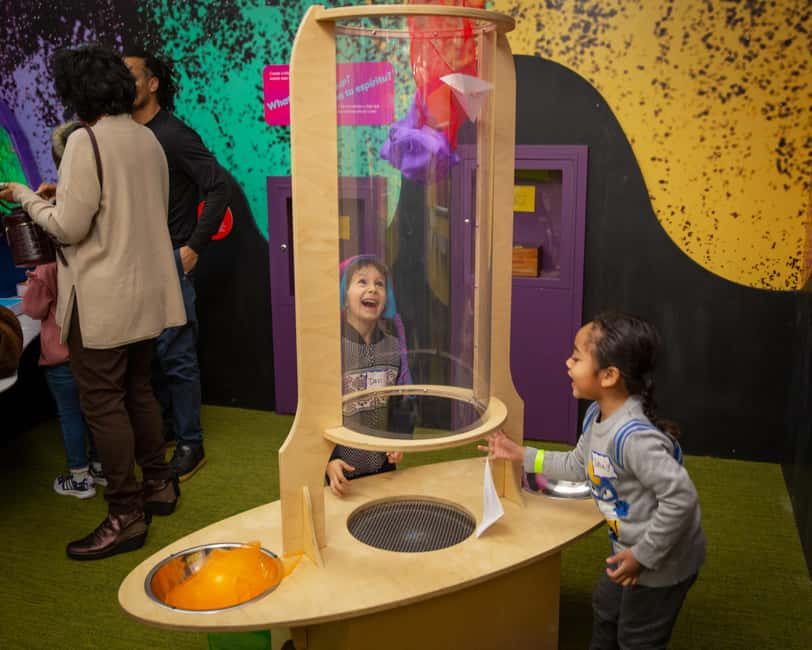
Families with younger kids have dedicated options, which makes the museum easier to manage. The PlaySpace is designed specifically for toddlers, so it’s a better fit than trying to force a toddler through areas built for older kids.
Then there’s STEAM Lab for kids who lean toward science and experimentation. If your child likes testing, observing, and tinkering, this can be a favorite stop. “STEAM” typically signals hands-on learning, and here it’s presented as an interactive opportunity to experiment.
I like that the museum doesn’t force one-size-fits-all. If you have a mixed-age group, you can give toddlers a safer, more appropriate play zone while older kids get their science and building fix. It also helps you reduce the tug-of-war that happens when everyone tries to do the same thing at the same intensity level.
Rotating exhibits: why your second visit can still work

A quiet advantage here is that the museum features rotating exhibits. That matters because it reduces the chance of a “been there, done that” feeling. Even if you plan a single trip, knowing there are rotating spaces helps you stay flexible once you’re onsite.
If your family comes back for a seasonal theme, rotating exhibits make it more likely something new is waiting. One verified note mentions returning for Halloween-themed programming later in the weekend. That’s a good example of how timing can turn a standard entry ticket into a different kind of day.
Practically, build in margin. Don’t cram your itinerary minute by minute. When something catches your child’s attention, follow it. Rotating exhibits are easiest to appreciate when you aren’t rushing.
What else fills the day besides the big anchors

The museum isn’t only about the headline spaces. Throughout your visit you can expect opportunities to create art, solve puzzles, and enjoy imaginative play. That “everything in one building” design is a huge help for families. It gives you fallback options when a child is tired, cranky, or suddenly obsessed with one small activity.
You’ll also find interactive exhibits and engaging programs for all ages. Even without a formal tour route, the museum’s layout encourages exploring. The goal is to keep kids engaged without requiring you to entertain them every minute.
If you want a simple way to structure your flow, use a three-part rhythm:
- One big active stop (climb or Kid Power)
- One hands-on making stop (Construction Zone)
- One calmer cultural or exploratory stop (Japanese House, STEAM Lab, or toddler-friendly zones)
Then repeat as needed based on your kids.
Rainy-day strategy: make indoors feel like an adventure
This is one of those places that shines when the weather turns. If Boston weather is doing its usual switch, you’ll appreciate having a full indoor option that can hold a child’s attention for hours.
The experience reads like a natural fit for indoor family time. Since there’s plenty to do at different energy levels, you don’t need to keep moving to stay entertained. You can follow what kids like that day, and the museum gives you enough variety that you’re not stuck with one single exhibit.
That rainy-Sunday success is real in spirit, even if your child doesn’t have a school buddy. Kids tend to adapt fast when the activities are this hands-on. After an initial adjustment, it often becomes a calm day of play rather than a frantic attempt to beat cabin fever.
Rules and practical boundaries you’ll want to know
To avoid surprises at the door, know what isn’t allowed. The museum does not allow weapons or sharp objects, smoking, vaping, or alcohol and drugs. If you’re packing bags for your day, keep it simple and leave anything questionable at home.
Also keep the ticket rules in mind:
- Everyone after their first birthday needs a ticket
- Infants under 1 are free
- All children 15 and under must be accompanied by an adult 16+
- Adults unaccompanied by children need to leave a government-issued photo ID at the Admissions Desk under the unaccompanied adult policy
Finally, the museum is wheelchair accessible, and English is the language supported by the host or greeter. That’s useful if you’re planning a day with family members who need assistance navigating indoor spaces.
How long to plan: making 1 day feel like enough
Since the ticket is valid for 1 day, and you’re asked to check availability to see starting times, I’d treat the plan as flexible rather than exact. Arrive with the expectation that you’ll spend a good chunk of time in the main activity zones, then fill the remaining hours with whichever exhibits keep attention.
A common mistake is trying to “check everything off” like a checklist. With kids, it’s better to aim for top priorities plus a couple of alternates. This museum gives you alternates naturally through art, puzzles, imaginative play, and rotating exhibits.
If you have a mixed group, plan for slower transitions. Toddlers may need more frequent breaks, and older kids may want to revisit their favorite spot multiple times. That’s normal. The museum format supports it.
Should you book the Boston Children’s Museum entry ticket?
Book it if:
- You want a full indoor family day with hands-on exhibits and multiple activity types.
- Your kids like movement, making/building, science-style experiments, or cultural experiences.
- You need something that works well when Boston weather is unpredictable.
- You’re traveling with toddlers or mixed ages, since PlaySpace and other zones are designed for family needs.
Skip or reconsider if:
- Your child only likes one narrow type of activity, because the $28 per person price works best when you use a lot of the variety.
- You’re looking for mostly quiet, adult-focused sightseeing. This is family-oriented, child-driven play and learning.
If you’re making a short visit to Boston and want one ticket that can handle a wide range of moods, this is a strong pick. Start with the big climb, add Construction Zone and Kid Power, then sprinkle in Japanese House and whatever rotating exhibit pulls you in that day. That blend is what makes the museum feel worth your time.
FAQ
How much is the Boston Children’s Museum entry ticket?
The price is listed as $28 per person.
How long is the experience valid?
Your entry is valid for 1 day.
Are there starting times I need to consider?
The ticket is valid for 1 day, and you should check availability to see starting times.
What is included with the ticket?
The ticket includes entry to the museum.
Do kids need tickets if they are under a certain age?
Everyone after their first birthday requires a ticket. Infants under 1 are free.
Do children need to be with an adult?
Yes. All children ages 15 and under must be accompanied by an adult age 16+.
Are there any rules about unaccompanied adults?
Adults unaccompanied by children must leave a government-issued photo ID at the Admissions Desk under the museum’s unaccompanied adult policy.
Is the museum wheelchair accessible?
Yes, the museum is wheelchair accessible.
What items are not allowed inside?
Weapons or sharp objects are not allowed, and the museum also bans smoking, vaping, alcohol, and drugs.
Is there a cancellation policy?
Free cancellation is available up to 24 hours in advance for a full refund.
More Tour Reviews in Boston






Keep Going in Boston

More Tickets Worth Buying


More around Boston, freshly written up
- The Boston Bash Scavenger Hunt★ 4.5 · 3 reviews
- Self-Guided Audio Tour of Boston North End★ 4.5 · 3 reviews
- Self-Guided Boston Christmas Tour★ 5.0 · 3 reviews
- Self Guided “The North End Pizza, Cannoli and Picnic” Solo Walking Tour★ 5.0 · 3 reviews
- Cambridge: Haunted Charles River Cruise★ 4.3 · 3 reviews
- Boston: Official Freedom Trail® Lantern Tour★ 4.7 · 3 reviews
Boston Museum and Attraction Tickets, compared.
 ★ 4.7View Boston Observation Deck Entry TicketFrom $341,451 reviews
 ★ 4.5New England Aquarium Entry + Optional Simons TheatreFrom $39746 reviews
 ★ 4.0New England Aquarium Admission Ticket in Boston446 reviews
 ★ 4.3Franklin Park Zoo Entry TicketFrom $24430 reviews
 ★ 3.9Salem Witch Museum Admission TicketFrom $18417 reviews
 ★ 4.0Boston Pass: 40+ Things To Do – Includes Franklin Park ZooFrom $79359 reviews
 ★ 4.5View Boston Observation Deck Admission TicketsFrom $34314 reviews
 ★ 4.1Boston Pass: Save up to 50% – Includes Franklin Park ZooFrom $79304 reviews
Also filed under