The Full Revolutionary Story Epic Small Group Boston Walking Tour

REVIEW · REVOLUTIONARY BOSTON HISTORY TOURS

The Full Revolutionary Story Epic Small Group Boston Walking Tour

5.0 · 2,356 reviews 3 hours to 3 hours 30 minutes (approx.) From $55 Operated by The Revolutionary Story Tour · Bookable on Viator
Book on Viator →

Boston history has a better way to feel.

This tour threads the American Revolution through Boston with story-first guiding, not a simple check-the-sites walk. I like that you follow the Revolution in chronological order, then step off the Freedom Trail to see the streets and buildings that explain the tensions, the politics, and the people. One thing to consider: it is a lot of outdoor walking, so if you struggle with distance or bad weather, you’ll feel it.

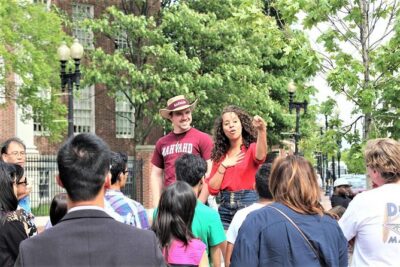
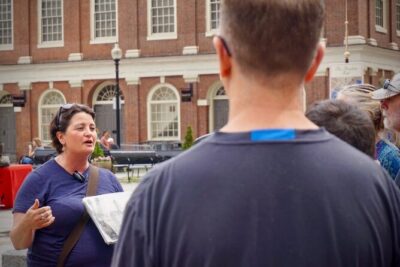
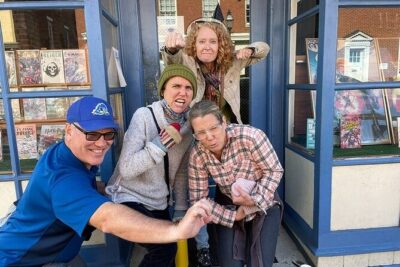
You also get small-group attention, capped at 15, which makes a difference when you want to ask questions and when the guide is using hands-on teaching tools. Guides such as Tyler, Mike, Chris, and Tom are named in recent feedback, and the common theme is energy plus clear storytelling. You’ll finish in the North End with waterfront views and a surprise tea moment, so the tour ends on a real sense of place, not just another landmark photo.

Key highlights that make this tour worth your time

The Full Revolutionary Story Epic Small Group Boston Walking Tour - Key highlights that make this tour worth your time

  • Freedom Trail, but in the order events unfolded, so the Revolution story clicks into place
  • Small group size (max 15), which makes the experience feel personal rather than crowded
  • You stray off the Freedom Trail to cover key church, meeting, and civic spots tied to the push for independence
  • Modern Boston stays in the frame, with stops in downtown squares and public spaces
  • Interactive teaching with props, including examples like Lego-style visuals used for events such as Bunker Hill
  • A North End waterfront finish, with a surprise tea on the harbor walk and restaurant guidance for afterward

Starting at City Hall Plaza and lining up the Revolution story

You begin at City Hall Plaza, one of those convenient places where everything is close and the views help you orient fast. It sits across from Faneuil Hall with that big Boston sign nearby, and the guide meets you between Five Iron Golf and City Hall, in front of the seasonal beer garden. It is an easy start, and it also gives you a quick “where am I?” moment before you head into the older Boston.

Before you hit the first historical stops, the guide sets up the big idea: most walking tours march from point A to point B. This one walks the Revolution as a sequence of cause and effect. That matters because Boston’s path to independence was not one dramatic day. It was a chain of sermons, protests, debates, and escalating tensions, all happening in visible locations.

From there, you move to Boston City Hall, a stop that is brief but useful. You’re not visiting it as a Revolutionary site, you’re using it as a modern anchor. You’ll get the contrast right away: the city that governs today stands just steps from the buildings that argued about who should govern then.

King’s Chapel Burying Ground, Brimstone Corner, and the early settlers

The Full Revolutionary Story Epic Small Group Boston Walking Tour - Kings Chapel Burying Ground, Brimstone Corner, and the early settlers
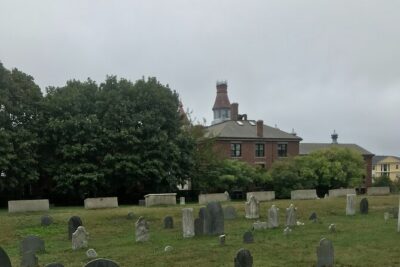
Next comes King’s Chapel Burying Ground, where you shift from politics to people. This is where you hear about the first settlers in Massachusetts Bay, and you’ll get the point that the Puritans were more complicated than the simple textbook label. The tone here is “why did they live like this,” and “how did beliefs shape community rules,” not just “who is buried here.”

A short walk later, you pass the First Anglican Church in Boston. Even without lingering long, this is a key reminder that early colonial Boston had religious friction and competing identities. Then you reach Brimstone Corner, famous for fiery sermons. One of the standout details you’ll hear here is that July 4, 1829, William Lloyd Garrison delivered his first public address against slavery at this spot. That connects the Revolutionary era to the later fight over human rights in American history.

These stops might feel “off to the side” compared to the Freedom Trail landmarks, but that is the point. If you only follow the red-brick path, you can miss how ideas traveled. Religion, reform, public speech, and protest all fed the Revolutionary mindset in Boston.

Granary Burying Ground and the Sons of Liberty, under your feet

The Full Revolutionary Story Epic Small Group Boston Walking Tour - Granary Burying Ground and the Sons of Liberty, under your feet
Granary Burying Ground is where the tour leans into the Revolution’s personalities. You visit the tombs of Paul Revere, John Hancock, and Sam Adams, and the guide uses this setting to explain who the Sons of Liberty really were and what they did. The key value here is that you’re not just learning names. You’re tying actions to locations.

Then the tour keeps building the civic debate theme with Old City Hall. This stop is short, but it is framed around the obstacles and built-in challenges of democracy. I like this approach because it turns Boston into a living classroom. The city is not just a backdrop. It is where arguments happened, and the buildings still communicate how those arguments looked.

A quick statue stop follows next, Benjamin Franklin. You’ll learn about America’s first public school and also about Franklin as the famous student as well as the big thinker. It’s a reminder that Revolution did not only mean confrontation. It also meant building institutions, systems, and ideas about education.

Old State House, the Boston Massacre site, and how tensions escalated

The Full Revolutionary Story Epic Small Group Boston Walking Tour - Old State House, the Boston Massacre site, and how tensions escalated
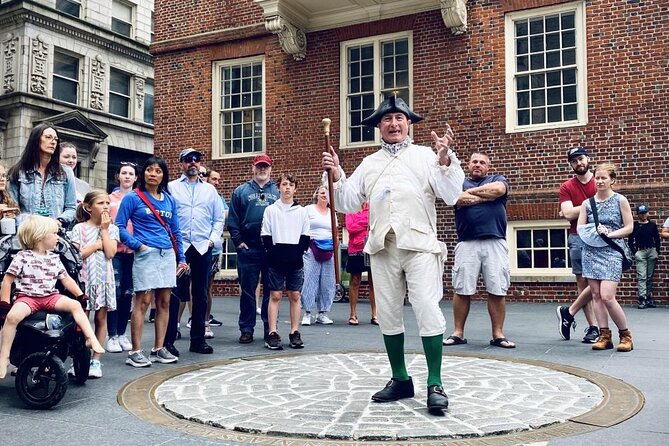
Old State House is one of the most important Revolutionary-era buildings in the U.S. The guide points out it is the oldest public building in the country and the nerve center of Massachusetts politics. You’ll hear why this mattered: the big debate over British authority versus American rights played out in these rooms, not in theory.

From there, you go to the Boston Massacre site. This is where the story becomes messy in a useful way. You are not only told about the patriot side. You hear how soldiers, citizens, loyalists, and patriot leaders were pulled into the tense explosion of conflict. That shift helps you understand why the Revolution gained momentum. It was not one clean narrative. It was a powder keg.

The tour also passes through the area tied to the former publishing house associated with major American literary figures, including Ralph Waldo Emerson, Henry Wadsworth Longfellow, and Nathanial Hawthorne. That is another smart “context” moment. It shows how Boston culture matured right alongside political change, and how ideas spread through print long after the first arguments for independence began.

Old South Meeting House, the road to protest, and downtown that still matters

The Full Revolutionary Story Epic Small Group Boston Walking Tour - Old South Meeting House, the road to protest, and downtown that still matters
Old South Meeting House is where the lead-up becomes hard to ignore. This is where the Boston Tea Party starts, and the guide frames it as a point of no return. You’ll hear how people moved from anger to organized action, and how events in a single meeting house could trigger national consequences.

Then you move through downtown squares and civic spaces that are easy to walk past on your own. Post Office Square is one of them, and the guide’s message here is practical: the road to revolution ran right through the heart of downtown Boston, and modern Boston grew up all around that historic foundation. Instead of cutting away to quieter streets, the tour keeps you in the real city.

Next comes the Financial District, with a focus on education, healthcare, and finance. It is a short stop, but it helps you connect the Revolutionary story to what Boston became after independence. The guide uses this to show continuity, even when the buildings and jobs change.

Faneuil Hall Marketplace follows, and you’ll hear why it earned the nickname Cradle of Liberty. It is where protest becomes revolution, in a very literal sense. From there, you continue to Quincy Market. You are warned that tourist traps exist here, and that warning is fair. The value is not shopping. The value is location and time. It’s a good moment to regroup, especially because the tour builds a rhythm, not a sprint.

Rose Fitzgerald Kennedy Greenway, the Paul Revere House area, and the Revolution on residential streets

The Full Revolutionary Story Epic Small Group Boston Walking Tour - Rose Fitzgerald Kennedy Greenway, the Paul Revere House area, and the Revolution on residential streets
After the downtown action, the tour turns to public space with Rose Fitzgerald Kennedy Greenway. This is one of the easiest ways to appreciate Boston’s modern urban planning while still staying tied to the Revolution story. You get a stretch of green running along the length of the city, and it works as a calm reset between the heavier political stops.

Then you reach the Paul Revere House. The guide points out that the man is more impressive than the legend, and you’re also in the oldest and most charming square in the city. Nearby, the Rose Kennedy Greenway shift to the North Square Park area keeps the tour moving through different kinds of Boston neighborhoods, not just the busiest tourist zones.

North Square Park is next, described as the oldest residential square in America. This is where the tour becomes more intimate again. You are not looking at a battlefield. You are looking at where daily life lived. That helps you imagine the Revolution as something happening in real neighborhoods, not distant history.

A Paul Revere statue stop follows. This one is partly practical and partly iconic. You get a photo moment, then you get context so the image means something.

Old North Church, Lexington and Concord energy, and the Charlestown views

The Full Revolutionary Story Epic Small Group Boston Walking Tour - Old North Church, Lexington and Concord energy, and the Charlestown views
Old North Church and Historic Site is one of the emotional high points of the whole walk. You hear One if by land, two if by sea as the guide connects the story of Revere’s midnight ride to the iconic steeple. Then the tour expands the frame to the shot heard round the world and the chaos leading toward Lexington and Concord.

After that, you reach a second oldest burial ground in Boston area. The tour keeps it outside rather than entering, but you get spectacular views of Charlestown and Boston Harbor from a terrace across the street. I love stops like this because the guide uses the city view to make a point. You see how geography mattered in movement, signals, and strategy.

Then you go to Bunker Hill Monument. This is where the teaching tools often earn a smile. In recent feedback, guides used a Lego soldier style visual to recreate aspects of the battle of Bunker Hill, and that kind of prop fits the moment perfectly. The guide frames it as a complete recreation of the battle of Bunker Hill, described as the biggest battle of the American Revolution. Even if you know the basics, the emphasis here is on how hard the fight was and how it shaped confidence on both sides.

USS Constitution views, then North End food culture and the harbor finale

The Full Revolutionary Story Epic Small Group Boston Walking Tour - USS Constitution views, then North End food culture and the harbor finale
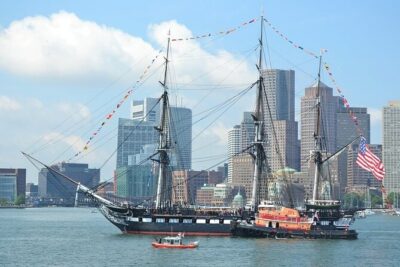
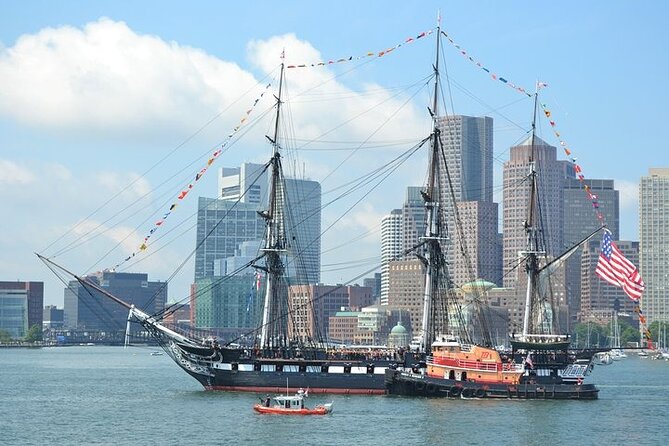
After Bunker Hill, the tour shifts across the waterfront story to the USS Constitution area. You see the oldest commissioned naval vessel in the world, often called Old Ironsides, from the other side of Boston Harbor. The guide explains it was undefeated in battle, and also notes it was not part of the American Revolution. Still, it adds a maritime angle and gives you a better sense of why Boston’s water mattered to its power and identity.

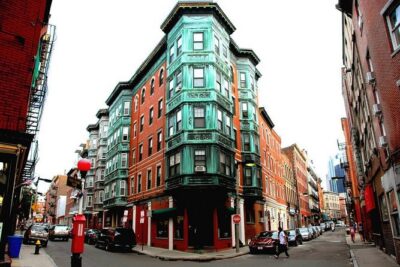
Then you enter North End, described as the oldest residential neighborhood in America. This is where the tour turns from “event history” into “living culture.” You’ll hear what people eat, what streets feel like, and what makes this neighborhood famous: Italian food, seafood, pizza, cannoli. The guide also uses the neighborhood to remind you that history is not just buildings. It is also habits, traditions, and community.

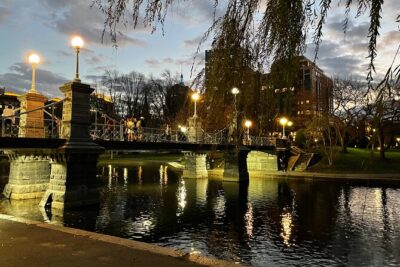
Next comes Boston Harbor with a stroll along the Harbor Walk. This is a practical payoff because you finally get the open-air views that earlier stops only hinted at. It is also framed as the final push to kick the British out of Boston.

The harbor walk continues for a longer stretch, giving you chances to look back at the skyline and enjoy ocean air. Then you finish at Lewis Wharf in the heart of Little Italy. The end point is convenient: public restrooms, a parking lot, and nearby transit. It also puts you within a short walk of food options, which matters because three to three and a half hours builds an appetite.

A special included touch is a surprise tea party moment on Boston Harbor. It’s not just a cute finish. It’s a gentle way to slow down and reflect on what you learned while you’re in the right setting, water views and all.

Price and value, why $55 can feel like a bargain

At $55 per person for about 3 to 3.5 hours, the biggest value isn’t the “many stops” headline. It is the way the guide connects the stops into a coherent story. You’re getting a small group capped at 15, which helps keep the guide focused on your group rather than talking into the air for a big crowd.

You also get a Freedom Trail masterclass style approach, where the guide teaches you how to read the trail as a sequence of events rather than a scenic walk. On top of that, the tour includes built-in entrance time for Faneuil Hall and Quincy Market, so you are not locked out of key indoor context.

In plain terms, $55 is a fair price for a professional guide plus multiple landmark stops plus real storytelling plus an end that includes the harbor setting. If you normally prefer self-guided wandering, this is still worth it because the guide’s job is to supply the missing links between the sites.

What I’d consider before booking

The biggest consideration is physical. This is a walking tour with moderate physical fitness recommended, and it stays outdoors for a long stretch. If you’re heat sensitive, weather sensitive, or have mobility limits, you’ll want to plan carefully.

Second, if you want costumes and full reenactments, this isn’t that. The tour is described as scholars teaching you to understand what happened, not putting on a show with performers. That style can still be fun, especially with interactive props, but it is not theatre.

Finally, it is not a kids-only version. It is said to be appropriate for all ages, but children must be accompanied by an adult, and it is not branded as a kid-focused show. If you bring teenagers or inquisitive kids, they may thrive on the story and the interactive moments.

Who this tour suits best

This is a strong match if you want:

  • A Boston walking tour that teaches the Revolution in order, with cause and effect
  • A small group experience where you can ask questions and hear details, not just pass by plaques
  • A history lover who also cares about how Boston looks today, from Rose Kennedy Greenway to downtown squares to North End
  • Families with older kids who can handle a long walk and want real story content

If you only want a short hit of the Freedom Trail without much explanation, you might prefer something shorter. But if you want Boston to make sense as a city shaped by argument and action, this walk is built for that.

Should you book the Full Revolutionary Story Epic Small Group Boston Walking Tour?

I’d book it if your priority is understanding the Revolution as a connected story, not just collecting landmark photos. The chronological Freedom Trail approach, the off-trail detours for key context, and the way the guide uses interactive teaching tools (including examples like Lego-style visuals for Bunker Hill) make the walking feel purposeful. You also get a satisfying end in the North End with harbor views and a surprise tea moment, which is a nice change from a tour that ends mid-downtown.

Skip it if walking a lot outdoors is a problem, or if you specifically want costume reenactments instead of scholar-style storytelling.

FAQ

How long is the Boston revolutionary walking tour?

The tour runs about 3 hours to 3 hours 30 minutes.

What is the group size?

The experience has a maximum of 15 travelers.

Where do I meet and where does the tour end?

You meet at City Hall Plaza in Boston, and you finish at Lewis Wharf in the North End area.

Does the tour follow the Freedom Trail exactly?

It uses the Freedom Trail, but it does not just follow it in a straight geographic line. The route weaves around Boston and emphasizes visiting in chronological order.

Is museum admission included?

Museum entry is not included other than access for Faneuil Hall and Quincy Market.

Is this a costume or reenactment style tour?

No. The tour is described as scholars who want you to understand the history, and it is not costume-based or reenactment-focused.

Is the tour good for children?

Children must be accompanied by an adult. It is appropriate for all ages, but it is not a kids-only version of events.

What if the weather is bad, or I need to cancel?

This experience requires good weather. If it is canceled due to poor weather, you will be offered a different date or a full refund. You can cancel for a full refund up to 24 hours in advance.