REVIEW · REVOLUTIONARY BOSTON HISTORY TOURS
PRIVATE Authentic Revolutionary Boston Walking Tour
Boston’s Revolution feels close up. This private tour turns the big events into something you can walk through, with a guide who adjusts the story to what you care about. I like the focus on modern relevance and the fact that the research is presented for today’s audiences, not just for history buffs. You get a guided route that’s built for active thinking, with private group pacing so questions do not get pushed aside.
One thing to plan for: several of the most famous buildings on the route are only viewed outside, and if you want to go inside, you’ll need separate museum tickets. The good news is the guide keeps the stops efficient, so you can decide on the spot whether those extra admissions are worth it for your group.
Key things to know before you go

- A truly private group experience, so the pace and focus can match your interests
- Stop-by-stop outside viewing, with optional paid entry at select museums
- Research built for 21st-century audiences, with an emphasis on inclusion and critical thinking
- Guide Adam’s style, including humor and a historical military outfit that keeps it fun and clear
- Bathroom intel included, since the guide knows where things are easiest to find
More of the revolution, from the tea to the bridge
A Private Boston Revolution Walk, Tailored to Your Questions

This is a Boston walking tour built for people who do not want a one-size-fits-all script. The promise is simple: if you care more about politics, everyday life, international connections, or how freedom worked in practice, your guide can shape the route around that. The tour also leans into how the Revolution still shows up in civic life, with ideas meant for kids and adults, not just lectures.
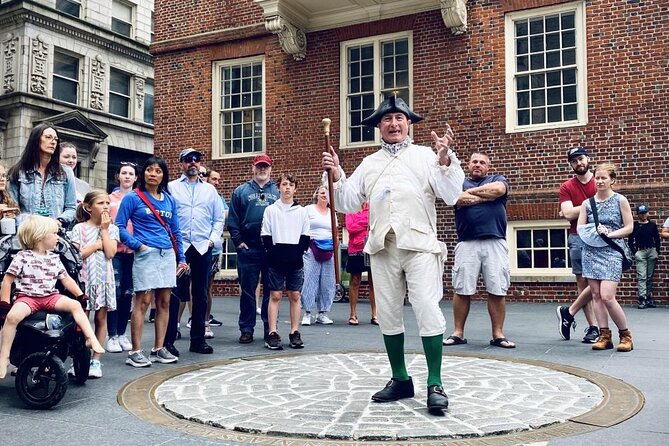
I also like the tone. It is not dry, and it is not trying to sound academic. One guide mentioned in feedback, Adam, is known for showing up in a historical military outfit and keeping things moving with humor. That kind of energy matters on a city walk, where attention can fade fast if the story is not paced well.
Because it is private, you also get a natural chance to ask follow-ups as you go. If a name or event clicks for your group, you can spend more time on it. If something does not land, the guide can steer you toward what you will remember.
Price and Value: What $75 Buys in 1.5 to 2 Hours

At $75 per person, this tour sits in the mid to higher range for a walking experience. But the value comes from the word private, not just the walking part. You are paying for a guide who can slow down, speed up, and tailor the story rather than reciting a fixed “Freedom Trail” script to strangers.
It helps that the duration is listed at about 1 hour 30 minutes to 2 hours. That is long enough for real context, but short enough that you are not stuck walking for hours in one story mode. And since the ticket is mobile, you avoid the hassle of printed confirmations and paper reminders.
Also, it is booked about 32 days in advance on average, which hints at steady demand. If you want a specific day or a time that fits your other plans, it is smart to reserve earlier rather than later.
Starting at Boston Common Visitors Center, Then Boston’s Political Heart

You begin at the Boston Common Visitors Center, 139 Tremont St. It is a convenient launch point because it is easy to find and it puts you right into the city’s political core. Boston Common is the oldest public park in the United States, and the tour uses it as a symbolic starting line for how public space and public power overlap.
You only spend about 15 minutes here, so think of it as a quick ignition, not a long stop. The goal is to get your bearings and your storyline straight before you move into the more specific sites. If you like your history tied to real places, this is a good opener.
One practical plus: you are near public transportation, and the tour is designed for most travelers. That matters if you are mixing this with museum time or a neighborhood dinner later.
Boston Common: 15 Minutes That Sets the Tone

Boston Common works best when you treat it like an introduction chapter. It gives you a mental map of the area and a baseline for how Bostonians thought about authority and community. The tour keeps it focused, so you get the political meaning without burning half your morning on a park walk.
If you are the type who gets impatient when tours start with generic facts, this one avoids that. The time is short, the interpretation is pointed, and it feeds directly into what you see next.
More of Boston from the top of the list
Granary Burying Ground, Where the Graves Tell More Than Names

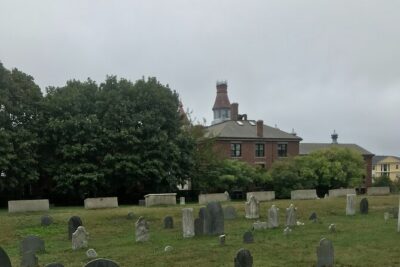
Next comes Granary Burying Ground, where you spend about 10 minutes. This is one of those places where a cemetery stop could go either way: either it feels solemn but vague, or it becomes a clear lens into society. The tour leans into the lesser known details, with an emphasis on what the graves can reveal about the radical demographics of the time.
That angle is why I think this stop works on more than one level. You are not only learning about who was famous. You are learning what a community looked like, who had power, and who was counted or left out. That makes it feel connected to the bigger Revolution story rather than a side detour.
Also, the entry is free for the walking stop, so it is a low-cost way to add depth. The guide also keeps things moving, which helps you avoid that awkward “we’re standing around waiting for the next fact” feeling.
King’s Chapel, Outside Details and Optional Paid Entry

King’s Chapel is about an 8 minute stop. From the outside, the tour focuses on why this place matters beyond architecture, including the international scope of the Revolution in Boston. In other words, you are not just admiring stone, you are connecting ideas across borders.
One important logistics point: speaking outside is included, but entry into the Chapel requires a separate private ticket with the museum. So if your group has interest in going in, plan on extra cost and a little extra time.
If your group is split, you can still use the outdoor conversation to get value even without going inside. That flexibility is useful when some people want the interior and others would rather keep walking.
Old South Meeting House, the Tea Party Story With Context

Old South Meeting House gets about 10 minutes. This is the building that spawned the Boston Tea Party, but the tour treats it as more than a single headline moment. The guide frames it in its broader significance so you understand how meetings, public pressure, and colonial politics fed into what came next.
Like King’s Chapel, outside viewing and explanation are included, but admission to go inside is separate. The tour keeps the stop length tight, so you do not lose the thread if you skip the interior.
This is one of the stops where a tailored guide can really pay off. If you want to focus on protest strategies, you will get more on the “how did people organize” side. If you care more about the British perspective, the guide can steer you toward that international tension.
Old State House, a Short Stop With Big Aftermath

Old State House is next, and you spend about 8 minutes. The key idea here is the Boston Massacre legacy, presented in the context of what the city learned from it and how that story shaped public memory.
This stop is also external, with entrance to the museum requiring a separate ticket. But even without going inside, it is a strong location because the tour is tied to the adjacent intersection where history played out.
I like that the tour does not pretend every stop will be equal in “wow factor.” Old State House is quick, but the interpretation aims to make the event feel consequential, not distant.
Faneuil Hall Marketplace, Where Meetings, Trading, and Power Collide
Faneuil Hall Marketplace is brief, about 5 minutes. That short time is not a drawback here, because Faneuil Hall is busy in its own way, even when you are standing still. The tour uses it as a Revolutionary meeting space plus marketplace plus British armory, showing how civic life mixed with conflict.
If you are imagining a clean split between “public debate” and “daily business,” this stop nudges you to see how intertwined they were. That is a theme that runs through the entire tour, and it is why the route fits people who want history that still makes sense today.
Admission here is free for the exterior experience, so you can get a lot without extra ticket costs. It also works well as a transition, moving you from one heavy episode to the next.
Old North Church & Historic Site, Lanterns and the Contradictions of Freedom
The tour ends at Old North Church & Historic Site, with about 8 minutes at the stop. It is famous for lanterns signaling the Revolution, but the guide also highlights a harder theme: the paradox of freedom and bondage in that era.
That moral complexity is handled as part of the storyline, not tacked on as a lecture. You should expect a thoughtful conversation rather than a simple good guys versus bad guys recap.
As with some other interior sites, you can pause outside with the guide as part of the included experience. Entry into the church itself requires a separate private ticket.
This is a great ending because it forces you to hold two truths at once. It also matches the tour’s broader goal: to help you think critically about civic life, not just memorize dates.
Guide Style That Makes the Walking Feel Easy
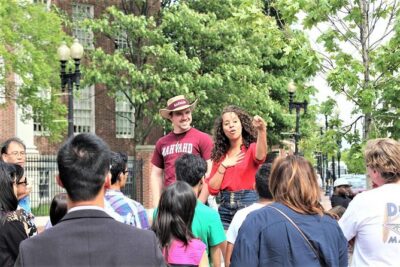
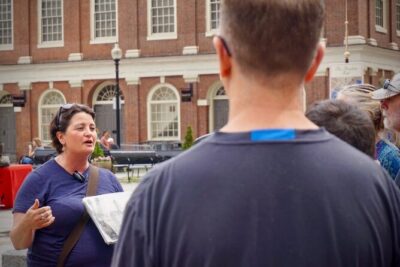
What people tend to remember about this tour is the guide’s delivery. Adam, specifically, is described as very prepared and professional, with a strong sense of humor. The historical military outfit adds a visual cue that helps you picture the era, and that can make facts stick faster.
Just as important, the tour is private, so the guide can tailor how fast you move and what you zoom in on. One example from feedback: Adam helped a wheelchair user navigate the historic streets. That does not guarantee universal access, but it does show the guide can think practically about movement issues on uneven sidewalks.
If you have mobility needs, it is worth telling the provider when you book so the route and pacing can be planned for your group.
Bathroom, Timing, and Walking Comfort in Real City Conditions
Walking tours live or die on small practical details. Here, the tour includes guide knowledge on where the cleanest bathrooms are in the city. It sounds minor until you need it, especially on a route with several historic sites where bathrooms might be harder to find on your own.
Timing is also realistic: the whole experience is about 1.5 to 2 hours. That means you can fit it between other plans without it eating your entire day. The listed opening hours run daily from 10:00 AM to 10:00 PM during the date window shown for the experience, so you can usually find a slot that works.
Because the tour requires good weather, pick your day with caution. If rain is likely, you may want a flexible schedule or a backup plan.
Museum Tickets: How to Decide What’s Worth Paying For
Several stops sit at famous buildings that require separate admission if you want to go inside. That includes King’s Chapel, Old South Meeting House, Old State House, and Old North Church. The included experience focuses on exterior visits, with the guide doing the interpretation outside.
This setup can save money if your group is happy to learn from the street view. It can also be a good way to control costs if you are traveling with mixed interests. You can choose to add interior visits when someone in your group really wants it.
If you are budget-conscious, I recommend treating the tour like a guided orientation first. If the story hooks you, you can always decide later which museum entrances are worth the added time and fee.
Where You Meet and Where You End, With Flexibility Built In
You start at Boston Common Visitors Center, 139 Tremont St, Boston, MA 02111. The end point is listed as Haymarket, 100 Hanover St, Boston, MA 02108, and it is customizable depending on your private booking logistics and interest.
That flexibility is a nice practical benefit. It can help you finish near a subway stop, a hotel, or a dinner spot without needing to retrace your steps.
The experience also notes confirmation is received at booking, and tickets are mobile. So once you reserve, you should have what you need without hunting for paperwork.
Should You Book This Private Revolutionary Boston Walking Tour?
Book it if you want a Boston Revolution walk that stays focused on people, ideas, and consequences, not just landmarks. It is a strong fit for families, students, and adults who like history tied to how we live now. The private format is the biggest selling point, because it lets the guide adjust to your group, including the tone and pacing.
Skip it or plan carefully if your group expects everything to be included without extra admissions. You will likely pay separate museum tickets if you want to enter key buildings. Also, if your schedule is tight and the weather looks shaky, the good-weather requirement could be a factor.
If you are aiming for the best mix of context and flexibility, this tour is a smart use of time. And if you appreciate a guide with humor and a knack for making the era feel real, the chances are good you will leave with names, places, and themes that actually connect.
FAQ
How long is the private revolutionary Boston walking tour?
The tour lasts about 1 hour 30 minutes to 2 hours.
How much does the tour cost?
The price is $75.00 per person.
Is this tour private or shared with other groups?
It is private. Only your group participates.
Where does the tour start?
The start is Boston Common Visitors Center, 139 Tremont St, Boston, MA 02111.
Where does the tour end?
The tour ends at Haymarket, 100 Hanover St, Boston, MA 02108. The end point can be customized for private bookings based on logistics and interest.
Are tickets to the museums included?
No. Museum and ticket costs for the private museums and sites on the route are not included. The tour includes external visits, and entrance to some sites requires a separate private ticket.
Which stops are included for free outside viewing?
Boston Common, Granary Burying Ground, and Faneuil Hall Marketplace are listed as free for admission for the experience.
Is there a mobile ticket?
Yes, the tour includes a mobile ticket.
Are service animals allowed?
Yes, service animals are allowed.
What if the weather is bad or the minimum number of travelers is not met?
The experience requires good weather. If it is canceled due to poor weather, you will be offered a different date or a full refund. If it is canceled because the minimum number of travelers is not met, you will also be offered a different date or experience, or a full refund.
What is the cancellation policy?
You can cancel for free up to 24 hours in advance for a full refund. If you cancel less than 24 hours before the start time, the amount paid is not refunded.
More Tour Reviews in Boston
Keep Going in Boston
More Revolution in Boston
More around Boston, freshly written up
- The Freedom Trail and a whole lot more 3 hour Boston walking tour★ 5.0 · 4 reviews
- Boston: Boston Red Sox Baseball Game Ticket at Fenway Park★ 4.5 · 19 reviews
- Boston Harbor: Full Moon Cruise with Champagne Option★ 3.0 · 7 reviews
- Boston Harbor: Winter Holiday Weekend Brunch Cruise★ 4.6 · 24 reviews
- Boston: Hop-On Hop-Off All Day Boston Sightseeing Tour★ 3.4 · 27 reviews
- Boston Premium Night Tour with View Boston Observation Deck★ 4.6 · 6 reviews
Revolutionary Boston History Tours, compared.
★ 4.5Boston Tea Party Ships and Museum AdmissionFrom $352,512 reviews
★ 5.0The Full Revolutionary Story Epic Small Group Boston Walking TourFrom $552,356 reviews
★ 4.8Boston Tea Party Ships and Museum Interactive TourFrom $351,926 reviews
★ 4.9Boston’s Freedom Trail: A Revolutionary Walking TourFrom $311,748 reviews
★ 5.0Boston’s Freedom Trail: A Revolutionary Walking TourFrom $311,343 reviews
★ 5.0Entire Freedom Trail Walking Tour: Includes Bunker Hill and USS ConstitutionFrom $79732 reviews
★ 5.0Boston’s Revolutionary and Drunken Past with Ye Olde Tavern ToursFrom $91195 reviews
★ 4.8Boston History & Highlights Tour: From Revolution to TodayFrom $44178 reviews
Also filed under