Boston: Underground Railroad History Tour of Beacon Hill

REVIEW · BEACON HILL AND BACK BAY WALKING TOURS

Boston: Underground Railroad History Tour of Beacon Hill

5.0 · 141 reviews 2 hours 30 minutes (approx.) From $35 Operated by Hub Town Tours · Bookable on Viator
Book on Viator →

Beacon Hill tells stories you were never taught. On this Underground Railroad history walk, I love how the tour links the Civil War era to real streets and still gives you a small-group feel as you move landmark to landmark. For 35 dollars, you get a guided, on-foot tour that focuses on Black Bostonians and the abolition fight, not a vague overview.

The main consideration is simple: it is a 2.5-hour walking tour on a hilly, older neighborhood with uneven surfaces. If standing for long stretches is hard for you, this may not be your best pick.

Key Highlights and What They Mean for You

  • Small groups up to 16 people: more time for questions and a steadier pace on Beacon Hill’s slopes.
  • Black Heritage Trail covers 10 landmarks: you get a full story arc, not just one highlight.
  • African Meeting House admission included: one stop goes beyond the sidewalk look.
  • A guide who connects abolition to Boston’s politics and culture: you will see how decisions were argued, enforced, and challenged in the city.
  • Street-level history, not museum hopping: most stops are outside, so you spend more time learning where events happened.

Why Beacon Hill Works So Well for Underground Railroad History

Boston: Underground Railroad History Tour of Beacon Hill - Why Beacon Hill Works So Well for Underground Railroad History
Beacon Hill is built for walking and for noticing details. Even when a place looks quiet now, the layout of streets, meeting houses, schools, and homes helps you understand what life was like and what choices people had.

What I like about this tour is that it refuses to treat the Underground Railroad as a mystery box. Instead, it frames freedom-seeking as a public, local, and political story. You see how abolitionists organized, how communities formed, and how city institutions shaped who was allowed to learn, worship, and live safely. That is one reason the tour is grouped around the Black Heritage Trail stops across the neighborhood.

You also get a guided layer that makes Boston’s Civil War era feel connected to what was already happening in the North. One guide thread you will hear again and again is that Boston was not just a distant support city for the abolition cause. It was a place where debates were fought, people were targeted, and courage showed up in everyday locations, including schools, churches, and private homes.

Two and a Half Hours on Foot: Pacing, Shoes, and Expectation Setting

Boston: Underground Railroad History Tour of Beacon Hill - Two and a Half Hours on Foot: Pacing, Shoes, and Expectation Setting
This tour runs about 2 hours 30 minutes and is designed around walking between landmarks. The timing is built from multiple short stops, so you are not standing in one place for a long time. Still, you will be outside, moving up and down Beacon Hill.

The practical advice is straightforward: wear comfortable shoes with good grip. Beacon Hill’s cobblestones and older sidewalks can be uneven, and the tour includes some hill climbing. The tour is described as requiring moderate physical fitness, and it is not recommended if you have difficulty standing for extended periods.

Group size matters here. With a maximum of 16 people, you are less likely to feel like part of a slow-moving blob. You can usually keep up with the pace, and the guide has a better shot at answering questions clearly.

Also plan for the weather. The experience requires good weather, so on bad days you may be offered a different date or a refund. If you are traveling in Boston in shoulder season, I would treat this like any other outdoor walking tour, meaning check the forecast the morning of.

From Soldiers and Sailors Monument to Acorn Street: Starting in Boston Common

Boston: Underground Railroad History Tour of Beacon Hill - From Soldiers and Sailors Monument to Acorn Street: Starting in Boston Common
The tour begins at Soldiers and Sailors Monument in the middle of Boston Common, right by the Boston Common Visitors Center at 139 Tremont Street. Look for a white granite column topped by a female figure holding a flag, with bronze statues around the base. It is an iconic start point, but it also works as a way to talk about how Boston organized its Civil War memory and civic identity.

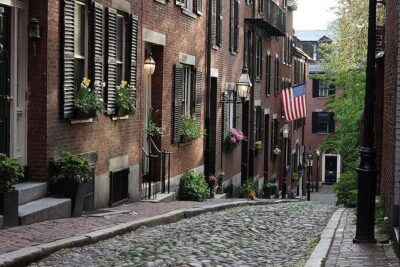
From there, the walking gets you into Beacon Hill’s feel quickly. Acorn Street is next, famous for its narrow cobblestone alleyways. This is not a long detour, but it is a powerful moment in the story because it shows you how neighborhoods that feel charming today were still part of a society where freedom and violence were both real.

One of the tour’s best moves early on is that it does not just say, people were escaping slavery. It explains the local context: how Boston’s elite life coexisted with fierce debates about race, law, and belonging. You get introduced to 19th-century Boston Brahmins, and you see how this class world shaped the city’s institutions and opinions.

It helps to have a quick mindset shift at this point. When you see a pretty alley or a refined square, keep in mind that the same neighborhood held schools, meeting houses, and homes where people argued about integration and risked their safety for abolition.

Phillips School and John J. Smith House: Education and Daily Resistance

Boston: Underground Railroad History Tour of Beacon Hill - Phillips School and John J. Smith House: Education and Daily Resistance
Phillips School is one of the most important stops early in the tour. It was built in 1824 as a whites-only school. Then, by 1855, it became among the first schools to integrate in Boston. Even if you already know that the abolition era was complicated, this stop makes it concrete. It shows that education was a battleground, not an afterthought.

Nearby, you move through the story of civic leadership and grassroots work at the John J. Smith House. This was the home of a leading abolitionist, a state legislator, and a former barber. That combination of roles matters. It hints at how abolition was not only a set of speeches. It was also politics, local influence, and community ties.

The names you hear throughout this kind of Beacon Hill route often connect national debates to street-level realities. In this tour’s telling, the Civil War era ties back to abolition organizing happening right where you are standing. You also get a reminder that anti-slavery arguments were tied to questions like who gets legal protection, who gets education, and who can live without fear.

A practical tip here: take a moment to slow down at these stops. Phillips School and John J. Smith House are not just facts on a wall. They are places where you can mentally map the difference between laws on paper and lived experience.

Charles Street Meeting House and 66 Phillips St: Debate and Actual Risk

Boston: Underground Railroad History Tour of Beacon Hill - Charles Street Meeting House and 66 Phillips St: Debate and Actual Risk
Charles Street Meeting House is a turning point. Built in 1807, it is the site of contentious debate over racial integration. That word, contentious, is key. You are not walking through a neat feel-good history. You are seeing how integration was argued and resisted in public.

The next stops keep tightening the story around action. 66 Phillips Street is presented as an Underground Railroad safe house owned by the Haydens, staunch abolitionists who had been formerly enslaved. This is where the tour earns its title. Safe-house history sounds abstract until you realize it happened in ordinary neighborhood spaces. A home can be a front line.

Why this matters for you is that it reframes what the Underground Railroad was. It was not only tunnels and secret signals. It was people working together, using local networks, and risking consequences. The guide’s job here is to help you hold both truths at once: the courage and the danger.

You might find this section emotionally intense. A number of the tour’s stories involve slavery and the violence surrounding abolition. The approach on this tour aims for clarity and context, so you come away understanding what was at stake, not just feeling vague sadness.

Otis House and the African Meeting House: Politics, Churches, and Community Power

Boston: Underground Railroad History Tour of Beacon Hill - Otis House and the African Meeting House: Politics, Churches, and Community Power
Otis House is another big checkpoint. It is a 1796 residence of Harrison Gray Otis, Boston mayor and nephew of revolutionary James Otis Jr. This is a smart inclusion because it keeps the story balanced. Beacon Hill is not only abolitionists and safe houses. It is also power, influence, and the people whose decisions shaped what life would be like for others.

Nearby, you learn about a historic 1806 church designed by architect Asher Benjamin. Churches often served as anchors for community and moral debate, and this stop helps you connect religious spaces to the broader fight over slavery and freedom.

The tour then points you to the home of an outspoken abolitionist and U.S. Senator who was beaten unconscious in the Capitol over slavery in 1856. That detail is jarring, but it also helps you understand that abolition was not a safe, gentle cause. It triggered backlash, and it provoked violence at the highest levels.

Then you reach African Meeting House, which is the cultural center of Boston’s African-American community and the oldest extant black church building in the United States, dating to 1806. This is also a practical break from sidewalk-only viewing because admission here is included. Even if you do not spend ages inside, you will appreciate the chance to see the space tied to community life.

During this segment, the tour’s themes often expand to include key abolition-era figures connected to Boston. Names that may come up in the telling include William Cooper Nell, and Elizabeth Freeman, who sued for her freedom in Massachusetts and became a symbol tied to the end of slavery there. Whether you already know those names or not, the stop helps you connect personal stories to community institutions you can still stand inside or read about in context.

Pinckney Street, the Massachusetts State House, and the 54th Regiment Memorial Finale

Boston: Underground Railroad History Tour of Beacon Hill - Pinckney Street, the Massachusetts State House, and the 54th Regiment Memorial Finale
As you continue, 5 Pinckney Street appears as a standout. It is the oldest extant house in Beacon Hill (1787) and was home to an African-American Revolutionary War veteran. That inclusion is more than trivia. It adds a long view, reminding you that Black history in Boston was not limited to the Civil War era. It extends back to the nation’s earliest chapters.

The tour also reaches the Massachusetts State House area, described as the Hub of the Solar System (1798). This is a reminder that Boston’s political center sat right alongside the abolition debate. When people fought over slavery in government, this building area is part of the physical “why” behind it.

The final segment is the Robert Gould Shaw and the 54th Regiment Memorial across from 24 Beacon Street, where the tour ends at the memorial. The tour concludes beside this important monument, making the last minutes feel like more than a walk through old architecture. You leave with a sense of how the abolition story turned into Civil War service and how Boston’s Black community and allies fought for change through both advocacy and action.

If you want one takeaway from the end, it is this: Beacon Hill’s abolition story is not a side chapter. It is threaded into the city’s civic identity, right up to the war era.

Price and Value: What 35 Dollars Gets You in Real Time

Boston: Underground Railroad History Tour of Beacon Hill - Price and Value: What 35 Dollars Gets You in Real Time
At 35 dollars per person, this is priced as a fairly accessible guided walking tour. The value comes from three things you cannot easily replicate on your own without doing a lot of homework.

First, the tour includes all 10 landmarks on the Black Heritage Trail. That means you are not paying for a single dramatic stop. You are paying for a sequence that builds understanding step by step.

Second, the group size is capped at 16. With that limit, you can ask questions and you are less likely to miss details at each stop.

Third, at least one stop has admission included: African Meeting House. If you have ever paid for a tour that only points at sites from the sidewalk, you will appreciate that this one includes time tied to an interior space.

What is not included is also part of the value equation. Museum admissions are not included, and there is no mention of guide period costume. Gratuity for the guide is optional, so you are free to decide based on your experience.

For many people, the best part is that it does not require you to hop between museums. You learn while you walk, and Beacon Hill’s streets act like a map for the story.

Guides Who Make the Story Stick, and How to Get More Out of It

Boston: Underground Railroad History Tour of Beacon Hill - Guides Who Make the Story Stick, and How to Get More Out of It
A huge part of this tour’s appeal is the storytelling. You will hear guides bring a mix of history teaching and Civil War era context into the narrative, and several names show up repeatedly in the tour’s guide roster, including Dana, Will, Meghan, Lin, Joe, Drew, and Dave.

If you are the kind of traveler who likes to ask questions, this is a good tour format for it. Small groups help you get more direct answers, and the stops are close enough that you can stay engaged rather than just chasing the guide down the street.

To get more out of the experience, I suggest you come with one question in mind. Something like: How did Boston actually handle abolition, beyond slogans? Or: What did integration debates look like at the institutional level?

Then watch how the itinerary answers it. Phillips School gives you policy and education. Charles Street Meeting House gives you debate and integration friction. 66 Phillips Street gives you the safe-house reality. African Meeting House gives you community infrastructure.

By the end, you should feel like Beacon Hill is a living archive, not a postcard.

Should You Book This Beacon Hill Underground Railroad Tour?

Book it if you want a focused walking tour that treats Underground Railroad history as part of Boston’s real civic life. This works especially well if you like Civil War era history with local connections, and if you want to see Black heritage landmarks across a compact neighborhood.

I would think twice if you struggle with uneven sidewalks and hills, or if standing for around 2.5 hours is uncomfortable. The route includes walking time between stops, and Beacon Hill’s terrain is part of the experience, not something removed.

It is also a strong pick for families who have kids old enough to follow history stories for a longer walk. Younger children may find it challenging simply because there is a lot to process and not enough “break” time built into a single long attraction.

Bottom line: if you like your history grounded in specific places and you are happy to walk, this is an excellent use of a half-day in Boston.

FAQ

How long is the Beacon Hill Underground Railroad History Tour?

It is about 2 hours 30 minutes.

What does the tour cost?

The price is 35.00 per person.

How big is the group?

The maximum group size is 16 travelers.

Where does the tour start and end?

It starts at Soldiers and Sailors Monument, 139 Tremont Street, Boston, MA 02109. It ends at the Robert Gould Shaw and the 54th Regiment Memorial at 26 Beacon Street, Boston, MA 02108.

What is included in the tour price?

The tour includes the Black Heritage Trail (all 10 landmarks), small groups, and the Beacon Hill neighborhood walk. Admission at the African Meeting House is included.

What is not included?

Gratuity for the guide is optional, museum admissions are not included, and guides are not listed as wearing period costume.

What language is the tour offered in?

The tour is offered in English.

Is the tour physically demanding?

It requires moderate physical fitness and it is not recommended for travelers who have difficulty standing for extended periods.

Is the tour affected by weather?

Yes. It requires good weather. If it is canceled due to poor weather, you will be offered a different date or a full refund.

Can I get a refund if I cancel?

Yes. There is free cancellation, and you can cancel up to 24 hours in advance for a full refund. Cancellation less than 24 hours before the start time is not refunded.

Are service animals allowed?

Yes, service animals are allowed.