REVIEW · FREEDOM TRAIL WALKING TOURS
Relive 1776: Interactive AR Experience on The Freedom Trail
Boston history gets a high-tech reboot.
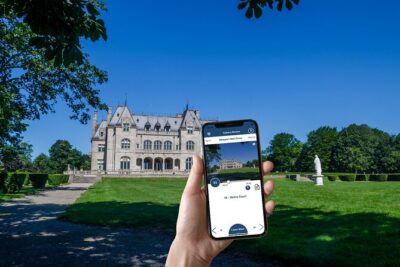
Relive 1776 turns the Freedom Trail into a guided AR time jump from 1765 to 1775, with characters appearing in the real street scene. I love the way the tour uses both AR headsets and mobile AR, so you get story, interaction, and landmarks in the same walk. I also like that you can pace it yourself and even skip a stop if you are short on time. One thing to consider, especially if you are sensitive to intense moments, is that the simulation includes things like historically accurate soldiers and weapons, and it may feel startling for some people.
If you want your Boston history to feel more like a scene you step into, this is a fun, structured way to do it. I was especially impressed by the focus on historically accurate character behavior and the guide-led format across five short experiences. The only real drawback is practical, not emotional: it is not suitable for everyone, including people with heart problems or epilepsy.
Key moments worth marking on your mental map

- A five-part AR story arc (1765 to 1775) tied to major Freedom Trail sites
- Boston Common under the Great Elm Tree, where you meet key figures like Paul Revere, John Hancock, and Samuel Adams
- Historically accurate characters who react to your choices, including tense moments at the Boston Massacre area
- No VR goggles, so you keep real-world awareness and avoid nausea risks tied to VR
- Mixed tech approach, with three stops using mobile AR and two using AR headsets (headsets are provided and sanitized)
- A clean wrap at Bunker Hill, with the tour ending there or at your drop-off option
Other ways to walk the red brick, compared
Why 1765 to 1775 feels like a story you can walk into

Relive 1776 is built around a simple idea: don’t just look at historic Boston. Move through it while a chronological AR story plays out where the events unfolded. The tour runs across five guided experiences that cover key years from 1765 through 1775, so you get a sense of momentum instead of a collection of disconnected facts.
You follow the Freedom Trail in the real world, but the “history layer” appears over it. That matters more than you might think. The Freedom Trail is famous for being compact and walkable, which is great for first-timers. But it can also feel like check-the-box sightseeing if you are trying to pack it all into one day. This tour changes the rhythm. The landmarks become the stage, and each stop adds a specific beat of the story, not just a view.
What makes the concept especially strong is that it is interactive. You are not only watching scenes. You make choices, and the British soldiers and colonists you see in AR react to you. It is a small thing compared to a full video game, but it gives you agency, which helps the story stick.
And it is not a gore-heavy gimmick. The experience is designed to be fun and educational, with no gore in the simulation. That puts it in a different category than some “re-enactment” attractions that try to scare you by going graphic. Here, tension comes from context and realistic character presence.
Price and time: what $30 buys you on the Freedom Trail

At $30 per person, this is not a budget-free add-on, but it is also not priced like a premium private tour. You are paying for three things: the guide, the structured five-scene AR production, and the hardware support (AR headsets provided and sanitized).
Time range is wide. The tour can run 30 minutes to 2 hours, depending on starting times and how you move between the five experiences. Each experience itself tends to be 5 to 15 minutes, and the overall flow is designed so you can go at your own pace or even skip a stop if you need to keep your day moving.
Here is how I’d think about value if you are comparing options in Boston. A typical Freedom Trail walking tour often gives you a story plus stop-by-stop narration. Relive 1776 adds a layer that is hard to replicate on your own: the AR characters, the choice-based reactions, and the guided “scene work” at real locations. If you love history but you get restless with lectures, that added engagement is where the money tends to feel justified.
Also, the group size is small, limited to 10 participants. That tends to make the guide’s attention feel closer and more responsive, which helps if you need a hand with headset setup or want clarity on what you are seeing.
AR vs VR: what the experience does differently for comfort

This tour uses augmented reality (AR), not VR. That distinction affects the whole vibe. With AR, you can keep your eyes on the real streets while the virtual figures appear in front of you. You are not cut off from your surroundings.
The practical benefit is comfort. The tour specifically notes that using AR instead of VR means you won’t experience nausea or safety issues tied to VR. That is a big deal for people who have tried VR before and felt off.
You’ll also have a mix of tech modes:
- Three experiences use mobile phone AR
- Two experiences use AR headsets provided by the operator
Headsets are sanitized between participants, and the company states that sanitization kills 99.99% of bacteria and viruses. They also offer a fresh facial cover, optional, for extra peace of mind.
One more thing to flag for safety planning: the activity is not suitable for people with heart problems or epilepsy. If either applies, skip this one and consider a different style of Freedom Trail tour.
Five stops, one coherent story: Boston to Bunker Hill

Relive 1776 is designed around five guided AR beats, and the “route logic” is straightforward: you start near the Boston Massacre area, build through the political and personal moments in central Boston, and finish with Bunker Hill.
More of the revolution, from the tea to the bridge
Stop 1 options: Boston Massacre area as your opening scene
Your first stop can be either:
- Boston Massacre Site, or
- Commodore John Barry Memorial
This matters because it sets the tone. Instead of starting with “here is what this building is,” you start with the conflict energy of the Revolutionary era. It is a smart choice for engagement. You are pulled into a story that feels tense early, which makes the later political moments at Boston Common and the Old State House land harder.
Also note that your tour can end back at the meeting point, but drop-off options later can include the Boston Massacre area or Bunker Hill Monument, depending on how the tour is scheduled.
Stop 2: Boston Common and the Great Elm Tree meeting
Next is Boston Common, with about 15 minutes of guided time. This is where the tour focuses on major Revolutionary figures. You meet people like Paul Revere, John Hancock, and Samuel Adams near the Great Elm Tree.
For me, this is one of the best parts conceptually. Boston Common is a big public space and an easy place to feel “lost” among all the landmarks. Adding a story moment here gives the Common a job. It becomes the setting for pivotal meetings and shifting loyalties, instead of just another stop to check.
It is also one of the clearest “bridge” segments: characters and historical ideas connect the start of the conflict to the more specific events you’ll see as you move along.
Stop 3: Old State House, where politics gets personal
From there you move to the Old State House, typically 20 minutes. This stop is where the tour leans more into historical context and lived-in detail, including scenes that help you understand daily life and political pressure in the decade leading up to the Revolution.
In AR format, these kinds of sites work well because you are not just hearing about the past. You are viewing it in place, and your guide is present to connect what you see to why it mattered. The tour includes activities like trying on colonial fashion, which adds a hands-on layer to the “what it felt like” side of history.
A small consideration here: because each experience is short and guided, you’ll want to listen closely the first time a new AR scene starts. The story beats move quickly, so it is not the best fit for someone who wants slow, independent wandering at each landmark.
Stop 4: Paul Revere House, a quick but important beat
Then you are at the Paul Revere House for about 10 minutes. This is a shorter stop than the Common or Old State House, but it still functions like a hinge in the story. You are building toward the confrontation phase.
One practical detail: the tour includes transportation from Paul Revere House to Bunker Hill. So you do not have to force your legs to cover everything back-to-back. It keeps the schedule tighter and reduces the “Freedom Trail leg fatigue” that can make later stops less enjoyable.
If you prefer a walking-only day, this might feel like a minor compromise. But time-wise, it is often worth it, especially if you are blending this with other Boston plans.
Stop 5: Bunker Hill Monument, the tour’s finish line
Finally, the tour ends at Bunker Hill Monument with about 20 minutes of guided time. This is the climax location in the five-part arc. You’ll see the final AR beats unfold and wrap up the story.
Bunker Hill is also the right ending from a narrative standpoint. It is one of the most recognizable Revolution-era sites along the Boston landscape, and finishing here gives you a satisfying “now you get the why” feeling after earlier stops.
At the end, you have drop-off options that can include either the Boston Massacre area or Bunker Hill Monument, depending on your tour flow. That flexibility can help if you have reservations after your Freedom Trail day.
Interactive choices and historically accurate characters

The standout feature is how the AR characters behave. The experience is set up so you see British soldiers and colonists appear in the real world, and they react based on your choices. That is where the tour stops feeling like a standard “look at this, then this” walking guide.
The historical accuracy is a major source of praise. People respond strongly to the detailed environment and lifelike 3D soldiers, which makes the scenes feel less like cartoon history and more like you are being pulled into a moment.
There is also a hands-on element. The tour includes historically inspired activities such as operating a field cannon in the AR experience and trying on colonial fashion. Even when you are not literally firing anything in real life, the “role” you take in the simulation helps you connect with the era in a way a museum label rarely does.
One more point to consider: even though the simulation has no gore, it can still feel intense. One common reaction is that the presence of realistic guns and soldier behavior can be startling, especially if you scare easily. If that sounds like you, the tour notes that a kids version is available, and that version is without guns.
The guide experience: short, focused, and technical

The tour includes a live guide in English throughout the five experiences, and the format is small-group friendly. The guide helps you understand what you’re seeing, how the AR scene works, and what the choices mean in the moment.
One specific guide name shows up in feedback: Dylan. The comments around Dylan emphasize strong technical knowledge and clear explanations of how everything works. That is exactly what you want with an AR attraction. If someone can explain the tech quickly and keep the story grounded, the headset becomes a learning tool instead of a distraction.
Since each AR experience is only 5 to 15 minutes, the guide’s pacing matters. You are likely to get a few minutes of setup, then the scene action begins. The best guides keep you oriented so you do not feel like you are fumbling through the device while the story moves on.
Small perks that make the tour smoother in real life

A few practical touches make this easier to fit into a Boston day:
- Skip the ticket line, which is huge in a city where Freedom Trail areas can get crowded.
- Small group size, max 10, which reduces chaos when devices are involved.
- Sanitized headset and optional fresh facial cover, so you do not have to worry about shared equipment.
- You also get an Illegal Tea souvenir, described as a reusable tea bag with a discount card.
That tea detail is not the reason to book, but it is the kind of small “story-adjacent” souvenir that feels less generic than a postcard and plastic keychain.
Who should book Relive 1776 (and who should pick the kids version)

This is a strong match if you:
- enjoy history but want something more active than a lecture,
- like modern tech used in a practical way,
- want a Freedom Trail experience with structured pacing,
- travel as a small group and appreciate limited crowding.
It is also a good fit for first-time Boston visitors because it gives you context at the exact stops people come to see. You are walking the Freedom Trail, but you are doing it with a storyline that connects the major players.
You may want to steer toward the kids version if you are bringing younger people or anyone who gets frightened by weapons in the simulation. The kids version is designed without guns, while keeping the AR story and learning angle.
And if you have heart problems or epilepsy, the tour is not suitable. In that case, it is better to choose a different style of Freedom Trail tour that is not device-based.
Should you book? My decision guide

Book Relive 1776 if you want your Freedom Trail day to feel like a living narrative, not a stack of monuments. The combination of five guided AR scenes, real-world walking, historically accurate character moments, and interactive choices is the reason this works. The no-VR approach also makes it a more comfortable option for many people who are cautious with headset experiences.
Skip it, or at least consider the kids version, if you know you get unsettled by realistic weapons in simulations, even without gore. The story can still feel intense because the soldiers and gun presence are part of the historical depiction.
If you are trying to pick just one “extra” activity alongside Boston sightseeing, this is one of the best bets for making Revolutionary-era Boston memorable in a way that feels personal, not just informational.
FAQ
How long is the Relive 1776 AR experience?
The duration can range from 30 minutes to 2 hours, depending on starting times. Each of the five experiences typically lasts 5 to 15 minutes.
How much does Relive 1776 cost?
The price is $30 per person.
Is this VR or AR?
It is AR (augmented reality), not VR. The experience keeps you seeing the real world while adding historical visuals.
Are there gore or graphic scenes?
No gore is included in the simulation.
Is there a kids version?
Yes. A kids version is available without guns.
What sites are included on the route?
You start at either the Boston Massacre Site or the Commodore John Barry Memorial, then visit Boston Common (Great Elm Tree area), the Old State House, the Paul Revere House, and end at Bunker Hill Monument.
Do I get transportation during the tour?
Yes. Transportation is included from Paul Revere House to Bunker Hill.
What language is the guide?
The tour guide is English only.
Is it wheelchair accessible, and how big are the groups?
Yes, it is wheelchair accessible. Groups are small, limited to 10 participants.
Are AR headsets sanitized?
Yes. The AR headsets are sanitized for each participant, and the tour notes that a fresh facial cover is optional.
More Tour Reviews in Boston
More Revolution in Boston
The Red Line, Three More Ways
More around Boston, freshly written up
- The Freedom Trail and a whole lot more 3 hour Boston walking tour★ 5.0 · 4 reviews
- Boston: Boston Red Sox Baseball Game Ticket at Fenway Park★ 4.5 · 19 reviews
- Boston Harbor: Full Moon Cruise with Champagne Option★ 3.0 · 7 reviews
- Boston Harbor: Winter Holiday Weekend Brunch Cruise★ 4.6 · 24 reviews
- Boston: Hop-On Hop-Off All Day Boston Sightseeing Tour★ 3.4 · 27 reviews
- Boston Premium Night Tour with View Boston Observation Deck★ 4.6 · 6 reviews
Freedom Trail Walking Tours, compared.
★ 5.0Freedom Trail History Small Group Walking TourFrom $356,450 reviews
★ 4.5Boston Freedom Trail Walking Tour with Costumed GuideFrom $262,531 reviews
★ 5.0Boston Food & History: Pizza, North End & Freedom TrailFrom $901,772 reviews
★ 4.9Boston’s Freedom Trail: A Revolutionary Walking TourFrom $311,748 reviews
★ 4.9Freedom Trail History Small Group Walking TourFrom $351,590 reviews
★ 5.0Boston’s Freedom Trail: A Revolutionary Walking TourFrom $311,343 reviews
★ 4.5Freedom Trail Walking Tour 250From $261,118 reviews
★ 5.0Boston Freedom Trail History Pub Crawl Small-Group TourFrom $60996 reviews