
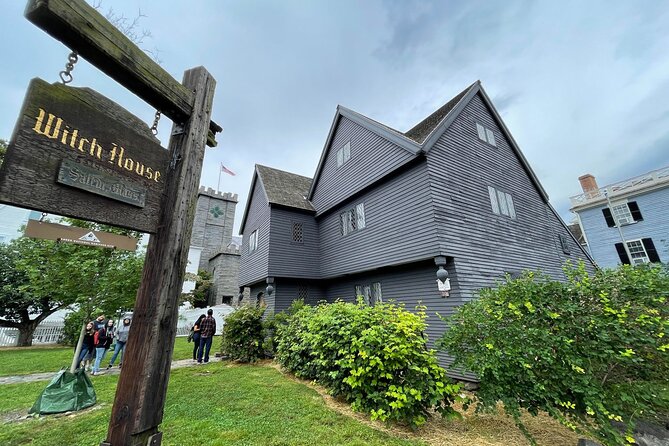
REVIEW · SALEM WITCH TRIALS AND HISTORY TOURS
Secrets of Salem Hidden Dark History Tour
A Salem walk with teeth and facts. This guided route connects famous 1692 names to the streets you can still stand on, including sites linked to Judge Jonathan Corwin and the town-versus-village tension behind the chaos. I love the small-group feel and the way guides like Mason, Danielle, and John bring stories to life without turning it into theater.
What won me over is the mix of accurate, thoroughly researched history plus ghostly-style storytelling that stays grounded in what actually happened. I also like that the tour doesn’t lock you into witch trials only, it adds wider Salem context along the way, including connections to Nathaniel Hawthorne and even a Bewitched filming trivia thread.
One thing to consider: this is dark history. Expect heavy themes, and you’ll be walking a moderate amount for about two hours, so wear decent shoes and pace yourself.
Key highlights at a glance
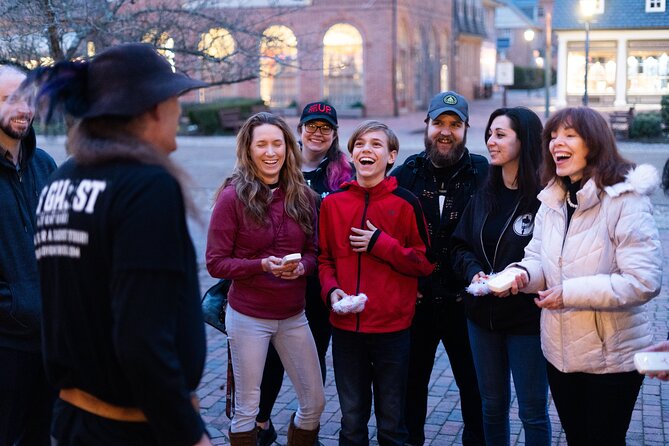
- A small group max of 20 keeps the walk personal and helps the guide manage the pace
- Multiple Salem witch-trials touchpoints, including sites tied to Judge Jonathan Corwin
- Name-heavy storytelling (Corwin, Hawthorne, Giles Corey, Nathaniel Ropes) that’s easy to follow
- A balanced tone that mixes spooky atmosphere with straight facts
- Local, engaging guides like Mason, Danielle, and John, who add hometown context and humor
More of 1692, told properly
Essex Street start, Hawthorne Hotel finish, and how the tour actually flows
The tour starts at 210 Essex St, Salem, MA, and it ends at the historic Hawthorne Hotel, at 18 Washington Square W. You’re out for about two hours, give or take, and the whole thing is in English with a mobile ticket.
This matters because Salem’s downtown can feel packed. A smaller group (up to 20) helps you keep moving and hear the guide over the street noise. It also tends to make the experience feel less like a rushed checklist.
If you like a built-in itinerary, you’ll enjoy that the stops are clustered around key historical sites rather than spread across Salem. And yes, this is walking, but the tour is set up for a manageable downtown pace. Service animals are allowed, and the activity is described as having a moderate physical fitness level.
Free cancellation is offered up to 24 hours in advance for a full refund, so it’s easier to plan confidently.
Witch Trials of 1692: why the facts land harder on the streets
One of your early stops is a museum-style stop that gives a clear overview of the Witch Trials of 1692, including why these trials are often cited as an example of mass hysteria in the United States. Standing in Salem, that topic hits differently than reading about it at home. The guide’s job is to put people, fear, and momentum in the right order, so you don’t just get spooky vibes.
I like tours that explain the mechanics of what happened, because it helps you understand how rumors turn into accusations and how communities enforce punishment. This tour’s structure does that. It gives you the big picture early, then later you’ll walk to houses, land ties, and civic locations that connect the story to real addresses.
A small drawback: if you’re expecting only light entertainment, this is not that. You’ll be guided through troubling events, and the “hidden dark history” angle is the point.
The 1816 municipal building and the Corwin thread through Salem
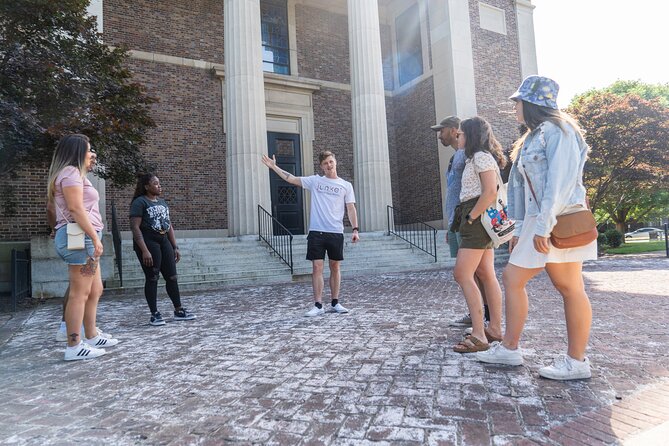
A major anchor stop is an old municipal building, built in 1816, described as the oldest original municipal building in Salem. It’s not there just for atmosphere. You use it to understand Salem’s earliest years, and then the tour keeps returning to one family name: Corwin.
That leads to the next highly specific location: a house with direct ties to the witch trials because Judge Jonathan Corwin lived there. This is where the tour leans into lesser-known miscarriages of justice, not just famous names. For me, that’s one of the strongest ways the guide keeps the walk from feeling repetitive. Instead of repeating broad trial facts, you get a human scale for how decisions were made and enforced.
If you want to make the most of this portion, focus on the guide’s connections between the person and the place. The addresses are part of the lesson, not random stops.
Judge Jonathan Corwin’s world meets Loyalist tensions in Nathaniel Ropes’s home
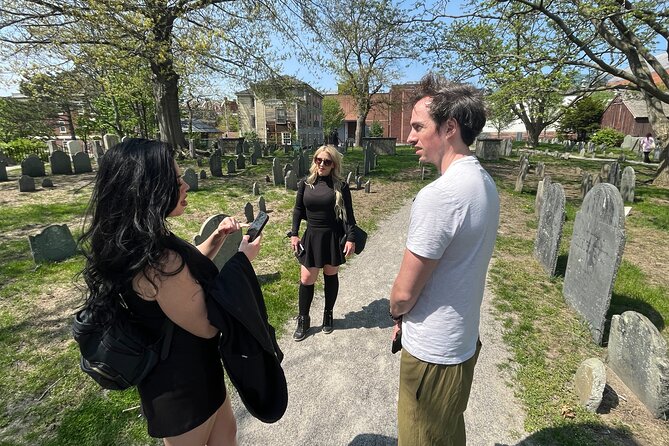
Another standout stop brings you to a house built about a century after Salem’s founding, roughly 30 years after the witch trials, later sold to local judge Nathaniel Ropes. The tour frames Ropes as a staunch British Loyalist, and it notes the backlash he faced from his town near the end of his life.
This is smart pacing. After learning about witch-trial trauma and legal power, you shift to how Salem’s politics and loyalties shifted later. It gives you a clearer sense of how conflict evolves over time in the same community.
The possible catch is that this segment changes gears from 1692 to later Salem. If you’re only interested in the witch trials, you might wish for more time staying in that narrow time window. Still, the Loyalist storyline helps explain why Salem’s courtroom culture and social pressure kept mattering.
Deeper into the four centuries
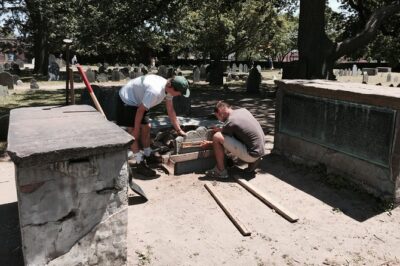
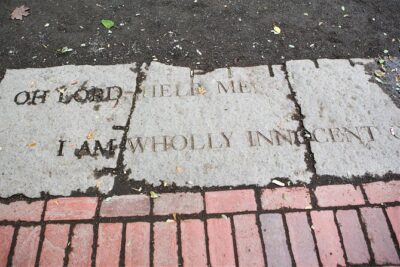
Salem Athenaeum and Hawthorne: the story behind the libraries
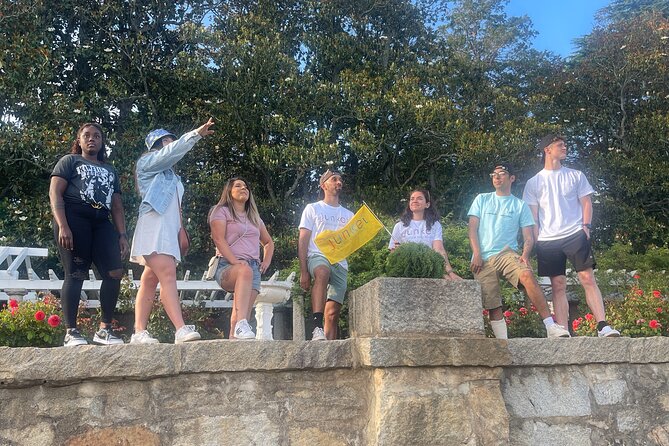
Not all “dark history” is about trials. One stop focuses on a library connection: Nathaniel Hawthorne served as head of the Salem Athenaeum for a time in the 1800s, and the tour explains how the Athenaeum’s libraries came together from two separate societies.
This matters because it widens your Salem lens from the 1600s into a town where literature, reputation, and civic institutions all played roles in shaping public memory. Hawthorne’s name is everywhere in Salem, but the tour gives you the institutional context, not just a famous surname.
If you’re a Hawthorne fan, this is a pleasant tonal reset. You still get history, just with a different flavor.
George Corwin, the sheriff connection, and the cruelty claim
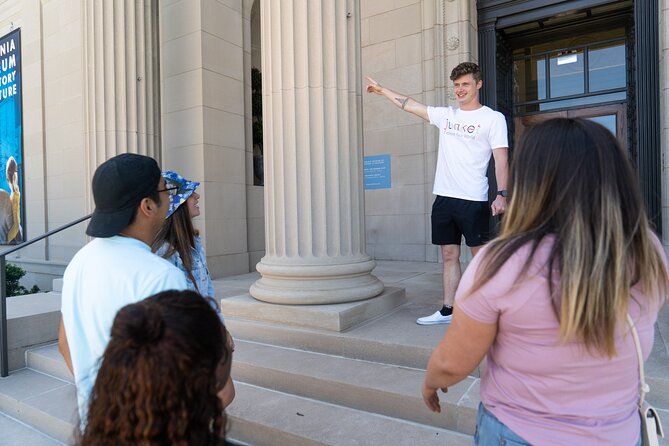
The tour also traces a land plot tied to George Corwin, identified as the nephew of Judge Jonathan Corwin. The guide connects him to the witch trials by noting George Corwin was sheriff of Salem during that period and was said to be overly cruel in his actions toward those accused and convicted of witchcraft.
I appreciate that the guide doesn’t treat these names as legends. You get a family network and official roles, which helps you map who had authority and how it was used. In practice, this part works best if you stay alert and listen for the chain of relationships. The surnames can blur if you’re not paying attention.
One caution: “said to be” language is careful, and it’s useful. People at the time and later retellings can frame behavior differently. Let the guide keep the tone measured, and you’ll get more out of it.
The cemetery founded in 1637, Giles Corey, and the ghost story thread
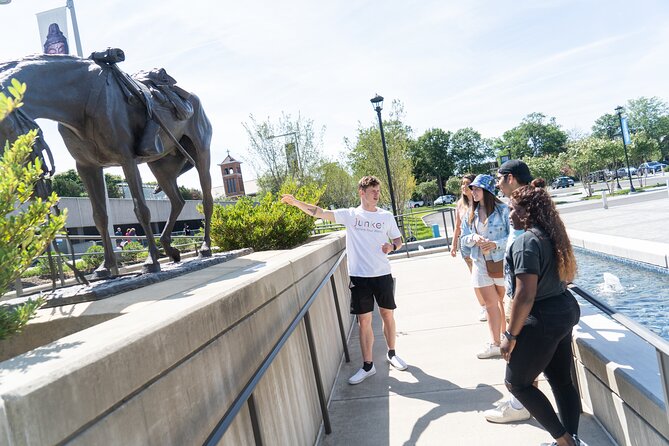
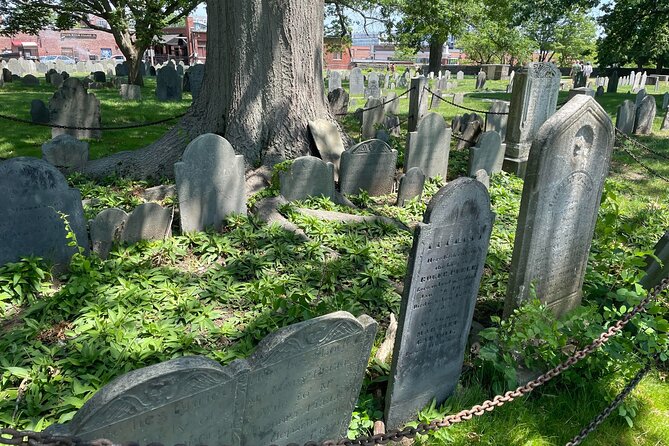
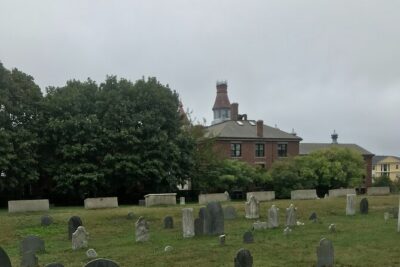
The oldest-feeling stop is the cemetery, established in 1637, one of the oldest cemeteries in the United States. This is where the guide brings in major witch-trial figures, including Giles Corey and Judge Jonathan Corey, and it notes that Judge Jonathan Corey’s second wife is also interred here.
You’ll also hear reported sightings: the tour mentions stories of people seeing the ghost of Judge Corwin wandering among the graves. You don’t need to treat it as literal to enjoy the effect. A cemetery is where fear stories naturally linger, and the guide’s job is to connect the folklore to the people and the place.
This stop is great if you like atmosphere that’s rooted in actual local names and dates. If you prefer strictly document-based history, keep your expectations balanced: you can enjoy the ghost lore as part of Salem’s storytelling tradition while still appreciating what the tour says is historically connected.
Salem’s later scandals, plus Salem Town versus Salem Village tensions
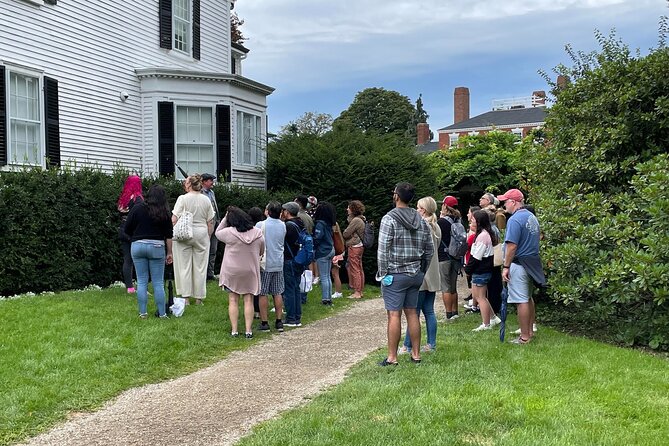
The route includes a home constructed over a century after the witch trials and explicitly described as not linked to them, but still full of secrets and scandal. It’s a reminder that Salem isn’t frozen in one era. It also helps break up the density of trial-focused stops so you don’t get mentally overloaded.
Then you get the structural explanation that ties the witch-trial energy together: the tour points to a rivalry between Salem Town and Salem Village that may have helped fuel the hysteria behind the trials. That’s a key idea because it shifts you from individual blame to community conflict. It also offers a clearer reason why so many people fell into the same emotional trap.
A Bewitched filming detail, and why it shows Salem’s afterlife
The tour name checks Salem’s famous son Nathaniel Hawthorne, and it includes a fun modern-history detail: an episode of the 1970s TV series Bewitched was filmed here.
This kind of stop works for me because it connects Salem’s reputation as a witch-trials symbol to how later pop culture kept using that imagery. You get a sense that the town’s identity is layered, not one-note.
It also gives your brain a landing place near the end of the walk. When you finish at the Hawthorne Hotel, you’ve moved from 1600s legal fear to 1800s literary institutions to 1970s TV references, all within one connected downtown route.
Price and value: what $32 gets you, and what makes it worth it
At $32 per person for about two hours, the price lands in the “worth it if you care about accuracy” category. You’re not paying for a long bus ride or a large production. You’re paying for a guide plus time-saving structure.
The big value is that the tour is designed for a small group and described as thoroughly researched and accurate. That’s exactly what you want in Salem, where it’s easy to drown in trivia and lose the thread of what matters.
Also, you’re getting more than a single witch-trial overview. You move through connected sites, including buildings and homes tied to named officials, plus cemetery context and Hawthorne-linked history. If you’re the type who likes seeing how stories map to addresses, this price makes sense.
Who should book this tour, and who might not love it
This is a good fit for you if:
- You want Salem witch-trial history tied to real locations, not vague landmarks
- You like guides who bring personal touches and local context, like Mason, and who can keep attention with humor, like guides described as charismatic and funny (Danielle and John come up often)
- You prefer a manageable downtown walk with a small group so you can hear explanations clearly
This is less ideal if:
- You want only light spooky fun. This route is built around dark history and miscarriages of justice
- You hate walking, even when the effort is described as manageable. It’s still a walking tour for roughly two hours
Should you book the Secrets of Salem Hidden Dark History Tour?
Yes, if you want a guided, fact-focused Salem walk that connects names, power, and place. I’d book it especially if you’re visiting for the first time and you want your Salem context assembled in a clean timeline: 1692 hysteria, the Corwin footprint, later political shifts with Nathaniel Ropes, Hawthorne’s institutional link, and the rivalry idea that helps explain how things escalated.
Skip it if you want a purely supernatural ghost tour with no serious historical grounding. This one isn’t only ghosts. It’s a guided look at how the story was built, enforced, and remembered.
Either way, do yourself a favor: arrive at 210 Essex St on time, wear comfortable shoes, and listen closely for the relationship threads. That’s where the tour really pays off.
FAQ
Where does the tour start and where does it end?
The tour starts at 210 Essex St, Salem, MA 01970, USA and ends at the Hawthorne Hotel, 18 Washington Square W, Salem, MA 01970, USA.
How long is the Secrets of Salem Hidden Dark History Tour?
It lasts about 2 hours.
How much does it cost?
The price is $32.00 per person.
Is the tour offered in English?
Yes, it is offered in English.
Is transportation included?
No, transportation is not included.
What ticket format do I get?
You receive a mobile ticket.
How big is the group?
The tour has a maximum of 20 travelers.
Is service animal access allowed?
Yes, service animals are allowed.
What cancellation options do I have?
Free cancellation is available up to 24 hours in advance of the experience for a full refund.
When should I expect confirmation after booking?
Confirmation is received within 48 hours of booking, subject to availability.
More Tours in Salem





More Tour Reviews in Salem
Salem, Still More to See
More around Salem, freshly written up
- Private Walking Salem Legends Tour Professional Guide★ 5.0 · 3 reviews
- Pirates and Privateers Walking Tour with Real Pirates Admission★ 4.5 · 3 reviews
- Salem: Spanish-Speaking Witch Trials Walking Tour★ 5.0 · 3 reviews
- Cemetery and Witchcraft Trials Tour★ 5.0 · 4 reviews
- The Ghost Walk. Tortured Souls of Salem★ 5.0 · 4 reviews
- [ESP] History of Salem Witch Trials★ 4.0 · 5 reviews
Salem Witch Trials and History Tours, compared.
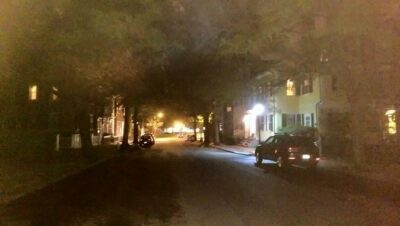 ★ 5.0History and Hauntings of Salem Guided Walking TourFrom $3614,564 reviews
 ★ 4.5Salem’s Best Ghost TourFrom $304,186 reviews
 ★ 5.0Salem Voodoo, Vampires, and Ghosts Guided Walking Tour1,931 reviews
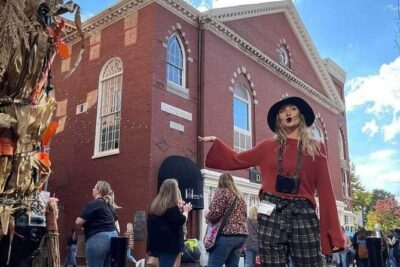 ★ 5.0Bewitched Walking Tour of SalemFrom $351,895 reviews
 ★ 5.0Satanic Salem Walking TourFrom $301,635 reviews
 ★ 5.0Mysteries and Murders of Salem Guided Night-Time Walking TourFrom $361,488 reviews
 ★ 4.5The Salem Witch WalkFrom $251,301 reviews
 ★ 5.0Wicked Awesome Tours: Witch Trial History and Salem Haunts!From $291,032 reviews
Also filed under