
REVIEW · SALEM WITCH TRIALS AND HISTORY TOURS
Salem Merchants and Mansions Guided Architecture Walking Tour
Salem looks different when you read the buildings. This guided walk turns the city into a timeline, with architecture and merchant life doing most of the storytelling. You start with basic orientation and end with a stronger sense of what shaped Salem long before the witch lore takes over.
I really like the way the guide connects design details to power and money, from the sea trade to the rise of merchant wealth. I also like the balance between pop culture touchpoints, like the Hocus Pocus filming area and the Bewitched statue, and the more serious architecture lessons.
One thing to consider: this is an outdoor walk with no public restrooms on the route, and you’ll be on your feet for the full 1.5 to 2 hours.
Key things I think you should know first
- Licensed guide plus an architectural guide of Salem included with your ticket
- Outdoor-only route, with no entering buildings or cemeteries
- Architecture lessons in plain language, from Georgian to First Period additions
- Salem Common is a major turning point for understanding how the city changed over time
- Stops mix merchant wealth with familiar film landmarks, without making it gimmicky
- Small-group feel for a walking tour, with up to 40 guests per group
More of 1692, told properly
Salem Through a Merchant and Mansion Lens
Most Salem tours lean hard into spooky stories, which is fun. This one aims for a different payoff: you come away understanding how Salem’s merchants and trade shaped the streets and houses you see today.
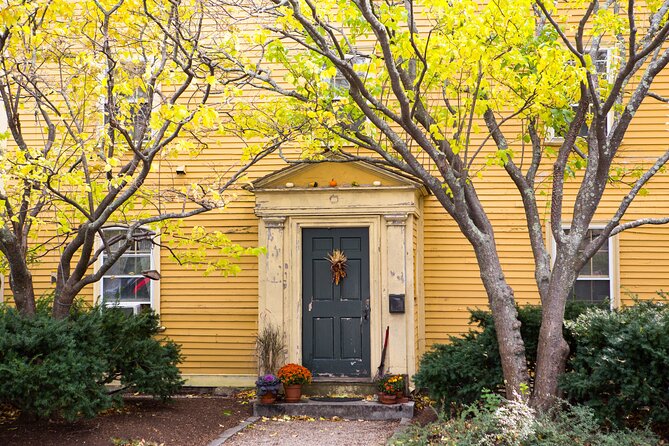
The focus is architecture, but the guide does not treat buildings like museum pieces. You learn what a building style signals about the era, and you start noticing small cues, like how additions show changing needs and growing status. It is the kind of tour where each stop adds a new piece to the puzzle, so Salem starts to feel organized rather than random.
I also appreciate how the tour does not ignore the Salem people know best. You still get pop culture anchors, like the Hocus Pocus location tied to the old school area around Salem Common and the Bewitched statue of Elizabeth Montgomery. You just get context around them, plus the built-world stories that make the city more than a set of spooky photos.
Derby Square Start to a Walk That Stays Manageable
The tour meets at 32 Derby Square in Salem, starting at 11:00 am. It runs about 1 hour 30 minutes to 2 hours, and the walking is straightforward, since it is built around the historic core.
This is also a rain-or-shine tour. You should wear comfortable shoes and plan for the fact that you will not get indoor breaks to wait out weather. The experience is not recommended if you cannot stand for long periods, and there are no public restrooms along the route, so plan ahead.
Group size can reach up to 40 guests, but it is set up so the guide can work through the points clearly. You’ll also want to have your mobile ticket handy, since confirmation comes through booking and you show it on your phone.
If you’re traveling with a dog, good news: it is dog friendly, and service animals are allowed. Kids must be with a ticketed adult, so it works best for families who can handle a longer outdoor stroll.
Old Town Hall, the Custom House, and the Sea-Trade Clues
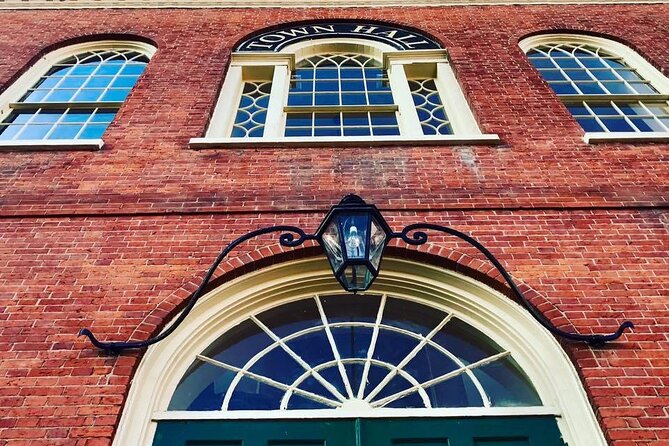
You begin at Salem Old Town Hall, which works well as a first mental map. Early in the walk, you get a framework for what Salem looked like and why certain areas mattered, so later stops land harder.
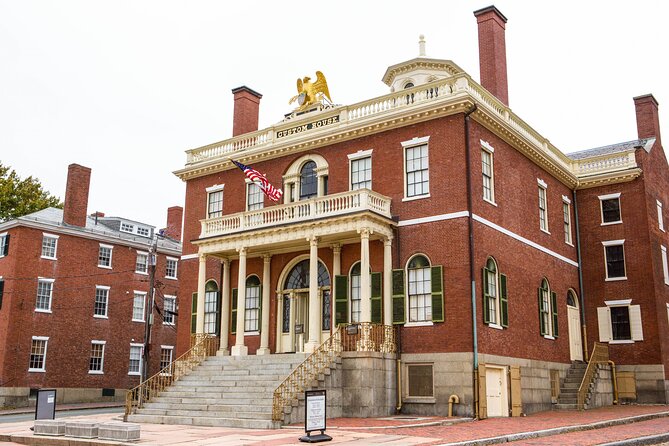
Next you head through the broader Old Salem area, then arrive at the Custom House, where the guide connects the city to the spice trade. This is one of the tour’s most satisfying moments because it explains the “why” behind a port city mindset. You also hear about the city motto and why Salem has it, plus you’ll get pointed out where an old ship-building yard used to be, near where the Adirondack chairs sit at the far end of the open space.
That ship-building detail is the kind of thing you can only pick up from a guide. From the street, it is easy to see buildings and miss the former industrial footprint. Here, the guide helps you read the ground, not just the facades.
One practical note: the stops themselves are all exterior views. The Custom House segment does not require you to buy admission during the tour, since you are not entering buildings as part of this experience.
Derby House and Narbonne House: Georgian Meets First Period Growth
Two of the best learning stops are the Derby House and the Narbonne House, because you see how architecture tells a story of wealth and change.
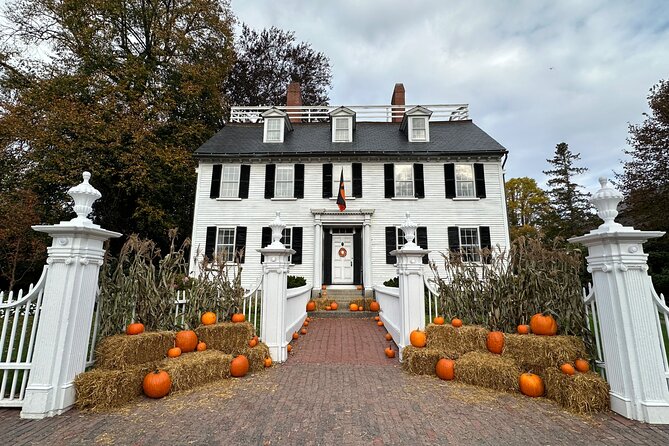
At the Derby House, the guide focuses on Georgian architecture. You learn how a building that may look “simple” at first glance actually reflects the rise of Salem and New England merchants. The key idea is that Georgian style tends to signal order, prosperity, and a certain seriousness about standing in the world as more than a working port.
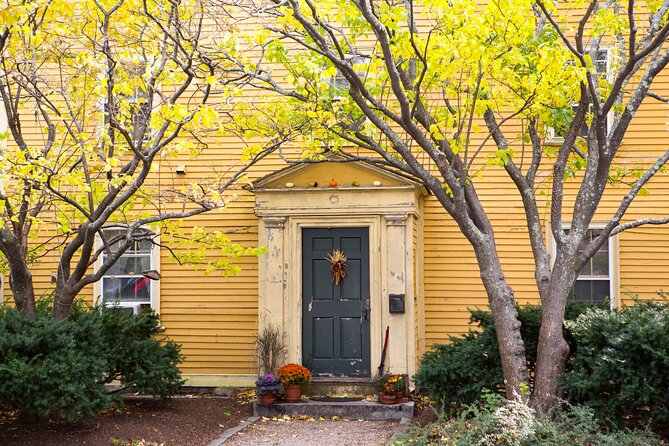
Then you move to the Narbonne House, where the lesson is about First Period architecture and how it got modified over time. This stop is especially useful if you like to spot “older bones” in houses that were expanded later. The guide walks you through how a structure can start in one era and then grow into the next, without losing the older identity.
The Narbonne House stop makes a big difference because it teaches you how to look. After this, you’ll likely start noticing patterns like where older sections meet newer ones and how building updates can track with economic shifts.
Again, you are not going inside. You’re using the exterior view to learn the structure of the story, which means you can keep moving and keep the tour rhythm.
More pirates, and the maritime rooms


Daniels House and Salem Common: The City Re-Designed for Wealth
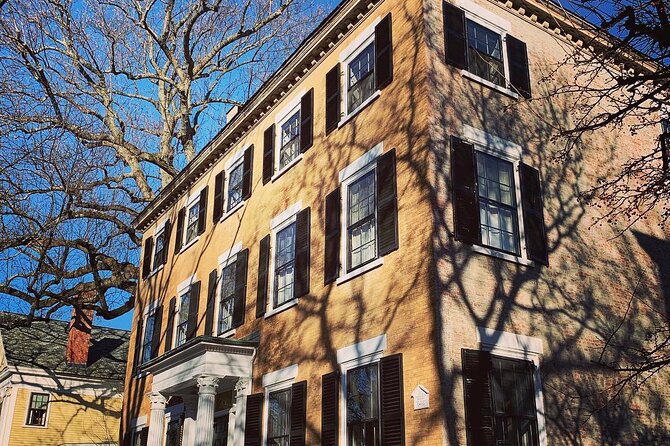
The Daniels House Historic Site is a shorter stop, but it keeps the timeline moving. Even without a long discussion window, it adds texture to what “historic Salem” means beyond the big-name landmarks.
Then the tour hits Salem Common, which is one of the most important breaks in the whole experience. The guide points out a Hocus Pocus location tied to an old school nearby, but the real payoff is the explanation of how the Common changed.
You hear how Salem Common started as marshy pools and unusable ground in the 17th and early 18th centuries. Then, over time, it becomes a manicured pleasure park in the 19th century. Finally, you learn how it becomes a fashionable district and Salem’s “last gasp” of wealth and mansions, with Second Empire and Greek Revival style buildings.
This portion helps you understand a huge theme: Salem did not grow in a straight line. It re-invented its public spaces based on economic realities, and the architecture followed. Once you hear that shift, you can look at the buildings around you and guess why certain styles show up at certain moments.
Salem Common also notes admission included, which matters mainly as a signal that this is a core stop with time built in. You should still bring water if you like, because there are no restroom stops listed along the route.
Hawthorne Hotel, Peabody Essex Museum, and the Church Street Mix
After Salem Common, you get a quick reset with the Hawthorne Hotel, where the guide discusses the architecture. Stops like this work well in a walking tour because they keep the theme consistent, even when you’re moving from one major cluster of buildings to another.
Next comes the Peabody Essex Museum area. You’ll get a look at it as a place connected to collections and historic homes, but you’re not going inside during this tour. That exterior focus still gives you context for why the museum matters to Salem’s identity as a trading city that collected goods, stories, and craft along the way.
Then you continue to Church Street, another short architecture segment. Church Street is one of those areas where the “lines” of the buildings can teach you a lot, especially after the guide has already trained your eyes on style and era.
The tour also includes Saint Peter’s Episcopal Church, where you touch on Salem’s religious heritage. This matters because architecture in Salem is not only merchant-driven. Religious institutions also shaped what got built, what got respected, and how communities organized themselves in physical space.
If you like tours that make you pay attention to details without turning into a lecture, this section is a strong example of that approach.
Witch City Mall, Bewitched Statue, and Ending Near the Sculpture
Toward the end, you get back into recognizable Salem pop culture territory with a stop at Witch City Mall. The guide ties this in to architecture conversation, which keeps it from becoming a purely themed detour.
Then you visit the Bewitched statue of Elizabeth Montgomery. This stop is short, but it’s a nice landing point because it connects the idea of Salem as an image, not just a place. You end with a reference people instantly recognize, and you can look back at what you learned about the real city behind the TV-era fame.
The tour ends at the Bewitched sculpture area in Salem. That ending helps if you want to continue on your own after the walk, since you can pivot to nearby attractions without needing to backtrack to the start.
One more practical point: the tour is English-only, it runs rain or shine, and it is designed to keep moving. So if you want to take longer photos, plan a little extra time before and after, since the guide’s schedule is tight.
Price, Timing, and Whether It Feels Worth It
At $36 per person, this tour sits in the “good value if you actually want the context” category. You are paying for a licensed guide and an architectural guide of Salem, plus a structured route that saves you from guessing what you’re looking at.
What makes the price feel fair is the focus. If you only wanted witch stories, you could spend your time doing other Salem attractions. If you want the city to make sense, the guide’s job is to turn the street view into a readable story, with specific stops that each teach you something different.
The tour typically runs 1 hour 30 minutes to 2 hours, which is a smart window for a walking tour. It is long enough for real learning, but short enough that you can still do other Salem things afterward. Also, the tour is booked on average about 23 days in advance, so if your dates are fixed, you’ll do better reserving early.
There are no public restrooms on the route, admission ticket notes say most stop admissions are not included, and the tour does not enter buildings or cemeteries. That means you should think of this as an outdoor architecture orientation, not a museum visit.
Should You Book Salem Merchants and Mansions?
Book it if you want Salem to feel like a real place, not just a Halloween set. You’ll likely enjoy it most if you care about how cities grow, how merchant wealth shows up in building styles, and how public spaces like Salem Common can reflect economic shifts.
Skip it or consider something else if you need frequent indoor stops, if you cannot stand for long periods, or if you want a heavy emphasis on witches rather than architecture. Since there are no restrooms on the route, also be sure you’re comfortable with an outdoor outing.
If you like tours led by a guide who can explain styles and add story without getting lost in spooky folklore, this one is a strong fit. Guides known from this program, like Topher, Seán, and Henry, have a reputation for being friendly and story-focused, and that combination is exactly what makes architecture feel alive.
FAQ
How long is the Salem Merchants and Mansions Guided Architecture Walking Tour?
The tour runs about 1 hour 30 minutes to 2 hours.
How much does the tour cost?
It costs $36.00 per person.
Where does the tour meet, and where does it end?
It meets at 32 Derby Square, Salem, MA 01970, USA, and ends at the Bewitched Sculpture in Salem, MA 01970, USA.
Is this an outdoor tour, or do you enter buildings?
This is an outdoor activity only. You do not enter any buildings or cemeteries on the tour.
Are restrooms available during the tour?
There are no public restrooms on the tour route, so plan accordingly.
Does the tour run in bad weather?
The tours run rain or shine, and they do not cancel for weather.
Is the tour good for kids or families?
Children must be accompanied by a ticketed adult. The tour is not recommended if you cannot stand for long periods, so it is best for families who can handle that pace.
More Tour Reviews in Salem




More Pirates and Sea Rooms




Salem, Still More to See
More around Salem, freshly written up
- Private Walking Salem Legends Tour Professional Guide★ 5.0 · 3 reviews
- Pirates and Privateers Walking Tour with Real Pirates Admission★ 4.5 · 3 reviews
- Salem: Spanish-Speaking Witch Trials Walking Tour★ 5.0 · 3 reviews
- Cemetery and Witchcraft Trials Tour★ 5.0 · 4 reviews
- The Ghost Walk. Tortured Souls of Salem★ 5.0 · 4 reviews
- [ESP] History of Salem Witch Trials★ 4.0 · 5 reviews
Salem Witch Trials and History Tours, compared.
 ★ 5.0History and Hauntings of Salem Guided Walking TourFrom $3614,564 reviews
 ★ 4.5Salem’s Best Ghost TourFrom $304,186 reviews
 ★ 5.0Salem Voodoo, Vampires, and Ghosts Guided Walking Tour1,931 reviews
 ★ 5.0Bewitched Walking Tour of SalemFrom $351,895 reviews
 ★ 5.0Satanic Salem Walking TourFrom $301,635 reviews
 ★ 5.0Mysteries and Murders of Salem Guided Night-Time Walking TourFrom $361,488 reviews
 ★ 4.5The Salem Witch WalkFrom $251,301 reviews
 ★ 5.0Wicked Awesome Tours: Witch Trial History and Salem Haunts!From $291,032 reviews