
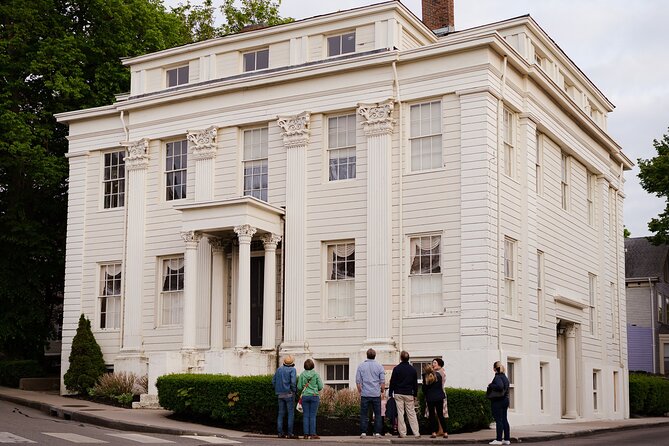
REVIEW · NEWPORT MANSIONS AND GILDED AGE TOURS
Golden Age to Gilded Age Newport’s Transformation Walking Tour
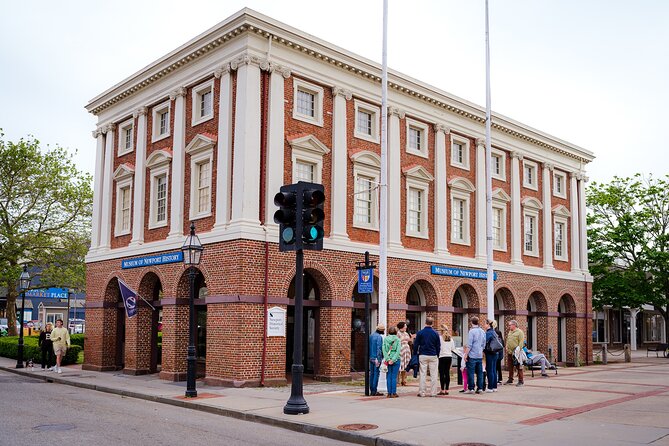
Newport changes fast, especially on foot. This 1 hour to 1 hour 20 minutes walking tour strings together 14 key addresses that explain how small-town life turned into Gilded Age summer society, with architecture and street stories you can actually see. I like that it starts with real museum context at the Museum of Newport History, and I also like that the tour includes museum admission plus a 10 percent discount in the shop. One catch: you will be walking and standing outdoors on uneven pavement, so it is not ideal if you have mobility limits.
For the “whoa, that makes sense” moments, look for the human plotlines. You’ll connect Irish settlement, hotel tourism, and the building boom to specific people and specific houses, like Alfred Smith’s land development and Dudley Newton’s design experiments. And if you care about storytelling, the guides can be top-notch, including history-teacher energy I’ve seen associated with guides like Patsy Finley and Mike. The only drawback to plan around is that at least one big museum stop is outside only, and entering the Newport Art Museum costs extra.
Key highlights worth your attention
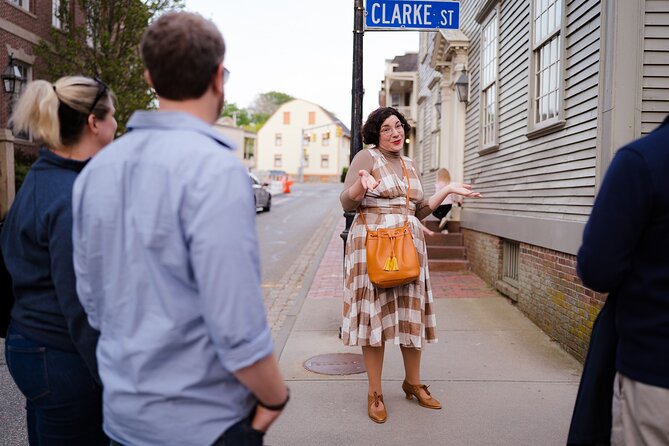
- Fourteen stops that cover people, architecture, and city growth in one walk
- Museum of Newport History admission included at the start, with shop credit too
- Small group size (maximum 18), so questions are actually doable
- Bellevue Avenue architecture trail featuring names like Dudley Newton and George Champlin Mason Sr.
- Touro Jewish Cemetery stop that grounds the story in real community history
- Clear ending at Touro Park, with quick access onward to more sights
More of the Gilded Age, down the coast
Golden Age to Gilded Age Newport, on foot
This is the kind of tour that helps Newport click. Instead of treating the city like a pretty museum, it walks you through the shift from early settlement to high-society seasonal power. Along the way, you read the city through addresses you can stand in front of, including Touro Street, Mt. Vernon Street, and the big-ticket boulevard of Bellevue Avenue.
I love that the pace is practical. The tour length usually sits around 1 hour 20 minutes, and it is mostly flat, with about a mile of walking suggested by one previous group experience. That makes it friendly for first-time visitors who want orientation, not a marathon.
Your main consideration is footwear and surfaces. Newport sidewalks and road edges can be uneven, and you will spend time standing at corners and house front steps. Comfortable shoes matter, and if you have trouble with long standing, you may want to think twice.
Price and value for a $25 Newport history walk

At $25 per person, this tour lands in the sweet spot for value, because you are not paying just for narration. You also get museum admission at the start, plus bottled water, and a 10 percent discount on purchases in the Museum of Newport History shop.
What is not included is also important to know. The tour makes an outside stop at the Newport Art Museum, and the entrance fee to get in is extra (it is listed at $15 per person). If you want to see the interior exhibits, you can decide after the tour, but you should not assume it is included.
Group size is capped at 18, which usually helps the experience stay focused. You get time to hear the street-level story without feeling lost in a crowd. And since it runs in English and uses a mobile ticket, it is easy to manage on your phone.
Getting oriented at Old Colony House and the Museum of Newport History
The meeting point is at Old Colony House in Washington Square, Newport, RI, and the tour starts at 11:00 am. From there, you check in at the Museum of Newport History, and the museum admission is included as part of the tour.
This start is smart because it gives you context before you start scanning facades. You are not just looking at houses and guessing their era. You get the baseline story of how Newport developed, and then the walking stops layer in details address by address.
There is one detail to plan around. The museum space on the second floor is not part of the walking tour. If you care about seeing everything, arrive early or plan to return after the tour so you can catch those areas that are not included in the group’s route. Also, the tour includes 10 percent off purchases in the museum shop, which is a nice extra if you want a local book or gift.
Touro Street addresses: Perry, Buliod, Levi Gale, and the moveable houses of early Newport
The walk begins to focus you on specific buildings and the people connected to them. On Touro Street, you start with 29 Touro St, which is tied to the Buliod-Perry house and the Perry family. This is where the tour starts turning the city into a set of connected stories, not random points on a map.
Next is 85 Touro St for the Levi Gale house. This stop zeroes in on architecture from the era and adds a practical detail that I think makes the city feel real: how houses were moved in early Newport. That kind of information changes how you see older neighborhoods, because it reminds you that early buildings were part of a changing town, not fixed monuments.
At 100 Touro St, the story widens to the people who shaped Newport’s foundation. The tour connects early Irish immigrants to major civic impacts, including building Fort Adams, establishing Rhode Island’s first Catholic church, and creating a cemetery with enduring historical significance. If you want to understand why Newport looks the way it does, this is one of the stops that explains the “why,” not just the “what.”
More of Newport on foot

Mt. Vernon Street: Alfred Smith and how tourism shifted from hotels to private summer homes
At 12 Mt Vernon St, you get a major turning point through Alfred Smith, a New York tailor turned real estate developer. This is one of those names that the tour uses to explain a big economic shift. Smith’s land development transformed Newport from a tourism model based more on hotels into one dominated by private summer residences.
That matters because it helps you understand the difference between a place that hosts visitors and a place that becomes an exclusive seasonal address. When land values rise and the wealthy build private homes, city planning and architecture shift with them. The tour frames Newport’s later Gilded Age look as a direct result of that kind of development.
Then you move to 7 Mt Vernon St, where the tour highlights Queen Anne style architecture, popular from about 1875 to 1910. You also learn that the house was designed by local architect John Dixon Johnston and used as an example of upward mobility for Irish families like the Rooneys in Newport. This stop is worth slowing down for, because you can look for the visual clues of the style while you hear what it meant socially.
Municipal growth, fire protection, and the Touro Jewish Cemetery stop
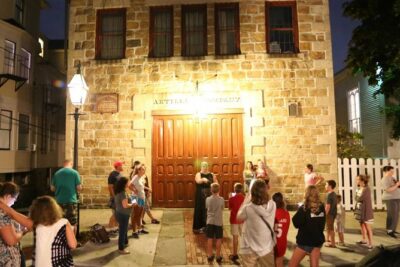
At 119 Touro St, the tour highlights Newport’s oldest active fire station. This stop does more than point to a building. It connects the city’s growth to the municipal services required when Newport expanded, and it ties that expansion to wealthy tourists whose preferences could influence city decisions.
It is a useful reminder that the Gilded Age wasn’t just mansions and parties. It created pressure on public services, and the city had to respond.
Next comes the Touro Jewish Cemetery. This is a quieter, more reflective moment in the route, with a straightforward story about the Jews in Newport from the 17th century to the 19th century. If you usually skip cemeteries on busy days, this one earns its place because it grounds the tour’s big themes in real community continuity. It also gives context for how long Newport’s cultural layers have been building, long before the luxury boulevard era.
Hotels before Bellevue Avenue cottages: Hotel Viking and the Ocean House era
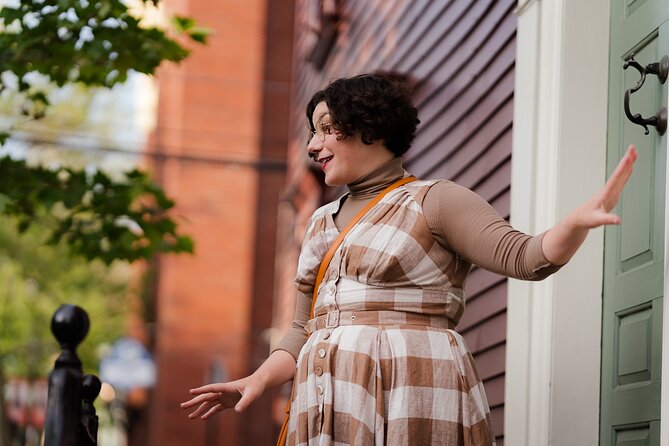
At the Hotel Viking stop, the tour shifts back toward leisure and luxury. You learn about the era of major hotels in Newport before the construction of Bellevue Avenue’s “cottages.” The big example here is the Ocean House, described as a standout of lavish luxury and elegance that attracted a privileged clientele, including artists and writers.
This stop helps you interpret Bellevue Avenue correctly. If you only look at the houses, you miss the fact that luxury tourism came in waves. Hotels were part of the early model, and then private residences took over as wealth and exclusivity increased. It is a neat way to connect the city’s architecture to how people actually traveled and spent their summers.
If you want photos, this is a good stretch, because the architecture and street feel become more “storybook Newport.” Just remember, you will be outside in an urban setting, so glare and shadows can change quickly.
Bellevue Avenue power names: Dudley Newton and the Newton Roof
At 20 Bellevue Ave, you meet Dudley Newton, a 19th-century Newport architect credited with designing over 100 buildings. The tour calls out his “daring” architectural experimentation, including the invention of the Newton Roof. It is a clever detail because you can understand the city’s distinctive character as something created by people who actively tested design ideas, not just copied existing patterns.
If you like architecture, this is where you start seeing the city as an experiment in form. It is not just “old buildings.” It is a record of choices.
Then the tour moves to 29 Bellevue Ave. Here the story turns to George Champlin Mason Sr., the architect who helped transform a small Federal-style hotel into an exclusive men’s club. You also get a key cultural anecdote tied to the Newport Casino, including the club’s role in its founding.
Even without stepping inside, this stop connects architecture to social systems. Clubs, access, and who gets invited all shape what gets built. That is the kind of context that makes Bellevue Avenue feel less like a postcard and more like a living map of power.
Newport Art Museum outside stop and Redwood Library’s intellectual pulse
At the Newport Art Museum, you stop outside the main building, the Griswold House. You learn that it was the first Newport commission of acclaimed Gilded Age architect Richard Morris Hunt. Since you are viewing from the outside, this is best if you want the big-picture story: how Newport drew major architects as the city’s wealth peaked.
If you want the interior, the entrance fee is not included. Still, even an outside stop can be useful because it gives you the origin story of a key site before you decide whether to pay for more.
You then head to Redwood Library & Athenaeum, where the tour focuses on the Golden Age intellectual culture. The tour explains how this culture was reinvigorated in the mid-19th century. This stop adds an important counterweight to the wealth narrative. It reminds you that Newport’s prominence was not only about leisure or buildings. It was also about ideas, learning, and gatherings that attracted people with influence.
Touro Park finale: Old Stone Mill, Matthew C. Perry, and the Atlantic House Hotel
The tour ends at Touro Park at 5 Touro Park St W. The final stretch is one of the most practical ways to finish, because Touro Park is a natural hub for onward exploring.
At this stop, you learn about the Old Stone Mill, plus Matthew C. Perry, and the Atlantic House Hotel, which served as the U.S. Naval Academy during the American Civil War. This is a satisfying conclusion because it puts Newport back into broader American history, not just the Gilded Age summer scene.
It also gives you a good mental reset. After all the mansions and boulevard stories, you end with institutions and national context. That makes it easier to connect Newport to the larger story of the United States in the 1800s.
What to do after the tour, and how to move around
When the tour finishes, you are at Touro Park. If you want to return to the museum after, the route is simple: take a left onto Bellevue Avenue, walk to the light, then continue straight on Touro Street down the hill. The museum is at the bottom.
You might also use the time after to decide whether the Newport Art Museum entrance is worth the extra $15. Since the tour only stops outside, you can match your interest to your energy level, instead of feeling forced.
And if you are planning a tight day, I’d suggest keeping this tour near the early part of your schedule. The included museum start makes it easier to hit other historic sites with a clearer sense of timeline.
Who should book this Newport transformation tour
This tour is a strong fit if you want:
- A short, organized way to understand Newport’s shift from Golden Age roots into Gilded Age power
- A walking route that connects houses to people and to civic changes
- Architecture and place-name stories on streets you can actually revisit later
It is less ideal if:
- You have mobility or walking limitations, because you will stand and walk on uneven pavement
- You need mostly indoor time, because the core experience is outdoors
If you are a first-time Newport visitor, this helps you get your bearings fast. If you already know Newport’s “pretty parts,” you may still enjoy how the tour explains the money, design, and community changes that created those pretty parts.
Should you book this Golden Age to Gilded Age Newport tour?
Yes, I’d book it if you like history you can see in the street and you want good value without a long day. $25 is reasonable for the mix of included museum admission, bottled water, and a guided walk that hits key Newport addresses tied to real development and design decisions. The small cap at 18 people is another practical plus.
Just go in with two expectations. First, you will be outside on uneven sidewalks, so bring comfortable shoes. Second, the Newport Art Museum stop is outside only, so if you want to go inside, you should budget extra. If those are fine with you, this is a smart way to understand how Newport became the Newport of the Gilded Age.
More Tours in Newport





More Tour Reviews in Newport
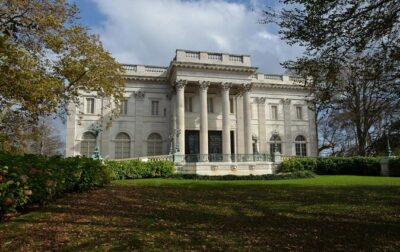
More Gilded Age Houses
More around Newport, freshly written up
- Twilight Cruise: After The Sun Goes Down★ 5.0 · 3 reviews
- Private Downtown Newport Walking Tour★ 5.0 · 4 reviews
- Parasailing in Newport, Rhode Island★ 5.0 · 4 reviews
- Newport Downtown Historic Audio APP Self Guided Smart Phone Tour★ 4.5 · 5 reviews
- Nutty Newport Scavenger Hunt★ 3.5 · 7 reviews
- Early Bird Mimosa Cruise – Family Friendly!★ 5.0 · 7 reviews
Newport Mansions and Gilded Age Tours, compared.
 ★ 5.0Newport Gilded Age Mansions Trolley Tour with Breakers AdmissionFrom $473,785 reviews
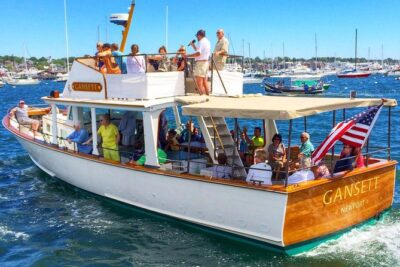 ★ 5.0Afternoon Grand Tour | Gansett Cruises in Newport, RIFrom $421,869 reviews
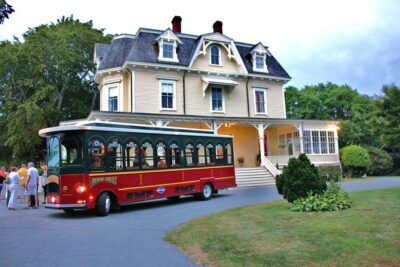 ★ 5.0Newport Trolley Tour with Breakers Mansion – Viking ToursFrom $451,624 reviews
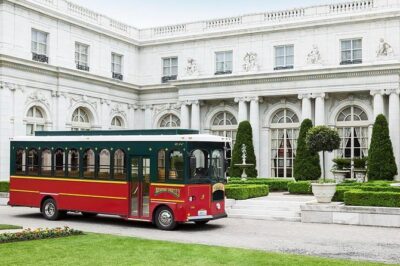 ★ 5.0Newport Trolley Tour – Viking Scenic OverviewFrom $25839 reviews
 ★ 4.8Newport: Scenic Trolley TourFrom $26730 reviews
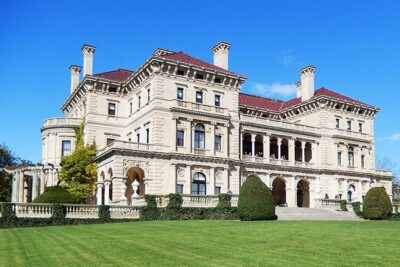 ★ 5.0Newport RI Mansions Scenic Trolley Tour (Ages 8+ only)From $27605 reviews
 ★ 5.0Newport Neighborhood Food TourFrom $99597 reviews
 ★ 5.0Sunset Cruise with Gansett Cruises in Newport, RIFrom $50538 reviews
Also filed under