
REVIEW · SALEM WITCH TRIALS AND HISTORY TOURS
Discover Salem’s History & Practice Authentic Witchcraft
Salem can be scary on paper. This tour makes it hands-on and real. You start at the Ropes Mansion (Alison’s house from Hocus Pocus) then move through sites tied to the Witch Trials, the town’s maritime boom, and even colonial magic practices. I especially like the practical ritual work, like Circle Casting, where you create sacred space and cast your first spell. I also love how the walk connects landmarks to stories, from the Witch House to the Witch Trial Memorial. One thing to consider: you cover about 1.5 miles on foot, so comfortable shoes and water matter.
You’re in a small group/coven, with a max of 15, so the guide can slow down when questions pop up. The price, $52 for 2 hours, also feels reasonable because you get spell ingredients plus beginner-friendly guidance, not just stop-by-stop sightseeing.
Key highlights to plan around
- Hands-on spellwork with spells and rituals you actually perform, not just watch
- Circle Casting to set up sacred space and cast your first spell
- Witch House and a trial-style test to see how you’d be judged in 1692
- Real Salem landmarks plus the Charter Street Witch Trial Memorial and Old Town Hall area stops
- Pop culture easter eggs like Samantha (from Bewitched) and filming-location stops from Hocus Pocus
More of 1692, told properly
Ropes Mansion start: Hocus Pocus vibes meet the real street map
The tour begins at 318 Essex St, and you’ll meet at the white fence toward the front door of the Ropes Mansion. If you know Hocus Pocus, you’ll recognize the setting immediately, because this is the place people associate with Alison’s house. But the value here is that it’s not just a photo stop. Your guide uses that familiar movie doorway to set up the contrast Salem is built on, the way folklore and history sit next to each other.
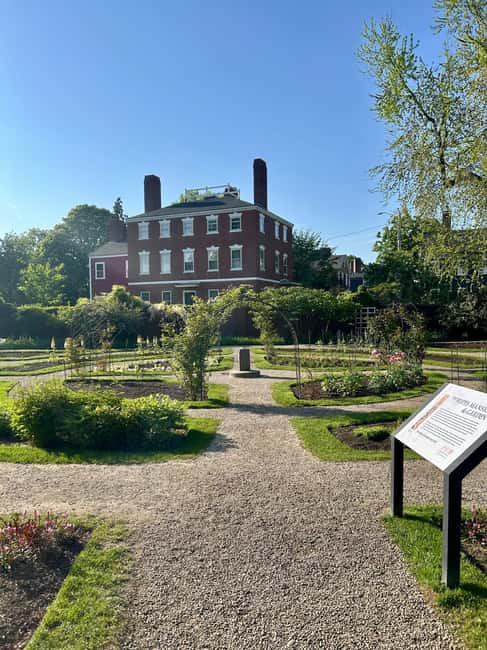
After the welcome, you’ll also spend time at the Ropes Mansion gardens. This matters because Salem’s story is not only names and dates. It’s place. Gardens, streets, and old property lines all help you feel why people built their lives where they did, and why later traditions clung to specific spaces.
If you’re the type who hates wasting the first ten minutes, this start works. You’re pulled into the idea that you’re going to do things, walk places, and leave with something tangible, not just a handful of general facts.
Puritan New World stories, plus a place to start the craft
From the mansion area, the tour shifts into land history and why puritans left Europe for the New World. You’ll also hear about pre-colonial history, which gives you context before the Salem Witch Trials take center stage. That order is smart. It keeps the story from feeling like a single dark chapter dropped onto a blank map.
I like that the tour ties this early history to the physical start of the craft. The gardens act like a warm-up, and then the guide transitions into the practice side. Even if you’re skeptical, it’s easier to pay attention when the talk connects to what you’re about to do.
Circle Casting: creating sacred space and casting your first spell
Here’s where the tour stops being a standard history walk and becomes something you can feel in your hands. You practice Circle Casting, described as a foundational protection ritual. The goal is practical in the tour context: you build a defined space, you use it as a focus point, and then you cast your first spell.
This is beginner-friendly, which is the right call. Salem’s reputation can attract either folks who want deep practice or folks who just want a fun themed adventure. This tour is trying to fit both, without expecting you to already know witchcraft language or ritual structure.
I also like the pacing here. It’s not a “watch the guide do everything” moment. You’re involved. And that involvement changes how you remember the rest of the route, because you’ve got a repeated mental anchor. Every new stop afterward feels connected, not like random sightseeing.
Witch House and the test: what would you have been condemned for?
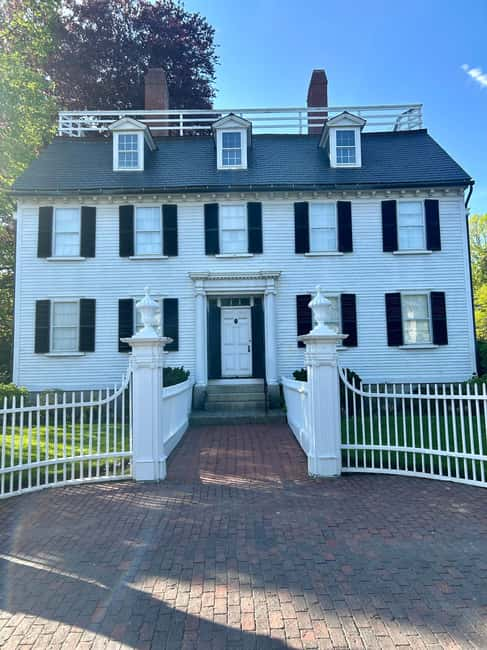
The Witch House stop is one of the core moments. You’ll have a guided visit, and you’ll hear what truly happened during the Witch Trials of 1692 while standing in a real historical site tied to that era.
Then comes the part people remember: you enact a test to see if you would have been condemned as a witch or saved as a pious puritan. I like this approach because it turns an abstract injustice into an exercise you can understand. You’re not asked to judge victims. You’re asked to simulate how the process worked from the inside, using the tour’s framework and the questions that would have mattered in that world.
One practical note for your comfort: this kind of interactive stop can run emotionally heavy. If you prefer lighter humor all the time, go in knowing there’s a serious thread here. It’s still part of a fun tour, but it’s not only costumes and nostalgia.
Deeper into the four centuries
Old Town Hall area and the Witch Trial Memorial on Charter Street
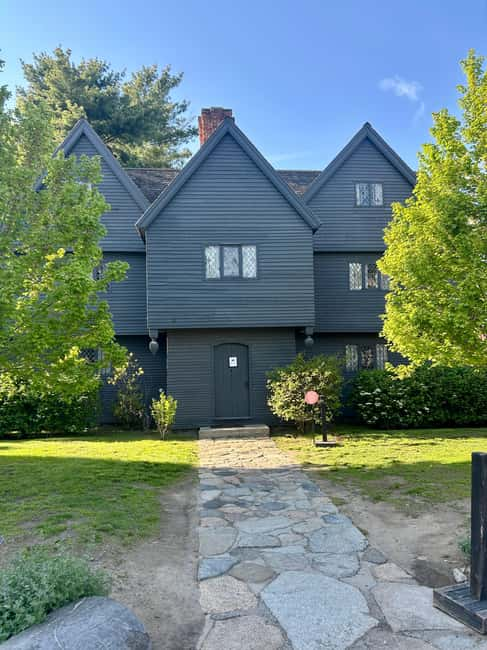
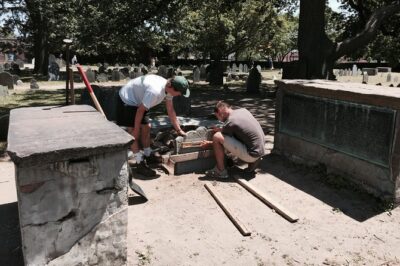
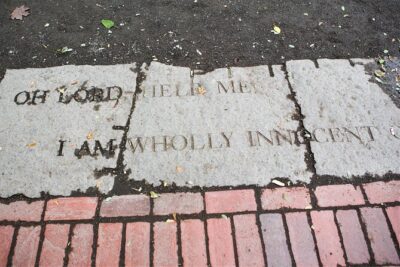
As you move along cobblestone roads, you’ll hear stories of trial victims. The tour includes stops tied to Old Town Hall and then reaches the Charter Street Witch Trial Memorial.
This portion is valuable because it anchors the story beyond the single historic house. The Witch Trials weren’t just one courtroom drama. They were a community-wide event that affected streets, families, and public memory. A memorial stop forces your brain to shift from “what happened” to “what was remembered,” and that’s often where the story gets more meaningful.
You’ll also see artistic murals during your walk. That matters even if murals aren’t your thing. They show you how Salem chooses to talk about the past now. It’s a different type of storytelling than a museum plaque, and it adds color to a section that could otherwise be only dark.
Samantha, murals, and divination as a controversial colonial tool
Salem’s reputation for witches often flattens everything into one neat theme. This tour resists that simplification. Along the way, you’ll hear about the controversial importance of divination in the colonial world and also its importance in the craft.
And yes, there’s a pop culture stop that fans usually love: the famed statue of Samantha from Bewitched. It’s fun, but it also works as a reminder that the witch image did not come from nowhere. People have been painting witches in stories, statues, and TV for a long time, and Salem is one of the places where those images overlap with older beliefs.
You’ll also do a little reading of your own tied to divination. I can’t promise it’ll feel like a mind-blowing mystical event, because the tour data frames it as a small reading you try as part of the learning. But it’s a practical way to understand what “divination” meant to people in the colonial context, not just as a spooky label.
From maritime trade to Revolutionary War: Salem’s golden age era
After the darker trials, the tour shifts into Salem’s golden age through maritime trade in the 18th and 19th centuries. If you think of witchcraft tourism as purely spooky, this section will widen your view. The town’s wealth and influence came from ocean-facing work, ships, and commerce. That changes the story. Salem isn’t only a cautionary tale. It’s also a place that grew powerful before it was forced to reinvent itself.
You’ll learn Salem’s role in the American Revolutionary War and hear about Lieutenant Colonel Leslie’s retreat. That adds a layer of American history that fits well after the witch trials. It shows you that Salem moved from religious fear to national turbulence, and it did that in the same streets and buildings you’re walking.
In tour terms, this is the part where your feet start to feel lighter again. The guide uses the landmarks to show why the town mattered, then connects that to what comes next.
Laurie Cabot, Hawthorne, and why tourism reborn took over
The tour doesn’t treat witchcraft as a museum exhibit. It brings it into modern Salem identity. You’ll hear about local celebrities like Nathaniel Hawthorne and our official witch, Laurie Cabot.
That also sets up the final theme: why Salem’s golden age came to an inevitable end, and how Salem has become reborn by the tourism industry on the Derby Wharf. Even if you only came for the spellwork, this last stretch makes the experience feel less like a one-night Halloween act and more like understanding how cities market their own stories.
I appreciate this kind of wrap-up because it helps you see the whole engine. Salem’s past creates the attraction, but tourism changes what people focus on. Knowing that helps you choose what to do next after the tour, whether that’s a museum stop, a waterfront walk, or a second look at the places you just visited.
The price and what makes it feel worth $52
At $52 per person for about 2 hours, this tour sits in the mid-range for Salem. Here’s why it can still feel like good value.
First, you’re paying for guided time across multiple historically significant stops, not a single site. Second, you get included spell ingredients for a few spells you make to bring home. That turns part of your payment into a take-home souvenir that fits the theme, instead of only photos.
Third, you’re walking with a small group/coven max of 15. In a big tour, the guide can only give you so much attention. Here, the format makes it more likely you’ll be able to ask questions and actually participate during ritual moments.
If you’re trying to decide whether this is worth it for you, ask a simple question: do you want to do things, or do you want to only look? If you want hands-on practice, the included ingredients and spellwork are the reason this price makes sense.
Pacing, walking, and what to pack so you enjoy every stop
This tour is about 120 minutes and walks roughly 1.5 miles. That’s not a marathon, but it is enough distance that your comfort choices matter.
Bring comfortable shoes and water. Dress for the weather, because Salem conditions can change fast. The tour also recommends comfortable clothes, which sounds obvious until you’re standing in wind for a half hour trying not to regret your outfit.
The good news is the route is designed to keep moving while still giving you guided stops. If you’re used to history tours that drag, this format tends to feel more active because you’re constantly switching between story, site, and hands-on moments.
Who this tour is best for, and who might want a different style
This experience is a great fit if you like history but also want something more than lectures. It’s ideal for people who enjoy hands-on activities and don’t mind a bit of ritual structure.
It’s also a good choice if you enjoy pop culture crossovers. The Ropes Mansion Hocus Pocus connection and the Samantha statue from Bewitched make the tour easier to enter, even if you’re not a witchcraft person.
You might want a different option if you dislike interactive activities or you want a strictly academic history format. The tour includes guided history and real sites, but it also focuses on practice, spells, and small readings, so it is not only facts on a page.
Should you book this Salem history and real witchcraft tour?
Book it if you want Salem to feel personal. The combination of historic stops, serious Witch Trials context, and actual spellwork practice is what makes this stand out. I especially like that it’s designed for beginners, and still gives you real participation, like Circle Casting and the test at the Witch House.
Skip it if you’d rather spend your time in quiet museums and long explanations with no ritual components. This tour asks you to take part, and that’s the whole point.
FAQ
How long is the tour?
The tour runs for about 2 hours.
What is the price per person?
The price is $52 per person.
What’s included with the tour?
You get spell ingredients needed to create a few spells to bring home, plus a beginner-friendly introduction to the craft.
How much walking is involved?
The tour includes walking about 1.5 miles.
Where do I meet the guide?
Meet at the white fence toward the front door of the Ropes Mansion at 318 Essex St.
Is the tour wheelchair accessible?
Yes, it is wheelchair accessible.
Can I reserve and pay later, and what is the cancellation window?
You can reserve now and pay later. Free cancellation is available up to 24 hours in advance for a full refund.
More History Around Salem


More Tour Reviews in Salem


Salem, Still More to See
More around Salem, freshly written up
- Private Walking Salem Legends Tour Professional Guide★ 5.0 · 3 reviews
- Pirates and Privateers Walking Tour with Real Pirates Admission★ 4.5 · 3 reviews
- Salem: Spanish-Speaking Witch Trials Walking Tour★ 5.0 · 3 reviews
- Cemetery and Witchcraft Trials Tour★ 5.0 · 4 reviews
- The Ghost Walk. Tortured Souls of Salem★ 5.0 · 4 reviews
- [ESP] History of Salem Witch Trials★ 4.0 · 5 reviews
Salem Witch Trials and History Tours, compared.
 ★ 5.0History and Hauntings of Salem Guided Walking TourFrom $3614,564 reviews
 ★ 4.5Salem’s Best Ghost TourFrom $304,186 reviews
 ★ 5.0Salem Voodoo, Vampires, and Ghosts Guided Walking Tour1,931 reviews
 ★ 5.0Bewitched Walking Tour of SalemFrom $351,895 reviews
 ★ 5.0Satanic Salem Walking TourFrom $301,635 reviews
 ★ 5.0Mysteries and Murders of Salem Guided Night-Time Walking TourFrom $361,488 reviews
 ★ 4.5The Salem Witch WalkFrom $251,301 reviews
 ★ 5.0Wicked Awesome Tours: Witch Trial History and Salem Haunts!From $291,032 reviews
Also filed under