
REVIEW · SALEM WITCH TRIALS AND HISTORY TOURS
Best Historic Overview of Salem Walking Tour
Salem makes a lot more sense on foot. This $30 Salem walking tour ties together 1626 settlement, Revolution-era meetings, and the 1692 witch trials with an amplified guide. I love the quick orientation it gives you, and I also like that it moves past the witch stories into maritime power. One caution, the pace can feel dense for first-time history buffs, and street noise can make audio harder in some spots.
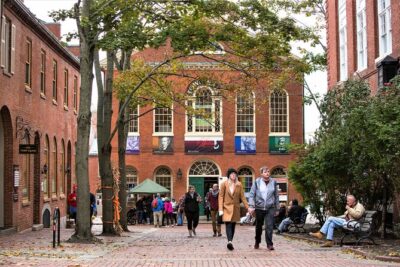
You start downtown on Central Street and then work through landmark sites like Old Burying Point Cemetery, the Salem Witch Trials Memorial, and the Witch House. I like the mix of somber and surprising stops, including Lyceum Hall, where Alexander Graham Bell gave the first public telephone demonstration. The route ends back in downtown Salem, so you can easily keep exploring on your own after the walk.
Key Highlights You Will Notice Right Away
- 12 downtown stops in about 90 minutes, about one mile of walking
- Amplified commentary so most of the group can hear clearly
- Not just witches, you also get Revolution and maritime context
- Old Burying Point Cemetery (dating to 1637) and the Witch Trials Memorial
- Lyceum Hall and Bell-era surprises that most people miss
- Small group feel, capped at 40 people
More of 1692, told properly
A 90-Minute Salem History Loop That Feels Like Salem 101
This is a classic Salem “get oriented fast” tour. In roughly 90 minutes, you get a guided sweep across four centuries of Salem, from early settlement to America’s later maritime era and then the 1692 witch trials. The goal is simple: help you understand why Salem looks the way it does, and why so many famous names keep showing up.
I like that the tour is built around an easy downtown loop, so you are not guessing where to go next. It is also designed for first-time visitors who want structure. You walk about a mile total, with frequent pauses to look at each site and hear what matters there.
Price and Value: What $30 Buys You in Downtown Salem
At $30 per person for an approximately 90-minute tour, the value comes from two things. First, you get a professional guide who links the bigger story to specific addresses and buildings you can still see today. Second, most stops have free admission tickets tied to them, so your money stays focused on the guide experience.
There is one practical note on costs. One stop, The Merchant, has an admission ticket that is not included, so you may need to budget for that separately. If you like “see it in person” history, that is still a reasonable trade for a guided walk that hits a lot of ground.
Also, there is no food or drink offered on the tour. The good news is that this keeps the pace moving, and you can buy snacks on your own before or after.
Starting on Central Street: Check-In, Timing, and Where to Park
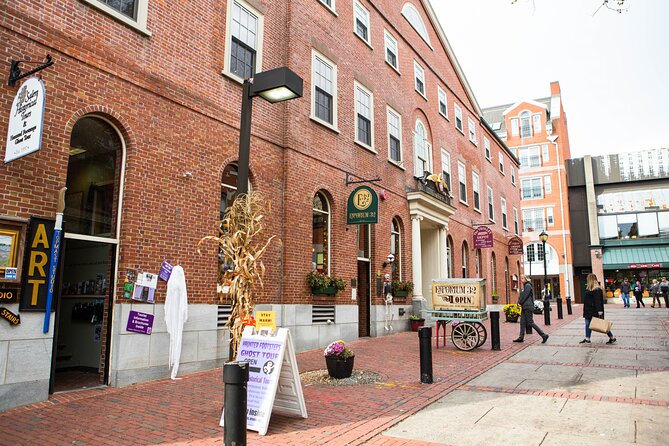
The tour meets at 8 Central St, Salem, MA 01970 at the Salem Historical Tours office. It departs at 12 pm, and you should check in 15 to 20 minutes early. The tour returns to the downtown Salem area, and the guide can help direct you to where you want to go next.
Parking in Salem can be slow, especially in October. The tour provider notes garages near New Liberty, Bridge, and Congress Streets, plus lots around Church Street, Front Street, and Klopp Alley, and metered parking near the meeting area. If you are driving, plan extra time, not just for parking, but for traffic too.
On the ground, expect historic streets. The sidewalks can be narrow and uneven, with bricks, cobblestones, and stairs. Comfortable shoes are not optional here, and the route is paced for frequent stops rather than a long nonstop march.
A quick hearing tip that matters
The company states the guide uses an amplifier so everyone can hear. In practice, Salem streets can be noisy, so I recommend you position yourself closer to the guide at each stop. If you prefer quieter listening, arrive with a little patience and be ready to lean in for key explanations.
More of Salem on foot
From 1626 to the Age of Sail: How the Tour Sets the Salem Backdrop
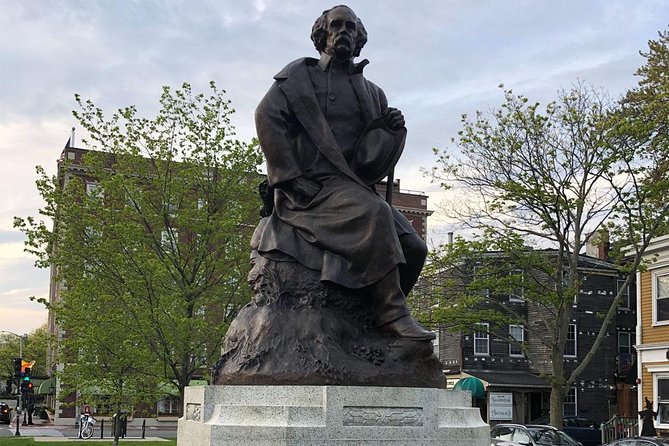
The tour begins with an orientation moment at Salem Historical Tours & Haunted Footsteps Ghost Tour. This is where the guide frames Salem as much more than a single spooky chapter. You get a quick “how Salem fits into the United States” theme, starting with the city’s early founding in 1626, then moving to Salem’s later role in the American Revolution and the Age of Sail.
This first section matters because it prevents the most common Salem mistake. If you only study 1692, you lose the reasons Salem people feared, resisted, and talked politics so intensely. By placing the witch trials in a wider timeline, the tour makes later stops hit harder, because you see them as part of a community that changed over time.
Then you move into one of the smaller but memorable downtown stops at Red’s Sandwich Shop. The story here is political and local: it is presented as a place where revolutionaries met to discuss plans for possible war with England. Even though you are not stepping into a museum room, the point is to show how Revolutionary conversation could happen on streets that still look familiar.
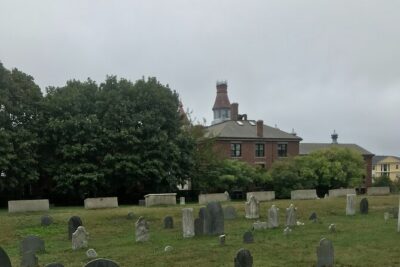
Old Burying Point Cemetery and the Witch Trials Memorial: Where Salem turns heavy
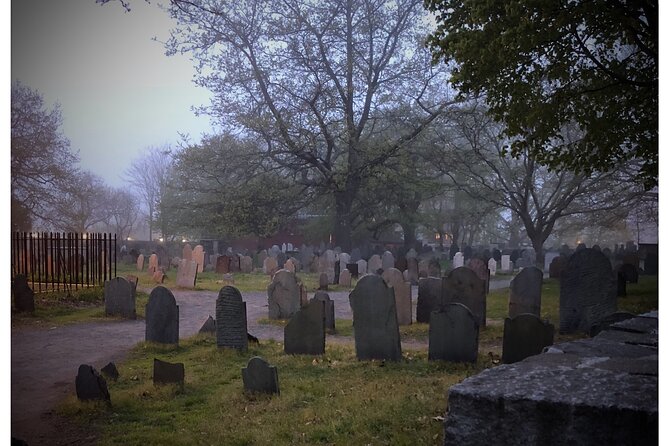
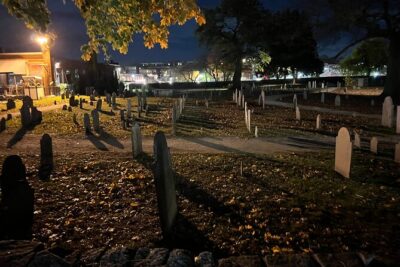
After the Revolution talk, the tour turns somber at Old Burying Point Cemetery. This is described as Salem’s oldest cemetery, dating back to 1637, and one of the oldest in the country. It is also presented as the resting place of Puritans and prominent figures connected to the 1692 trials, including judges John Hathorne and Bartholomew Gedney, plus names like Nathaniel Mather and Samuel McIntire.
This is one of the places where you should slow down. A cemetery stop works best when you treat it as more than a photo op. Even if you know the witch trial headlines, the names here help you understand that real people lived, served, argued, and later faced consequences within this community.
Right after that comes the Salem Witch Trials Memorial. It is dedicated to 20 people executed during the 1692 hysteria, and the memorial includes a bench for each person, with details like name, date of execution, and form of execution. The guide also highlights the symbolism, which is key if you want the memorial to mean something beyond a quick glance.
Lyceum Hall and Old Town Hall: Maritime power after the Revolution
Salem’s witch trials often steal the spotlight, but this tour keeps pulling you back to what made Salem a heavyweight town. At Turner’s Seafood at Lyceum Hall, the theme is layered history. The tour connects the grounds to Bridget Bishop, described as the first woman executed for witchcraft in 1692, and it also ties Lyceum Hall to a major invention moment.
The tour notes that in 1877, Alexander Graham Bell performed the first public demonstration of the telephone at Lyceum Hall. That contrast is the point. Salem was not only a place of fear and trials, it was also a place where technology and commerce pushed forward, long after 1692 ended.
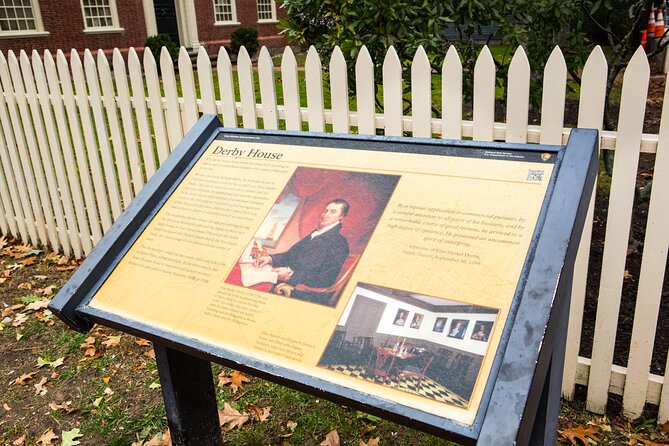
Then you head to Salem Old Town Hall. Here the story shifts to maritime wealth starting right after the American Revolution, with the tour describing Salem as the richest port in the country from 1790 to 1812. You also hear about Elias Haskett Derby, described as America’s first millionaire in 1793.
Two side notes make this stop fun even if you are not a film buff. The tour mentions that portions of Hocus Pocus were filmed at the site, and it adds that Harry Houdini was put in the jail across the street. For many people, this is where Salem becomes less like a single myth and more like a real city with multiple identities stacked on top of each other.
George Corwin to George Washington: The Merchant and the revolutionary meeting points
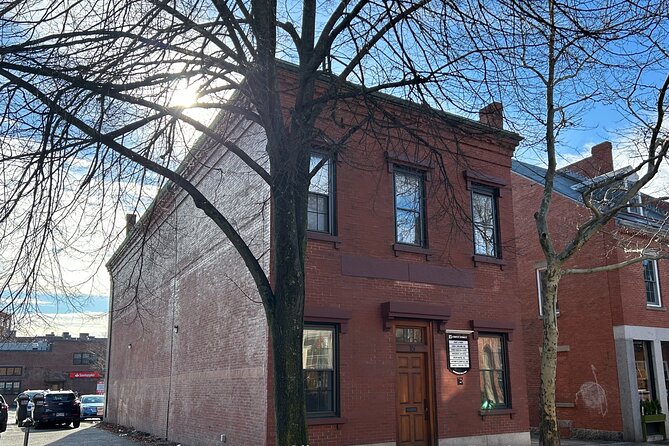
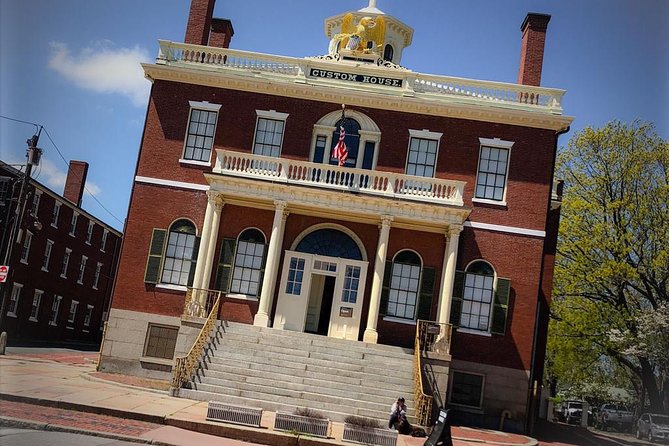
The tour continues with The Merchant. The focus here is on George Corwin, described as the high sheriff during the 1692 witchcraft trials, who lived on the grounds where the building now sits. The story then expands to the kind of visitors and power networks that passed through Salem later, including a note that George Washington visited Salem and stayed in a room that is today called the Washington Room.
Amelia Earhart also shows up, with the tour pointing out that she taught English in the Salem Commercial School just one block away. It is a small add-on, but it works because it shows Salem’s story did not freeze in 1692.
Next, you visit Rockafellas Restaurant, tied to church history and civic meeting spaces. The tour says the building is the fourth location of the first church, with the second location also on that spot. It also connects the area to revolutionary era gatherings, including a local congress of representatives meeting there before moving on to Ipswich, Concord, and then the continental congress in Philadelphia.
If you like history that feels grounded, this stop helps. It turns the abstract idea of revolution into actual street corners, political conversations, and institutions that changed location and name over time.
Bewitched in Lappin Park and Bell at the YMCA: pop culture meets old power
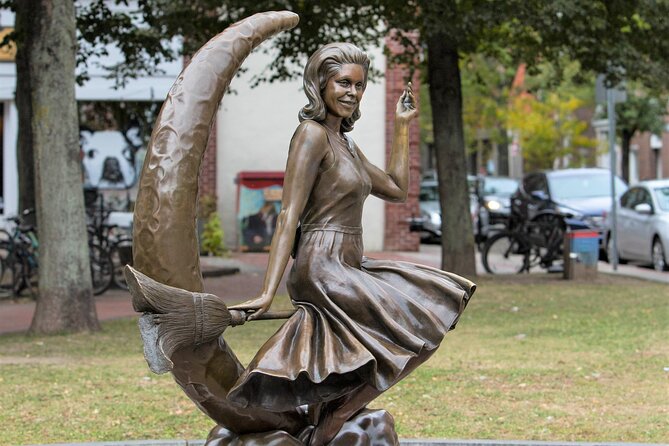
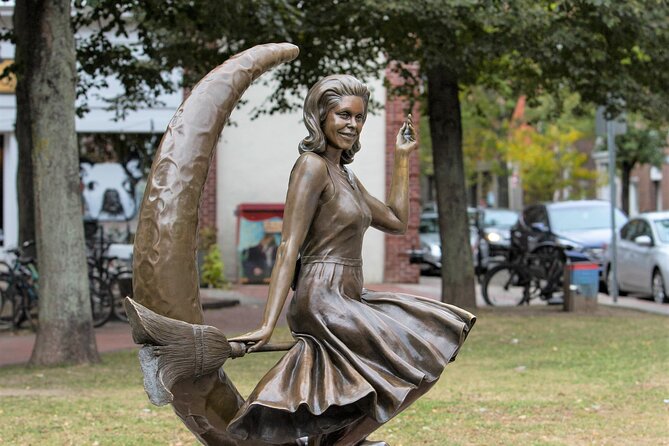
This walk also knows how to keep you awake. At Bewitched Sculpture in Lappin Park, you see a statue of Samantha Stevens. The tour notes that episodes of the TV show were shot here in Salem. The best part is the irony the tour underlines: the statue sits on land that was owned by Judge John Hathorne.
That one detail is a quick reminder that Salem constantly recycles its own stories. Witch trial figures become moral warnings, and later they become material for art, film, and tourism. It can feel weird, but that mix is part of what makes Salem worth visiting.
Then you head to the Salem YMCA stop, tied to Alexander Graham Bell again. The tour explains that before the YMCA was here, Mrs. Brown had a home on the site, and Alexander Graham Bell was described as her border. It also adds that Bell educated her grandson, then took the train to Boston to teach at Boston University, and that he worked on the telephone in an attic laboratory.
For many visitors, this is the “wait, really?” moment that makes the tour memorable. You get the feeling that Salem kept inventing and adapting, even while its past haunted it.
The Witch House and Leslie’s Retreat: trial-era ties and the road to Lexington
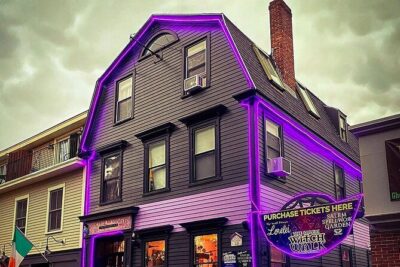
One of the most important stops comes next at The Witch House at Salem. The tour describes it as the home of Judge Jonathan Corwin, built in the 1660s, and purchased by Corwin in 1675. It also emphasizes that no witches lived here, but it is described as Salem’s last home with direct ties to the 1692 witchcraft trials.
This matters because it connects you to the physical reality of the trials. You can learn the names from books, but the Witch House gives you a place to hang that knowledge. It also helps you understand why Salem keeps returning to this site again and again.
Finally, the tour ends at Wesley United Methodist Church, where the story turns to Leslie’s Retreat at the North Bridge. The tour notes that 140 redcoats led by Colonel Leslie tried to cross the river to take weapons and cannons, and that colonists stopped them by pulling up the draw bridge. No shots were fired, and the British left empty handed, with the tour saying this happened two months before Lexington and Concord.
This ending is a good one. It reinforces that Salem’s influence was not only cultural and fearful, it was tied to real military planning and early American resistance. It gives you a tidy “how it all connects” finish as you walk back toward downtown.
How to Make This Tour Pay Off After the Last Stop
This tour is strongest as a planning tool. After you finish, you should be able to name key places, not just vague themes. Write down the stops that genuinely caught your attention, because Salem rewards repeat visits.
If you lean toward maritime stories, focus your next self-guided time on Old Town Hall and the Lyceum Hall area. If you lean toward the witch trial era, the Witch House plus Old Burying Point Cemetery and the memorial make a solid trio, and you can return for slower, quieter reading.
Also, bring your curiosity, not just your fear. The route makes space for the eerie, then it pivots into invention, politics, and even TV trivia. That mix is not random. It is the tour’s way of showing how one town can hold many eras at once.
One more practical tip from what you will likely experience on the street: if you are serious about hearing the guide, pick a spot near the front at each stop and keep your eyes up. If you miss a detail, the guide may repeat key context as the walk continues, but you will get more if you stay close.
Who This Salem Walking Tour Fits Best, and Who Should Rethink It
This tour fits you if you want Salem organized into one easy package. It is especially good for first-time visitors who want more than a witch trials overview, and it is also ideal if your time is short. The format works well for history buffs because the guide ties maritime wealth, Revolution-era politics, and 1692 into one connected storyline.
It can be less ideal if you need lots of background before anything clicks. A few people found the content hard to follow when they wanted more setup. If history is new to you, I suggest you arrive with at least a basic idea of why 1692 happened in the first place, then let the guide add the Salem-specific details.
It is also not a great fit if mobility is a big concern. The walk is about one mile, but the route includes uneven sidewalks, cobblestones, and stairs, with narrow passages during busy times and festivals.
Should You Book This Salem Historic Overview Walking Tour?
Book it if you want a fast, structured Salem orientation that covers the big threads: early settlement, Revolution, maritime power, and the witch trials. The $30 price makes sense when you look at what you get, a professional guide, amplified audio, and a dense route of downtown sites that otherwise take planning to stitch together.
Skip or switch tours if you want a slower, less talky experience, or if you need guaranteed quiet audio no matter how noisy the street gets. This is a walking tour built for pace and coverage, not a long, sit-down lecture.
If you are arriving on a busy day, especially in October, plan extra buffer time. Salem traffic and crowds can make everything take longer than you expect, and this tour still aims to keep moving through multiple stops.
FAQ
How long is the Best Historic Overview of Salem Walking Tour?
It runs for about 1 hour 30 minutes.
What is the price per person?
The price is $30.00 per person.
What language is the tour offered in?
The tour is offered in English.
Where do I meet the guide, and where does the tour end?
You meet at 8 Central St, Salem, MA 01970, and the tour ends back in downtown Salem.
What time does the tour depart?
The tour departs at 12 pm, and you should check in 15 to 20 minutes before departure.
How much walking is involved?
The tour is about one mile in length and is paced for 90 minutes with frequent stops.
Are admissions included for all stops?
Most stops list admission ticket free. One stop, The Merchant, has an admission ticket that is not included.
Does the guide use audio equipment?
Yes, the guide uses an amplifier so everyone can hear the tour.
Is food or drink included?
No food and drink are offered, but snacks are available for purchase.
Are service animals allowed?
Yes, service animals are allowed.
What is the cancellation policy?
You can cancel for a full refund up to 24 hours before the experience’s start time. If you cancel less than 24 hours before, the amount paid is not refunded.
More Tours in Salem



More Tour Reviews in Salem
Salem, Still More to See
More around Salem, freshly written up
- Private Walking Salem Legends Tour Professional Guide★ 5.0 · 3 reviews
- Pirates and Privateers Walking Tour with Real Pirates Admission★ 4.5 · 3 reviews
- Salem: Spanish-Speaking Witch Trials Walking Tour★ 5.0 · 3 reviews
- Cemetery and Witchcraft Trials Tour★ 5.0 · 4 reviews
- The Ghost Walk. Tortured Souls of Salem★ 5.0 · 4 reviews
- [ESP] History of Salem Witch Trials★ 4.0 · 5 reviews
Salem Witch Trials and History Tours, compared.
 ★ 5.0History and Hauntings of Salem Guided Walking TourFrom $3614,564 reviews
 ★ 4.5Salem’s Best Ghost TourFrom $304,186 reviews
 ★ 5.0Salem Voodoo, Vampires, and Ghosts Guided Walking Tour1,931 reviews
 ★ 5.0Bewitched Walking Tour of SalemFrom $351,895 reviews
 ★ 5.0Satanic Salem Walking TourFrom $301,635 reviews
 ★ 5.0Mysteries and Murders of Salem Guided Night-Time Walking TourFrom $361,488 reviews
 ★ 4.5The Salem Witch WalkFrom $251,301 reviews
 ★ 5.0Wicked Awesome Tours: Witch Trial History and Salem Haunts!From $291,032 reviews